



Summarize this blog post with:


In this article, you’ll learn what link building is, why it matters for ranking in Google (and increasingly in AI search engines), and how to build high-quality backlinks using five proven strategies. You’ll also learn which links actually move the needle, how to evaluate link quality, and how link building now affects your visibility in AI-powered search engines like ChatGPT, Perplexity, and Google AI Overviews.
Table of Contents
Part 1: The Basics of Link Building
Links work like votes. When another website links to your page, it signals to Google that your content is worth referencing. That basic premise is the foundation of Google’s PageRank algorithm, and it still drives how search rankings work today.
The more high-quality backlinks a page has, the higher it tends to rank. And if you want to outrank a competitor for a given keyword, you’ll typically need more (and better) links than they have.
![[Screenshot: Google search results showing top-ranking pages alongside their backlink counts from an SEO tool, demonstrating the correlation between backlinks and ranking position]](https://www.datocms-assets.com/164164/1774454314-blobid0.png?auto=format,compress&w=1248&fit=max)
That said, ranking number one is more nuanced than just stacking up links. Google uses hundreds of ranking signals. But backlinks remain one of the strongest, and they have a direct, measurable impact on where your pages show up in search results.
So what exactly is link building?
Link building is the process of getting other websites to link to pages on your website. The goal is to increase the “authority” of your pages in Google’s eyes so they rank higher and bring more organic traffic.
That definition covers the traditional SEO side. But there’s now a second reason link building matters — one that most guides still ignore.
Why Link Building Now Matters for AI Search Too
AI search engines like ChatGPT, Perplexity, Claude, and Google AI Overviews don’t just pull answers from thin air. They retrieve information from the web, and they choose which sources to cite based on signals that overlap heavily with what makes a good backlink profile: authority, relevance, and trustworthiness.
Analyze AI’s research studied over 83,000 AI citations across multiple AI engines. One consistent finding: pages that get cited frequently in AI answers tend to come from domains with strong backlink profiles. AI models lean on sources that other credible websites have already endorsed through links.
At Analyze AI, we believe GEO isn’t a replacement for SEO — it’s the next transformation of it. Search is expanding from ten blue links to multi-modal, prompt-shaped answers. Quality still governs visibility. Authority still comes from depth, originality, structure, and usefulness. What changes is where that quality must be legible — to crawlers, to models, and to the people asking better questions.
This means link building isn’t just an SEO play anymore. It’s also a visibility play for AI search. The same backlinks that help you rank in Google can help your content get cited in ChatGPT and Perplexity responses.
Throughout this guide, we’ll cover the traditional link building strategies in detail — and show you how each one also impacts your AI search visibility.
Part 2: How to Build Links
Most link building tactics fall into one of four categories:
|
Method |
How It Works |
Difficulty |
Impact |
|---|---|---|---|
|
Adding links |
You manually place your link on another site (directories, profiles, forums) |
Easy |
Low |
|
Asking for links |
You email site owners and request a link |
Medium |
Medium–High |
|
Buying links |
You pay for link placement |
Easy |
Risky |
|
Earning links |
You create something so valuable that people link to it naturally |
Hard |
Highest |
You can also hire a link builder or agency to handle this for you. Many marketers eventually go that route because link building is labor-intensive no matter which tactic you choose. But even if you outsource it, understanding the fundamentals helps you evaluate whether your link builder is doing good work or wasting your budget.
Let’s walk through each method.
1. Adding Links
This is when you visit a website you don’t own and manually place your link there. The most common tactics in this bucket include creating social media profiles, submitting to business directories, listing on review sites, and posting in forums, communities, and Q&A sites like Reddit and Quora.
These links are the easiest to get. And for that exact reason, they carry the least weight in Google’s eyes. If anyone can place a link somewhere, it doesn’t provide much competitive advantage.
Still, this category shouldn’t be ignored — especially for newer websites. Professional link builders often start here, calling these “foundational links.”
Think about it: most legitimate businesses have branded profiles on major social networks, plus listings on directories and review sites like Yelp, Trustpilot, Product Hunt, and Glassdoor. All of these pages contain a link back to their website.
![[Screenshot: A company’s Twitter/X profile showing the website link in the bio section]](https://www.datocms-assets.com/164164/1774454314-blobid1.png?auto=format,compress&w=1248&fit=max)
Google pays attention to these profile pages. If you look at the Knowledge Panel for any well-known brand, you’ll see links to their social profiles. Google identifies these profiles automatically and connects them to the brand as part of its Knowledge Graph.
![[Screenshot: Google Knowledge Panel showing social profile links for a brand]](https://www.datocms-assets.com/164164/1774454320-blobid2.png?auto=format,compress&w=1248&fit=max)
Yes, most of these links are nofollow or carry very little direct SEO weight. But since Google now treats nofollow as a hint rather than a hard rule, profile pages that accumulate their own backlinks over time can pass some value to your site.
The key is to stick to a few dozen relevant, high-quality directories where it’s natural for your business to be listed. Don’t go overboard submitting to every directory you can find — that’s a waste of time.
The best way to identify which directories and profiles to target? Study your competitors’ backlinks. We’ll cover that in detail in Part 4.
2. Asking for Links
This is outreach-based link building: you reach out to website owners and ask them to link to your content. SEOs often call this “link outreach.”
The catch is that your request needs to make sense. You can’t email a data science blog and ask them to link to your cookie recipes. Your outreach targets need to be relevant to your content, and you need a compelling reason for them to say yes.
The process of finding relevant websites to contact is called “link prospecting.” The more carefully you build your prospect list, the higher your success rate.
But why would anyone link to you just because you asked?
Ideally, because your content is genuinely useful to their audience. But not every page on your site is a masterpiece worthy of a thousand links. So SEOs have developed specific tactics that give website owners a reason to add your link:
Guest posting — Write a high-quality article for their site, and include a relevant link back to yours within the content.
Skyscraper technique — Find an outdated or mediocre page that many sites link to. Create a significantly better version on your site. Then reach out to all the sites linking to the original and show them your improved version.
Resource page link building — Find pages that curate lists of resources in your niche and request to be included.
Broken link building — Find dead pages (404 errors) that still have lots of backlinks pointing to them. Create an equivalent resource on your site and contact the linkers, letting them know about the broken link and offering your page as a replacement. You can find broken links on any site for free using Analyze AI’s Broken Link Checker.
![[Screenshot: Analyze AI’s free Broken Link Checker showing dead URLs discovered on a competitor’s site — take screengrab from https://www.tryanalyze.ai/free-tools/broken-link-checker]](https://www.datocms-assets.com/164164/1774454321-blobid3.png?auto=format,compress&w=1248&fit=max)
Image link building — Find sites using your images without attribution and ask for a credit link.
HARO and journalist requests — Respond to journalist queries with expert quotes. When they publish the article, you get a link.
Unlinked mentions — Find places where your brand is mentioned online but not linked, and ask the author to turn the mention into a clickable link.
Digital PR — Give journalists and bloggers a compelling story to cover. When they do, they link to your site as the source.
Here’s the reality check, though: outreach success rates are low. If you get five links from a hundred emails, you’re doing well. Most people won’t reply. Many will decline politely. Some will ask for money or a reciprocal link. Only a few will actually link to you.
One thing dramatically improves your odds: building relationships before you need them.
If you get a cold email from a stranger asking for a link, you probably ignore it. But if the request comes from someone you’ve interacted with on LinkedIn, exchanged thoughts with on Twitter, or met at a conference, you’re far more likely to pay attention.
Start connecting with people in your industry now — comment on their content, share their work, participate in the same communities. When you eventually need to ask for a link, you won’t be a stranger.
3. Buying Links
Paying for links is the fastest way to build them. Many site owners will happily add a link for a fee.
But it’s also the riskiest approach. Google explicitly considers paid links a manipulation of its algorithm. If Google detects that you’re buying links, it can penalize your site — potentially removing it from search results entirely.
Beyond the penalty risk, you also risk wasting money on low-quality links that provide zero ranking benefit.
Because of these risks, this guide won’t cover tactics for buying links. But you should know that link buying is widespread in the SEO industry. As you start studying competitor backlinks and reaching out to the same websites, you’ll quickly discover whether your competitors paid for any of their links.
4. Earning Links
You “earn” links when other websites link to your pages without you asking them to. This happens when you have something genuinely worth referencing — something that makes other website owners want to share it with their audience.
What kinds of content earn links naturally? Proprietary data and original research, results of experiments that required significant effort, unique ideas and strong opinions (thought leadership), industry surveys with fresh data, and breaking news or exclusive scoops.
As a real-world example, one well-known SEO blog published a data study answering the question “How long does it take to rank in Google?” using proprietary data. That single blog post accumulated nearly 3,000 backlinks from about 1,700 different websites — and it still picks up new links years later.
![[Screenshot: A backlink analysis tool showing the referring domains graph for a research study post, demonstrating steady growth over time]](https://www.datocms-assets.com/164164/1774454326-blobid4.png?auto=format,compress&w=1248&fit=max)
But you don’t always need content to earn links. Your product itself can be link-worthy. Many links to software companies come from people mentioning the product in their own reviews, roundups, and tutorials — not a specific blog post.
The critical point is that people can’t link to what they don’t know about. No matter how good your content or product is, you need to actively promote it. More eyeballs means more links. We’ll cover promotion strategies in Part 4.
How Earned Links Drive AI Search Citations
Here’s where link building intersects with AI search visibility in a direct way: the same content that earns backlinks from other websites also tends to get cited by AI search engines.
AI models like ChatGPT and Perplexity use retrieval-augmented generation (RAG), which means they search the web in real time when answering questions. The sources they retrieve and cite are disproportionately authoritative pages — pages with strong backlink profiles.
An original research study that attracts hundreds of backlinks sends a strong signal to both Google and AI engines that the content is trustworthy and worth referencing. It’s a dual benefit.
You can track exactly which sources AI engines cite for prompts related to your industry using Analyze AI’s Citation Analytics. The Top Sources report shows which domains get cited most frequently across ChatGPT, Perplexity, Claude, and other AI engines — giving you a clear picture of which backlink-worthy sources are winning in both traditional and AI search.
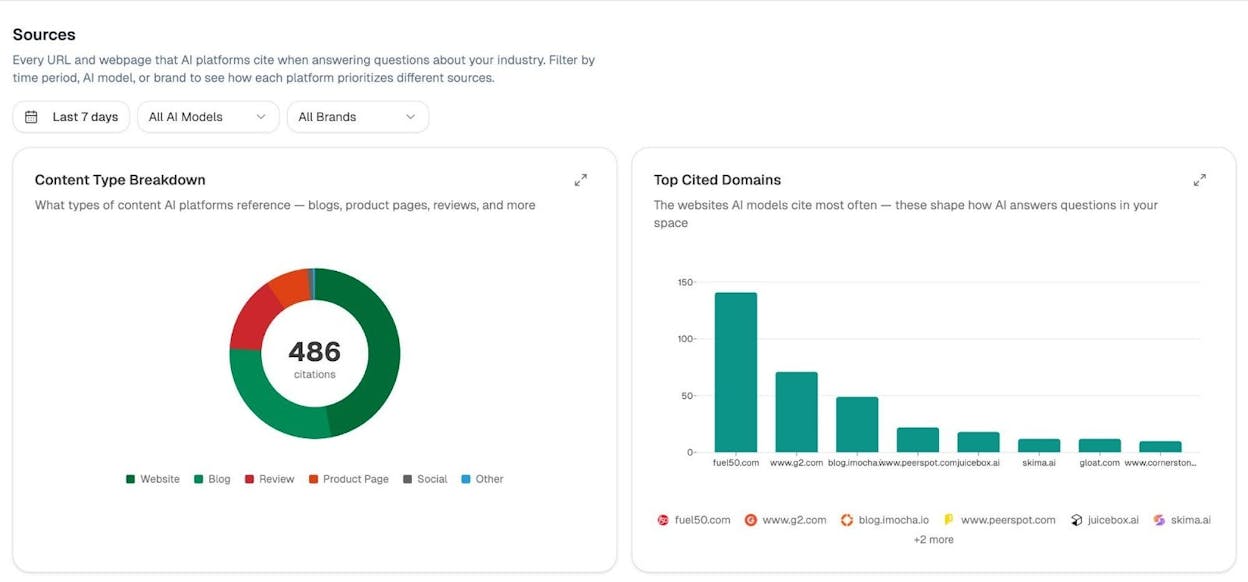
If you see a competitor’s domain appearing frequently in AI citations, that’s a signal their content and backlink profile are strong enough to earn AI visibility. Your link building and content strategy should aim to match or exceed that level of authority.
Part 3: Which Links Move the Needle?
Not all backlinks are created equal. A link from The New York Times and a link from a random personal blog don’t carry the same weight. Google evaluates each link based on several factors, and understanding these factors helps you prioritize which links to pursue.
Here are the five most important attributes of a high-quality backlink:
1. Authority
Links from well-known, high-authority websites have a bigger impact on your rankings than links from obscure, low-authority sites. This is intuitive — a vote of confidence from the New York Times carries more weight than one from an unknown blog.
How do you measure a website’s authority? The two most popular metrics in the SEO industry are Domain Rating (DR) and Domain Authority (DA). Both score websites on a scale from 0 to 100, with higher scores indicating stronger authority.
You can check any domain’s authority score for free using Analyze AI’s Website Authority Checker. Enter a URL and you’ll see its DR, backlink count, and referring domains — all the data you need to decide whether a potential link source is worth pursuing.
![[Screenshot: Analyze AI’s free Website Authority Checker showing Domain Rating, total backlinks, and referring domains — take screengrab from https://www.tryanalyze.ai/free-tools/website-authority-checker]](https://www.datocms-assets.com/164164/1774454332-blobid6.png?auto=format,compress&w=1248&fit=max)
Beyond the authority of the domain, there’s also the authority of the specific page linking to you. Google calculates this using its PageRank algorithm. In simple terms, a page with many high-quality backlinks of its own casts a stronger “vote” than a page with few or no backlinks.
![[Screenshot: Diagram illustrating how PageRank flows — pages with more backlinks of their own pass more authority through their outbound links]](https://www.datocms-assets.com/164164/1774454334-blobid7.png?auto=format,compress&w=1248&fit=max)
One more detail: if a backlink has a rel=“nofollow” attribute attached to it, it most likely doesn’t pass authority to the linked page. Always check for this when evaluating potential link opportunities.
2. Relevance
A link from a website in your industry carries more weight than a link from an unrelated site. Google’s own “How Search Works” documentation confirms this, noting that links from prominent websites on the same subject are a positive quality signal.
But relevance is broader than exact topic match. If you run a fitness website, links from nutrition sites, sports equipment blogs, or even time management sites make sense. The connection just needs to be natural — not forced.
The only time relevance becomes a problem is when links are shoehorned into clearly unrelated contexts. A link to a fitness site from a plumbing blog makes no sense, and Google recognizes that.
3. Anchor Text
Anchor text is the clickable text in a hyperlink. Google uses anchor text to understand what the linked page is about and what keywords it should rank for. This is explicitly mentioned in Google’s original PageRank patent.
So should you try to control anchor text when building links? No. The more you try to manipulate it by stuffing exact-match keyword types into every link, the more likely Google is to flag your link profile as unnatural and penalize you. Let the author of the linking page choose how to reference your content.
4. Placement
Where a link sits on a page affects how much authority it transfers. A Google patent describing the “Reasonable Surfer Model” explains that the likelihood of a link being clicked influences how much weight it passes.
Links placed within the main body content of an article get more clicks — and likely more authority — than links buried in sidebars, footers, or author bios. Similarly, links that appear near the top of a page tend to carry more weight than those at the bottom.
![[Screenshot: Diagram showing a webpage layout with content, sidebar, and footer areas, illustrating that contextual links in the body carry the most authority]](https://www.datocms-assets.com/164164/1774454341-blobid8.png?auto=format,compress&w=1248&fit=max)
When building links, aim for contextual placement within the body content of relevant pages, as high up in the article as possible.
5. Destination
When building links, you can point them at three types of pages: your homepage, your linkable assets (research studies, tools, guides), and your “money pages” (the commercial pages you need to rank for).
Money pages are typically the hardest to get links to. Website owners prefer linking to informational, free-value content rather than product or sales pages. Nobody wants to send their audience to a pitch.
The solution most experienced SEOs use is to build links to your informational linkable assets, and then use internal links to transfer some of that authority to your money pages.
![[Screenshot: Diagram showing link authority flowing from a well-linked research study through internal links to a product/money page]](https://www.datocms-assets.com/164164/1774454341-blobid9.jpg?auto=format,compress&w=1248&fit=max)
This “hub and spoke” approach lets you accumulate link authority on pages that naturally attract links, then distribute that authority across your site through strategic internal linking. It’s one of the core pillars of an effective SEO strategy.
Part 4: Best Link Building Strategies
There are dozens of link building tactics. Some work well. Others waste your time. Here are five strategies that consistently deliver results in 2026, based on what we’ve observed working with hundreds of marketing teams.
1. Replicating Your Competitor’s Backlinks
If someone is linking to your competitor, there’s a reasonable chance they might link to you too — especially if your content offers equal or greater value.
Here’s how to execute this strategy step by step:
Step 1: Study competitor homepage links.
Start by analyzing who links to your competitors’ homepages. These are people mentioning the business as a whole, not a specific page — which makes it easy to request being mentioned alongside them.
Open your competitor’s domain in any backlink analysis tool (Ahrefs, Semrush, and Moz all work for this) and pull up the backlinks pointing to their homepage. Before you start, check whether the competitor is actually worth studying by running their domain through Analyze AI’s free Website Traffic Checker to verify they have meaningful organic traffic.
![[Screenshot: A backlink analysis tool showing backlinks to a competitor’s homepage, with anchor text showing the competitor mentioned alongside other tools in a listicle]](https://www.datocms-assets.com/164164/1774454347-blobid10.png?auto=format,compress&w=1248&fit=max)
If you find list-style articles that mention your competitor alongside other tools (“10 best project management tools”), you have a natural opportunity to reach out and request inclusion.
Step 2: Find your competitor’s most-linked pages.
Next, identify which pages on your competitor’s site have attracted the most links. Most backlink tools have a “Best by links” or similar report that ranks a domain’s pages by referring domains.
![[Screenshot: A “Best by links” report in a backlink analysis tool, showing the most-linked pages on a competitor’s website sorted by number of referring domains]](https://www.datocms-assets.com/164164/1774454347-blobid11.png?auto=format,compress&w=1248&fit=max)
Common patterns you’ll find include the homepage getting links from general brand mentions, free tools attracting organic backlinks, blog content earning links from consistent publishing, and research studies drawing links from data-hungry writers and journalists.
Once you identify what types of pages earn your competitor links, create similar (or better) resources on your own site.
Step 3: Set up backlink alerts.
After completing the above analysis, set up alerts in your SEO tool so you get notified whenever your competitor earns a new backlink. This lets you reach out to the linking site quickly while the topic is fresh and the author is still actively working on related content.
![[Screenshot: A backlink alert setup screen showing how to configure a new alert for a competitor domain]](https://www.datocms-assets.com/164164/1774454353-blobid12.png?auto=format,compress&w=1248&fit=max)
How to extend competitor backlink analysis to AI search:
Here’s something most link building guides miss: your competitors in Google may not be the same as your competitors in AI search. A site that ranks number one for a keyword in Google might get zero citations in ChatGPT responses for the same topic, while a different site with fewer backlinks but more structured, authoritative content might dominate AI citations.
Analyze AI’s Competitor Overview lets you track how often competitors get mentioned across AI engines. You can see mention counts, sentiment, and which prompts trigger those mentions. It even suggests new competitors you might not be tracking yet.
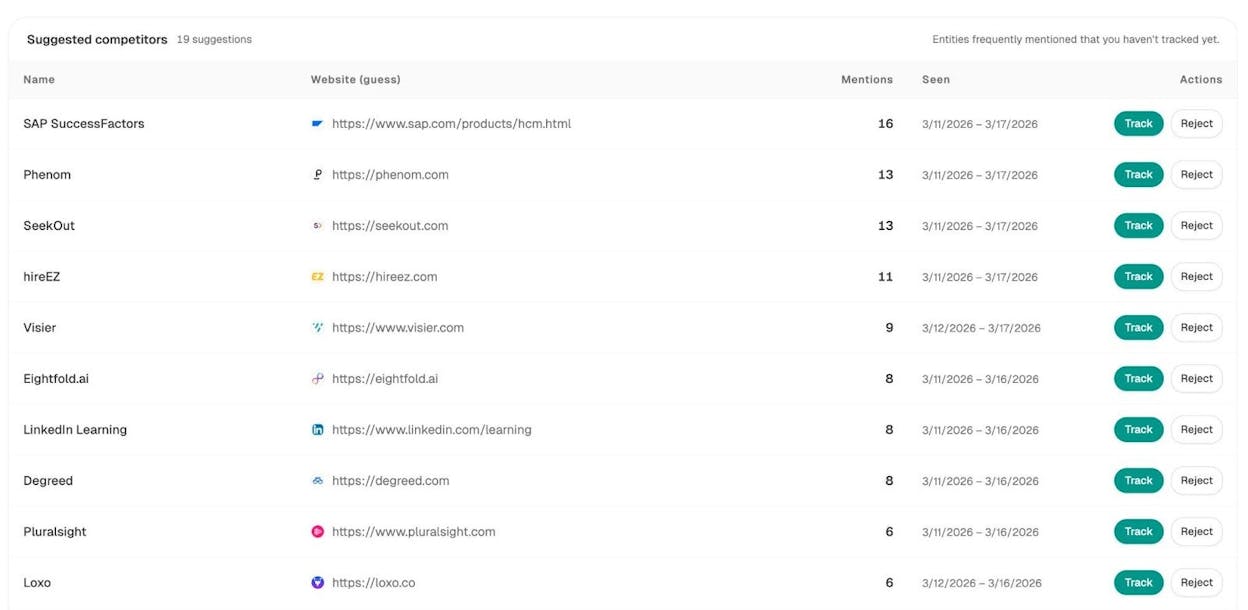
Combine this with your traditional backlink competitor analysis. If a competitor has a strong backlink profile and also appears frequently in AI citations, study their content closely — they’re doing something that both Google’s algorithm and AI models recognize as authoritative. That’s the bar you need to clear.
You can dig deeper with the Competitor Monitoring tools we’ve reviewed, but Analyze AI gives you the AI-specific layer that traditional SEO tools miss.
2. Targeted Link Outreach
Suppose you’ve done your keyword research and identified a specific page that needs to rank for a target keyword. You need links to that exact page. Here’s the systematic approach.
Step 1: Analyze top-ranking pages’ backlinks.
Enter your target keyword into a keyword research tool and look at the SERP overview. You’ll see the top-ranking pages along with their backlink counts.
If you don’t have a paid tool, start with Analyze AI’s free SERP Checker to see who currently ranks for your keyword. Pair it with the Keyword Generator to discover related long-tail keywords worth targeting.
![[Screenshot: Analyze AI’s free SERP Checker showing top-ranking pages for a target keyword — take screengrab from https://www.tryanalyze.ai/free-tools/serp-checker]](https://www.datocms-assets.com/164164/1774454360-blobid14.png?auto=format,compress&w=1248&fit=max)
Click through to any of these pages’ backlink profiles to see exactly who’s linking to them. These linkers are your initial outreach targets.
Step 2: Filter for meaningful backlinks.
Not every backlink is worth pursuing. Apply filters to focus on quality: look for links from sites with decent Domain Rating (30+), meaningful traffic, and content relevance. Exclude spammy or low-quality sites.
You can quickly vet any prospect’s authority using the free Website Authority Checker, and verify their traffic with the Website Traffic Checker. If a site has no organic traffic and a single-digit DR, a link from it is unlikely to move the needle.
![[Screenshot: A backlinks report filtered to show only high-quality link prospects with DR 30+ and meaningful organic traffic]](https://www.datocms-assets.com/164164/1774454362-blobid15.png?auto=format,compress&w=1248&fit=max)
Step 3: Review each prospect manually.
Open each linking page, read it, and assess whether there’s a natural place for a link to your content. Ask yourself: would adding a link to my page genuinely improve this article for the reader? If the answer is no, skip it.
Step 4: Find topic-relevant pages using content explorer tools.
Beyond analyzing existing linkers, you can find new prospects — websites that discuss your topic but don’t yet link to any competing page.
Use a content discovery tool to search for pages that mention your target topic. For a competitive keyword, you might find over 100,000 results. Narrow it down with filters: set a minimum Domain Rating, require meaningful traffic, filter for English only, and limit to one page per domain.
![[Screenshot: A content discovery tool showing search results for a target topic keyword, with filters applied to narrow down to high-quality prospects]](https://www.datocms-assets.com/164164/1774454368-blobid16.png?auto=format,compress&w=1248&fit=max)
This gives you a manageable list of pages whose authors are clearly interested in your topic and might be open to linking to a strong resource.
Step 5: Reach out with a compelling pitch.
Your outreach email should be concise and provide a clear reason for the link. Explain what your resource offers that would benefit the prospect’s audience. Don’t beg — demonstrate value.
Realistic expectations: most people won’t reply to your emails. Many will decline. Some will ask for money or a link exchange. Only a few will link to you. That’s normal. The key to improving your success rate is to start building relationships with website owners before you need something from them.
A good approach is to reach out while you’re still creating your content. Ask for their opinion, request a quote, or offer to feature their work. This creates a connection before you make any link request.
3. Creating Linkable Assets
A “linkable asset” is content designed to attract links. It gives other writers and site owners something worth referencing. Effective linkable assets take many forms: industry surveys and annual reports, original research studies with proprietary data, free online tools and calculators, curated awards or rankings, comprehensive how-to guides, definitions and coined terms, and data-driven infographics.
The key ingredient in any linkable asset is something new. New data, a new perspective, a new tool — something that didn’t exist before. Without novelty, there’s no reason for anyone to link to your version instead of the dozens that already exist.
Here’s a concrete example. Aira, a digital marketing agency, runs an annual “State of Link Building Report” by surveying hundreds of industry professionals. That single report earned them backlinks from over 600 different websites.
How to create a linkable asset step by step:
First, brainstorm what you can uniquely offer. Can you survey your industry? Can you calculate statistics from data your business has access to? Is there an experiment you could run? Does your industry need a free tool that doesn’t exist yet?
Second, study what’s already worked for competitors. Use the “Best by links” report in your backlink tool to find your competitors’ most-linked pages. Look for patterns — are research studies earning the most links? Free tools? Definitive guides? Check how hard it will be to compete for those same keywords using Analyze AI’s free Keyword Difficulty Checker — this helps you decide whether to go head-to-head or find a less competitive angle.
![[Screenshot: Analyze AI’s free Keyword Difficulty Checker showing difficulty score and competitive metrics for a target keyword — take screengrab from https://www.tryanalyze.ai/free-tools/keyword-difficulty-checker]](https://www.datocms-assets.com/164164/1774454369-blobid17.png?auto=format,compress&w=1248&fit=max)
Third, create something meaningfully better than what exists. This doesn’t mean longer. It means more useful, more current, more detailed, or more trustworthy.
Fourth, promote it aggressively. Even the best linkable asset needs distribution. We’ll cover promotion next.
Linkable assets and AI search visibility:
There’s a direct parallel here with AI search. The same content that earns backlinks — original data, unique research, comprehensive resources — is exactly what AI models are most likely to cite in their responses.
When ChatGPT or Perplexity answers a question about your industry, the sources they cite are overwhelmingly authoritative, data-rich pages. A well-promoted research study with hundreds of backlinks is far more likely to be cited in an AI response than a thin blog post with no supporting links.
You can verify this by checking Analyze AI’s Citation Analytics. Look at which URLs get cited most often for prompts in your space. You’ll likely find that the top-cited pages are the same ones with the strongest backlink profiles.
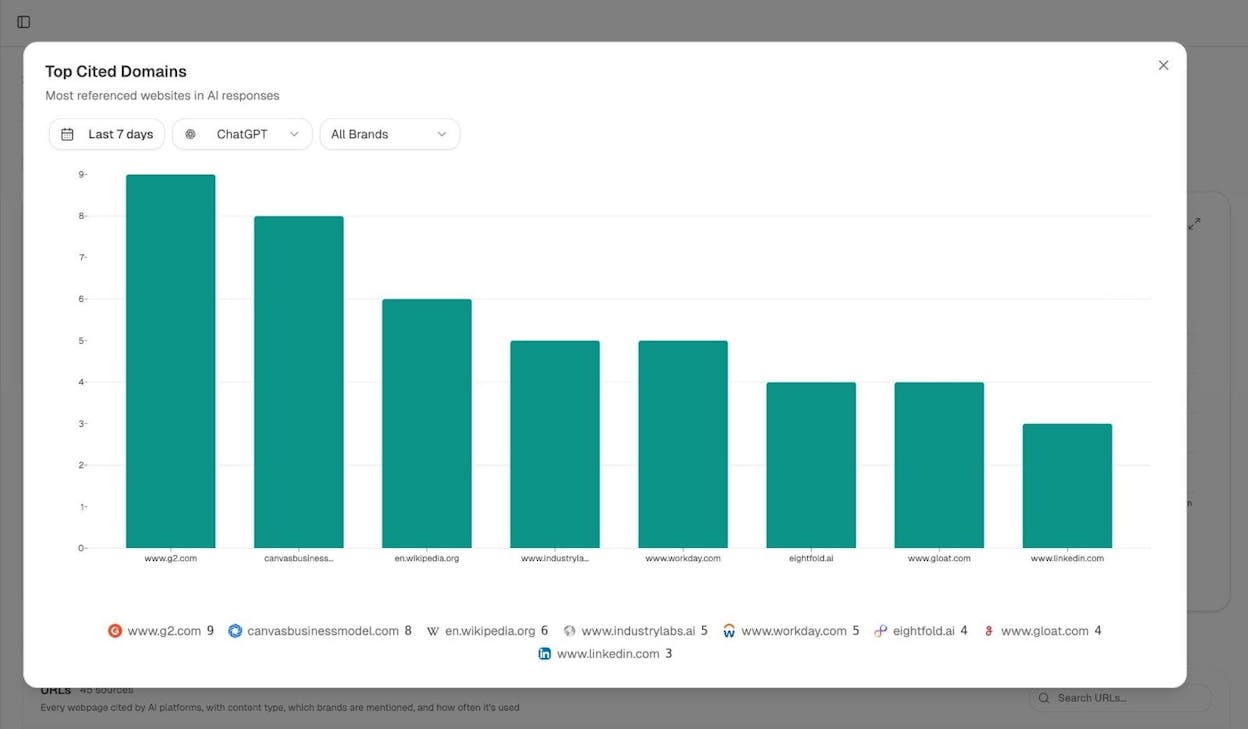
This means every linkable asset you create serves double duty: it earns backlinks that boost your Google rankings, and it builds the authority that AI engines look for when choosing which sources to cite.
4. Content Promotion
Creating great content is only half the job. If people don’t see it, they can’t link to it. Here are three promotion channels that consistently drive link acquisition:
Paid advertising. The most direct way to get your content in front of relevant audiences quickly. Run targeted ads on LinkedIn, Twitter, or Facebook to promote your best linkable assets to people who create content in your industry. This costs money, but it’s the fastest path to awareness.
Influencer and journalist outreach. Identify active thought leaders, journalists, and bloggers in your space. When you publish something genuinely noteworthy, reach out individually. If the content is strong and relevant to their audience, many will share it with their followers — and some will link to it in future articles.
Building a following. Start building an email list if you haven’t already, and stay active on platforms like LinkedIn and Twitter. Consistent, quality publishing attracts followers over time. Those followers become amplifiers for everything you publish, increasing the chance that your content reaches people who will link to it.
And don’t forget to cross-promote your older content. Mention and link to your best existing resources from new articles. Creating more work is one of the most effective marketing techniques there is.
Using AI referral data to guide promotion:
Here’s a promotion angle that almost no one talks about yet: tracking which of your pages already get traffic from AI search engines, and doubling down on promoting those.
Analyze AI’s AI Traffic Analytics connects to your GA4 and shows which pages receive referral traffic from AI engines like ChatGPT and Perplexity. It also shows the trend over time and AI traffic’s share of your total traffic.
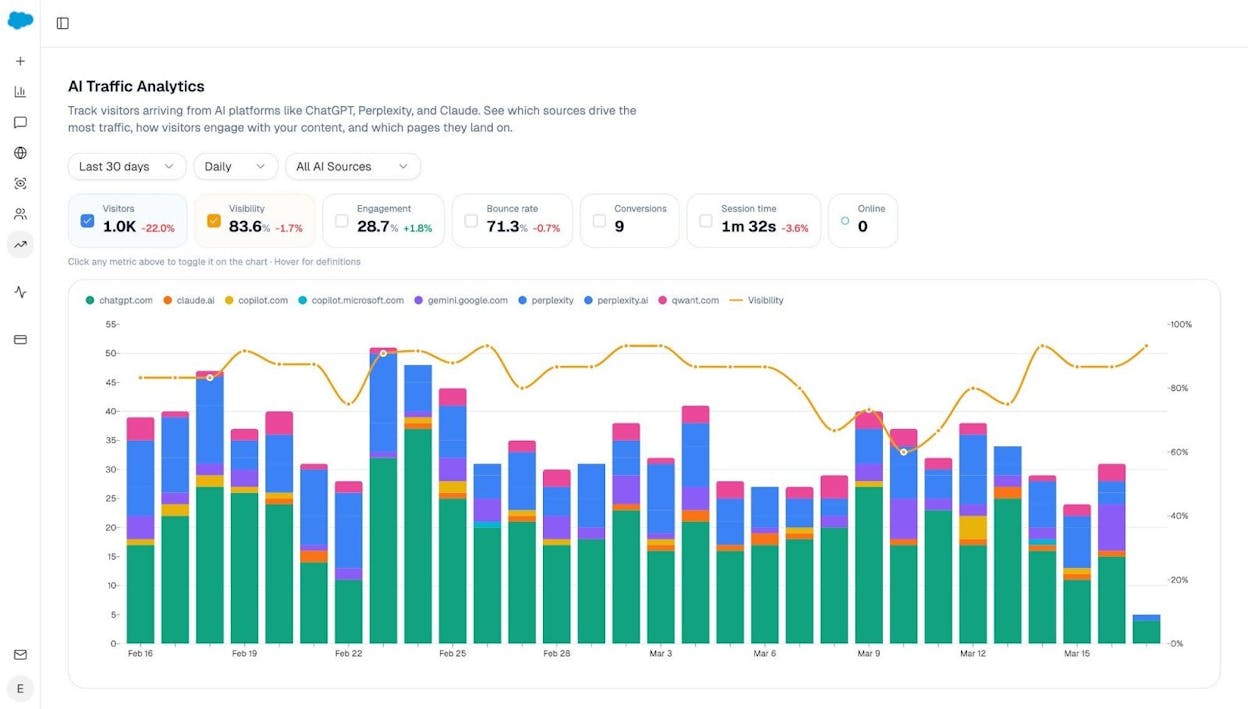
If a page is already getting AI referral traffic, that means AI engines are citing it in responses. Promoting that page further — through outreach, ads, or social — can create a flywheel: more visibility leads to more backlinks, which increases authority, which leads to more AI citations, which drives more traffic.
You can drill down even further with the Landing Pages from AI Search report, which shows exactly which pages get traffic from which AI engines, along with session counts and engagement data.
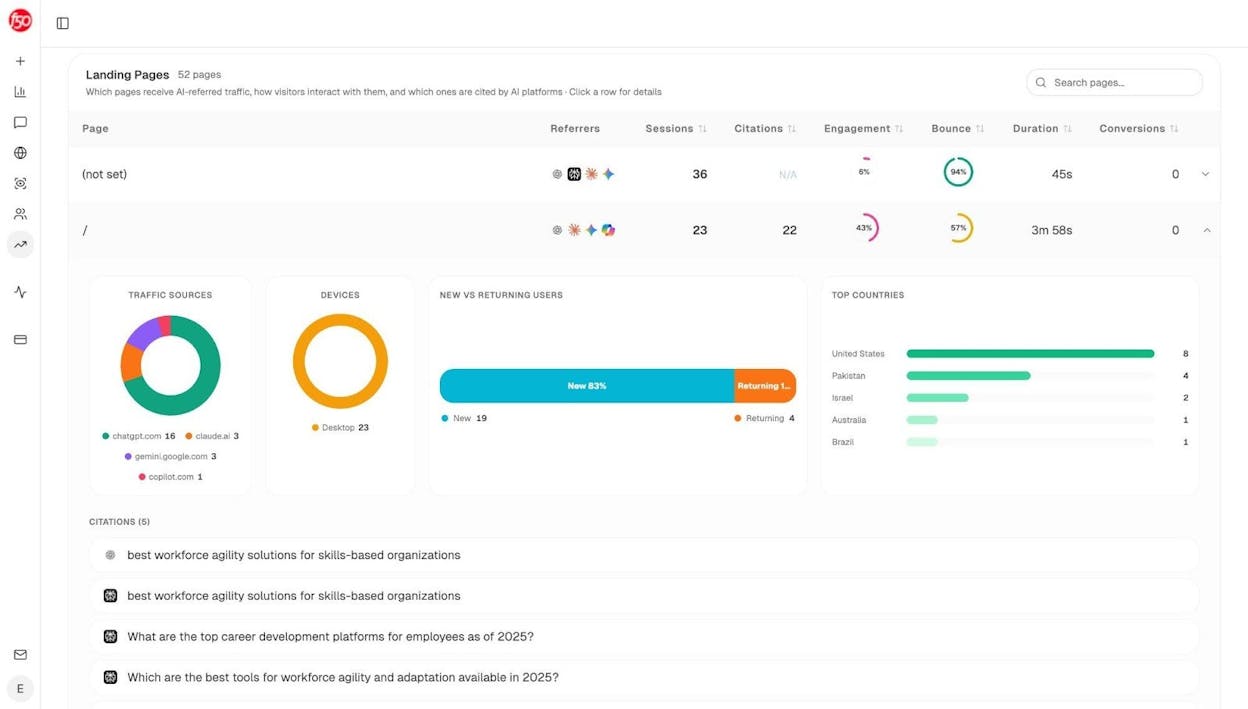
This data tells you which content resonates with AI engines. Use it to prioritize your promotion efforts and guide your next round of linkable asset creation.
5. Guest Posting
Guest posting is one of the most popular link building methods, and for good reason — it works. You write an article for another website and include a relevant link back to your site within the content.
Some SEOs frown on guest posting because it’s been abused. Low-quality guest posts on irrelevant sites, stuffed with links, rightfully deserve criticism. But legitimate guest blogging — writing genuinely useful content for reputable sites in your niche — remains an effective and ethical way to build links.
Here’s how to do it well:
Step 1: Find the right targets. Look for authoritative blogs in your industry that accept guest contributions. Check their existing content to understand their quality standards and audience. Vet their domain authority using the free Website Authority Checker — you want to guest post on sites with meaningful authority, not spam blogs.
Step 2: Pitch a compelling topic. Don’t send a generic “I’d love to write for you” email. Pitch a specific article idea that fills a gap in their content.
Here’s a practical way to find irresistible topics: use a content gap analysis tool to find keywords that competing blogs rank for but your target blog doesn’t cover yet. Use the Keyword Generator to expand your seed keyword into related variations, then check which ones the target blog hasn’t covered.
![[Screenshot: A content gap tool showing keyword opportunities where competitors rank but the target blog doesn’t]](https://www.datocms-assets.com/164164/1774454383-blobid21.png?auto=format,compress&w=1248&fit=max)
If you can pitch a topic that would fill one of these gaps, the blog editor has a strong incentive to say yes — you’re offering them content that would help them capture traffic they’re currently missing.
Step 3: Write an exceptional article. Don’t phone it in. Your guest post should be as good as (or better than) anything you’d publish on your own site. Include your link naturally, only where it genuinely adds value for the reader. If you need guidance on writing high-quality content, see our guide on how to write an article.
A lesser-known tactic: Find underperforming articles on your target blog and offer to rewrite them from scratch. If you can show that a refreshed version would rank higher and bring more traffic, most editors will consider your pitch. Use a “Top Pages” report filtered by low traffic to find these candidates.
![[Screenshot: An SEO tool’s Top Pages report filtered by low traffic, showing underperforming articles ripe for a rewrite pitch]](https://www.datocms-assets.com/164164/1774454387-blobid22.png?auto=format,compress&w=1248&fit=max)
Part 5: Link Building for AI Search Visibility
This is the section most link building guides are missing entirely. As search evolves, backlinks don’t just influence Google rankings — they directly impact whether your content gets cited by AI search engines.
How AI Engines Choose Sources to Cite
AI search engines like ChatGPT, Perplexity, and Google AI Overviews use retrieval-augmented generation (RAG) to find and cite web sources in real time. While the exact algorithms differ across platforms, the signals they look for heavily overlap with traditional link-quality signals: domain authority, content relevance, page structure, and frequency of citation by other credible sources.
In other words, the pages that rank well in Google (often because of strong backlinks) are also the pages most likely to appear in AI search responses. Building backlinks increases your traditional rankings and your AI visibility simultaneously.
This is exactly what we mean at Analyze AI when we say SEO isn’t dead — it’s evolving. Quality still governs visibility. Authority still comes from depth, originality, structure, and usefulness. What changes is where that quality must show up — not just in Google’s index, but in the sources that AI models retrieve, trust, and cite.
Tracking Your AI Search Citations
Traditional SEO tools can tell you about your backlink profile, but they can’t tell you which sources AI engines are actually citing. For that, you need dedicated AI search analytics.
Analyze AI tracks your brand’s presence across AI search engines — ChatGPT, Perplexity, Claude, Gemini, Google AI Overviews, and more. Here’s how to use it to complement your link building strategy:
Monitor your overall AI visibility and sentiment. The Overview dashboard gives you a bird’s-eye view of how your brand appears across all AI engines. You can see visibility trends, sentiment scores, and how you stack up against competitors — all in one place.
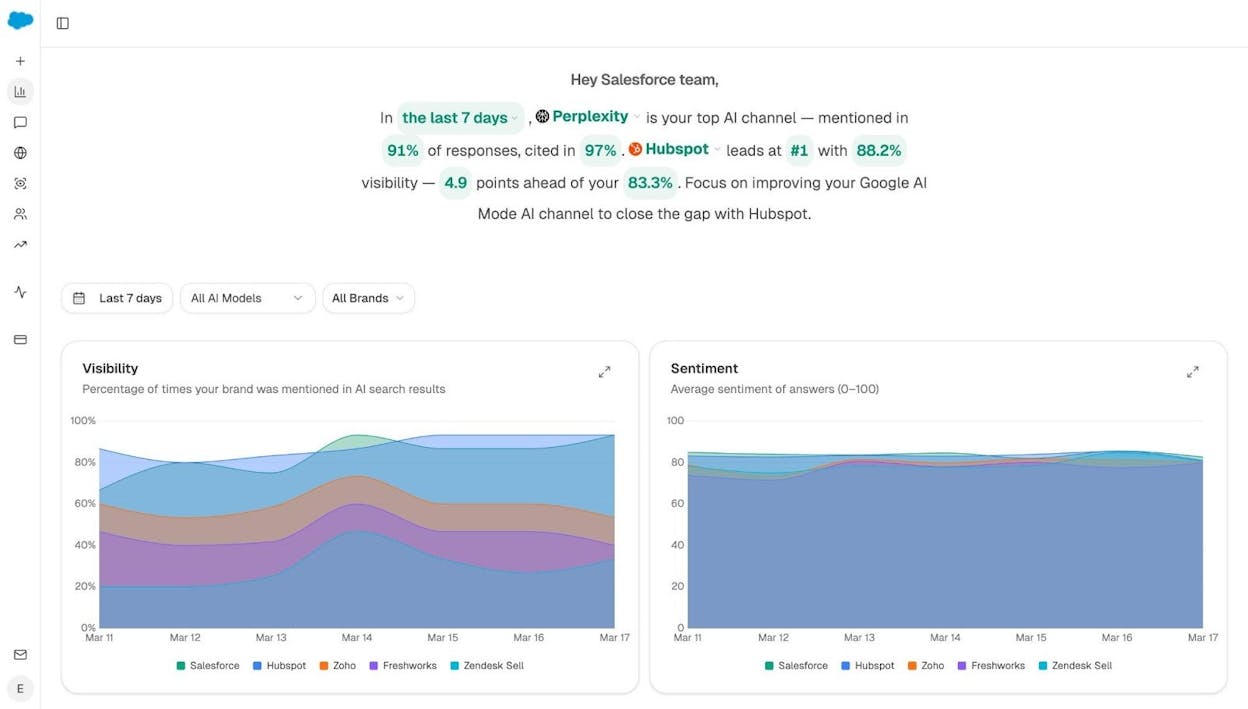
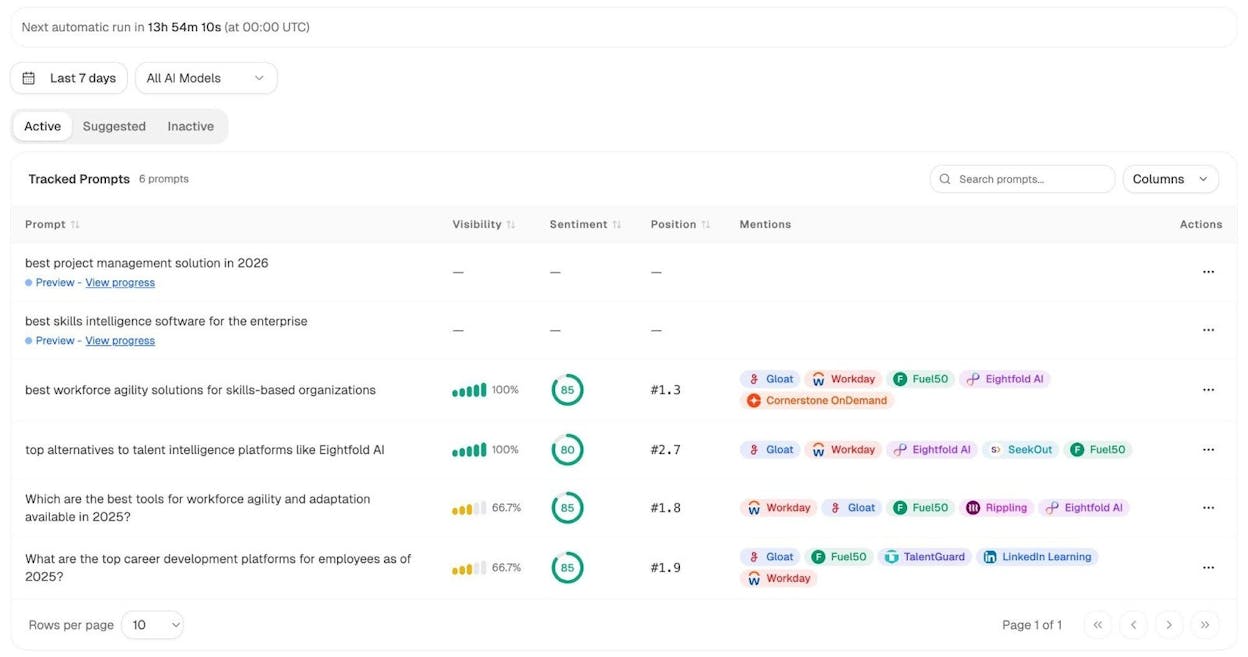
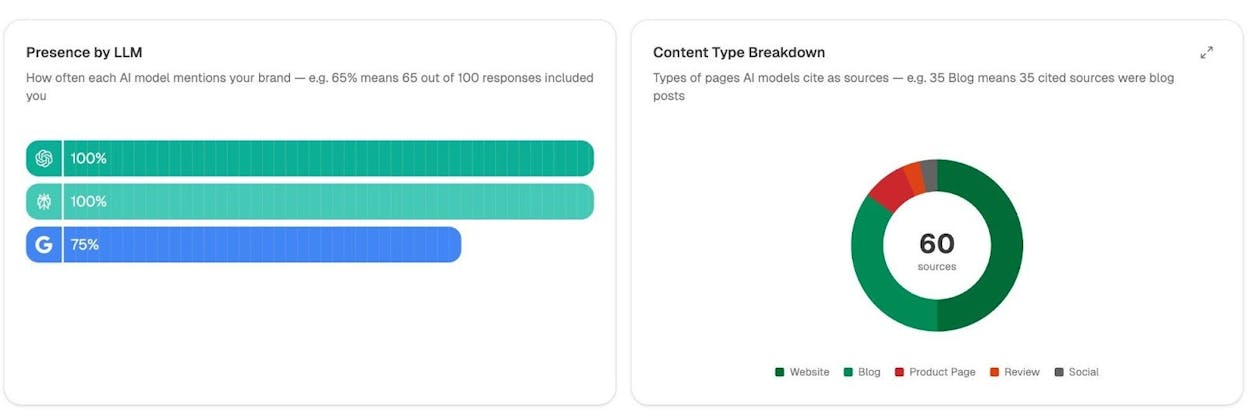
Track which prompts your brand appears in. Use Analyze AI’s Prompt Tracking to monitor specific prompts related to your target keywords. For each prompt, you can see your visibility percentage, sentiment score, position, and which competitors appear alongside you.
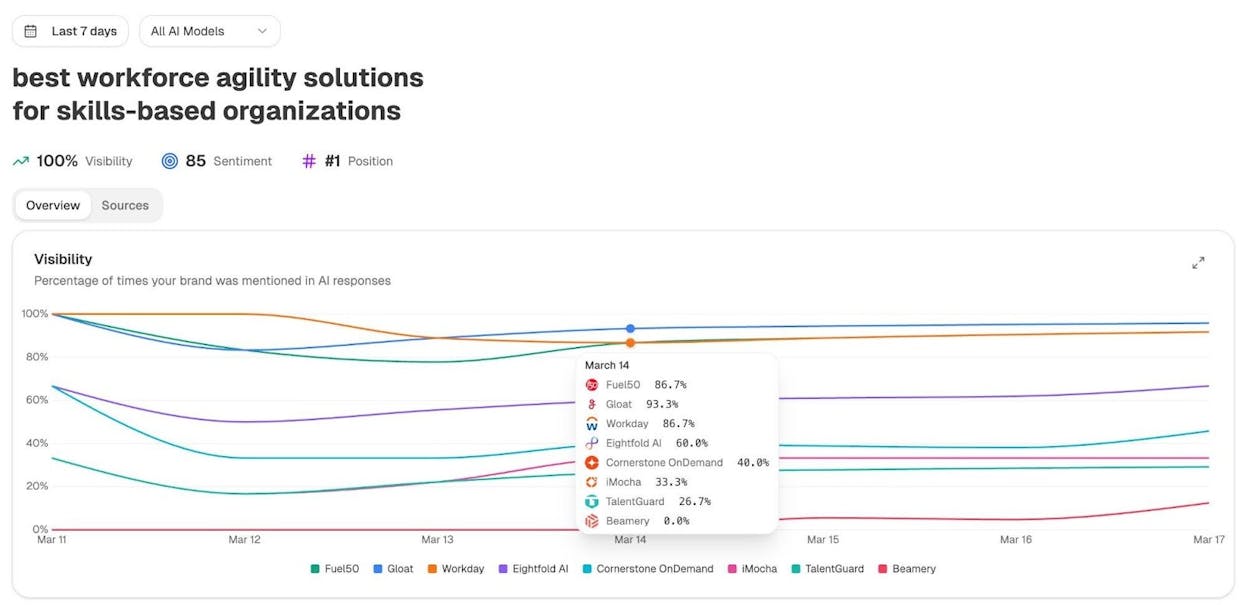
Click into any individual prompt to see detailed analytics including visibility trends over time, presence across different LLMs, and a full response timeline.
Identify citation gaps and opportunities. The Opportunities report shows prompts where your competitors are mentioned but you’re not. These are the exact topics where you need stronger content and more backlinks to break through.
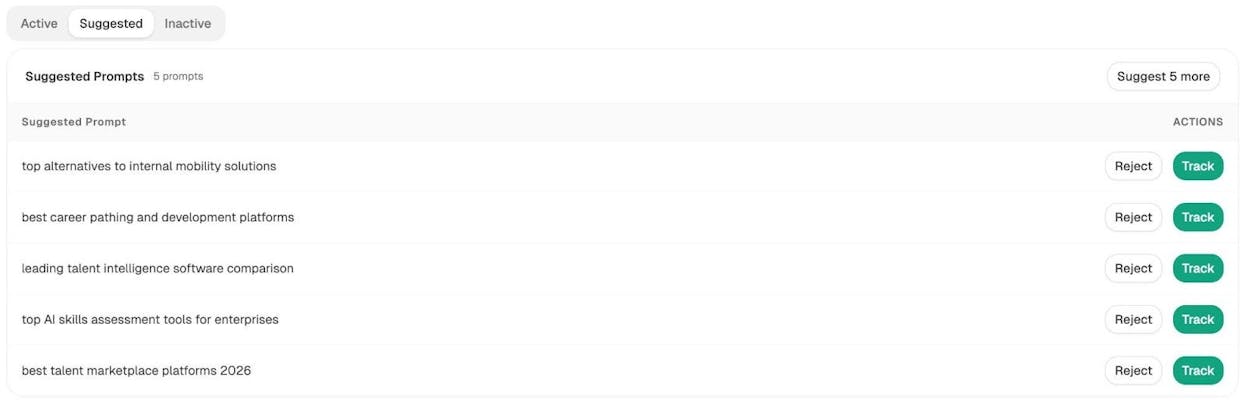
Discover prompts you should be tracking. Analyze AI’s Prompt Suggestion feature analyzes your brand and industry, then recommends relevant prompts to track. This saves hours of manual prompt research and uncovers blind spots you might miss.
Understand which external sources influence AI answers. The Top Sources report reveals which domains AI engines cite most frequently for your tracked prompts. If a third-party site like techradar.com or linkedin.com keeps getting cited alongside your competitors, those are potential targets for your link building outreach — or platforms where you should be publishing guest content.
Track how AI engines describe your brand. The Sentiment Analysis tracks how positively or negatively AI engines talk about your brand compared to competitors. As your authority grows through link building, you should see sentiment improve.
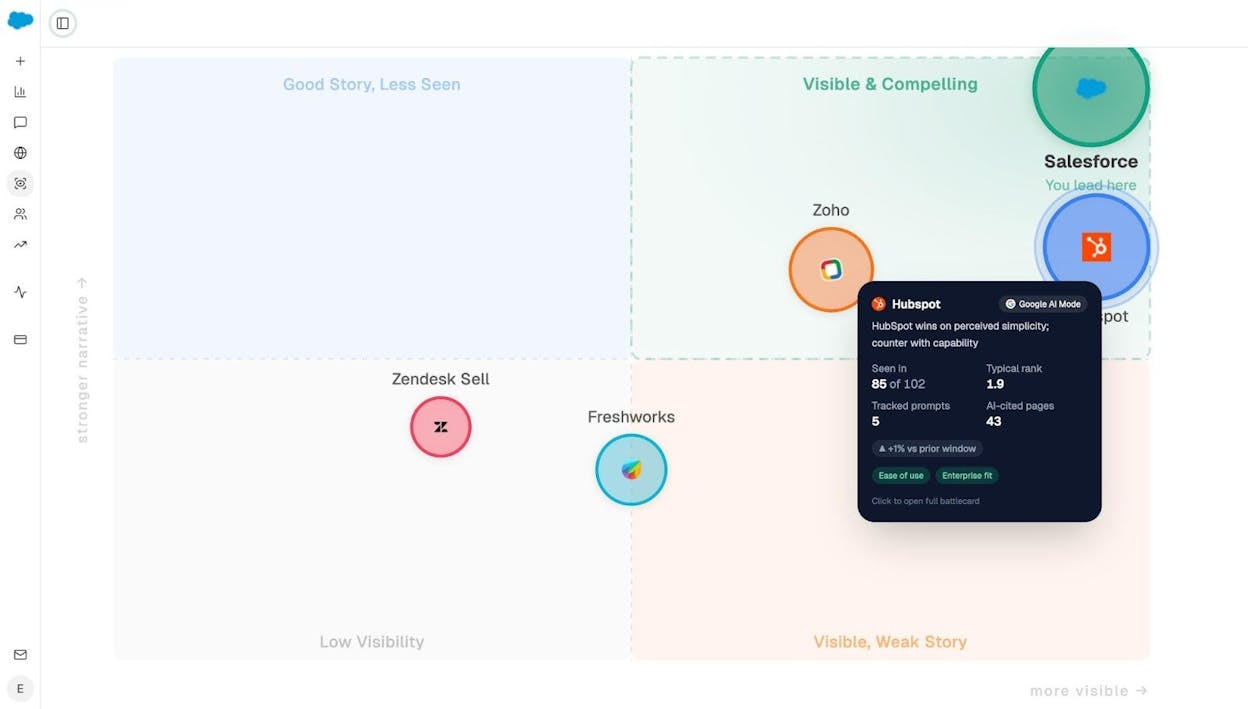
How to Use AI Search Data in Your Link Building Strategy
Here’s a practical workflow that combines traditional link building with AI search intelligence:
Step 1: Set up prompt tracking in Analyze AI for the keywords you’re targeting with your link building campaigns. Use the Prompt Suggestion feature to discover relevant prompts you might not have thought of.
Step 2: Run your traditional backlink analysis using your preferred SEO tool. Identify your competitors’ most-linked pages and their backlink sources. Use Analyze AI’s free Keyword Rank Checker to see where your pages currently rank — this gives you a baseline to measure improvement as you build new backlinks.
Step 3: Cross-reference your backlink data with Analyze AI’s citation data. Which competitors are winning both backlinks and AI citations? Which sources do both Google and AI engines treat as authoritative?
Step 4: Prioritize building links from (and to) the types of pages that appear in both datasets. A backlink from a source that’s frequently cited by AI engines gives you dual benefit — traditional ranking power and increased likelihood of AI citation.
Step 5: Track the results over time. As your backlink profile strengthens, monitor whether your AI search visibility increases too. Use the Overview dashboard and Sentiment Analysis to see if your brand’s presence and tone improve as your authority grows.
Part 6: Link Building Tools
You can technically build links with nothing but determination and a Gmail account, but the right tools make the process dramatically faster and more effective.
Free Tools from Analyze AI
You don’t need a paid subscription to start building links. Analyze AI offers a full suite of free SEO tools that cover the most common link building research tasks:
|
Free Tool |
What It Does |
Use It For |
|---|---|---|
|
Check any domain’s DR, backlinks, and referring domains |
Vetting link prospects before outreach |
|
|
Find dead links on any website |
Broken link building campaigns |
|
|
See estimated organic traffic for any domain |
Filtering out low-quality link prospects |
|
|
See who ranks for any keyword |
Analyzing top-ranking pages’ backlink profiles |
|
|
Track where your pages rank for target keywords |
Measuring link building ROI over time |
|
|
Evaluate ranking difficulty for any keyword |
Choosing which linkable assets to create |
|
|
Discover related keywords and long-tail variations |
Expanding your linkable asset topic list |
|
|
Find keyword data specific to Bing’s index |
AI engines like ChatGPT use Bing for retrieval |
|
|
Research video keywords |
Link building via YouTube content marketing |
|
|
Discover product-related keywords |
Ecommerce link building campaigns |
For AI Search Visibility Tracking
Traditional SEO tools tell you about backlinks and Google rankings, but they can’t tell you how your link building efforts are affecting your visibility in AI search. For that, you need a dedicated platform.
Analyze AI is the most complete tool for tracking AI search visibility alongside traditional SEO performance. It covers prompt tracking, citation analytics, competitor monitoring, AI referral traffic measurement, and sentiment analysis — all the data you need to understand whether your link building strategy is translating into AI search results.
For a full breakdown of available options, see our comparison of AI search monitoring tools.
For Backlink Research
For comprehensive backlink databases and competitor backlink analysis, the most popular paid tools are Ahrefs, Semrush, and Moz. Each offers backlink databases, “Best by links” reports, and content explorer features. Choose the one that fits your budget. For a deeper comparison, see our guide to the best SEO software and our roundup of the best backlink building tools.
For Outreach and Email
Link outreach at scale requires tools for finding contact information and managing email campaigns:
|
Tool |
What It Does |
|---|---|
|
Finds email addresses associated with any domain |
|
|
Email lookup service with verification |
|
|
Full outreach management platform for link builders |
|
|
Outreach CRM with link building workflow features |
|
|
Gmail-based mass email tool for personalized outreach |
For Monitoring and Alerts
|
Tool |
What It Does |
|---|---|
|
Free notifications for new web mentions of any keyword or brand |
|
|
Tracks daily AI mention changes, competitor appearances, and citation shifts across ChatGPT, Perplexity, Claude, and more |
The ideal setup combines a backlink research tool for traditional SEO analysis with Analyze AI for AI search visibility. Together, they give you the full picture of how your link building efforts perform across every search surface your audience uses.
Making Link Building Work in 2026 and Beyond
Here’s the honest summary: link building is hard work. There are no shortcuts that don’t carry serious risk. But the effort pays off in two ways now.
Strong backlinks still improve your Google rankings. That hasn’t changed. What has changed is that backlinks now also influence whether AI search engines cite your content. The same authority signals Google uses to determine ranking are the signals AI models use to determine trustworthiness and citation-worthiness.
That’s a significant shift. It means every quality backlink you earn does double duty — boosting your traditional search traffic and increasing your chances of being mentioned when someone asks ChatGPT, Perplexity, or Claude a question related to your business.
The most effective approach in 2026 is straightforward. Create content that’s genuinely worth linking to. Build real relationships with people in your industry. Promote your best work consistently. Track your progress in both Google and AI search. And treat link building not as a one-time campaign, but as an ongoing investment in your domain’s authority across every search surface.
If you take one thing from this guide, let it be this: link building isn’t just about SEO anymore. It’s about building the kind of authority that makes you visible everywhere your audience searches — whether that’s Google, ChatGPT, Perplexity, or whatever comes next.
Further reading from Analyze AI:

Ernest

Ibrahim


