



Summarize this blog post with:


In this article, you’ll learn which SEO skills matter most, how to build them through hands-on practice, where to gain real-world experience without needing a job first, and how to add AI search visibility to your skill set so you stay ahead as the search landscape evolves.
Table of Contents
Essential SEO skills and knowledge to develop
Before diving in, two caveats.
First, every website is different. What works for a local bakery will not work for a SaaS company. The type of site and industry shapes the strategy, so treat any advice — including this article — as a starting point, not a rulebook.
Second, the skills you prioritize depend on your intended specialty. A content-focused SEO will spend more time on on-page optimization than on server-side rendering. A technical SEO will do the reverse.
That said, a well-rounded understanding of every pillar of SEO is non-negotiable, regardless of where you specialize.
Learn your SEO fundamentals
Understanding the core pillars of SEO is the fastest way to build credibility and start producing results. Below, we break down each one, explain why it matters, and point you to resources that go deeper.
Keyword research
Keyword research is the starting point of every successful SEO campaign. It is the process of finding the search queries your target audience types into Google when looking for products, services, or information.
Why does it matter? Because if you produce content on a topic that nobody is searching for, you will not get any organic traffic. This is one of the most common mistakes new websites make, and it explains why studies have found that over 90% of pages on the internet get zero traffic from Google.
![[Screenshot: Google search results showing zero-traffic statistic from Ahrefs study]](https://www.datocms-assets.com/164164/1776704908-blobid1.png?auto=format,compress&w=1248&fit=max)
The goal of keyword research is straightforward: find topics with search demand, confirm you can realistically rank for them, and make sure the content you create matches what searchers actually want (search intent).
Here is what a typical keyword research workflow looks like:
-
Start with seed keywords. These are broad terms related to your niche. If you run a project management tool, your seeds might be “project management,” “task tracking,” and “team collaboration.”
-
Expand with a keyword tool. Plug your seeds into a tool like Analyze AI’s Keyword Generator or Google Keyword Planner to find long-tail variations, related terms, and question-based queries.
![[Screenshot: Analyze AI Keyword Generator tool showing keyword suggestions for a seed term]](https://www.datocms-assets.com/164164/1776704915-blobid2.png?auto=format,compress&w=1248&fit=max)
-
Evaluate difficulty and volume. Not every keyword is worth targeting. Use the Analyze AI Keyword Difficulty Checker to see how hard a keyword is to rank for. A keyword with 10,000 monthly searches and a difficulty score of 90 is usually a bad target for a new site. A keyword with 500 searches and a difficulty of 15 is much more realistic.
![[Screenshot: Analyze AI Keyword Difficulty Checker showing difficulty score and search volume]](https://www.datocms-assets.com/164164/1776704915-blobid3.png?auto=format,compress&w=1248&fit=max)
-
Check search intent. Look at what already ranks on page one. If the top results are all product pages and you are planning a blog post, there is a mismatch. Use the Analyze AI SERP Checker to quickly scan the results.
![[Screenshot: Analyze AI SERP Checker showing top-ranking pages for a keyword]](https://www.datocms-assets.com/164164/1776704921-blobid4.png?auto=format,compress&w=1248&fit=max)
-
Map keywords to pages. Each page on your site should target a primary keyword and a handful of related terms. This prevents keyword cannibalization — where multiple pages compete against each other for the same query.
Some additional aspects of keyword research worth studying include seed keywords, long-tail vs. short-tail keywords, keyword clustering, and secondary keywords.
Further reading:
On-page optimization
If there is one SEO skill you cannot skip, it is on-page optimization. Technical SEO and link building often get outsourced to specialists, but on-page touches everything you publish. You will use it daily.
On-page SEO is the process of optimizing individual pages so that search engines understand what they are about, how they relate to a query, and why they deserve a high ranking. Sometimes, small changes — rewriting a title tag, adding a missing H1, fixing a broken internal link — produce dramatic ranking improvements.
Here are the on-page elements you need to understand:
-
Content quality. Google rewards pages that are helpful, original, and written for humans. Stuffing keywords into thin content does not work anymore.
-
Title tags. The clickable headline in the search results. It should include your primary keyword and be compelling enough to earn the click.
-
Meta descriptions. The short summary below the title tag. It does not directly affect rankings, but a well-written meta description improves your click-through rate.
-
Heading structure (H1–H6). Use one H1 per page (your page title), then H2s for main sections, H3s for subsections, and so on. This helps both readers and search engines understand your content hierarchy.
-
SEO-friendly URLs. Keep them short, descriptive, and keyword-relevant. /blog/keyword-research-guide is better than /blog/post-12345.
-
Image optimization. Add descriptive alt text to every image. Compress file sizes. Use modern formats like WebP where possible.
-
Internal linking. Link related pages on your site to each other. This helps Google discover new pages and understand the topical relationships between them.
-
External links. Link to authoritative sources when they support your claims. This signals to Google that your content is well-researched.
-
Featured snippets. Structure your content to answer questions directly. Use lists, tables, and concise definitions to increase your chances of winning position zero.
![[Screenshot: A well-optimized blog post showing title tag, H1, internal links, and structured headings in a CMS editor]](https://www.datocms-assets.com/164164/1776704925-blobid5.png?auto=format,compress&w=1248&fit=max)
Off-page optimization
Off-page SEO covers everything that happens outside your website that influences your rankings. The biggest factor here is backlinks — links from other websites pointing to yours.
Google treats backlinks as votes of confidence. A page with links from authoritative, relevant websites will generally outrank a page with no links, all else being equal.
Common off-page techniques include:
-
Competitor backlink analysis. Find where your competitors get their links and pursue similar opportunities.
-
Guest posting. Write articles for other blogs in your industry in exchange for a link back to your site.
-
Digital PR. Create data-driven studies, surveys, or original research that journalists and bloggers want to reference and link to.
-
Quoting platforms. Respond to journalist queries on platforms like Qwoted, SourceBottle, and Featured to earn mentions and backlinks from high-authority publications.
-
Podcast appearances. Getting featured on industry podcasts builds brand awareness and often earns a backlink from the show notes page.
The key with link building is quality over quantity. One link from a well-known publication in your industry is worth more than fifty links from random, low-quality directories.
Further reading:
Technical SEO
Technical SEO is the process of making sure search engines can find, crawl, and index your website. If Google cannot crawl your pages, nothing else matters — your content simply will not appear in search results.
You do not need to be a developer to understand technical SEO. But you should know enough to identify issues and communicate them to someone who can fix them.
Here are the technical SEO fundamentals every practitioner needs to know:
|
Technical Element |
What It Does |
Why It Matters |
|---|---|---|
|
Crawling & indexing |
Controls which pages search engines can access |
If a page is not indexed, it cannot rank |
|
Website architecture |
How pages are organized and linked together |
A flat, logical structure helps both users and bots |
|
Robots.txt |
Tells search engines which pages to skip |
Prevents crawling of low-value pages |
|
XML sitemaps |
Lists all pages you want indexed |
Helps search engines discover new and updated content |
|
Canonical tags |
Points to the preferred version of a page |
Prevents duplicate content issues |
|
Core Web Vitals |
Measures page speed and user experience |
A ranking factor since 2021 |
|
Schema markup |
Adds structured data for rich results |
Enables star ratings, FAQs, and other SERP features |
Tools like Google Search Console, the Analyze AI Broken Link Checker, and the Analyze AI Website Authority Checker can help you identify and diagnose technical issues without needing to read server logs.
![[Screenshot: Analyze AI Broken Link Checker showing broken links found on a website]](https://www.datocms-assets.com/164164/1776704927-blobid6.png?auto=format,compress&w=1248&fit=max)
Learn how to use essential SEO tools
Every SEO professional relies on tools to do their job efficiently. You do not need to master every tool on the market, but you should be comfortable with the essentials:
-
Google Search Console. Free. Shows which queries drive traffic to your site, which pages are indexed, and alerts you to crawling errors. If you only use one tool, make it this one.
-
Google Analytics (GA4). Free. Tracks how users interact with your site — where they come from, which pages they visit, and how long they stay.
-
A keyword research tool. Analyze AI’s free Keyword Generator is a good starting point. For deeper research, tools like Analyze AI’s Keyword Rank Checker and Keyword Difficulty Checker let you evaluate competitiveness and track your position over time.
-
A site auditing tool. Automated audits catch issues you would otherwise miss — broken links, missing alt text, slow pages, duplicate content. Run one at least monthly.
-
A rank tracking tool. Track your target keywords over time so you can see what is working and what is not. Analyze AI’s Keyword Rank Checker handles this.
![[Screenshot: Analyze AI Keyword Rank Checker showing keyword positions over time]](https://www.datocms-assets.com/164164/1776704932-blobid7.png?auto=format,compress&w=1248&fit=max)
The point of tooling is not to replace your thinking. It is to save you from repetitive manual work so you can focus on strategy and creative problem-solving.
Add AI search to your skill set
Here is where the landscape is shifting, and where a new SEO professional can build a real competitive advantage.
People are no longer only searching on Google. They are asking ChatGPT, Perplexity, Gemini, and Copilot for product recommendations, comparisons, and how-to advice. When these AI platforms answer, they often cite sources — and those citations drive real traffic.
This is not a replacement for SEO. It is an additional organic channel. And the marketers who learn to track and optimize for it now will be years ahead of those who wait. (This is the core belief behind Analyze AI’s manifesto: SEO is evolving, not dying. AI search is a new channel to optimize alongside Google, not instead of it.)
Here is how to start building AI search experience:
Understand how AI platforms discover and cite content
AI models pull from web content they have been trained on and, in some cases, from real-time web searches. The pages they cite tend to share common traits: they are well-structured, factually accurate, frequently updated, and hosted on domains with strong authority.
The practical implication? Many of the same SEO fundamentals — helpful content, clear structure, strong backlinks — also improve your visibility in AI search. But tracking that visibility requires a different set of tools.
Track your brand’s AI visibility
With traditional SEO, you track keyword rankings in Google. With AI search, you need to track how often AI platforms mention your brand, what they say about you, and which pages they cite as sources.
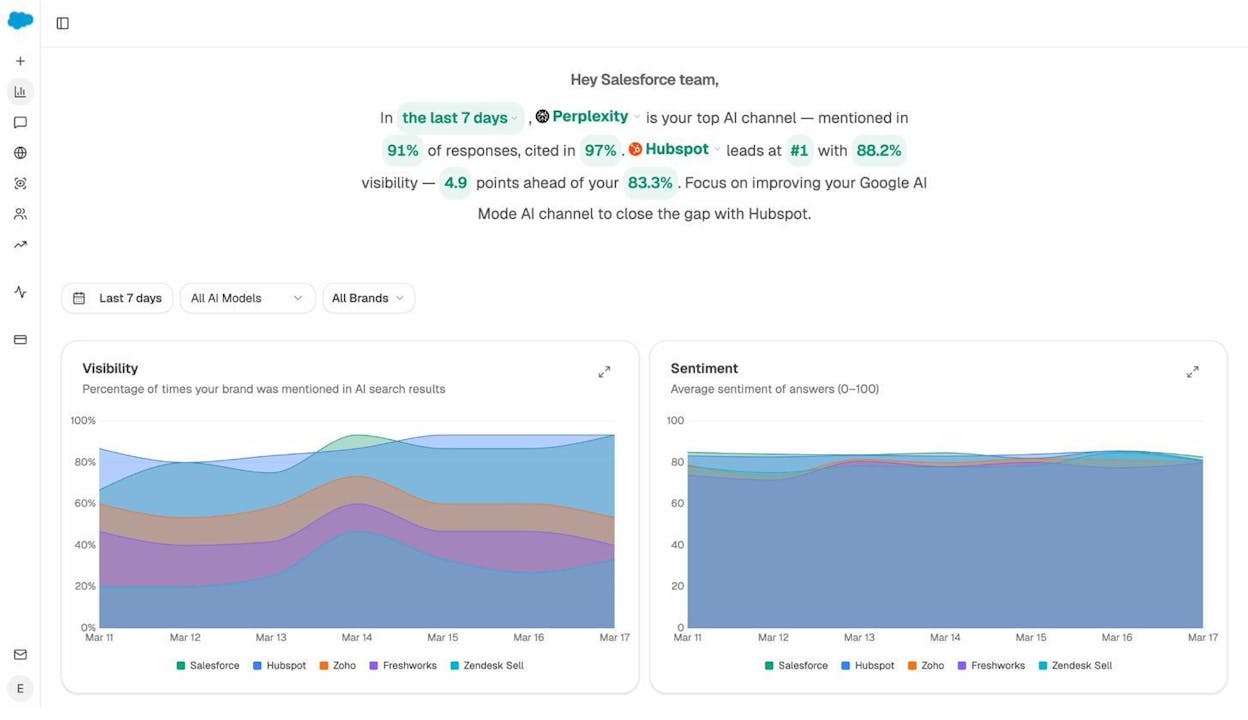
Analyze AI is purpose-built for this. Its Overview dashboard gives you a snapshot of your brand’s AI visibility, sentiment, and competitive position across ChatGPT, Perplexity, Gemini, and other AI models.
Research the prompts that matter in your industry
In Google, you research keywords. In AI search, you research prompts — the questions people ask AI platforms.
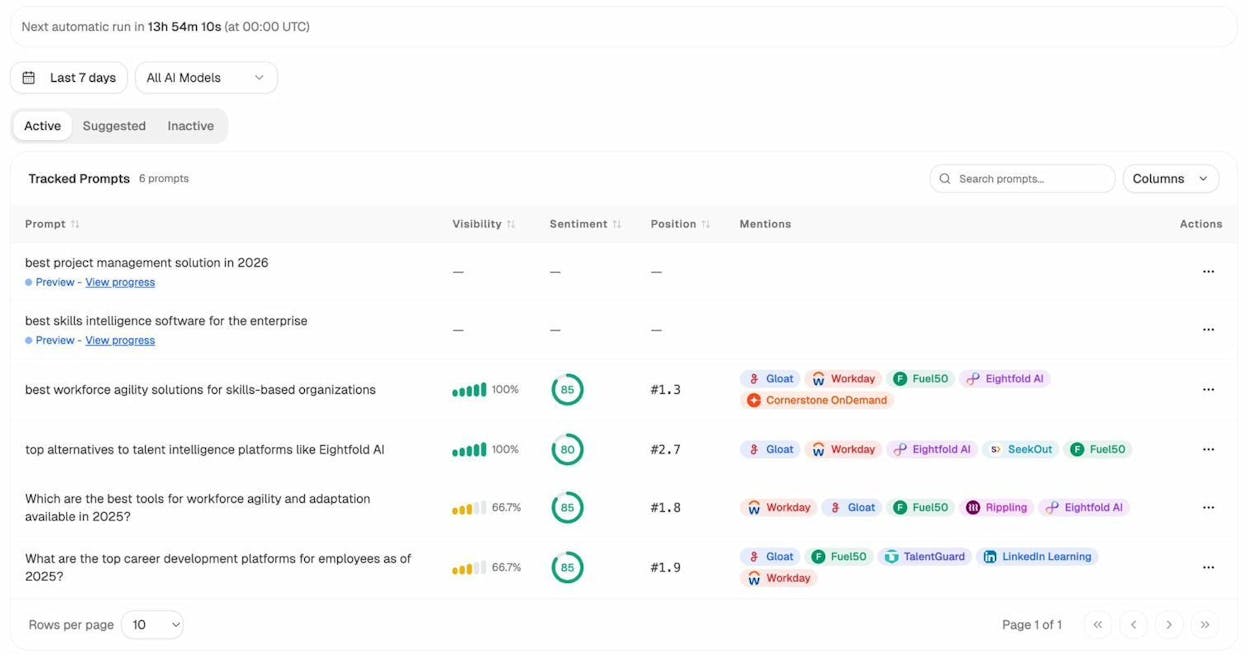
Analyze AI’s Prompts dashboard lets you track specific prompts, see which brands get mentioned, your position in the response, and the sentiment of each mention. It also suggests new prompts to track based on your industry and competitors.
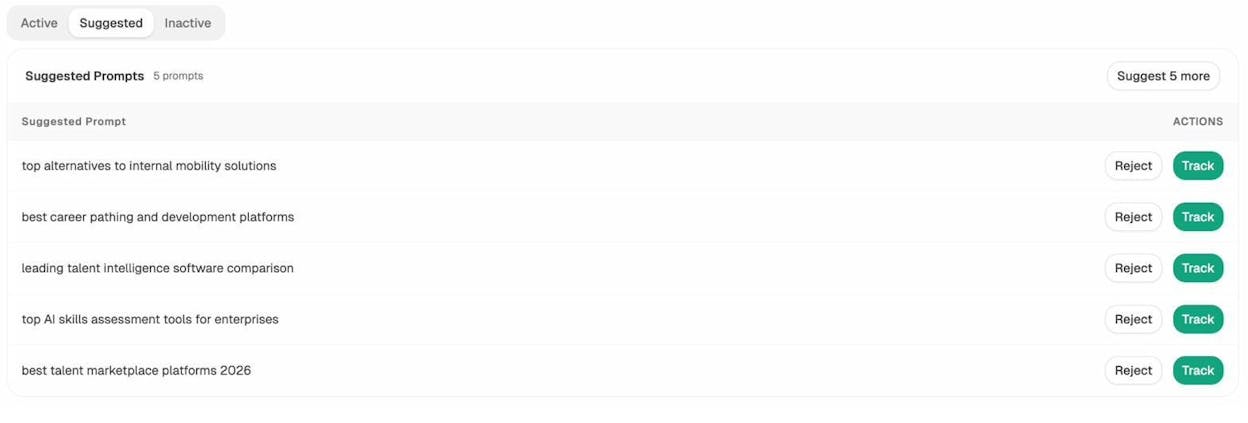
The Suggested Prompts tab surfaces prompts you may not have thought of — ones where your competitors already appear and you do not.
You can also run ad hoc searches to instantly check whether your brand appears in AI responses for any question, without needing to set up tracking first.
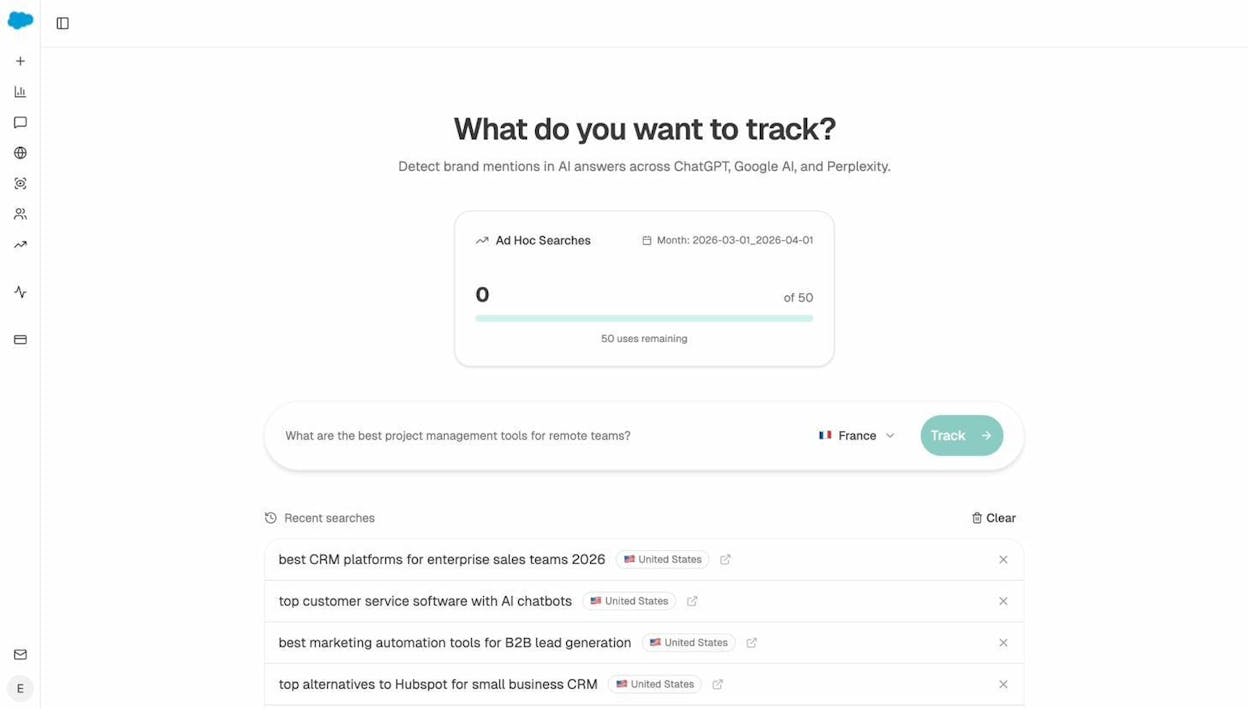
This is the AI search equivalent of typing a keyword into Google to see where you rank. Except here, you are checking if ChatGPT or Perplexity even mentions you at all.
Analyze which content gets cited by AI
Understanding what AI platforms cite as sources is critical. Analyze AI’s Sources dashboard shows you every URL and webpage that AI platforms reference when answering questions in your industry. You can filter by time period, AI model, or brand to see which content types get cited most.
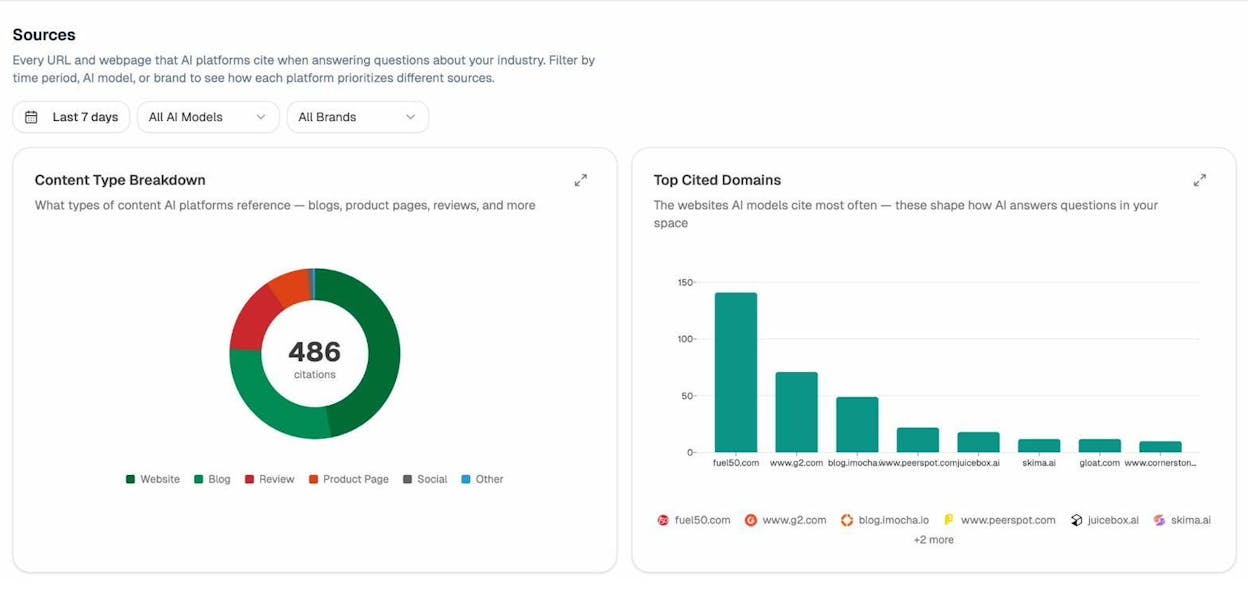
This data tells you what type of content to create more of. If AI models consistently cite blog posts over product pages in your space, that is a signal to invest more in your blog.
Further reading:
Study your competitors in AI search
In traditional SEO, you analyze competitor backlinks and rankings. In AI search, you analyze which competitors get mentioned alongside your brand in AI responses.
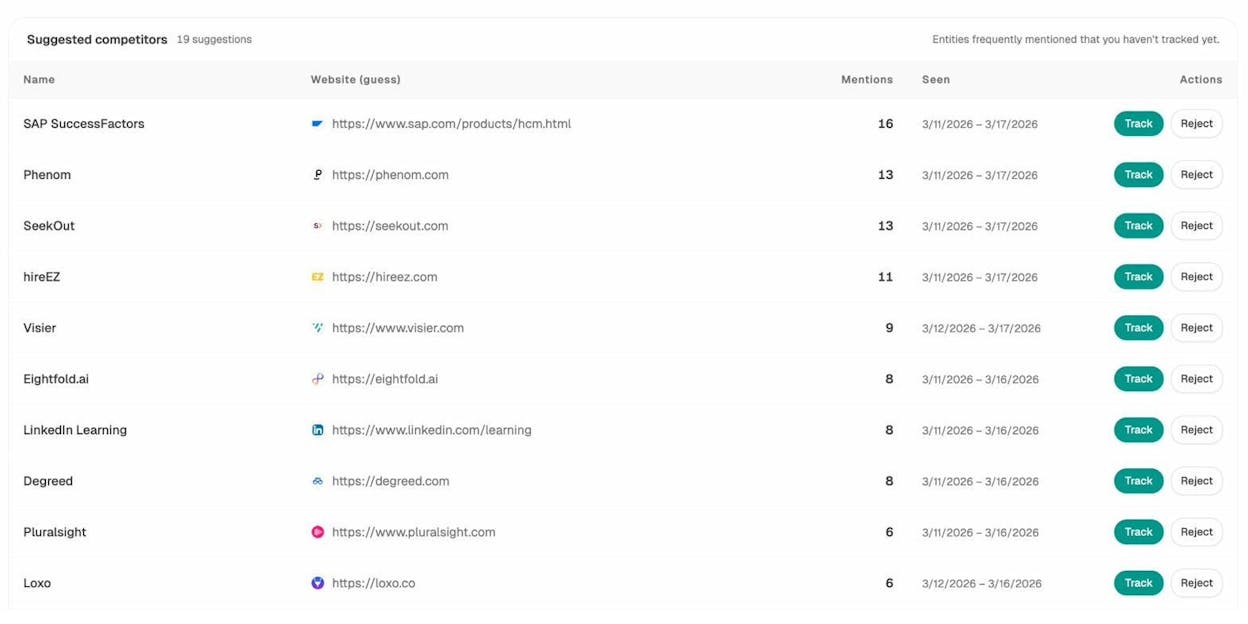
Analyze AI’s Competitors dashboard shows you suggested competitors — entities that frequently appear in the same AI responses as your brand. You can track them to monitor how their visibility compares to yours over time.
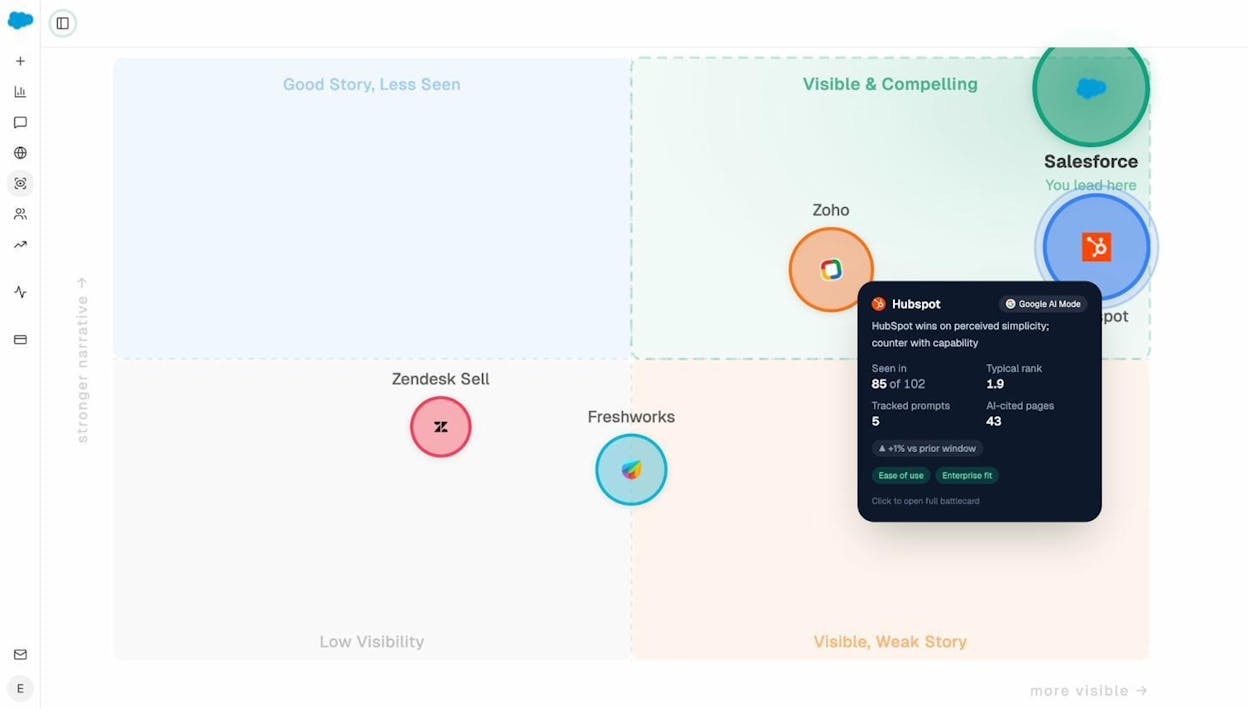
The Perception Map takes this a step further. It plots you and your competitors on a 2x2 matrix based on visibility (how often you are mentioned) and narrative strength (how positively you are described). This helps you identify where you lead and where you have gaps to close.
Track AI-referred traffic to your website
Knowing you are mentioned in AI responses is valuable. Knowing that those mentions drive actual traffic to your site is even more valuable.
Analyze AI’s AI Traffic Analytics dashboard tracks visitors arriving from AI platforms like ChatGPT, Perplexity, Claude, and Gemini. You can see which AI sources send the most traffic, how those visitors behave (engagement, bounce rate, session time), and which pages they land on.
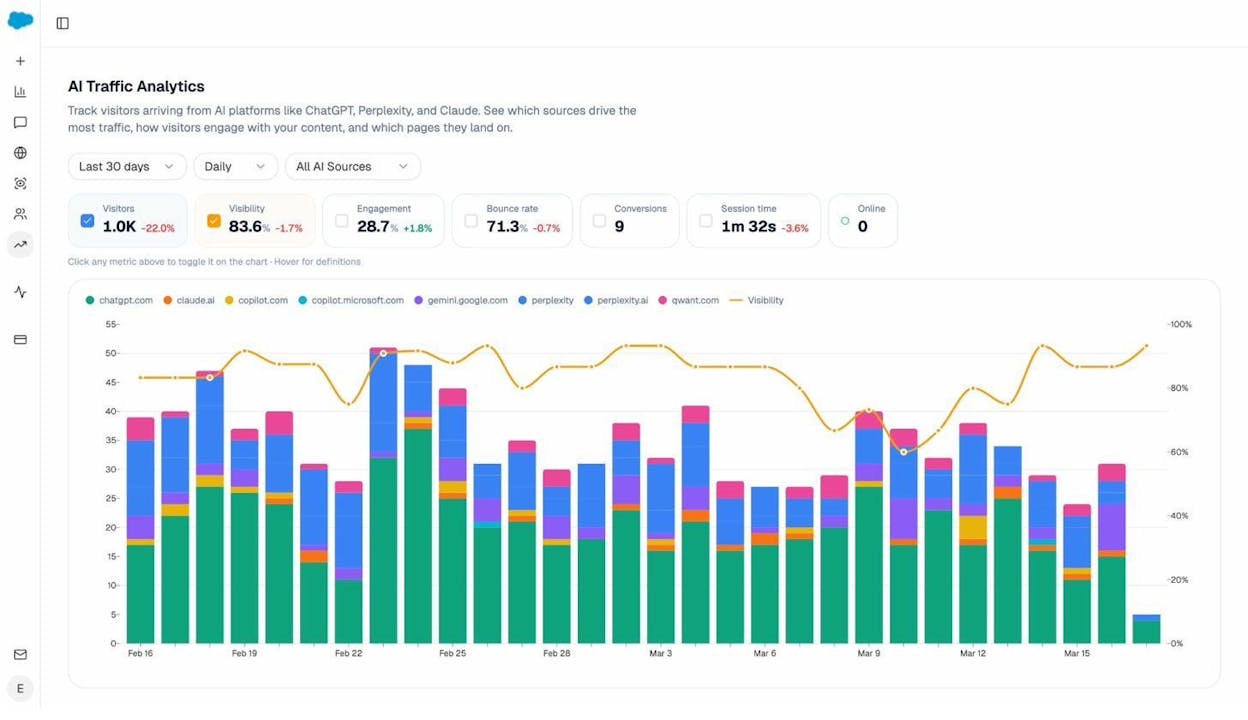
The Landing Pages report shows exactly which pages receive AI-referred traffic, how visitors interact with them, and which ones are also cited by AI platforms.
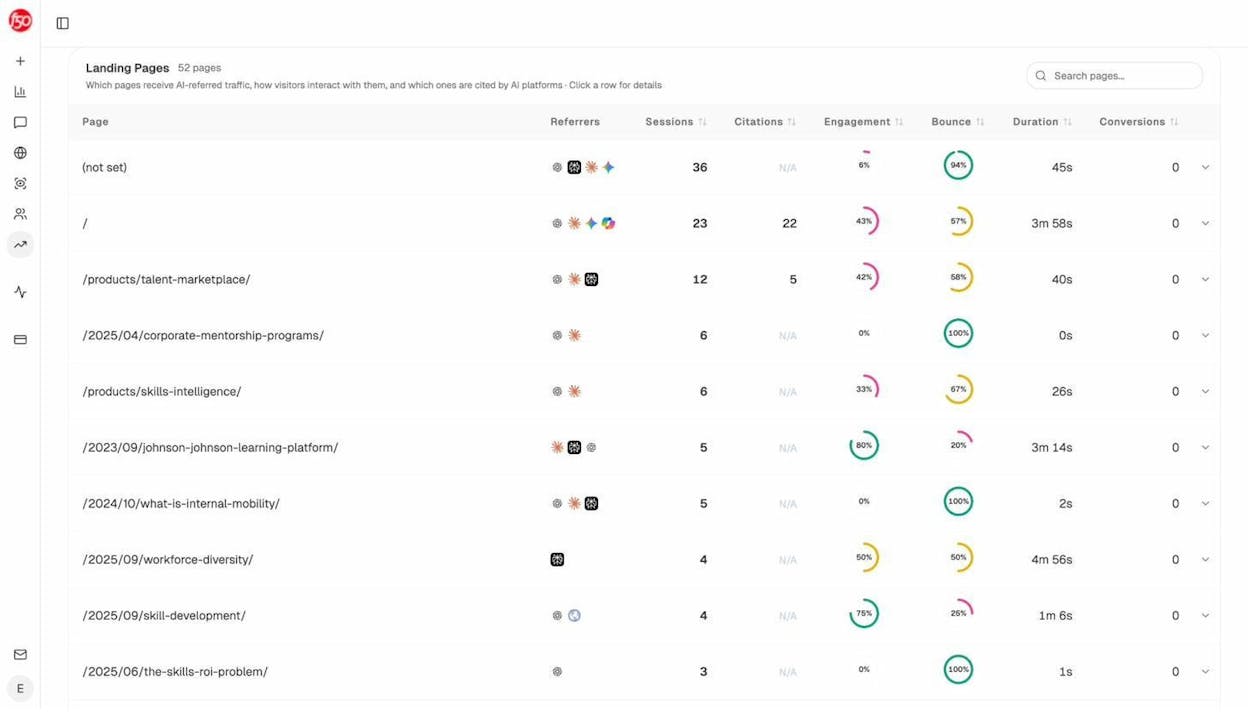
This is where AI search experience connects back to traditional SEO. If you see that certain types of pages consistently attract AI traffic — say, in-depth comparison guides or data-driven studies — you can double down on producing more content in that format.
Stay informed with automated AI visibility reports
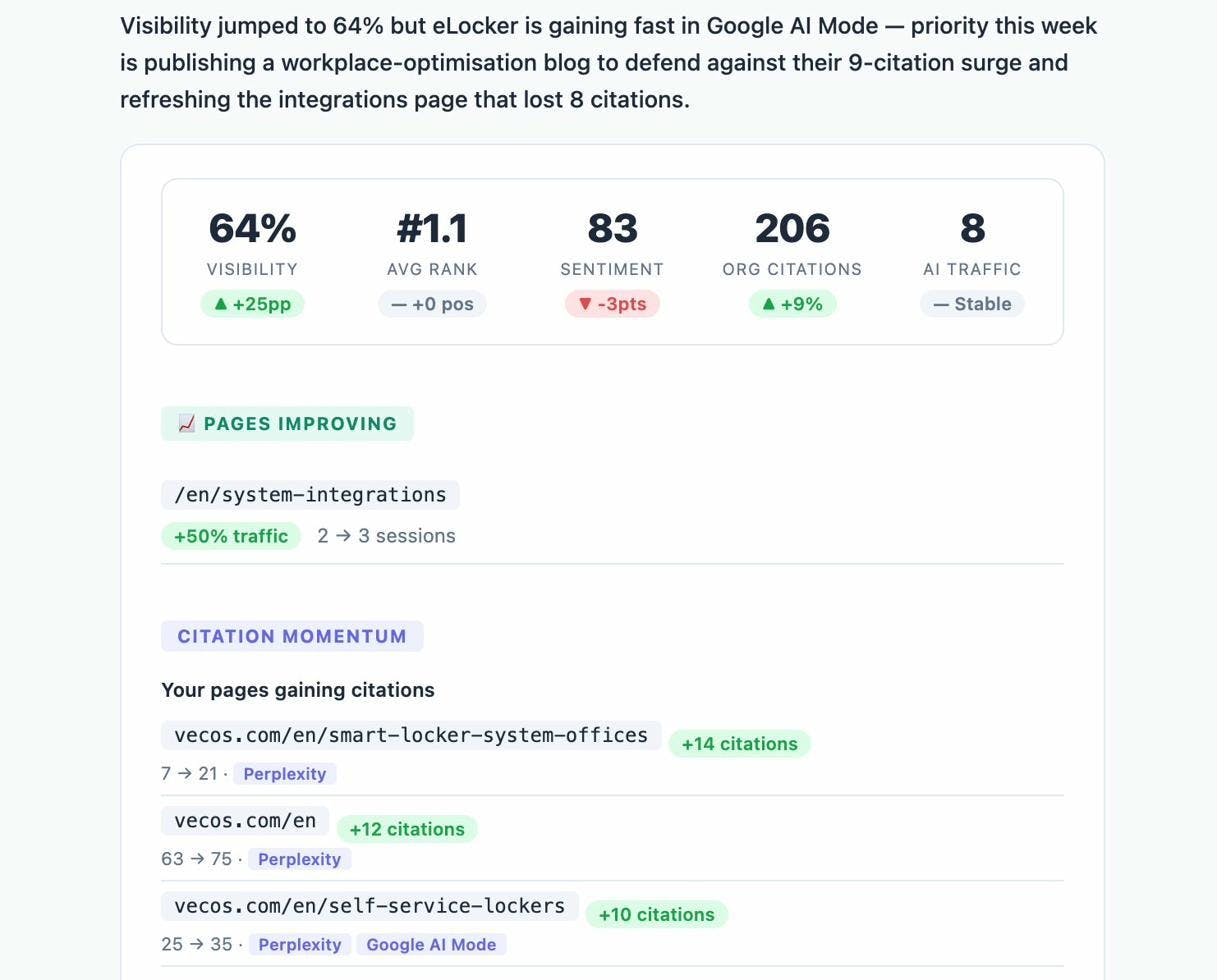
You do not need to log in every day to stay on top of your AI search performance. Analyze AI sends weekly email digests summarizing your brand’s AI visibility changes, competitor movements, and new prompt opportunities.
Build your SEO portfolio
Here is the problem every aspiring SEO faces: clients and employers want proof you can deliver results, but you need work to generate those results.
The solution is to create your own opportunities. Here are four ways to build a portfolio before anyone is willing to pay you.
Personal projects
The easiest way to start is to build your own website. Buy a domain, set up a simple WordPress or Ghost site, and start optimizing it for search engines.
This is your sandbox. You can experiment with keyword research, on-page optimization, internal linking, and content strategy without risking anyone else’s business. You will make mistakes — and that is the point. Every mistake teaches you something that theory alone cannot.
Even experienced SEOs maintain personal sites for testing. It is one of the best ways to validate new strategies before applying them to client work.
Here is what to do:
-
Pick a niche you know something about. Passion helps you stick with it during the months where traffic is low.
-
Do keyword research using the process outlined above. Find 10-20 topics with search demand and low competition.
-
Publish high-quality content. Not 500-word summaries — detailed, useful guides that are better than what currently ranks.
-
Track your rankings. Use the Analyze AI Keyword Rank Checker and Google Search Console to monitor progress.
-
Document your results. Take screenshots of traffic growth, ranking improvements, and before/after metrics. This becomes your portfolio.
While you are at it, set up Analyze AI on your personal site too. Track which AI platforms mention your content and which pages get cited. This gives you AI search experience alongside your traditional SEO experience — a combination very few practitioners have right now.
Skill exchanges
Skill exchanges are underrated. The idea is simple: you offer SEO work to someone in exchange for something you need.
Platforms like Skill Harbour let you post what you need and what you offer. Maybe a personal trainer at your gym needs help ranking their website, and in return they give you a few training sessions. Maybe a photographer needs on-page optimization and can shoot product photos for your personal project.
Because the other party is not investing cash, they are more likely to give you a chance even if your portfolio is thin. And the work you do for them becomes a case study for future clients.
Charity and nonprofit work
Charities and nonprofits almost always need help with their websites but rarely have the budget to hire an SEO agency. Volunteering your skills is a win for both sides.
Search for nonprofits in your area and evaluate their websites. Look for obvious SEO opportunities — missing meta descriptions, slow page speed, no keyword strategy. Then reach out and offer to help. You can use the Analyze AI Website Traffic Checker and Website Authority Checker to quickly assess a nonprofit’s current search performance before you reach out.
![[Screenshot: Analyze AI Website Traffic Checker showing estimated traffic for a nonprofit site]](https://www.datocms-assets.com/164164/1776704972-blobid18.png?auto=format,compress&w=1248&fit=max)
The advantages here are real: you get hands-on experience, a portfolio piece, and often a glowing testimonial. Some of the best SEOs I know started their careers by volunteering for causes they cared about.
Internships
If you prefer structured learning, look for internship programs at SEO agencies. Many agencies hire junior-level SEOs and provide on-the-job training. These positions expose you to a variety of websites, industries, and challenges that you would not encounter working on a single personal project.
The trade-off is that internships are sometimes unpaid or underpaid. But the experience — working on real client projects, learning from senior practitioners, seeing how an agency prioritizes tasks — is hard to replicate on your own.
Agency or in-house junior roles
Some agencies hire entry-level SEOs without requiring years of experience. You will start at the bottom, handling repetitive tasks like keyword research, content audits, and reporting. But every task teaches you something, and most agencies promote from within.
In-house roles are harder to land without experience, but they do exist — especially at startups that need someone to own SEO from scratch. If you can show a personal project with real traffic growth, you will stand out from other applicants.
Continuing education and staying up to date
SEO changes constantly. Google ships hundreds of algorithm updates per year. New SERP features appear and disappear. AI search adds an entirely new dimension to visibility.
The best SEOs treat learning as a permanent habit, not a phase. Here is how to stay current:
Follow the right blogs and newsletters
Not all SEO content is created equal. Prioritize sources that publish original research, test things themselves, and share real data. Some of the best include:
-
Google Search Central Blog — Official announcements about algorithm updates and best practices.
-
Analyze AI Blog — Covers both SEO strategy and AI search visibility with data-driven insights.
-
Search Engine Land — Industry news and analysis.
-
Moz Blog — Beginner-friendly explanations of SEO concepts.
Listen to SEO podcasts
Podcasts let you learn while commuting, exercising, or doing mundane tasks. Many feature interviews with practitioners who share specific strategies and results. Look for shows that focus on tactics rather than generalities.
Join SEO communities
Communities on Slack, Reddit (r/SEO, r/bigseo), and X (formerly Twitter) are where practitioners share real-time observations about algorithm changes, test results, and industry shifts. “SEO Twitter” in particular is where many ranking changes are first discussed and debated.
Track AI search developments
AI search is moving fast. New models launch regularly. Google is rolling out AI Overviews to more queries. Understanding these shifts as they happen — not months later — gives you an edge.
Set up Analyze AI’s weekly email digests to get automated updates on your brand’s AI visibility. Follow AI search research like Analyze AI’s studies on what triggers AI Overviews and how LLMs cite sources to stay ahead of the curve.
Invest in courses and certifications
Structured courses help you fill knowledge gaps systematically. Google offers a free SEO Fundamentals course through Skillshop. HubSpot Academy has free certifications in content marketing and inbound marketing. And several paid courses go deeper into specific topics like technical SEO or link building.
The key is to choose courses that require you to do real work — not just watch videos and answer quizzes.
Build AI search experience alongside traditional SEO
The biggest mistake aspiring SEOs can make right now is treating AI search as a separate discipline to learn later. It is not. It is an extension of the same principles — helpful content, strong authority, clear structure — applied to a new distribution channel.
Here is a practical way to build both skill sets simultaneously:
-
Build a personal website and optimize it for Google using the fundamentals covered above.
-
Set up Analyze AI to track your brand’s mentions across ChatGPT, Perplexity, and Gemini.
-
Research prompts in your niche using Analyze AI’s Suggested Prompts and Ad Hoc Searches to understand what people are asking AI platforms.
-
Create content that answers those prompts comprehensively. Structure it clearly, cite original data, and keep it updated.
-
Track your results on both channels. Use Google Search Console for organic search and Analyze AI for AI search. Look for patterns in which content performs well on both.
-
Study the Sources data in Analyze AI to see what types of content get cited by AI models in your industry, then create more of it.
The practitioners who can show results in both traditional search and AI search will be the most in-demand SEOs over the next several years. Starting now — even with a small personal project — puts you ahead of the vast majority of the market.
Final thoughts
Gaining SEO experience is not about memorizing algorithms or mastering every tool. It is about understanding how search engines work, practicing the fundamentals on real websites, and staying curious as the landscape evolves.
Start with keyword research and on-page optimization. Build a personal project. Volunteer for a charity or trade skills with someone who needs SEO help. Document your results and build your portfolio one case study at a time.
And do not ignore AI search. It is not a trend. It is a permanent shift in how people discover information and make buying decisions. The sooner you start tracking and optimizing for it, the further ahead you will be.
If you are ready to start building AI search experience, you can explore Analyze AI’s free tools — including the Keyword Generator, SERP Checker, Keyword Difficulty Checker, and Broken Link Checker — to get started with SEO today. Then set up AI search tracking with Analyze AI to see where your brand stands across the AI platforms that are reshaping search.

Ernest

Ibrahim


