



Summarize this blog post with:


In this article, you’ll learn what search engine marketing actually is, why most published definitions are now incomplete, and how to run campaigns that pull qualified traffic from Google’s paid results, its organic results, and the AI engines that have started to sit on top of both. By the end, you should be able to set up a paid campaign, decide which keywords belong in organic instead, and extend the same playbook into ChatGPT, Perplexity, Google AI Mode, and Copilot.
Table of Contents
What is search engine marketing?
Search engine marketing (SEM) is the practice of getting traffic from search engines through both paid ads and organic listings.
Some people use SEM as a synonym for paid search only. That definition was already narrow, and in 2026 it leaves you blind to two-thirds of where your buyers are looking. A complete SEM strategy now covers three channels:
-
Paid search, where you pay for placement in the ads section of the SERP.
-
Organic search (SEO), where you earn placement in the regular results.
-
AI search visibility, where you earn mentions and citations inside AI-generated answers from ChatGPT, Perplexity, Gemini, Google AI Mode, and Copilot.
![[Screenshot: A Google SERP for a commercial keyword like “crm software” with the paid results section, the organic listings, and the AI Overview block all clearly labeled.]](https://www.datocms-assets.com/164164/1777922913-blobid1.png?auto=format,compress&w=1248&fit=max)
The reason all three matter is straightforward. AI Overviews now appear on roughly 20.5% of all SERPs, and that share is growing. They sit above both ads and organic results for most informational queries. If you only buy Google Ads, you’re competing for a shrinking slice of the page. If you only do SEO, you’re missing the channel that ships qualified traffic in days, not months. If you ignore AI search, you’re invisible at the moment buyers are getting their shortlist generated for them.
For the rest of this guide, we’ll start with the paid side, because that is where most readers come into SEM, and then layer in how to do the same work for organic and AI search.
The three channels of modern SEM, side by side
Before we get into tactics, here is how the three channels compare on the dimensions that actually drive your decisions:
|
Paid search |
Organic search (SEO) |
AI search visibility |
|
|---|---|---|---|
|
Speed to first traffic |
Minutes |
3 to 9 months |
Weeks once you rank or are cited |
|
Cost per click |
You pay each click |
$0 per click |
$0 per click or citation |
|
Targeting control |
High (keywords, location, device, audience) |
Medium (keyword and intent only) |
Low (you influence prompts, not target them) |
|
Sustainability if you stop investing |
Traffic stops same day |
Traffic decays slowly |
Citations decay as your content ages |
|
Use case |
High-intent keywords with proven conversion |
Top, middle, and bottom-of-funnel discovery |
Research and comparison queries |
The smart move is rarely “pick one.” It’s deciding which keywords belong in which channel, and using each one for what it’s good at.
How Google Search Ads work
In Google Ads, you pick the search queries you want to show up for, write the ad, and tell Google the maximum you’ll pay for a click. Each time someone searches one of your keywords, Google runs an auction in the background and decides which ads to show.
![[Screenshot: A Google search results page for a query like “running shoes” with the four sponsored ad slots highlighted at the top.]](https://www.datocms-assets.com/164164/1777922919-blobid2.png?auto=format,compress&w=1248&fit=max)
If your ad wins a slot and the searcher clicks, Google charges you up to your maximum bid for that click. This is the pay-per-click (PPC) model. You only pay for clicks, not for the impression itself.
Inside Google Ads, you can adjust:
-
Daily budget. The cap on what you spend per day, on average.
-
Bidding strategy. Either a manual bid per keyword, or one of Google’s automated strategies that optimize for clicks, conversions, or return on ad spend.
-
Ad creative. Headlines, descriptions, sitelinks, callouts, and other assets that appear in the ad.
-
Keywords and match types. Which queries trigger your ad, and how loosely Google can interpret them.
-
Targeting. Locations, languages, devices, and audiences (including remarketing).
-
Schedule. Days and hours when your ads are eligible to show.
Most underperforming campaigns are not failing because of bad creative. They are failing because two or three of these settings are wrong at the same time.
How to win a Google Ads auction
The auction is not “highest bidder wins.” Google decides which ad to show and in what order using five inputs:
-
Your bid. The most you’re willing to pay per click.
-
Ad quality. A measure of how relevant and useful your ad is to the query.
-
Ad rank thresholds. Minimum quality you need to hit to show in a given position.
-
Ad asset impact. Whether your sitelinks, callouts, and other extensions are likely to add value for the searcher.
-
Search context. Who is searching, where they are, on what device, and at what time.
The practical takeaway is that a more relevant ad with a lower bid can beat a weaker ad with a higher bid. You don’t out-spend the auction. You out-relevance it.
This is also why your landing page matters. Google evaluates whether the page you’re sending people to actually delivers what the ad promised. If it doesn’t, your quality score drops, your costs go up, and you stop winning slots you used to win.
Six rules for running SEM campaigns that actually pay back
These are the moves that separate accounts that quietly compound from accounts that quietly bleed budget.
1. Pick keywords by intent and conversion potential, not search volume
The instinct is to chase volume. The better instinct is to chase intent.
For a paid campaign, the keywords that earn back the spend almost always sit at the bottom of the funnel. Think “[product category] software,” “[competitor] alternative,” “[product] pricing,” and “buy [product] online.” These signal that the searcher is in evaluation or purchase mode, not research mode.
For each candidate keyword, weigh four things:
-
Business value. Does this query lead to a sale, or to a casual browser?
-
Search intent. Are they trying to learn, compare, or buy?
-
Volume and competition. Higher volume usually means higher CPC and more sophisticated competitors.
-
Cost per click. What you’ll actually pay each time someone clicks.
A high-CPC, low-volume keyword can be your strongest line item if its intent matches the moment your buyer says yes. A high-volume, low-CPC keyword can drain you for months without producing a single qualified lead.
To build your initial keyword list, you can pull seed ideas from Google Ads Keyword Planner. It’s free and it’s accurate enough for paid forecasting, though it groups close variants together and will under-report the diversity of long-tail terms.
![[Screenshot: Google Ads Keyword Planner interface showing seed keywords entered, a list of related keyword ideas, and columns for monthly searches, competition, and top of page bid range.]](https://www.datocms-assets.com/164164/1777922922-blobid3.png?auto=format,compress&w=1248&fit=max)
If you want a wider net and more granular volume data, the Analyze AI Keyword Generator and Keyword Difficulty Checker will surface ideas Keyword Planner groups together, and tell you whether ranking organically is a realistic alternative. Our SERP Checker shows you exactly who you’d be competing against in both paid and organic results before you bid.
How to do the same research for AI search
In AI search, the unit of demand is not a keyword. It’s a prompt. People don’t type “best CRM” into ChatGPT, they type “what’s the best CRM for a 12-person sales team selling to mid-market construction companies.”
You research prompts the same way you research keywords. You start by listing the questions your buyers actually ask, then you watch which prompts AI engines are answering on your topic, and which competitors get named in those answers.
The Prompt Discovery feature in Analyze AI suggests prompts buyers are likely running based on your category and competitors, so you don’t have to guess. The AI Search Explorer lets you run any prompt against ChatGPT, Perplexity, Google AI Mode, and Copilot in parallel, and see exactly who gets cited.
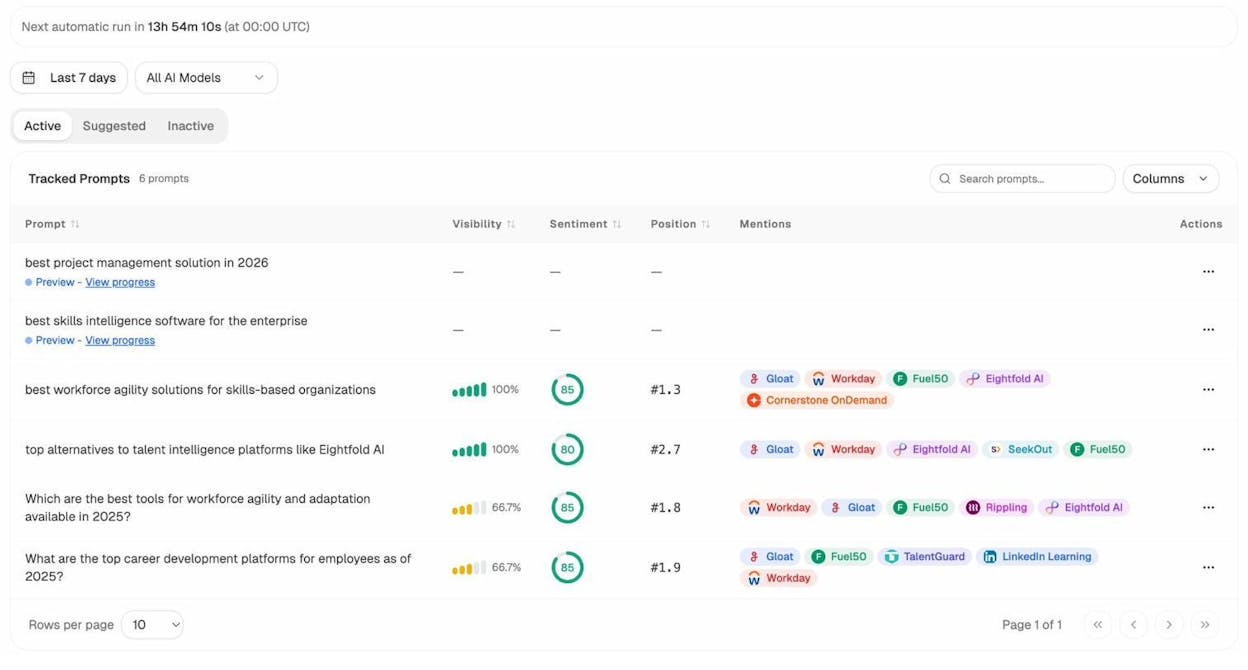
Once you’ve identified a prompt where your buyers are active and your brand is missing, you have the AI search equivalent of a high-intent keyword to target. Read How to Rank on ChatGPT and How to Rank on Perplexity for the playbook.
2. Constrain your campaigns before you scale them
Google’s defaults are designed to spend your money. Broad match keywords, automated bidding, and “expanded” targeting all push your ad in front of more people, which is not the same as more qualified people.
Three constraints will save you most of the budget you’d otherwise leak:
Use phrase match and exact match by default. Reserve broad match for keywords where you’ve already proven the conversion path. With phrase match, your ad shows for searches that include your keyword’s meaning. With exact match, it shows for searches that match the keyword’s intent very closely. Both give you tighter control than broad.
![[Screenshot: A side-by-side example showing the same keyword “running shoes” set as broad match, phrase match, and exact match, with examples of which queries would trigger an ad in each case.]](https://www.datocms-assets.com/164164/1777922927-blobid5.png?auto=format,compress&w=1248&fit=max)
Build a negative keyword list from day one. Negatives prevent your ad from showing when irrelevant words appear in the query. If you sell premium running shoes, “free running shoes” and “diy running shoes” should be negatives before your campaign goes live, not after.
Tighten your geography and schedule. Most B2B campaigns waste money showing ads at 2 AM on weekends. Most local service businesses waste money showing ads to other cities. Set your targeting before you optimize anything else.
Start with a budget that lets you collect 50 to 100 clicks per ad group within two weeks. Anything less and you won’t have enough data to optimize. Anything more and you’ll over-commit before you’ve learned anything.
3. Match your campaign structure to your keyword themes
A Google Ads account has four levels. There are campaigns, then ad groups, then ads, then keywords. The way you organize these decides whether your quality scores climb or stay stuck.
The pattern that works is grouping keywords by theme, then matching each theme with ad copy and a landing page that speak directly to that theme.
![[Screenshot: A diagram showing one campaign with three ad groups, each ad group containing a tight cluster of related keywords, two ad variants written specifically for that cluster, and a dedicated landing page.]](https://www.datocms-assets.com/164164/1777922932-blobid6.png?auto=format,compress&w=1248&fit=max)
If you sell project management software and you’re bidding on “project management for agencies,” “project management for construction,” and “project management for software teams,” each of those should be its own ad group. Each ad group should have ads written for that specific buyer, pointing to a landing page that speaks to that specific buyer.
If you have hundreds of keywords, ChatGPT or Claude can cluster them into themes for you in a few minutes. Paste the list, ask for groupings by intent and topic, and refine from there.
4. Keep your ads, your landing pages, and your AI answers consistent
Google rewards consistency between your ad and your landing page because it’s a proxy for user satisfaction. Searchers reward it because it’s the difference between “this is what I wanted” and “I’ve been baited.”
Three rules:
-
Show ads only for what you actually sell. Out-of-stock products and unavailable services should be paused, not advertised.
-
Send each ad to the most specific page that delivers on its promise. “Running shoes for plantar fasciitis” should not land on the homepage. It should land on a page about running shoes for plantar fasciitis.
-
Make the offer in the ad visible above the fold on the landing page. If you advertised a 20% discount, the discount should be the first thing the visitor sees.
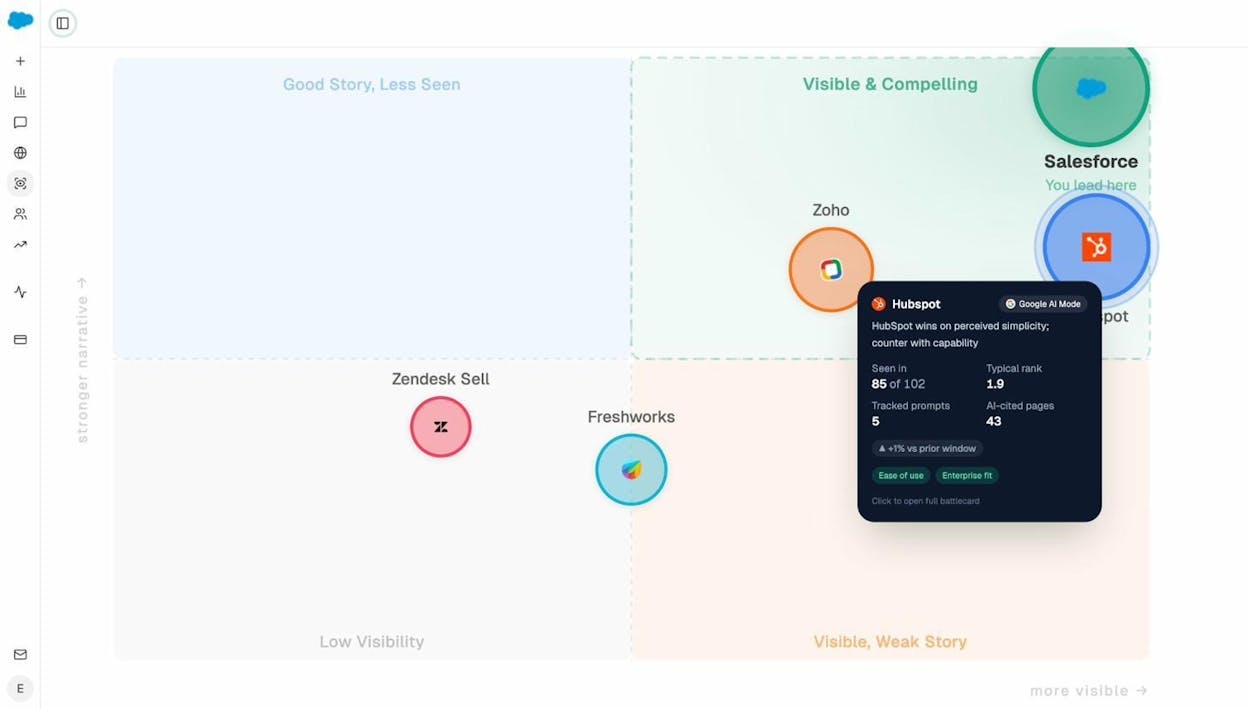
The same consistency rule now applies to AI search, just with one more surface. When AI engines summarize your category, they pull from your site to support what they say. If your homepage promises one positioning and your blog suggests another, you’ll either get cited inconsistently or skipped over for a competitor whose story is tighter.
Analyze AI’s AI Sentiment Monitoring shows you how AI engines actually describe your brand across hundreds of prompts, so you can spot drift between what you say about yourself and what AI says about you.
5. Use AI to draft and stress-test your ad copy
Writing 15 ad variants by hand for a campaign with eight ad groups is a slow way to spend an afternoon. AI tools handle the first draft well.
Tools like ChatGPT or Claude can produce a starting set of headlines and descriptions when you give them the keyword theme, your value proposition, and a rough word count. You then keep the lines that match your voice and rewrite the ones that sound generic.
![[Screenshot: ChatGPT generating five Google Ads headline variants for a B2B project management software campaign, with the prompt visible at the top.]](https://www.datocms-assets.com/164164/1777922941-blobid8.png?auto=format,compress&w=1248&fit=max)
The free Google Ads Copy Generator from Analyze AI does this in one click, and is tuned specifically for Google Ads character limits.
A reminder, though. AI gets you the first 70%. The last 30%, the part that makes a click-worthy ad, is still yours.
6. Run campaigns iteratively, not perfectly
Paid search is a system, not a project. You don’t launch the perfect campaign. You launch a reasonable campaign, you measure, and you change one thing at a time.
The discipline that separates strong accounts from weak ones is small, repeated changes. Every two weeks, look at:
-
Which keywords are spending the most and converting the least. Pause or move them to their own ad group with a tighter ad.
-
Which ads have the highest click-through rate. Make those your control and test new variants against them.
-
Which landing pages have the highest bounce rate. The ad-to-page promise is broken on those.
-
Which days, hours, and locations convert at the highest rate. Bid more aggressively there.
Treat every campaign as a hypothesis you’re sharpening, not a deliverable you’re finishing.
How to extend the same playbook into AI search
Most of the discipline that makes paid search work also makes AI search work. You research demand, you organize content around clusters of intent, you stay consistent across surfaces, and you iterate. The mechanics are different, but the muscle memory transfers.
Here is how each step maps:
|
Paid search step |
AI search equivalent |
|---|---|
|
Research keywords with Keyword Planner |
Discover prompts buyers actually ask |
|
Bid on keywords in Google Ads |
Track prompts and optimize content for them |
|
Match ad copy to keyword themes |
Match site content to prompt clusters |
|
Measure clicks and conversions in Google Ads |
Measure visits and conversions in AI Traffic Analytics |
|
Spy on competitor ads in auction insights |
Track competitor citations across AI engines |
Three things to start with this week:
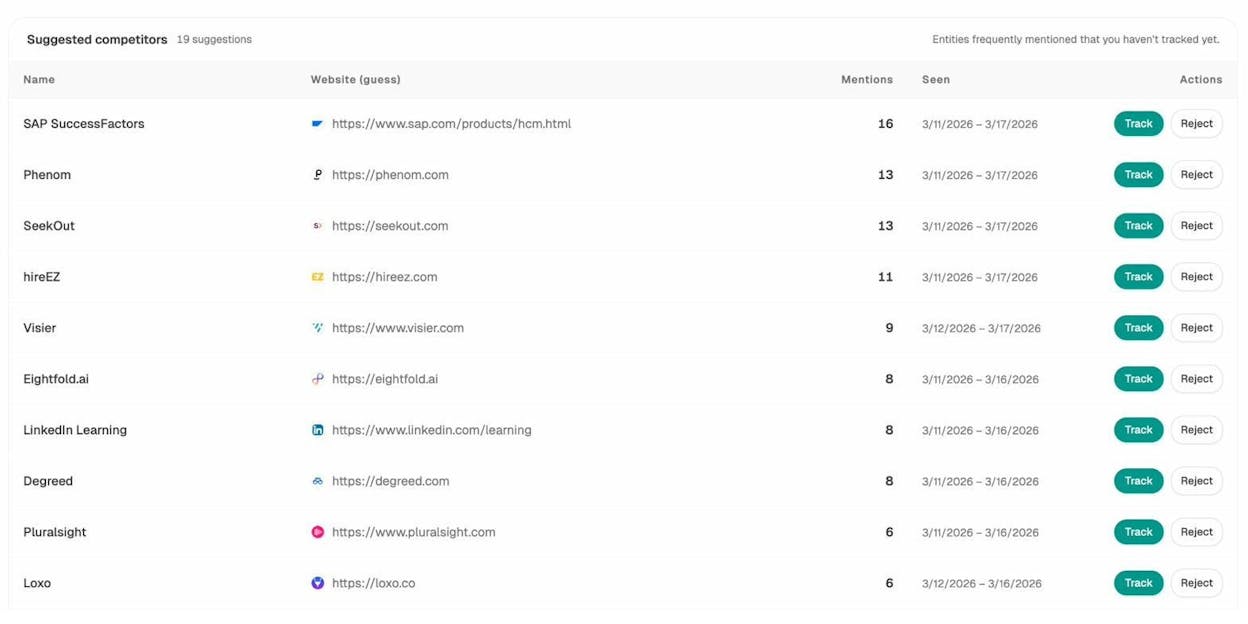
Find the prompts where your competitors win and you don’t. Pull the prompts your buyers are likely running, and look at which competitors get cited where you’re absent. Each gap is a content brief.
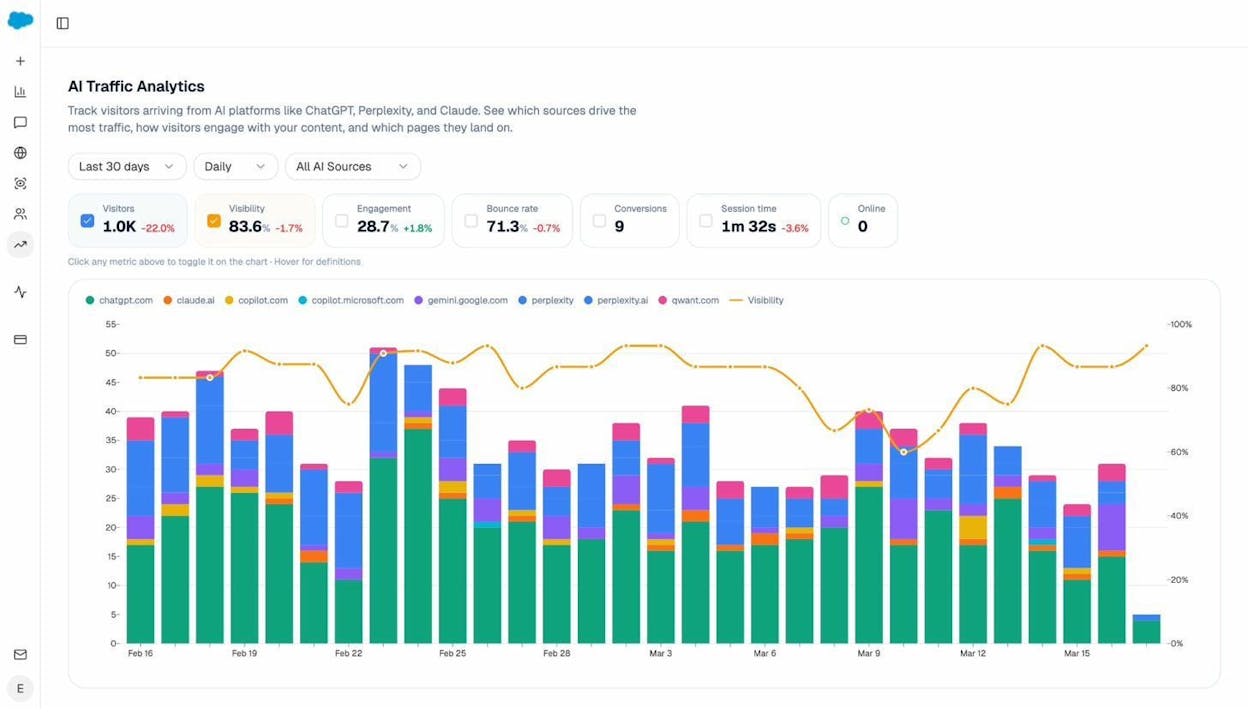
Watch which of your pages already pull AI traffic. Some of your content is probably already being cited. AI Traffic Analytics shows you which pages, from which engines, and what visitors do once they land. The patterns tell you what kind of content earns citations in your category, so you can produce more of it.
Test your visibility for the prompts that matter most. Run an ad hoc prompt search for the 10 queries closest to your buyer’s purchase decision, across ChatGPT, Perplexity, Google AI Mode, and Copilot. Where you’re missing, write the page that fills the gap. Where you’re cited, look at what you’re cited for and double down on that angle.
For a fuller walkthrough, see our guide to generative engine optimization and our breakdown of GEO vs SEO.
Tools to run modern SEM
The list below is what most teams actually need. You can run a competent program with a small subset of these.
For paid search:
-
Google Ads. Where you set up and run campaigns.
-
Google Ads Keyword Planner. Free keyword and forecast data inside Google Ads.
-
Analyze AI Google Ads Copy Generator. Free draft generator tuned to Ads character limits.
-
Google Trends. Free tool for spotting seasonality before you commit a budget.
For organic search:
-
Analyze AI Keyword Generator, Keyword Difficulty Checker, and SERP Checker. Free, for finding terms worth ranking for.
-
Keyword Rank Checker and Website Authority Checker. Free, for tracking whether your work is actually paying off.
-
Broken Link Checker. Free, for catching the small stuff before it costs you rankings.
For AI search:
-
Analyze AI Discover and Monitor. For finding the prompts that matter and tracking your visibility.
-
Analyze AI AI Traffic Analytics. For attributing visits and conversions to specific AI engines and landing pages.
-
Analyze AI Improve. For producing and optimizing content that earns citations.
Frequently asked questions
What’s the difference between SEM and SEO?
SEO is the practice of earning organic traffic from search engines. SEM is the broader practice that includes SEO, paid search, and now AI search visibility. SEO is one channel inside SEM, not a competitor to it.
What’s the difference between SEM and PPC?
PPC is a pricing model where you pay each time someone clicks your ad. PPC inside Google search is one part of SEM, but PPC also exists on social platforms and display networks that have nothing to do with search.
Is SEO still worth doing if AI Overviews keep growing?
Yes. The pages that get cited in AI Overviews are overwhelmingly pages that already rank well organically. Strong SEO is now also the foundation of strong AI search visibility. Read our SEO content strategy guide for the full reasoning.
Should I start with paid search or organic search?
If you need traffic this quarter, start with paid. If you need traffic that compounds for the next three years, start with organic. Most teams need both, in that order.
How do I measure SEM if some of my traffic comes from AI engines that don’t pass clean referrer data?
Most analytics tools under-attribute AI traffic because referrers are often stripped. A purpose-built tool like AI Traffic Analytics catches the visits that GA4 misses and tells you which engine sent them.

Ernest

Ibrahim


