



Summarize this blog post with:


In this article, you’ll learn what topical authority is, why it matters for both traditional SEO and AI search, how to measure it, and how to build it step by step so your site becomes the go-to resource in your niche.
Table of Contents
What Is Topical Authority?
Topical authority is an SEO concept where a website becomes the recognized expert on a specific topic by covering it comprehensively and in depth.
Instead of writing one article and hoping to rank for a single keyword, you cover every angle of a subject. The goal is for search engines (and now AI models) to associate your domain with that entire topic so that your content ranks more easily for every related query.
Here is a simple way to think about it. Say you want to rank for the keyword “email marketing.” Writing a single article targeting that phrase is not enough to compete. The topic is too broad, too competitive, and a single page cannot answer every question a searcher might have.
To build topical authority around email marketing, you would need content covering subtopics like:
-
“what is email marketing”
-
“email marketing best practices”
-
“email marketing tools”
-
“how to build an email list”
-
“email marketing vs social media marketing”
-
“email marketing automation”
-
“how to write email subject lines”
-
“email marketing metrics to track”
When your site covers all of these angles, links them together, and does it better than anyone else, search engines begin to treat your domain as the authority on email marketing. That is topical authority in action.
A Real-World Example
You can see topical authority at work in the SERPs every day. Search for a niche keyword like “mountain bike gifts” and you will notice something interesting: a small, focused cycling site with a low Domain Rating (DR 23) outranks Amazon (DR 96) for that term.
![[Screenshot: SERP results for “mountain bike gifts” showing a low-DR cycling site outranking Amazon]](https://www.datocms-assets.com/164164/1774889279-blobid1.png?auto=format,compress&w=1248&fit=max)
Why does this happen? Because the small site covers everything about mountain biking. Every article, every review, every guide on that domain is about bikes. Amazon sells everything from diapers to hard drives. It has more backlinks and a stronger domain, but it lacks topical depth in any single niche.
This is the core promise of topical authority: a focused site that covers a topic comprehensively can outrank larger, more established domains that spread their content thin.
Topical Authority vs. Domain Authority
These two concepts are related but different, and confusing them leads to bad strategy decisions.
|
Topical Authority |
Domain Authority |
|
|---|---|---|
|
What it measures |
Depth and breadth of content coverage on a specific topic |
Overall strength of a site’s backlink profile |
|
How it’s built |
Comprehensive content, internal linking, subject-matter expertise |
Earning backlinks from high-quality external sites |
|
Who controls it |
You (through content strategy) |
Partially you, partially determined by who links to you |
|
SEO tool metric? |
No official metric |
Yes (Moz DA, Ahrefs DR) |
|
Can a small site win? |
Yes, by going deep on a niche |
Harder, as backlink profiles take years to build |
The important takeaway: you can build topical authority faster than you can build domain authority. Content is within your control. Backlinks depend on others.
Why Is Topical Authority Important?
Topical authority matters because of how search engines have evolved. Google no longer matches keywords to pages. It matches topics to domains.
Here is why that shift matters for your site:
Search engines understand semantic relationships. Google uses semantic associations to connect topics together. When your site has 50 interlinked articles about project management, Google understands that your domain is deeply tied to that subject. When a new search query about project management appears, your site is more likely to surface as a relevant result, even if you have not written about that exact query.
Internal links compound your authority. Every piece of topically related content you publish creates an opportunity for internal linking. Those links help Google crawl and understand your site structure, and they pass authority between pages. A strong internal link network is one of the most reliable ways to improve rankings across an entire topic cluster.
You earn more backlinks naturally. Sites with comprehensive topic coverage attract more organic backlinks because other writers and publications see them as definitive resources. When someone needs to link to a source about email marketing, they are more likely to link to the site that covers the topic from every angle than one with a single, surface-level article.
It builds trust with your audience. Readers who find one helpful article on your site and then discover you have 20 more articles on the same topic are more likely to bookmark, subscribe, and return. That engagement sends positive signals to search engines, which reinforces your rankings.
It protects against algorithm updates. Sites with genuine topical authority tend to be more resilient during Google algorithm updates. When Google rolls out a core update, it often rewards sites that demonstrate real expertise and penalizes those that have thin or scattered content. Deep topic coverage acts as a buffer.
Why Topical Authority Now Matters for AI Search Too
Here is something most topical authority guides miss entirely: this concept is no longer just about Google.
AI search engines like ChatGPT, Perplexity, Claude, and Gemini are now answering the same questions your audience used to type into Google. And these AI models decide which sources to cite based on similar signals: depth of coverage, content quality, and perceived authority on a topic.
When ChatGPT recommends “the best project management software,” it pulls from sources it considers authoritative. If your site has one thin article about project management, it will not make the cut. But if your site is the definitive resource on that topic, with dozens of interlinked, in-depth articles, AI models are more likely to cite your content.
This is not speculation. Research on AI citation patterns shows that AI models favor sites with comprehensive, well-structured content on a given topic. The same depth that wins you topical authority in traditional SEO also makes your content more likely to be cited by LLMs.
At Analyze AI, we believe SEO is not dead. It is evolving. AI search is an additional organic channel, not a replacement for Google. Building topical authority helps you win in both channels simultaneously.
How Does Topical Authority Work?
No one outside Google’s engineering team knows the exact mechanics of how topical authority is scored. There is no public metric or confirmed ranking factor called “topical authority.”
But we know enough from Google’s own statements, patent filings, and observable ranking behavior to understand the core principles.
A Brief History of Google and Semantic Search
Google’s shift from keyword matching to topic understanding happened gradually over more than a decade:
-
2011 – Google announces the “Structured Search Engine” project to organize web information.
-
2012 – Google launches the Knowledge Graph to understand real-world entities and their relationships.
-
2013 – The Hummingbird algorithm overhauls search to rank content by relevance to a query, not just keyword matching. This is the moment topical authority becomes a real factor in rankings.
-
2015 – RankBrain introduces machine learning into search ranking, allowing Google to interpret queries it has never seen before.
-
2018 – The Medic update raises the bar for YMYL (Your Money or Your Life) content, emphasizing expertise, authority, and trustworthiness (E-A-T).
-
2019 – BERT launches, giving Google a much deeper understanding of language context and relationships between words.
-
2022 – Google updates E-A-T to E-E-A-T, adding “Experience” as a quality signal.
-
2023 – The Helpful Content Update makes site-wide quality signals a ranking factor, further rewarding topical depth.
The pattern is clear. With every update, Google moves further from keyword matching and closer to evaluating whether a site genuinely understands and thoroughly covers a topic.
E-E-A-T and Topical Authority
You cannot talk about topical authority without understanding E-E-A-T: Experience, Expertise, Authoritativeness, and Trustworthiness.
Google’s Quality Rater Guidelines state that the highest quality pages come from sites with a very high level of expertise, authority, or trustworthiness. Building topical authority directly contributes to the “Authoritativeness” signal in E-E-A-T.
Here is how the two connect:
-
Experience – Covering a topic thoroughly requires firsthand experience. Articles that include real examples, case studies, and original data demonstrate experience.
-
Expertise – A site with 50 in-depth articles on a topic clearly has subject-matter expertise, which individual thin pages cannot demonstrate.
-
Authoritativeness – When your site is the go-to resource on a topic and other reputable sites link to you, Google sees you as an authority.
-
Trustworthiness – Comprehensive, accurate content that cites credible sources builds trust with both users and search engines.
E-E-A-T is not a direct ranking factor in the way that backlinks or page speed are. It is a framework that informs Google’s ranking algorithms. But the practical implication is simple: sites that build genuine topical authority are more likely to score well on E-E-A-T signals.
How AI Models Evaluate Topical Authority
AI models do not use E-E-A-T directly, but they evaluate similar signals when deciding what to cite.
Large language models are trained on web data, and their training reflects the patterns of what authoritative content looks like. Sites that are frequently cited by other sources, that cover topics comprehensively, and that produce well-structured content are more likely to appear in AI-generated responses.
Additionally, AI search engines like Perplexity and ChatGPT with search actively crawl and index the web. When they encounter a site with deep topic coverage, well-organized content clusters, and strong internal linking, they are more likely to use that site as a citation source.
You can track how AI models perceive your brand and cite your content using Analyze AI’s citation analytics. The Sources dashboard shows exactly which URLs and domains AI models cite when answering questions in your industry.
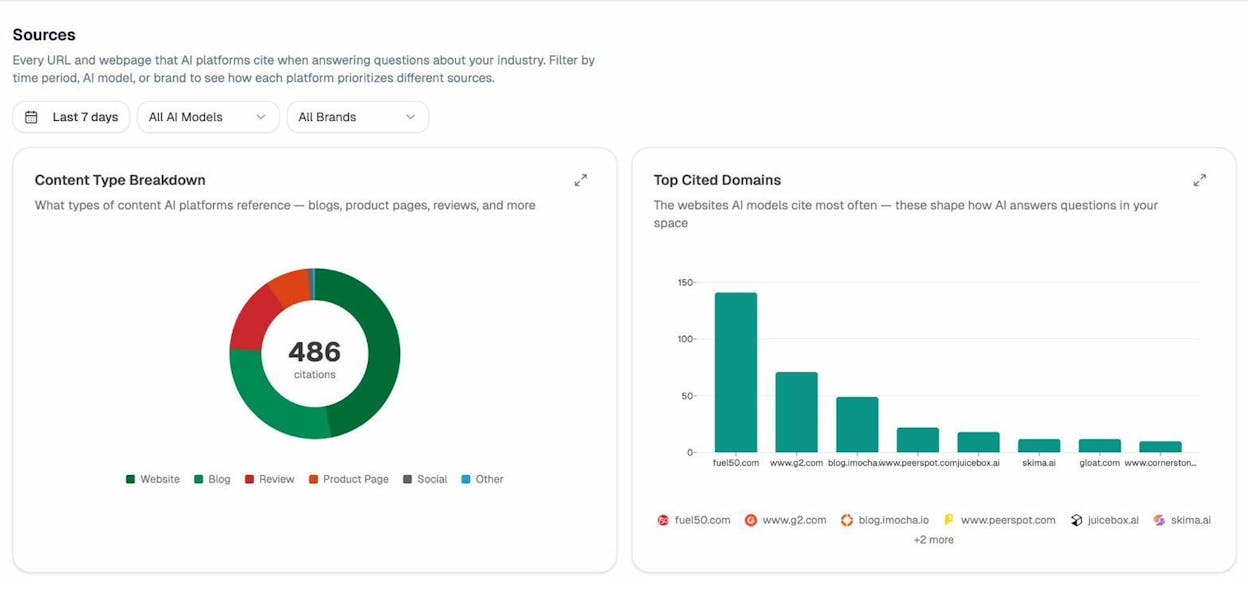
This data tells you two things: which of your pages AI models already trust, and which competitor pages are getting cited instead of yours. Both insights are critical for building topical authority that works across traditional and AI search channels.
How to Measure Topical Authority
There is no single metric that measures topical authority. No SEO tool will give you a “topical authority score.” But there are several proxy metrics you can track to gauge whether your topical authority is growing.
Method 1: Traffic Share by Domains
This method, popularized by Kevin Indig, uses the Traffic Share by Domains report in keyword research tools.
Here is how it works:
-
Take a broad head term for your topic (e.g., “project management”).
-
Enter it into a keyword research tool.
-
Go to the Matching Terms report and filter for keywords with a minimum search volume of 10.
-
Export all keywords and re-upload them into the tool.
-
Go to the Traffic Share by Domains report.
-
Your traffic share percentage is a rough proxy for your topical authority.
![[Screenshot: Traffic share by domains report showing domain percentage shares for a topic cluster]](https://www.datocms-assets.com/164164/1774889289-blobid3.png?auto=format,compress&w=1248&fit=max)
If your site captures 15% of the traffic share for all keywords related to “project management,” and your closest competitor captures 10%, you have stronger topical authority for that topic.
Method 2: Keyword Coverage Ratio
A simpler approach is to count how many of the relevant keywords in your topic you rank for versus the total number of keywords that exist.
Steps:
-
Build a comprehensive list of every keyword related to your topic using a keyword research tool.
-
Check how many of those keywords your site currently ranks for (top 100 positions).
-
Calculate the ratio: keywords you rank for / total keywords in the topic.
A ratio of 30% means you have significant coverage gaps. A ratio of 70%+ suggests strong topical authority. Track this ratio over time to measure progress.
Method 3: Share of Voice
Share of voice (SOV) measures your visibility across a set of tracked keywords compared to your competitors. Unlike traffic share, SOV focuses on ranking positions rather than estimated traffic.
To measure SOV for topical authority:
-
Add all keywords from your topic cluster to a rank tracking tool.
-
Track your rankings alongside your top 3-5 competitors.
-
Compare your share of voice percentage over time.
If your SOV for a topic cluster is growing month over month, your topical authority is strengthening. If it is declining, competitors are producing better or more content on the topic.
Method 4: AI Search Visibility (The New Metric)
Traditional measurement methods miss an increasingly important channel: AI search. You can have strong topical authority in Google and still be invisible in ChatGPT or Perplexity.
To measure your topical authority across AI search engines, you need to track how often AI models mention and cite your brand when answering questions about your topic.
Analyze AI does this automatically. Here is how to use it:
-
Set up your topic clusters. Define the prompts and questions that represent your topic in Analyze AI. For example, if your topic is “project management software,” your tracked prompts might include “best project management software,” “how to choose project management tools,” and “project management software for small teams.”
-
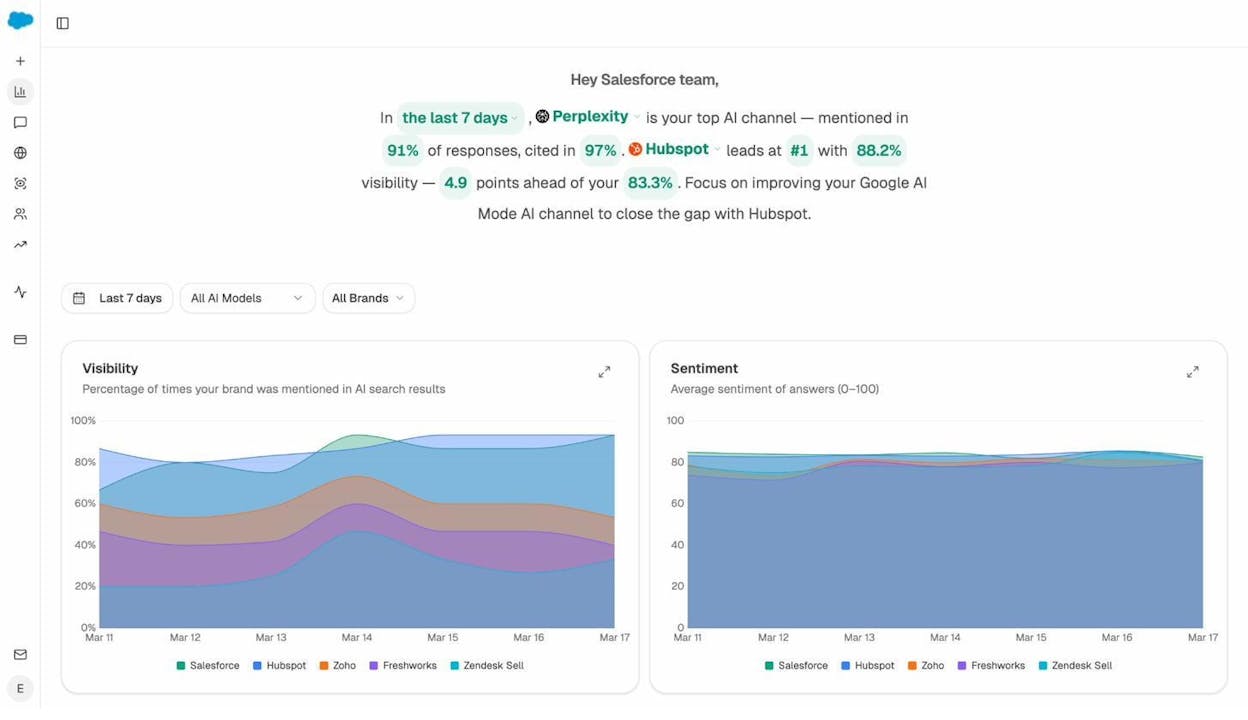
Track visibility over time. The Overview dashboard shows your visibility percentage (how often your brand appears in AI responses) alongside competitor visibility.
-
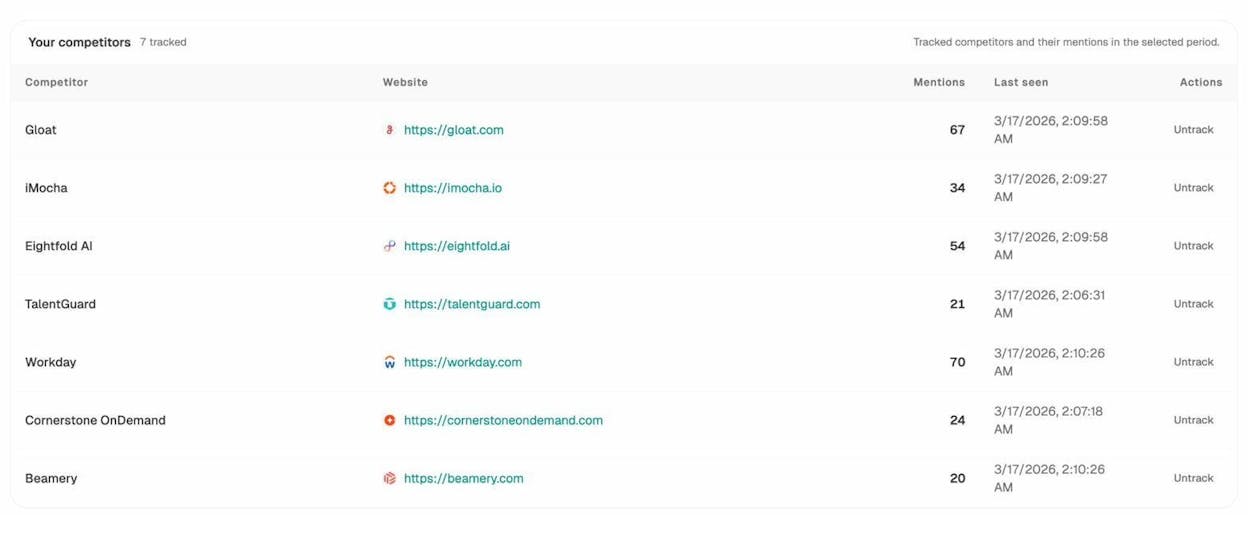
Analyze competitor gaps. The Competitor Overview shows where rivals appear and you don’t. These gaps represent specific subtopics where you need to build more depth.
-
Review which pages get cited. The AI Traffic Analytics Landing Pages report shows which of your URLs receive AI-referred traffic and citations.
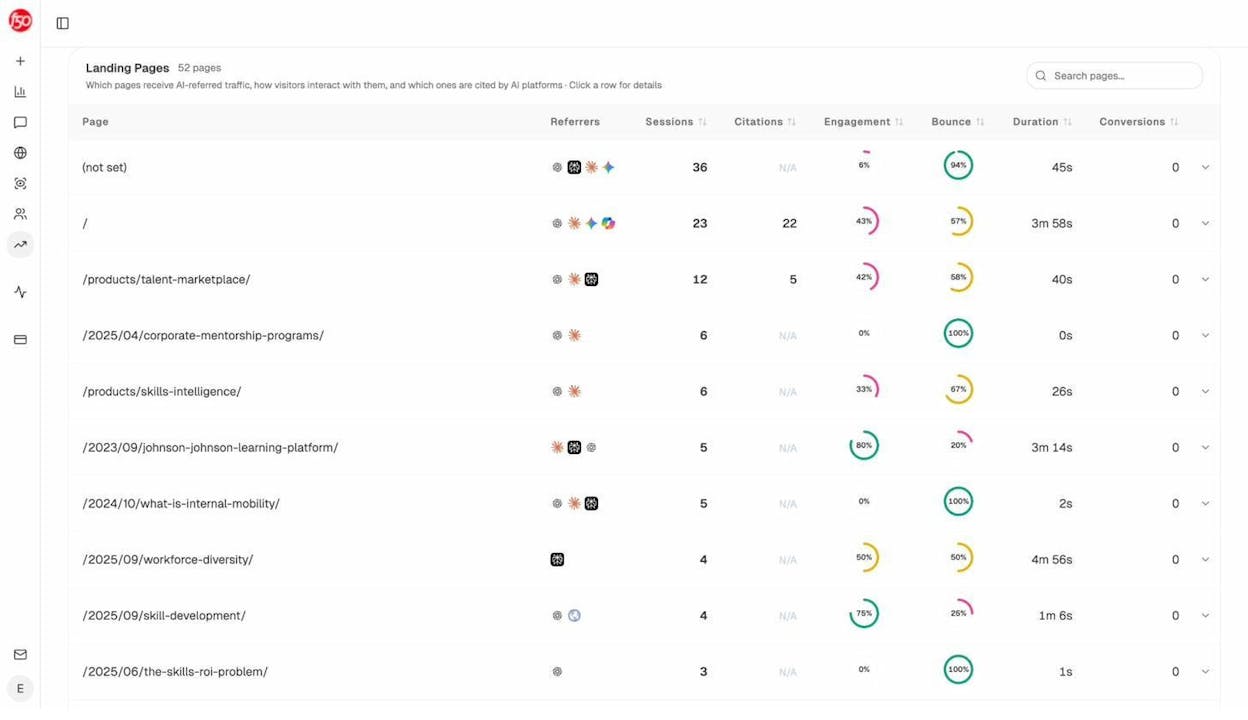
The combination of traditional SEO metrics and AI visibility data gives you the most complete picture of your topical authority. A site might rank well on Google for a topic but get zero AI citations, or vice versa. Measuring both channels reveals the full picture.
How to Build Topical Authority in Six Steps
Building topical authority is not complicated. It is methodical. The process requires research, planning, consistent content production, and strategic linking.
Here are the six steps.
Step 1: Do Topic-Based Keyword Research
Every topical authority strategy starts with keyword research. But this is not standard keyword research where you find a single keyword and write one article. Topic-based keyword research means mapping out every question, subtopic, and angle within a subject.
Choose the Right Seed Keyword
Your seed keyword is the broad term that represents your topic. Getting this right matters because a bad seed keyword will produce irrelevant keyword ideas.
|
Topic |
Good Seed Keywords |
Bad Seed Keywords |
|---|---|---|
|
Coffee roasting process |
“coffee roasting,” “coffee roasters” |
“coffee” (too broad), “roasting” (too vague) |
|
Taking care of dogs |
“dog care,” “dog health” |
“animals” (too broad), “pets” (too broad) |
|
Project management software |
“project management software,” “project management tools” |
“software” (too broad), “management” (too vague) |
|
Email marketing |
“email marketing,” “email campaigns” |
“marketing” (too broad), “email” (too vague) |
A useful trick for finding good seed keywords: go to Google Images, type in your broad topic, and check the filter tabs that appear at the top. These filters represent the entities that Google associates with your topic and make excellent seed terms.
![[Screenshot: Google Images filter tabs showing entity associations for a broad topic query]](https://www.datocms-assets.com/164164/1774889301-blobid7.png?auto=format,compress&w=1248&fit=max)
Expand Your Keyword List
Once you have a seed keyword, use it to generate a comprehensive list of related terms. There are several ways to do this:
Use a keyword research tool. Enter your seed term into a keyword research tool, then explore the Matching Terms, Related Terms, and Questions reports to find every query people search for within your topic. You can use Analyze AI’s free keyword generator to get started quickly.
![[Screenshot: Keyword research tool showing matching terms and related keywords for a seed term]](https://www.datocms-assets.com/164164/1774889304-blobid8.png?auto=format,compress&w=1248&fit=max)
Check Google’s People Also Ask. Search your seed keyword on Google and expand every People Also Ask box. Each expansion reveals new questions that represent subtopics to cover.
![[Screenshot: Google People Also Ask results expanded to show related questions]](https://www.datocms-assets.com/164164/1774889307-blobid9.png?auto=format,compress&w=1248&fit=max)
Analyze Google Autocomplete. Start typing your seed keyword in Google’s search bar and note the suggested completions. Try adding different letters after your keyword (e.g., “project management a,” “project management b”) to surface more suggestions.
![[Screenshot: Google Autocomplete suggestions for a seed keyword with various letter completions]](https://www.datocms-assets.com/164164/1774889311-blobid10.png?auto=format,compress&w=1248&fit=max)
Mine competitor content. Find the top-ranking sites for your topic and analyze which keywords they rank for. Use Analyze AI’s free website traffic checker to estimate how much organic traffic competitors get, then dig into their content to find gap opportunities where they rank and you do not. This is especially valuable because these are proven, rankable keywords.
![[Screenshot: Content gap analysis showing keywords competitors rank for but you don’t]](https://www.datocms-assets.com/164164/1774889313-blobid11.png?auto=format,compress&w=1248&fit=max)
Search YouTube, Bing, and Amazon. Different search engines surface different keyword variations. Analyze AI’s free YouTube keyword tool, Bing keyword tool, and Amazon keyword tool can reveal terms you would miss by only looking at Google. This is especially useful if your topic overlaps with product searches (Amazon) or how-to content (YouTube).
Research AI Search Prompts Too
Traditional keyword research only covers what people type into Google. But an increasing number of your audience is asking questions in ChatGPT, Perplexity, and other AI tools instead.
The prompts people use in AI search are often different from traditional search queries. They tend to be longer, more conversational, and more specific. For example:
|
Traditional Search Query |
AI Search Prompt |
|---|---|
|
“best project management software” |
“What is the best project management software for a remote team of 15 people with a tight budget?” |
|
“email marketing tools comparison” |
“Compare Mailchimp, ConvertKit, and ActiveCampaign for a B2B SaaS company” |
|
“how to build a content strategy” |
“Help me create a 6-month content strategy for a fintech startup targeting CFOs” |
To discover which prompts matter in your niche, use Analyze AI’s prompt suggestions feature. It recommends prompts based on your topic clusters and shows you which ones to track.
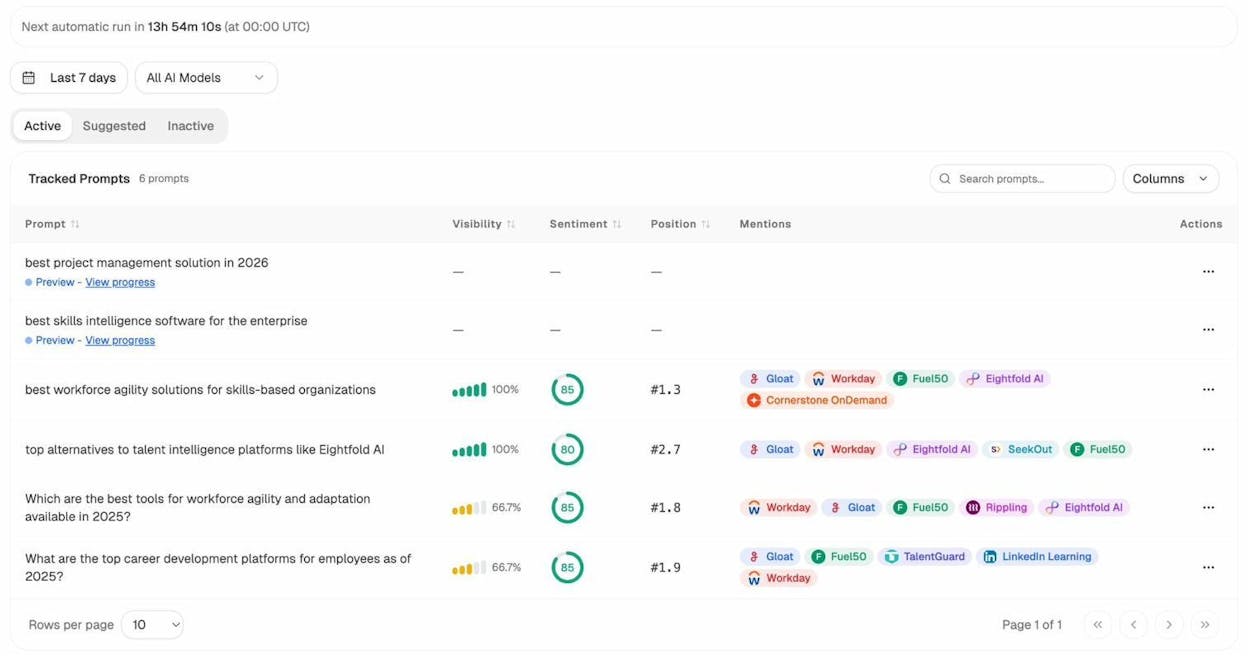
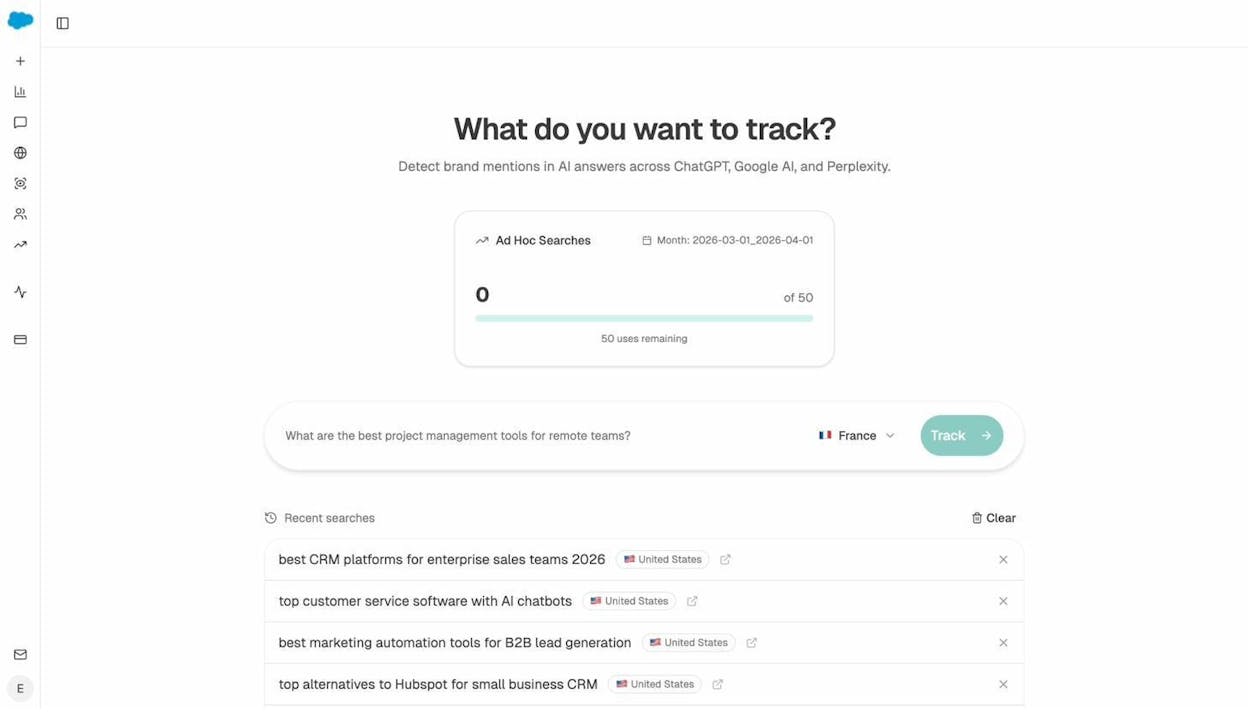
You can also run ad hoc prompt searches to test how AI models respond to specific questions in your niche. This shows you whether your brand appears in AI responses, which competitors are cited, and what sources the models rely on.
This research adds a layer of depth to your keyword strategy that most competitors miss entirely.
Step 2: Create Topic Clusters
With your keyword research complete, you have a long list of terms. The next step is to organize them into topic clusters.
A topic cluster is a group of interlinked pages about the same subject. Each cluster has a pillar page (the main overview page) and several supporting pages (deeper dives into subtopics).
How to Structure a Topic Cluster
-
Choose a pillar topic. This should be a broad topic that has enough depth for multiple subtopics. It should also align with your business. If you sell project management software, “project management” is a natural pillar topic.
-
Identify subtopics. Group your keyword list by search intent. Each group becomes a potential supporting article. For “project management,” subtopics might include:
-
What is project management? (informational)
-
Best project management software (commercial)
-
Project management methodologies (informational)
-
How to create a project plan (how-to)
-
Project management certifications (informational)
-
Agile vs. waterfall project management (comparison)
-
Choose the right content format for each subtopic. Match the format to the search intent:
-
Guides – Evergreen content that fully covers a broad subtopic.
-
“What is X” articles – Deep-dive definitions or explainers.
-
“How to X” articles – Step-by-step tutorials.
-
“Best X” articles – Curated lists with comparisons.
-
“X vs. Y” articles – Head-to-head comparisons.
-
Map the internal linking structure. Every supporting page should link back to the pillar page, and the pillar page should link out to every supporting page. Supporting pages should also link to each other where relevant.
Here is what a well-structured topic cluster looks like:
![[Screenshot: Diagram showing a topic cluster structure with a central pillar page linked to supporting articles in a hub-and-spoke pattern]](https://www.datocms-assets.com/164164/1774889323-blobid14.png?auto=format,compress&w=1248&fit=max)
The key principle: your pillar page is the hub, and your supporting pages are the spokes. Every spoke connects back to the hub, and related spokes connect to each other.
Prioritize Your Clusters
You probably cannot build all your topic clusters at once. Prioritize based on:
-
Business relevance. Which topics are closest to your product or service?
-
Competition level. Where can you realistically compete based on your current domain strength? Check with Analyze AI’s free keyword difficulty checker to assess competition.
-
Traffic potential. Which clusters have the highest combined search volume?
-
Content gaps. Where do your competitors have weak or missing content that you can fill?
Start with the cluster that has the best combination of business relevance and achievable competition. Build it fully before moving to the next topic.
Step 3: Write Authority Content
This is where most sites fail. They do the keyword research, plan the clusters, and then produce mediocre content that reads like every other article on page one.
Authority content is different. It is the most comprehensive, most actionable, most well-structured resource on the topic. Here is how to create it.
Start with Your Pillar Pages
Each pillar page should act as a complete overview of the topic. It needs to be broad enough to cover the entire subject but structured so that readers can easily find and jump to the subtopic they care about.
A good pillar page:
-
Defines the main topic clearly in the first few paragraphs.
-
Covers every major subtopic at a summary level.
-
Links out to dedicated supporting pages for each subtopic.
-
Includes a table of contents for easy navigation.
-
Is long enough to be genuinely comprehensive (typically 3,000-5,000+ words) but not padded with filler.
Then Build Supporting Content
Supporting pages go deeper than the pillar page on a specific subtopic. This is where you target long-tail keywords and provide step-by-step detail.
For each supporting article:
-
Match search intent. If the keyword is “how to create a project plan,” the article must be a step-by-step tutorial, not a conceptual overview. If the keyword is “best project management software,” the article must be a comparative list, not a glossary entry.
-
Add information gain. Do not just rewrite what the top-ranking articles already say. Add original data, firsthand experience, expert quotes, specific examples, or a unique framework. Google’s information gain patent suggests that content which adds new information to the existing search results is rewarded. This is also what makes your content more likely to be cited by AI models.
-
Include actionable details. Every section should leave the reader with something they can do immediately. If you mention a strategy, show how to execute it. If you mention a tool, show how to use it with a screenshot. If you reference a metric, show how to measure it.
-
Use the BLUF principle. Put the bottom line up front. Lead every section with the key insight, then add context and supporting details. This makes your content scannable and also helps AI models extract your main points when generating answers.
Keep E-E-A-T in Mind
For every piece of content you produce, ask yourself:
-
Does this article demonstrate firsthand experience with the topic?
-
Does it show subject-matter expertise through specific, detailed examples?
-
Is it published on a site that has a track record of covering this topic?
-
Does it cite credible sources and link to authoritative references?
If any answer is “no,” strengthen the article before publishing. Thin content that lacks E-E-A-T signals will not build topical authority, and it can actively hurt your site’s overall quality in Google’s eyes.
Step 4: Build a Strategic Internal Linking Structure
Internal links are the connective tissue of topical authority. Without them, your content exists as isolated pages rather than a cohesive topic network.
Google uses internal links to discover new content and understand how pages relate to each other. Strong internal linking tells Google: “These pages are all about the same topic, and they support each other.”
Internal Linking Best Practices for Topical Authority
Link every supporting page to the pillar page. This is non-negotiable. Every article in a cluster should have at least one contextual link back to the pillar page.
Link the pillar page to every supporting page. The pillar page acts as a directory. Update it whenever you publish new supporting content.
Link between related supporting pages. If your supporting article on “project management methodologies” mentions Agile, link to your supporting article on “Agile project management.” These cross-links strengthen the semantic relationship between pages.
Use descriptive anchor text. Instead of “click here” or “read more,” use anchor text that describes the linked page’s topic. This helps Google understand what the linked page is about.
Audit your internal links regularly. As your content library grows, older articles may miss linking opportunities to newer content. Run periodic audits to identify pages that should be linked but are not.
Use Analyze AI’s free broken link checker to make sure your internal links are not pointing to dead pages. Broken internal links waste link equity and create dead ends for both users and search engines.
Step 5: Build Relevant External Links
Even the best content sometimes needs backlinks to rank. But when building links for topical authority, relevance matters more than volume.
A single link from a respected site in your niche is worth more than ten links from unrelated sites. Google uses the topical relevance of linking pages to weight the authority passed through backlinks.
Link Building Tactics That Support Topical Authority
Guest blogging on topically related sites. Write valuable content for other websites in your niche. Each guest post is an opportunity to earn a relevant backlink and demonstrate your expertise to a new audience.
Create link-worthy resources. Original research, data studies, comprehensive guides, and useful tools attract backlinks naturally. If your pillar page is genuinely the best resource on a topic, other writers will cite it as a source.
Earn expert mentions. Participate in industry discussions, contribute expert quotes to journalists, and build relationships with other experts in your space. When your name and brand are associated with a topic, editorial links follow.
Find unlinked mentions. Other websites may mention your brand or content without linking to you. Finding and converting these mentions into backlinks is one of the highest-ROI link building tactics because the hardest part (getting mentioned) is already done.
You can check the overall strength of your backlink profile using Analyze AI’s free website authority checker.
Step 6: Track and Iterate
Building topical authority is not a one-time project. It is an ongoing process that requires measurement, iteration, and content updates.
Track Your Progress in Traditional Search
Monitor these metrics monthly:
-
Keyword rankings. Are you ranking for more keywords within your topic cluster? Use a rank tracking tool to monitor positions.
-
Organic traffic by topic. Is traffic to your topic cluster pages growing? Segment your analytics by topic to isolate the impact.
-
Share of voice. Is your visibility for the topic cluster increasing relative to competitors?
-
Content coverage. How many of the total keywords in your topic do you now rank for compared to last month?
Use a SERP checker to monitor your search performance and spot new opportunities.
Track Your Progress in AI Search
Traditional metrics miss a growing channel. You also need to track whether AI models are citing your content when answering questions about your topic.
With Analyze AI, you can:
-
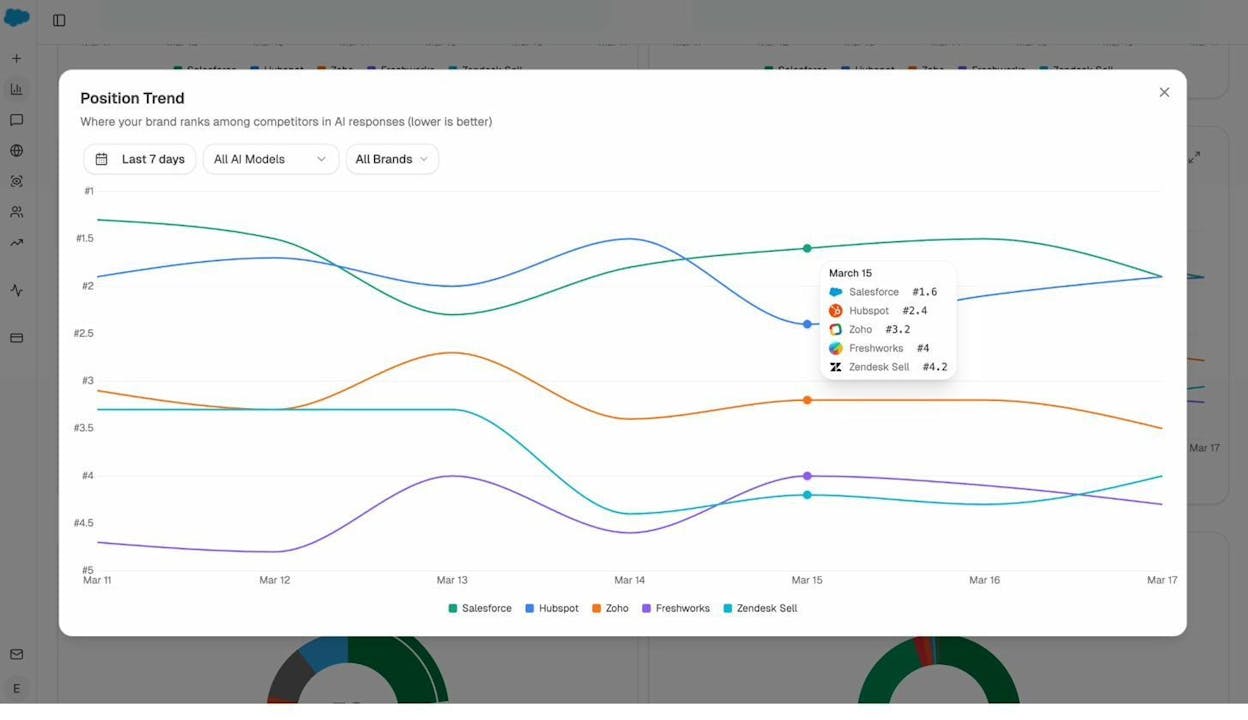
Track visibility across AI models. See how often ChatGPT, Perplexity, Claude, Gemini, and Copilot mention your brand for tracked prompts.
-
Monitor competitor movement. Track which competitors gain or lose AI visibility week over week, and identify the content that drives their gains.
-
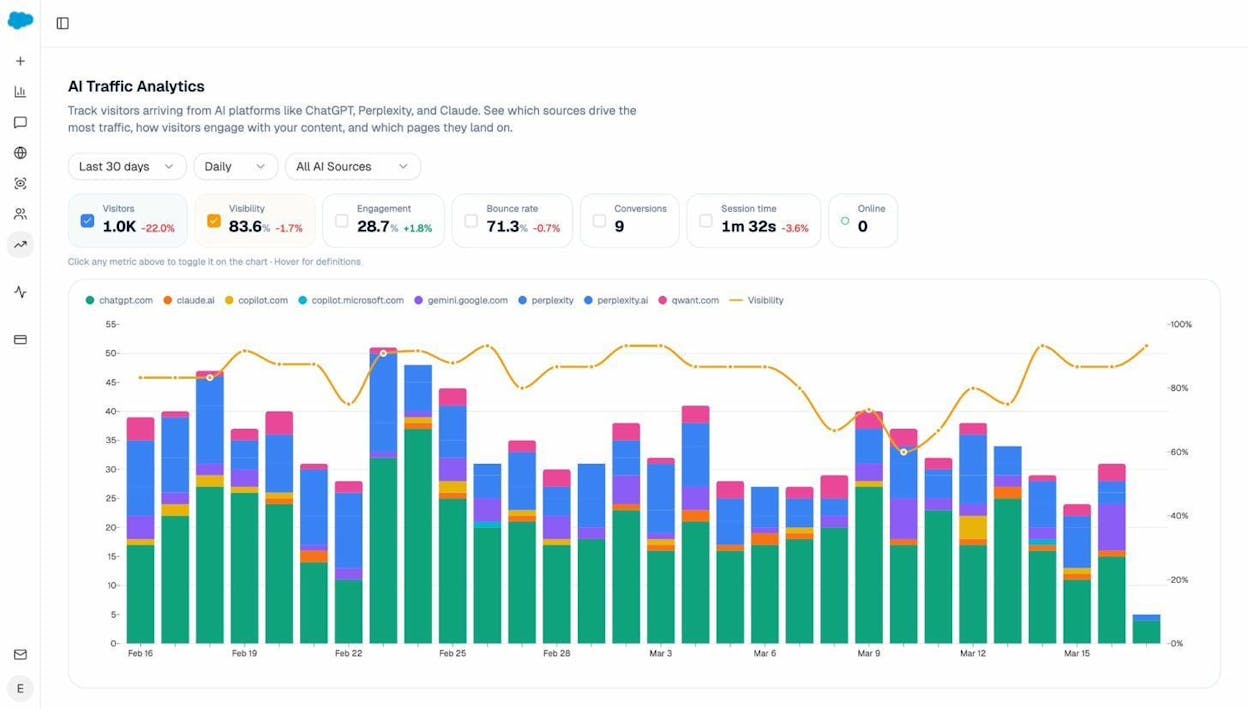
Attribute AI traffic to landing pages. Connect your Google Analytics to Analyze AI and see exactly which pages receive traffic from AI search engines. This reveals which content formats and topics AI models prefer for your niche.
-
Spot citation opportunities. The Sources dashboard shows which domains AI models cite most often in your space. If a competitor’s blog post is getting cited and yours is not, you know exactly what content to improve or create.
Update Your Content Regularly
Topical authority is not a “set it and forget it” strategy. Content ages. Statistics become outdated. New subtopics emerge. Competitor content improves.
Build a content refresh schedule:
-
Quarterly: Review top-performing cluster pages for accuracy. Update statistics, screenshots, and examples.
-
Biannually: Run a content audit to identify underperforming pages. Decide whether to update, merge, or remove them.
-
Ongoing: Monitor keyword research for new subtopics that emerge in your niche. Expand your clusters to cover them.
The sites that maintain topical authority over time are the ones that treat their content as a living resource, not a one-time deliverable.
Common Topical Authority Mistakes to Avoid
Building topical authority is straightforward in concept. But there are common mistakes that waste time and weaken your results.
Writing About Everything Instead of Going Deep
Some sites interpret topical authority as “publish as much content as possible.” They spread across dozens of topics with shallow articles on each. This does not build authority on any topic.
Pick one or two core topics to start with. Cover them completely before expanding to new areas. Depth beats breadth.
Ignoring Search Intent
Covering a topic comprehensively does not mean writing every article the same way. A “what is X” article requires a different format than a “best X tools” article. If your content does not match what the searcher is actually looking for, it will not rank regardless of how topically authoritative your site is.
Before writing any article, search the target keyword and analyze what is already ranking. The format of the top results tells you what search intent Google has assigned to that query.
Neglecting Internal Links
Publishing 30 articles about a topic means nothing if they do not link to each other. Without internal links, Google sees 30 isolated pages, not a cohesive topic cluster. Internal linking is what turns a collection of articles into a content network.
Publishing and Forgetting
Content gets stale. Competitors publish better articles. New subtopics emerge. If you publish a pillar page and never update it, your topical authority erodes over time.
The most successful sites revisit their content regularly, updating facts, adding new sections, and improving structure based on what is working.
Skipping AI Search Entirely
Many sites focus exclusively on Google rankings and miss the growing share of traffic coming from AI search engines. Building topical authority for traditional search but ignoring AI search means leaving a significant and growing channel on the table.
Track your visibility in AI search alongside your Google rankings. The data from both channels should inform your content strategy.
Topical Authority FAQs
What is topical relevance?
Topical relevance is the degree to which the content on a specific page relates to a given topic. Search engines use topical relevance to determine how well a page matches a user’s search query. Topical authority is the site-level version of this concept: it measures how comprehensively an entire domain covers a topic, not just one page.
What is semantic SEO?
Semantic SEO is the practice of building content around topics and entities rather than individual keywords. Instead of optimizing a page for one keyword, semantic SEO means covering the related concepts, questions, and subtopics that search engines expect to see. It is closely tied to topical authority because both focus on comprehensive topic coverage rather than keyword-level optimization. Learn more in our guide to LSI keywords and semantic search.
What is the difference between topical authority and E-E-A-T?
E-E-A-T (Experience, Expertise, Authoritativeness, Trustworthiness) is Google’s framework for evaluating content quality. Topical authority contributes to E-E-A-T, specifically the “Authoritativeness” signal. Building topical authority through comprehensive content, expert insights, and credible sources is one of the most direct ways to improve your E-E-A-T signals.
How long does it take to build topical authority?
There is no fixed timeline. It depends on the size and competitiveness of your topic, your existing content library, and how quickly you can produce quality content. Most sites start seeing measurable improvements in rankings and traffic share within 3-6 months of consistent topic cluster development. Full topical authority for a competitive topic can take 12-18+ months.
Does topical authority work without backlinks?
Topical authority can help you rank for lower-competition keywords without backlinks. But for competitive terms, you will still need backlinks. Think of topical authority and link building as complementary strategies, not alternatives. The combination of deep topic coverage and strong backlinks is what produces the best results.
Can topical authority help me rank in AI search?
Yes. AI search engines like ChatGPT, Perplexity, and Claude decide which sources to cite based on content depth, source authority, and topical relevance. Sites with strong topical authority are more likely to be cited in AI-generated answers. You can measure your AI search visibility using tools like Analyze AI and track citation patterns with our answer engine optimization guide.
How do I know which topics to build authority on?
Start with the topics closest to your core business. If you sell CRM software, build topical authority around CRM, sales processes, and customer relationships. If you run a fitness blog, build authority around workout types, nutrition, or specific fitness goals. The best topics to target are ones where your business has genuine expertise and where there is search demand from your target audience.
What is the difference between topical authority and domain authority?
Domain authority (or domain rating) is a metric created by SEO tools to estimate the strength of a site’s backlink profile. It is a single number that represents overall link equity. Topical authority is about content depth and coverage on a specific topic. A site can have high domain authority but weak topical authority if its content is spread thin across many subjects. Conversely, a site with low domain authority but deep topic coverage can outrank larger competitors for niche keywords.
Build Topical Authority That Works Across Every Search Channel
Topical authority is one of the most reliable long-term SEO strategies available. It does not depend on algorithm loopholes or quick tricks. It depends on doing the work: researching your topic thoroughly, covering every angle with quality content, linking it all together, and continuing to improve over time.
What has changed is that topical authority no longer applies only to Google. The same depth, structure, and expertise that wins traditional rankings now also determines whether AI search engines cite your content. If you are building topical authority for Google but ignoring AI search, you are missing a growing organic channel.
The approach is the same for both: be the most comprehensive, most helpful, most well-organized resource on your topic. Do that, and both Google and AI models will treat your site as the authority.
Start with one topic. Map out every subtopic. Build the content. Link it together. Measure your progress in both traditional and AI search. Then expand to the next topic.
That is how topical authority compounds.

Ernest

Ibrahim


