



In this article, you’ll learn what multilingual SEO is, why companies like Wise, Canva, and Amazon generate over 50% of their organic traffic from it, and how to build a multilingual strategy from scratch. You’ll see real examples of how these brands separate language targeting from regional targeting—the core insight most guides miss. You’ll also get step-by-step guidance on keyword research, URL structure, hreflang implementation, and content localization. And because AI search is now an organic channel alongside Google, you’ll learn how multilingual content performs in AI engines and how to track your visibility across ChatGPT, Perplexity, and Gemini in every language you target.
Table of Contents
What Is Multilingual SEO?
Multilingual SEO is a language-led approach to optimizing a website so it ranks in search engines across multiple languages. It’s a subset of international SEO that focuses specifically on language—not geography.
This distinction matters. Multi-regional SEO targets specific countries. Multilingual SEO targets the languages people search in, regardless of where they are.
You can do one without the other. A dentist in Miami can target Spanish speakers in the US without ever targeting Mexico. A SaaS company can target English speakers in 30 countries without translating a single page.
The most effective strategies combine both—but the starting point is always language.
Why Multilingual SEO Matters: The Data
On average, leading global brands see a 58% lift in organic traffic from multilingual SEO. For some, the numbers are even more dramatic.
|
Company |
Organic Multilingual Keywords |
Organic Multilingual Traffic |
% Lift in Organic Traffic |
|---|---|---|---|
|
Wise |
61.11% |
67.19% |
204.78% |
|
Canva |
43.48% |
62.15% |
164.20% |
|
Amazon |
49.53% |
52.46% |
110.35% |
|
Wix |
29.61% |
39.09% |
64.17% |
|
Trustpilot |
35.06% |
39.00% |
63.93% |
|
WordPress |
23.17% |
30.06% |
42.98% |
|
Shopify |
29.91% |
28.57% |
39.99% |
|
AMEX |
36.52% |
20.98% |
26.55% |
|
GoDaddy |
24.11% |
15.87% |
18.86% |
|
PayPal |
42.39% |
14.32% |
16.71% |
|
Average |
37.49% |
37.00% |
58.73% |
These numbers tell a clear story. Multilingual SEO is not a nice-to-have for global companies. It’s the engine behind the majority of their organic growth.
But this isn’t only relevant for Fortune 500 brands. The same principles apply to any business with a multilingual audience—whether that’s a local law firm targeting Spanish speakers in Texas or a SaaS product expanding into Germany.
The key insight is that competition in non-English search is dramatically lower. Keywords that are fiercely contested in English often have near-zero competition when searched in another language in the same country.
How to Separate Language Targeting From Regional Targeting
Most people think about multilingual SEO as a one-to-one equation: you’re targeting India, so you translate to Hindi. You’re targeting France, so you translate to French.
That’s the most basic version of the strategy. It works, but it ignores the creative possibilities.
The real opportunity lies in decoupling language from geography. This means you can target Vietnamese speakers in Japan, Spanish speakers in the US, or English-speaking expats anywhere in the world—without ever translating your entire site.
A Framework for Multilingual SEO Strategy
There are four ways to think about the relationship between language and region:
|
Region |
Language |
Example |
|---|---|---|
|
One |
One |
Targeting people in Australia with Australian English |
|
One |
Many |
Targeting both French and English speakers in Canada |
|
Many |
One |
Targeting English-speaking expats worldwide |
|
Many |
Many |
Targeting multiple languages across multiple regions |
Most businesses default to the third quadrant (many languages, many regions) because they assume that’s what multilingual SEO means. But some of the most creative strategies fall into the other three.
Understanding which quadrant your strategy belongs in helps you prioritize resources and avoid overcomplicating your setup.
Here are four real-world examples that illustrate each quadrant at work.
1. Abogado.com: Targeting Spanish Speakers Within the US
Abogado.com offers legal services in the United States, but its primary audience is Spanish speakers. The brand name itself translates to “lawyer.com.”
![[Screenshot: Abogado.com homepage showing Spanish-language legal services for the US market]](https://www.datocms-assets.com/164164/1776872000-blobid1.png)
This is a single-language, single-region strategy. The entire website is written in neutral Latin American Spanish, optimized for Spanish-language searches within the US.
The results demonstrate why this approach works so well for local businesses.
Take the keyword “dentist near me.” In English, it gets 393,000 monthly searches in the US with a keyword difficulty of 39—reasonably competitive.
![[Screenshot: Keyword research tool showing “dentist near me” with 393K volume and KD 39]](https://www.datocms-assets.com/164164/1776872010-blobid2.png)
Now look at the Spanish equivalent: “dentista cerca de mi.” It gets 13,000 monthly searches with a difficulty score of just 2.
The English version converts only 2.8% of searches into traffic. The Spanish version converts 61.54%.
This is not a niche strategy. The US has over 41 million native Spanish speakers. For any local business in a region with significant immigrant, expat, or multilingual communities, this approach is an easy win with minimal competition.
Use Analyze AI’s Keyword Generator to brainstorm keyword ideas in different languages, or the Keyword Difficulty Checker to compare difficulty scores between English and non-English versions of your target keywords.
2. Wise: Targeting Expats and Travelers in Every Country
Wise solves a specific pain point for anyone moving money across borders. Its multilingual strategy reflects this: instead of just translating content into a country’s native language, it targets multiple languages within each country.
In Japan, for example, Wise runs two separate blogs:
-
wise.com/jp/blog/ — written in Japanese for locals
-
wise.com/en-jp/blog/ — written in English for expats living in Japan
![[Screenshot: Wise’s Japanese blog homepage showing content for local audiences]](https://www.datocms-assets.com/164164/1776872010-blobid3.png)
![[Screenshot: Wise’s English blog for expats in Japan showing topics like foreign credit cards and bank accounts]](https://www.datocms-assets.com/164164/1776872016-blobid4.png)
These aren’t translated versions of the same content. The topics are different because the audience needs are different.
For Japanese locals, Wise writes about things like bypassing yen transfer limits and opening bank accounts abroad. For English-speaking expats, it covers how to get a credit card in Japan as a foreigner or find alternatives to Venmo.
Wise’s product positioning changes depending on who it’s talking to. So does its content strategy.
This pattern scales across more than 74 sub-folders targeting different language and region combinations. That’s what drives the 67% of organic traffic coming from multilingual content.
What’s particularly interesting is where the traffic comes from. In Japan, Wise’s top-performing keywords aren’t in English or Japanese—they’re in Vietnamese. This reflects the large Vietnamese population living in Japan who need money transfer services.
![[Screenshot: Top keywords for Wise in Japan showing Vietnamese-language queries with 200K+ monthly traffic]](https://www.datocms-assets.com/164164/1776872018-blobid5.png)
Most competitors wouldn’t even think to target Vietnamese speakers in Japan. Wise does because it separates language from region and follows the data.
How to Find These Opportunities
Start with your existing keyword list in your primary language. Then:
-
Translate your top-performing keywords into the languages spoken in your target markets—not just the official language, but immigrant and expat languages too.
-
Check the search volume and competition level for each translation in each region.
-
Look for keywords where volume is decent but competition is near zero. These are your quick wins.
-
Prioritize based on business value: which of these audiences actually need your product?
![[Screenshot: Keyword research tool comparing search volume of a keyword across different languages in the same country]](https://www.datocms-assets.com/164164/1776872023-blobid6.png)
Don’t assume the native language of a country is the only language worth targeting there. The data will often surprise you.
3. Canva: Customizing Multimedia Content for Each Language
Canva also targets many languages across many regions, but its approach goes deeper than text translation. It makes language-led design decisions.
Canva targets specific dialects, especially in Spanish-speaking markets. Instead of a single Spanish subfolder, it maintains separate versions for Mexican Spanish, Argentinian Spanish, Colombian Spanish, and others.
![[Screenshot: Canva’s subfolder structure showing dialect-specific versions for Spanish-speaking markets]](https://www.datocms-assets.com/164164/1776872024-blobid7.png)
But what makes Canva’s strategy remarkable isn’t the text—it’s the visuals.
Compare Canva’s French resume templates page with its Mexican Spanish version. The French page uses soft, neutral colors with a clean and elegant aesthetic. The Mexican Spanish page is more vibrant and colorful. The example names on the resumes match each audience. Even the design styles reflect local preferences.
![[Screenshot: Canva’s French resume templates page showing elegant, neutral design]](https://www.datocms-assets.com/164164/1776872029-blobid8.png)
![[Screenshot: Canva’s Mexican Spanish resume templates page showing vibrant, colorful design]](https://www.datocms-assets.com/164164/1776872032-blobid9.png)
This is what full localization looks like. Canva doesn’t just translate words—it translates the entire user experience.
For most businesses, you don’t need to go this far. But the principle applies at every scale: localized content that feels native to the audience will always outperform content that feels translated.
4. Amazon: Using ccTLDs and Customizing for Each Region
Amazon operates at least 22 different websites using country-code top-level domains (ccTLDs). A ccTLD is a domain extension tied to a specific country—like .ca for Canada, .co.uk for the United Kingdom, or .de for Germany.
Each ccTLD targets different languages, delivery zones, and currencies. Amazon’s setup is one of the most complex multilingual implementations in existence.
One detail worth noting: Amazon makes language-led design decisions too. On its Arabic websites, the entire layout flips right-to-left. The logo moves from the top-left corner to the top-right. Navigation, product listings, and text all follow the reading direction of Arabic speakers.
![[Screenshot: Amazon’s Arabic website showing right-to-left layout design]](https://www.datocms-assets.com/164164/1776872036-blobid10.jpg)
Amazon uses all four quadrants of the multilingual matrix across its global operations:
-
One language, one region: for ccTLDs targeting a single country like Turkey or Brazil
-
One language, many regions: for ccTLDs that serve nearby countries sharing a common language, like the UK site covering South Africa and Singapore
-
Many languages, one region: rare for Amazon, used only where multiple languages are commonly spoken, like Canada and Belgium
-
Many languages, many regions: the majority of Amazon’s ccTLDs fall here, especially those handling 230+ delivery zones
Even Amazon is selective about which languages it offers where. Some regional sites only offer English, even when the local population primarily speaks another language. This is a strategic decision based on demand data, not a gap in their strategy.
The takeaway: you don’t have to support every language everywhere. Be strategic about where language investment will deliver the highest return.
How to Build a Multilingual SEO Strategy: Step by Step
The examples above show what success looks like. Now let’s walk through how to build a multilingual strategy from scratch.
Step 1: Research Your Target Markets
Before translating anything, figure out which markets offer the biggest opportunity.
Start with your existing analytics. Look at where your current traffic comes from geographically. If you’re already getting visits from non-English-speaking countries, that’s a signal of existing demand.
![[Screenshot: Google Analytics showing geographic traffic distribution with non-English-speaking countries highlighted]](https://www.datocms-assets.com/164164/1776872038-blobid11.jpg)
Next, use keyword research tools to estimate the search demand for your primary keywords in different languages and countries.
![[Screenshot: Keyword Explorer showing search volume for a keyword across multiple countries]](https://www.datocms-assets.com/164164/1776872042-blobid12.png)
Prioritize markets based on three factors:
-
Search demand: Is there meaningful search volume for your core topics in this language?
-
Competition: How difficult is it to rank for these keywords in this language? (Non-English keywords are often dramatically less competitive.)
-
Business viability: Can you actually serve customers in this market? Do you accept their currency? Can you ship there?
Use the Analyze AI Keyword Generator to explore keyword ideas across different languages, and the SERP Checker to see who’s currently ranking.
Step 2: Do Keyword Research in Each Language
This is where most multilingual strategies fail. Teams translate their English keywords literally and assume the translations will perform. They won’t.
Language doesn’t work that way. The way people search in French is different from the way they search in English—even when they’re looking for the same thing.
Here’s how to do multilingual keyword research properly:
-
Start with your English keyword list. Export your top-performing keywords by traffic, conversions, or business value.
-
Get native-speaker translations. Don’t use Google Translate. Hire a native speaker or use a professional translation service. Ask them to provide the terms people actually use, not literal translations.
-
Validate translations with search data. Plug the translated keywords into a keyword research tool and check volume, difficulty, and traffic potential in the target country.
![[Screenshot: Keyword research tool showing translated keywords with their search volume and difficulty in the target country]](https://www.datocms-assets.com/164164/1776872044-blobid13.png)
-
Look for local search patterns. Some concepts don’t translate at all. In those cases, find the local equivalent—the keyword that captures the same intent in the local market.
-
Check for dialect variations. Spanish is not one language. The word for “popcorn” has 14 different variations across Spanish-speaking countries. If dialect matters for your brand, test which variation has the most search volume in your target region.
Use Analyze AI’s Keyword Difficulty Checker to compare competition levels across languages, and the Bing Keyword Tool to find keyword ideas beyond Google.
Step 3: Choose Your URL Structure
You have three options for organizing multilingual content on your website. Each has trade-offs.
|
Structure |
Example |
Pros |
Cons |
|---|---|---|---|
|
Subfolders |
example.com/fr/ |
Easy to set up. Inherits domain authority. One site to manage. |
Weaker localization signal than ccTLDs. |
|
Subdomains |
fr.example.com |
Separates content clearly. Can host in different locations. |
Treated as separate sites by Google. Dilutes link equity. |
|
ccTLDs |
example.fr |
Strongest geo-targeting signal. Trusted by local users. |
Most expensive. Each domain needs its own authority. |
For most businesses, subfolders are the best starting point. They’re the simplest to implement, they inherit your existing domain authority, and they’re how Wise and Canva structure their multilingual content.
Avoid mixing structures. Pick one and stick with it.
Step 4: Implement Hreflang Tags
Hreflang tags tell search engines which version of a page to show to which audience. Without them, Google might show your French page to English speakers or your Mexican Spanish page to users in Spain.
The syntax looks like this:
<link rel="alternate" hreflang="en" href="https://example.com/page/" />
<link rel="alternate" hreflang="fr" href="https://example.com/fr/page/" />
<link rel="alternate" hreflang="es-mx" href="https://example.com/es-mx/page/" />
<link rel="alternate" hreflang="x-default" href="https://example.com/page/" />
Key rules for hreflang implementation:
-
Every page must reference itself and all its alternates. If you have an English page and a French page, both pages need hreflang tags pointing to both versions.
-
Use x-default for your fallback. This tells search engines which page to show when no other language matches.
-
Be specific with language-region codes. Use es-mx for Mexican Spanish and es-es for European Spanish. Just es targets all Spanish speakers globally.
-
Keep hreflang tags consistent. If page A points to page B, page B must point back to page A. Broken references cause Google to ignore the tags entirely.
You can implement hreflang in three places: the HTML <head>, HTTP headers, or an XML sitemap. For most sites, the HTML <head> is the simplest option.
Use Analyze AI’s Broken Link Checker to verify that all your hreflang references point to live, accessible pages.
Step 5: Localize Your Content (Don’t Just Translate)
Translation and localization are different things. Translation converts words from one language to another. Localization adapts the entire content experience—tone, examples, imagery, cultural references, formatting, and even design—to feel native in the target market.
Here’s how to approach content localization:
-
Hire native speakers. Machine translation has improved dramatically, but it still misses nuance, idiom, and cultural context. Use AI translation as a starting draft, then have a native speaker edit for accuracy, tone, and natural phrasing.
-
Localize your examples. If your English article references US companies, swap them for local equivalents in the translated version. A case study featuring a German brand will resonate more with German readers than one featuring an American brand.
-
Adapt your keywords. Don’t just translate headings and body text—re-optimize each localized page for the keywords you identified in Step 2. This includes meta titles, meta descriptions, headings, and image alt text.
-
Adjust formatting and design. Some languages are read right-to-left. Some use different date formats, currencies, or number conventions. These details matter for user experience and trust.
-
Don’t translate everything. Prioritize your highest-performing content first. Wise doesn’t translate every blog post into every language. It selects content based on what each audience needs and what has the highest business value.
Step 6: Build Links in Each Language
Multilingual pages need backlinks in their target language to rank effectively. A French backlink from a French-language website is significantly more valuable for your /fr/ subfolder than an English backlink.
Here’s how to build multilingual links:
-
Guest post on local publications. Find industry blogs and media outlets in your target language. Pitch content that’s relevant to their audience.
-
Get listed in local directories. Industry directories and business listings in the target country provide relevant, easy-to-earn links.
-
Build relationships with local influencers. Identify thought leaders who publish in your target language and offer value—data, expert quotes, or collaborative content.
-
Internal linking matters too. Link pages in the same language to each other. Don’t cross-link your French pages to your German pages. Keep each language ecosystem self-contained.
Use Analyze AI’s Website Authority Checker to evaluate the authority of potential link targets in each market.
How Multilingual Content Performs in AI Search
Here’s what most multilingual SEO guides miss entirely: AI search is now a real channel, and multilingual content behaves differently there than it does in traditional search.
When someone asks ChatGPT, Perplexity, or Gemini a question in French, these models pull from French-language sources. When someone asks in Portuguese, they pull from Portuguese sources. The AI model matches the language of the query to the language of the content it cites.
This means your multilingual content isn’t just competing for Google rankings—it’s also competing for AI visibility in every language you target.
And here’s the opportunity: AI search competition in non-English languages is even thinner than traditional search competition. The brands investing in high-quality multilingual content now will dominate AI answers in those languages for years.
How to Track Multilingual AI Visibility With Analyze AI
Analyze AI lets you monitor how your brand appears in AI answers across ChatGPT, Perplexity, Claude, Gemini, and Copilot. Here’s how to use it for your multilingual strategy.
Track prompts in multiple languages. In the Prompts dashboard, you can add tracked prompts in any language. For example, if you’re targeting French speakers, add prompts like “meilleur outil de gestion de projet” alongside your English equivalents.
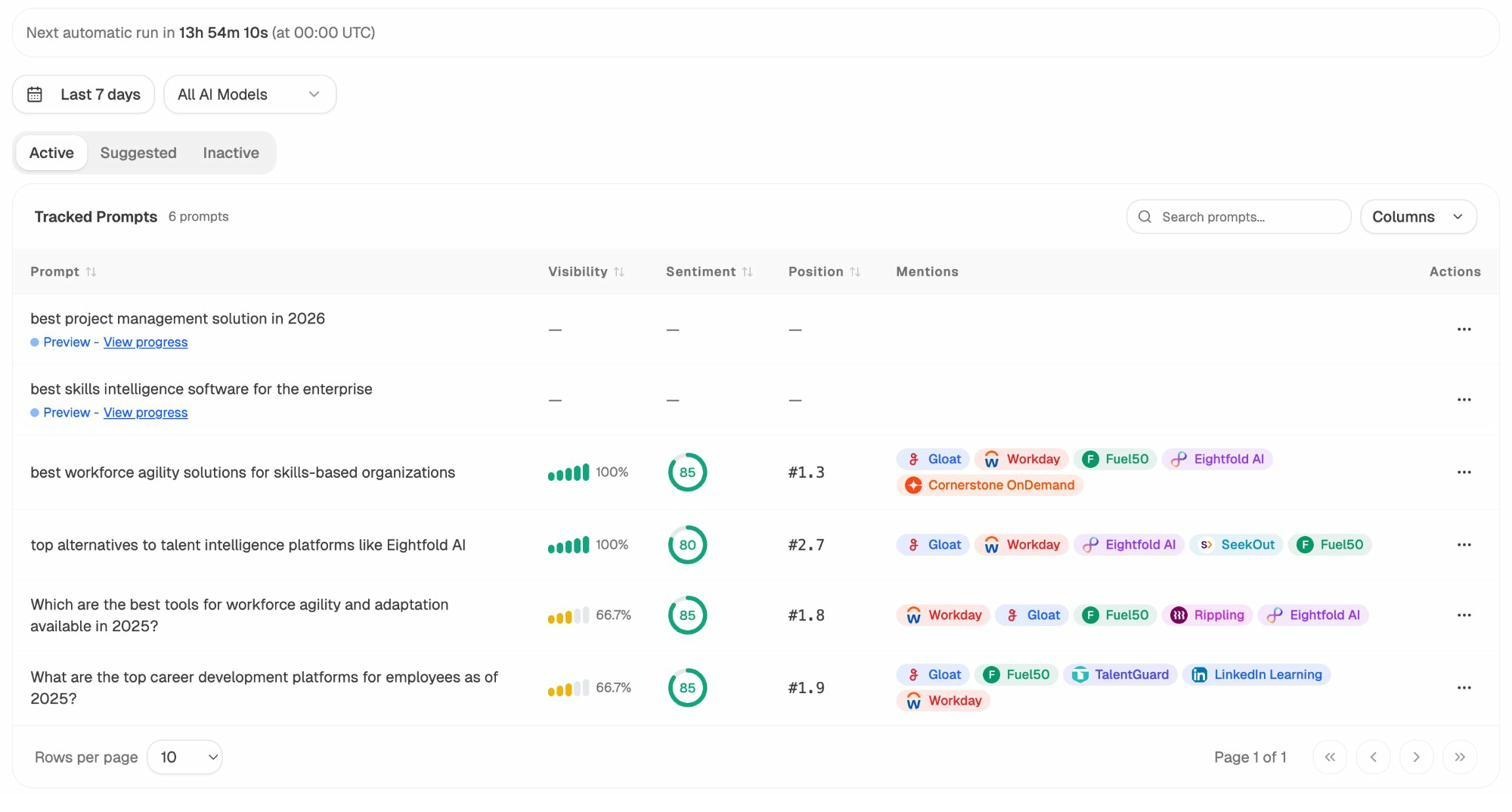
The dashboard shows your visibility score, sentiment, position, and which competitors appear for each prompt—broken down by AI model. This tells you exactly where you’re winning and where you’re losing in each language.
Use Ad Hoc Searches for quick multilingual checks. Before committing to a full tracking setup, use Ad Hoc Searches to test how AI models respond to queries in your target languages. You can select the country and language for each search.
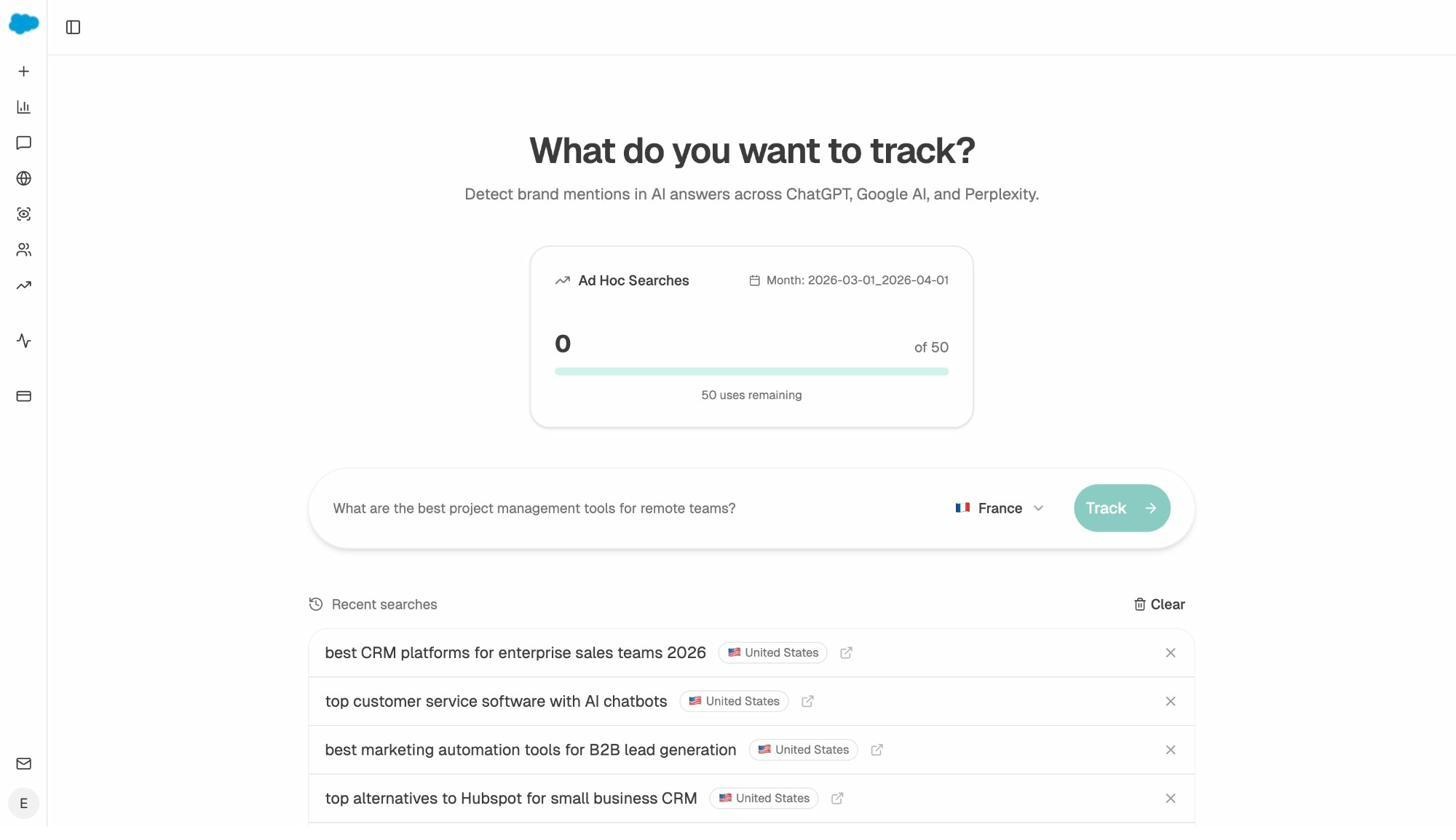
This is useful for scoping out the AI search landscape in a new market before you invest in content.
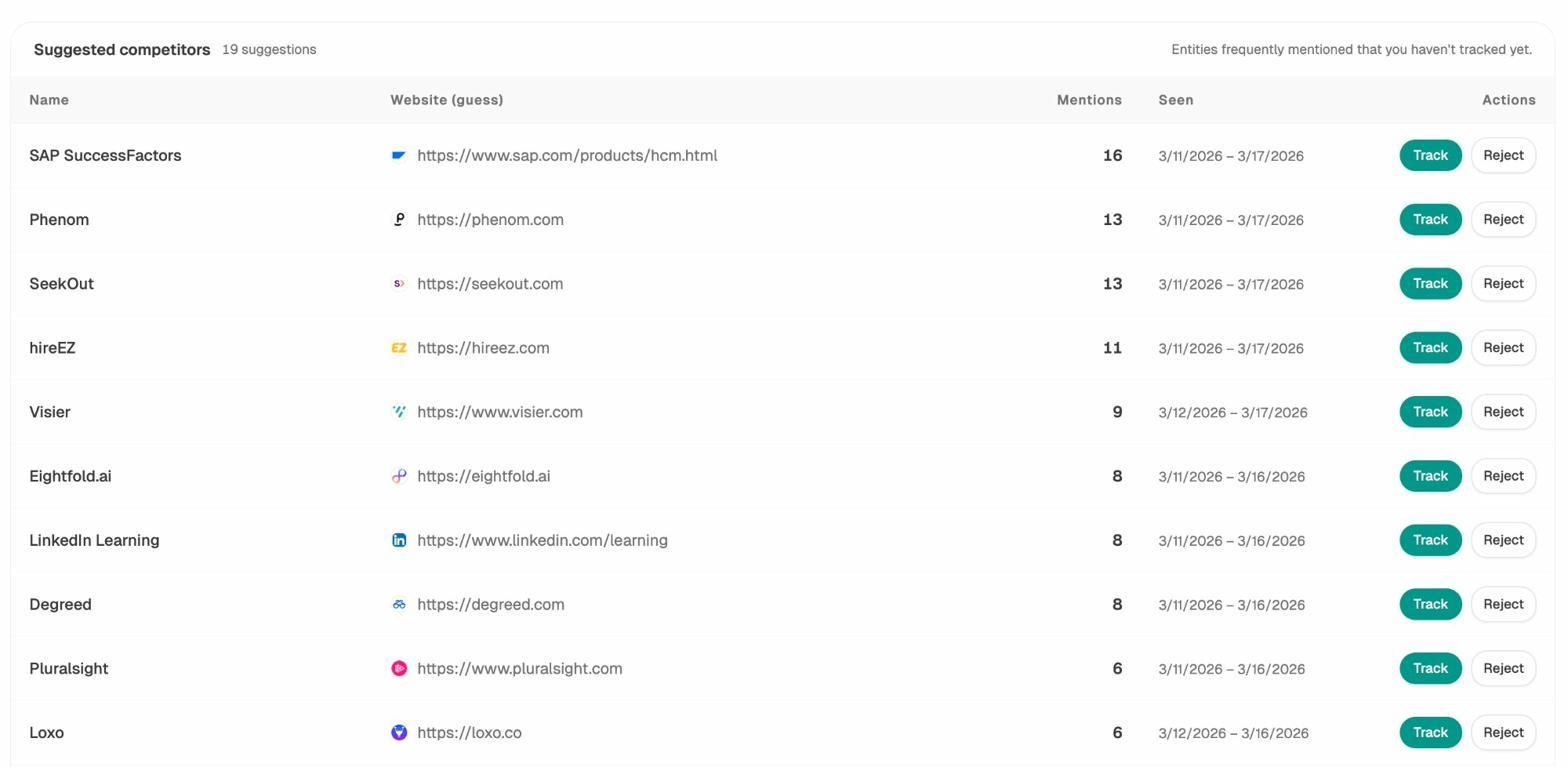
Monitor which competitors appear in each language. The Competitors dashboard shows which brands AI models mention most frequently in your space. If you filter by language-specific prompts, you’ll see your actual competitors in each market—which may be completely different from your English-language competitors.
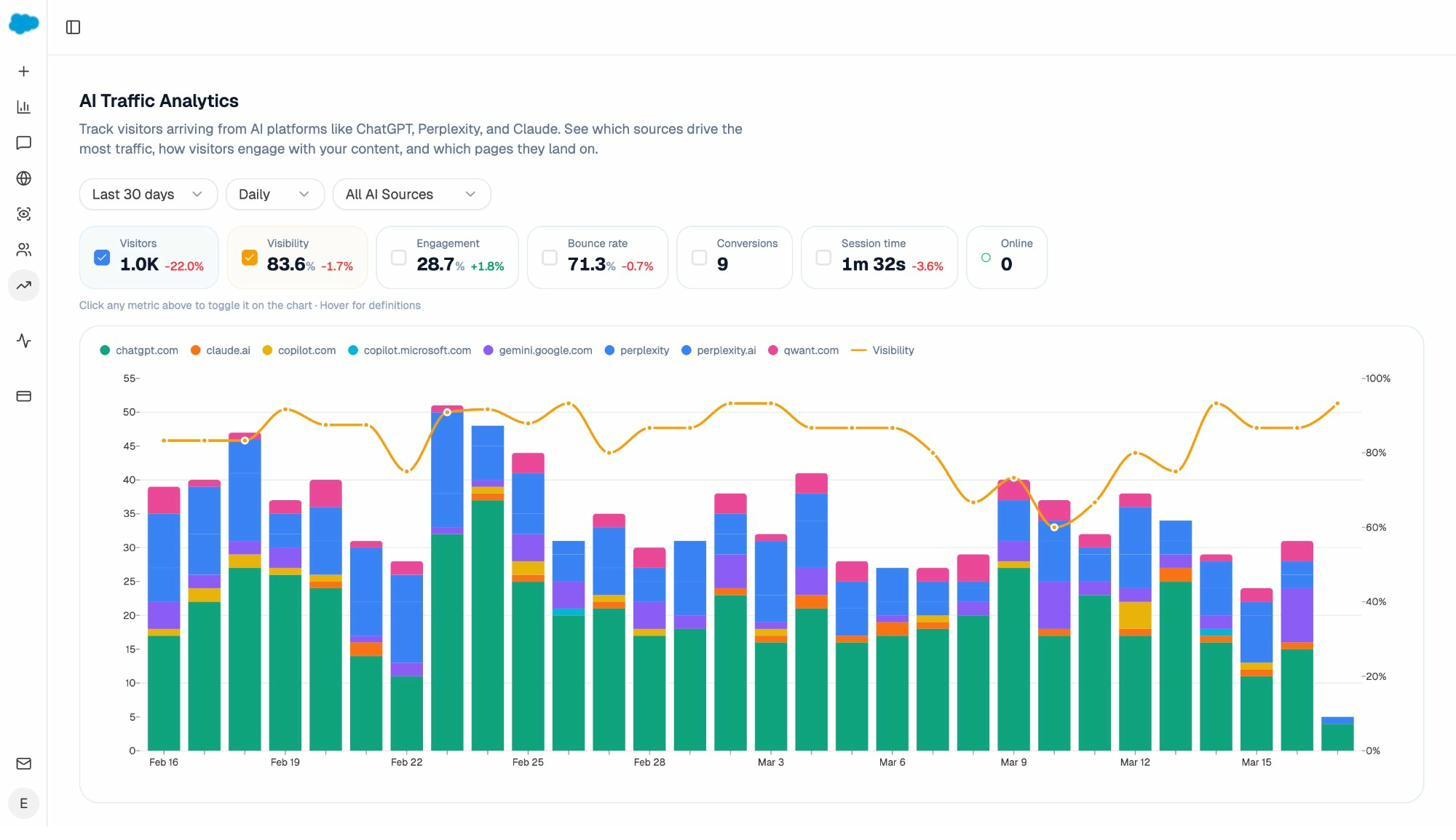
Track AI-referred traffic by country. The AI Traffic Analytics dashboard shows which AI platforms drive traffic to your site, broken down by country. If you’re running a multilingual strategy, you can see which localized pages receive AI-referred visits and which AI engines send the most traffic in each region.
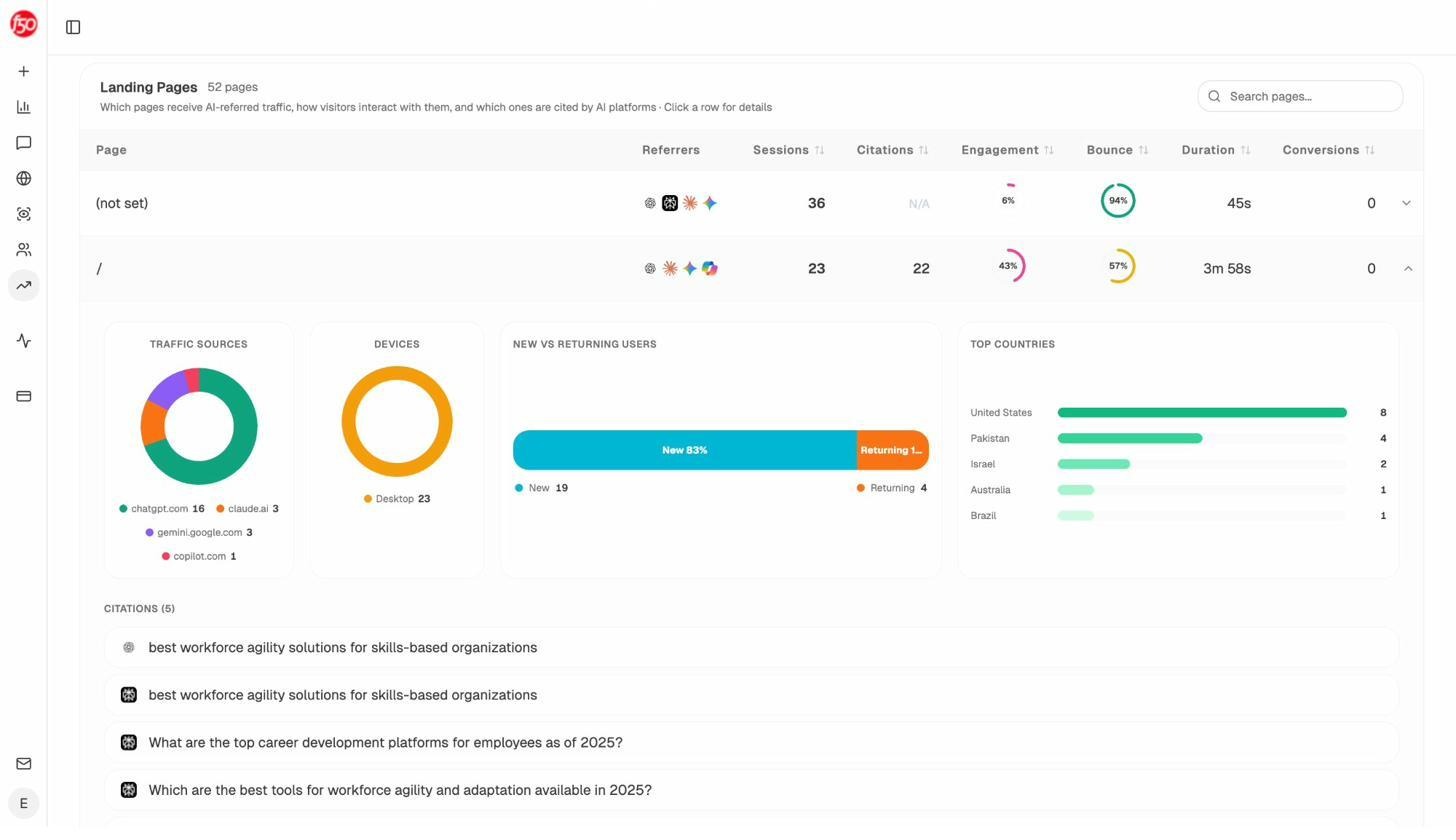
The Landing Pages report goes deeper. It shows exactly which pages receive AI traffic, which prompts drove the visits, and what countries the visitors come from. This is critical for multilingual strategy because it tells you which localized pages are actually getting cited by AI models.
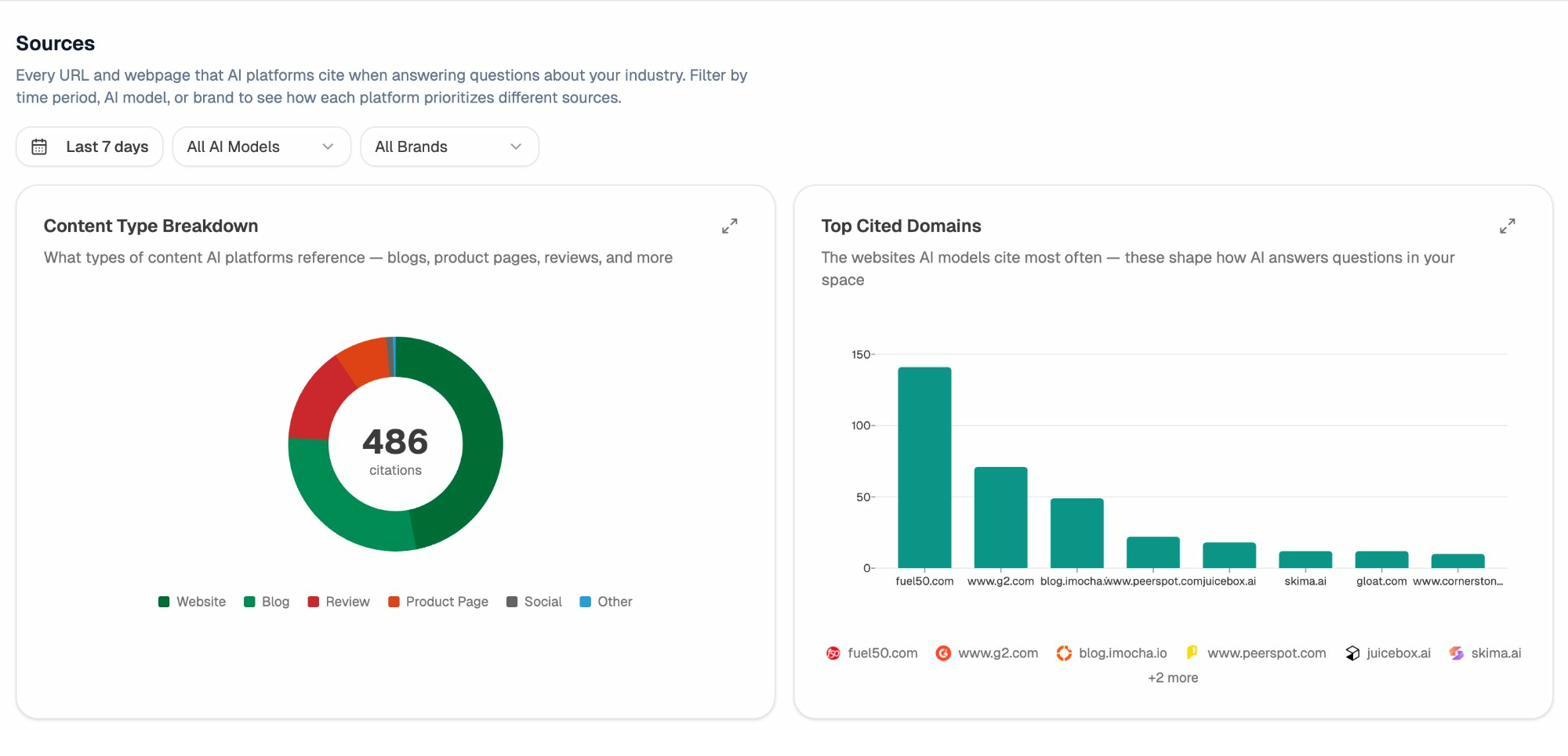
Check which sources AI models cite in your space. The Sources dashboard shows every URL and domain that AI platforms cite when answering questions in your industry. Filter by language-specific prompts to see which local-language sources are being cited. These are the sites you need to outperform—and potentially earn links from.
Why This Matters for Your Multilingual Strategy
Traditional SEO tools tell you how you rank in Google for keywords in different languages. Analyze AI tells you how AI models perceive and recommend your brand in those languages.
Both channels matter. A comprehensive multilingual strategy optimizes for both.
The brands that start tracking their AI visibility across languages now will have a significant head start. AI search adoption is growing fast, and the window to establish visibility—especially in non-English languages—is wide open.
Common Multilingual SEO Mistakes (and How to Avoid Them)
Mistake 1: Using Machine Translation Without Human Review
AI translation tools like Google Translate and DeepL produce serviceable drafts. But they miss nuance, local idiom, and keyword optimization. A translated page that reads unnaturally will have higher bounce rates, lower engagement, and weaker rankings.
Always have a native speaker review and edit machine-translated content before publishing.
Mistake 2: Translating Keywords Literally
Direct keyword translation rarely captures how people actually search. The English phrase “how to lose weight” might translate literally to French, but French speakers might use a completely different phrase to express the same intent.
Always validate translated keywords with actual search data.
Mistake 3: Missing or Broken Hreflang Tags
Broken hreflang implementation is one of the most common technical issues in multilingual SEO. If page A references page B but page B doesn’t reference page A, Google will ignore both tags.
Audit your hreflang tags regularly. Use your site’s XML sitemap as the source of truth.
Mistake 4: Duplicating Content Across Languages Without Localization
Copying your English content verbatim into a translation tool and publishing it creates a poor user experience. Worse, if the translation is similar enough to the English version, search engines might treat it as duplicate content.
Localize, don’t just translate. Adapt examples, images, and cultural references to match the target audience.
Mistake 5: Ignoring Internal Linking Within Each Language
Your French pages should link to other French pages. Your Spanish pages should link to other Spanish pages. Cross-language internal linking confuses both users and search engines.
Keep each language version as a self-contained section of your site with its own internal link structure.
Mistake 6: Not Tracking AI Search Visibility in Each Language
If you’re only tracking Google rankings for your multilingual content, you’re missing half the picture. AI engines are increasingly driving traffic in non-English languages, and the competitive landscape is different from traditional search.
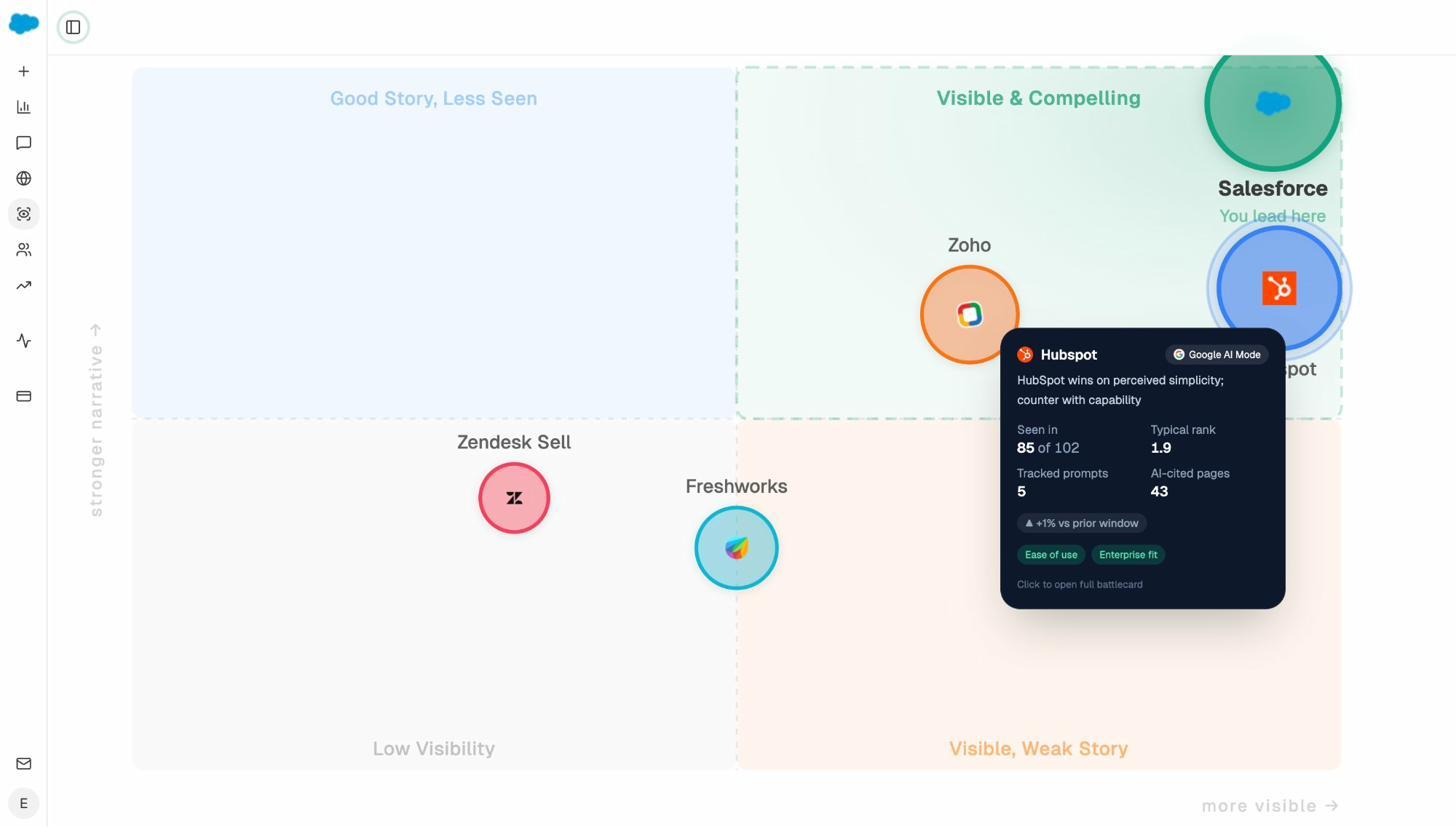
Use Analyze AI to track how your brand appears in AI answers across every language you target. The Perception Map shows how AI models position your brand relative to competitors, helping you identify where your multilingual messaging needs work.
How to Measure Multilingual SEO Success
Tracking the performance of a multilingual strategy requires monitoring metrics across both traditional search and AI search, in each language independently.
Traditional Search Metrics
-
Organic traffic by language/region: Segment your analytics by subfolder or ccTLD to track growth in each market independently.
-
Keyword rankings by language: Track your target keywords in each language separately. A keyword gaining ground in French might be losing ground in German—aggregated data will hide this.
-
Conversion rate by language: Not all traffic is equal. Track conversions from each language version to understand which markets deliver the best ROI.
-
Bounce rate by language: High bounce rates on localized pages often signal poor translation quality or mismatched user expectations.
Use Analyze AI’s Website Traffic Checker to benchmark your multilingual traffic against competitors.
AI Search Metrics
-
AI visibility by prompt language: Track how often your brand appears in AI answers for prompts in each target language.
-
AI-referred traffic by country: Monitor which countries send AI-referred visitors to your localized pages.
-
Citation sources by language: Identify which local-language sources AI models cite in your space, so you can prioritize content and link building efforts.
-
Competitor visibility by language: Track which competitors appear in AI answers for each language to identify market-specific threats and opportunities.
Analyze AI’s Overview dashboard consolidates all of this data across AI engines, giving you a single view of your multilingual AI visibility.
Getting Started
Multilingual SEO looks complex, but the path forward is straightforward:
-
Pick one language to start with. Choose the market with the highest opportunity and lowest competition based on keyword research.
-
Localize your top 10-20 pages. Start with your highest-traffic, highest-converting content.
-
Set up hreflang correctly from day one. Getting this wrong creates problems that compound over time.
-
Track both Google and AI search from the start. Set up Analyze AI to monitor your AI visibility in each language alongside your traditional SEO tools.
-
Measure, learn, and expand. Once your first language proves ROI, repeat the process for the next market.
The data is clear: companies that invest in multilingual SEO see traffic lifts of 50-200%. And with AI search adding another organic channel where non-English competition is still minimal, the window for early movers has never been wider.
Don’t wait for your competitors to figure this out first.

Ernest

Ibrahim


