



In this article, you’ll learn why most outreach emails fail before they’re even opened, how to segment your prospects so you stop wasting time on the wrong people, and how to write outreach emails that actually get responses. You’ll also learn how to find the right prospects, craft subject lines that don’t scream “template,” time your outreach for maximum impact, and follow up without being annoying. Along the way, you’ll see how AI search is quietly reshaping the way recipients evaluate your credibility before they ever reply — and what you can do about it.
If you’ve ever sent 200 outreach emails and gotten three replies (two of which were “please remove me from your list”), you already know this: outreach is broken for most people.
Not because outreach doesn’t work. It does. But because most outreach emails are indistinguishable from spam.
The gap between a great outreach email and a terrible one isn’t copywriting talent. It’s effort. The best outreach emails show the recipient that you did the work — you researched them, you understand what they care about, and you’re offering something worth their time.
The worst ones show the opposite: you scraped a list, plugged in a template, and hit “send.”
This guide is for people who want to stop getting ignored.
Table of Contents
What Is Outreach (And What Makes It Different from Spam)?
Outreach is the process of reaching out to specific people — bloggers, journalists, website owners, influencers — to build a relationship, promote content, secure a backlink, or pitch a collaboration.
Spam is mass-emailing strangers with no regard for who they are or what they care about.
The difference sounds obvious, but in practice, the line blurs fast. Here’s an email that crosses it:
Hey [First Name],
I just found your post: [URL of their article]
It links to this post: [URL of a competitor’s article]
I have a similar post: [URL of your article]
Please link to me too.
That’s a template pretending to be a personal email. The recipient can spot the pattern in two seconds. It goes in the trash.
The best outreach emails feel like they were written by a human who actually read the recipient’s work. That’s the bar.
![[Screenshot description: Example of a bad outreach email in an inbox — a clearly templated email with generic subject line and placeholder-style copy]](https://www.datocms-assets.com/164164/1776794381-blobid1.png)
Why Most Outreach Emails Fail
Before we get into how to write good outreach emails, it’s worth understanding why most of them fail. There are five common reasons:
1. You’re emailing the wrong person. If the recipient has no reason to care about your content, no amount of good copy will save you.
2. You have nothing to offer. You’re asking for a link, a tweet, or a mention — but giving nothing in return. This is the equivalent of walking up to a stranger and asking for money.
3. Your email looks like a template. The recipient has seen your email structure a hundred times. They don’t need to read past the first sentence to know you’re running a campaign.
4. Your content isn’t good enough. Even if you do everything else right, mediocre content kills outreach. Nobody wants to link to something average.
5. Your timing is off. The person wrote about that topic three years ago. They’ve moved on. Your email is irrelevant.
Each of these is fixable. The rest of this guide shows you how.
Step 1: Segment Your Prospects (Stop Treating Everyone the Same)
The biggest mistake in outreach is treating all prospects the same. A one-size-fits-all email doesn’t work because a blogger with 500 monthly visitors and an industry leader with 500,000 monthly visitors have completely different inboxes, expectations, and motivations.
Segment your prospects into four groups:
Sharks
These are the top-tier names in your industry — people with massive audiences and high-profile reputations.
They get hundreds of emails a day. Your chances of reaching them with a cold email are close to zero.
To get on their radar, you need a warm introduction from someone they trust, or you need to do something genuinely impressive that they can’t ignore (a major data study, a contrarian take that goes viral, or a collaboration that benefits them directly).
Don’t waste your first impression on a template. If you’re going to email a Shark, it needs to be exceptional.
Big Fish
These are well-known people in your niche — not household names, but respected voices with engaged audiences.
A personalized email can reach them. But a template won’t.
The key with Big Fish is to ask for their opinion, not their promotion. If your content is good enough, they’ll share it without being asked.
Small Fish
These are people who are actively building their presence — writing guest posts, contributing to communities, growing their audience. Their websites are gaining traction but aren’t dominant yet.
Small Fish are your best outreach targets. They’re responsive, they value new connections, and a good pitch can lead to real collaboration.
Spawn
These are brand-new voices in your industry. They’ll reply to almost anything, but a link from their site carries little weight because the site is too new to have built any authority.
Focus your outreach on Small Fish and Big Fish. That’s where the return on your effort is highest.
How to check a prospect’s authority: Use Analyze AI’s free Website Authority Checker to quickly assess the strength of a prospect’s website before you invest time in writing a personalized email.
![[Screenshot description: Analyze AI Website Authority Checker showing the domain authority score of a prospect’s website]](https://www.datocms-assets.com/164164/1776794399-blobid2.png)
Step 2: Find the Right Prospects
Most outreach advice jumps straight to email templates. But the template doesn’t matter if you’re emailing the wrong people.
Here’s how to build a list of high-quality prospects.
Use competitor backlink analysis
The fastest way to find outreach targets is to look at who’s already linking to your competitors. If they linked to a similar piece of content, they might link to yours — especially if yours is better.
![[Screenshot description: Backlink analysis tool (e.g., a free backlink checker) showing referring domains for a competitor’s article]](https://www.datocms-assets.com/164164/1776794406-blobid3.png)
Search for people who recently wrote about your topic
Someone who published an article on your topic last week is a much better prospect than someone who wrote about it two years ago. Recent publishers are still thinking about the topic and are more likely to update their content.
Use Google Search with a date filter to find articles published in the last month. Search for your target keyword, click “Tools,” then set the time range to “Past month.”
![[Screenshot description: Google Search results filtered by “Past month” showing recent articles on a topic]](https://www.datocms-assets.com/164164/1776794414-blobid4.png)
Monitor your topic with alerts
Set up Google Alerts for your target keywords. Whenever someone publishes new content on your topic, you get notified. This turns outreach into a reactive process — you’re reaching out at the moment they’re most receptive.
![[Screenshot description: Google Alerts setup page showing a keyword alert being created]](https://www.datocms-assets.com/164164/1776794423-blobid5.png)
Use the SERP to find linkers
If your target keyword ranks pages that link to multiple external resources, the people behind those pages are natural link-givers. Look at the top 10 results for your keyword, check which ones link out generously, and add them to your list.
Use Analyze AI’s free SERP Checker to pull the current top results for any keyword and identify which pages are linking outward.
![[Screenshot description: Analyze AI SERP Checker showing top-ranking results for a keyword]](https://www.datocms-assets.com/164164/1776794429-blobid6.png)
Check who’s showing up in AI search results
Here’s something most outreach guides miss: the people and brands that AI search engines cite are often different from the ones ranking on Google’s page one.
If you’re doing outreach to build authority for your content, you should know who AI search engines like ChatGPT, Perplexity, and Gemini are citing for your topic. These are sources that AI models consider authoritative — and they’re worth reaching out to.
In Analyze AI, you can use the Sources dashboard to see which websites are being cited across AI search engines for prompts related to your industry.
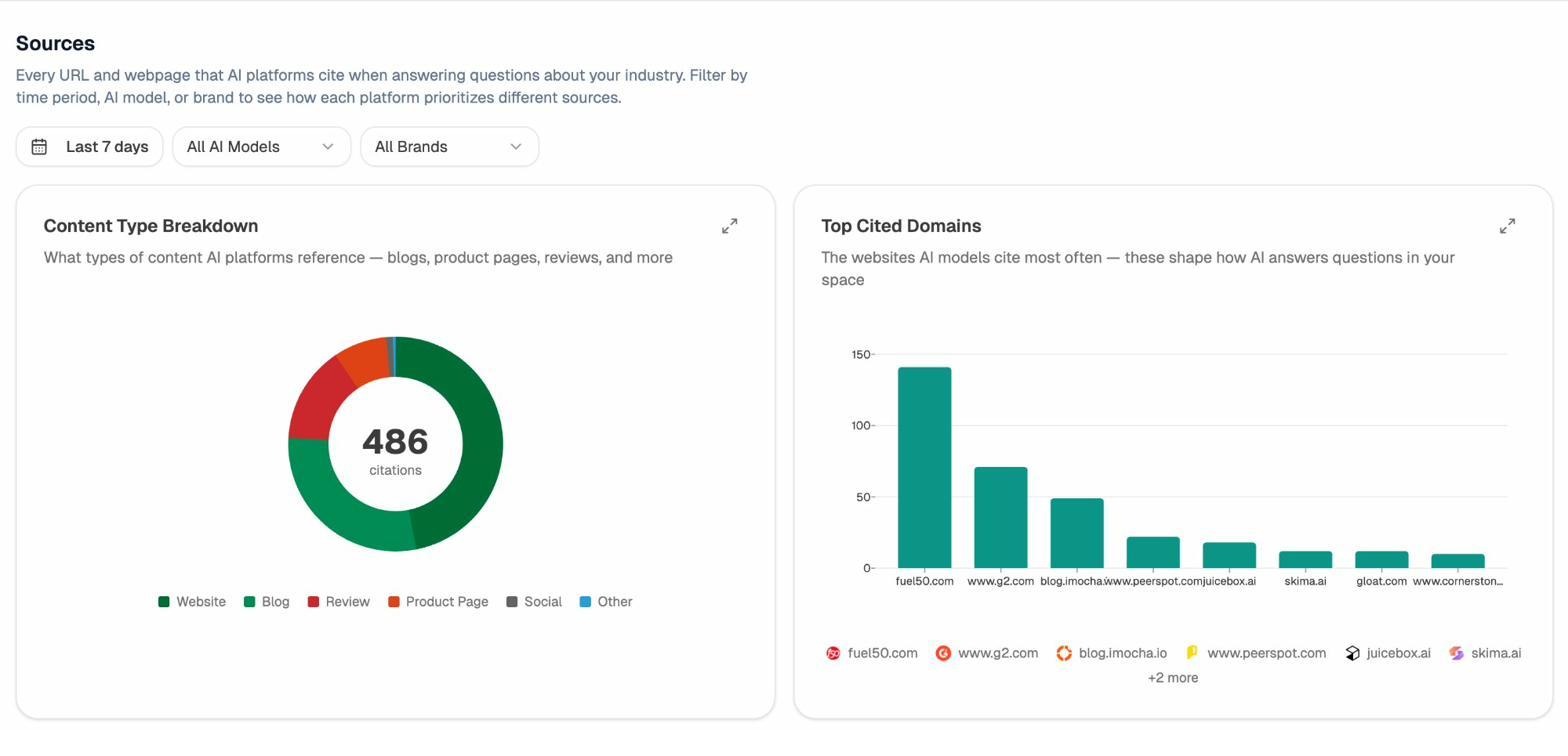
If a source is being cited by AI models, it means their content is considered trustworthy and authoritative. That makes them a high-value outreach target — because if they link to you or mention you, that signal gets picked up by both Google and AI search engines.
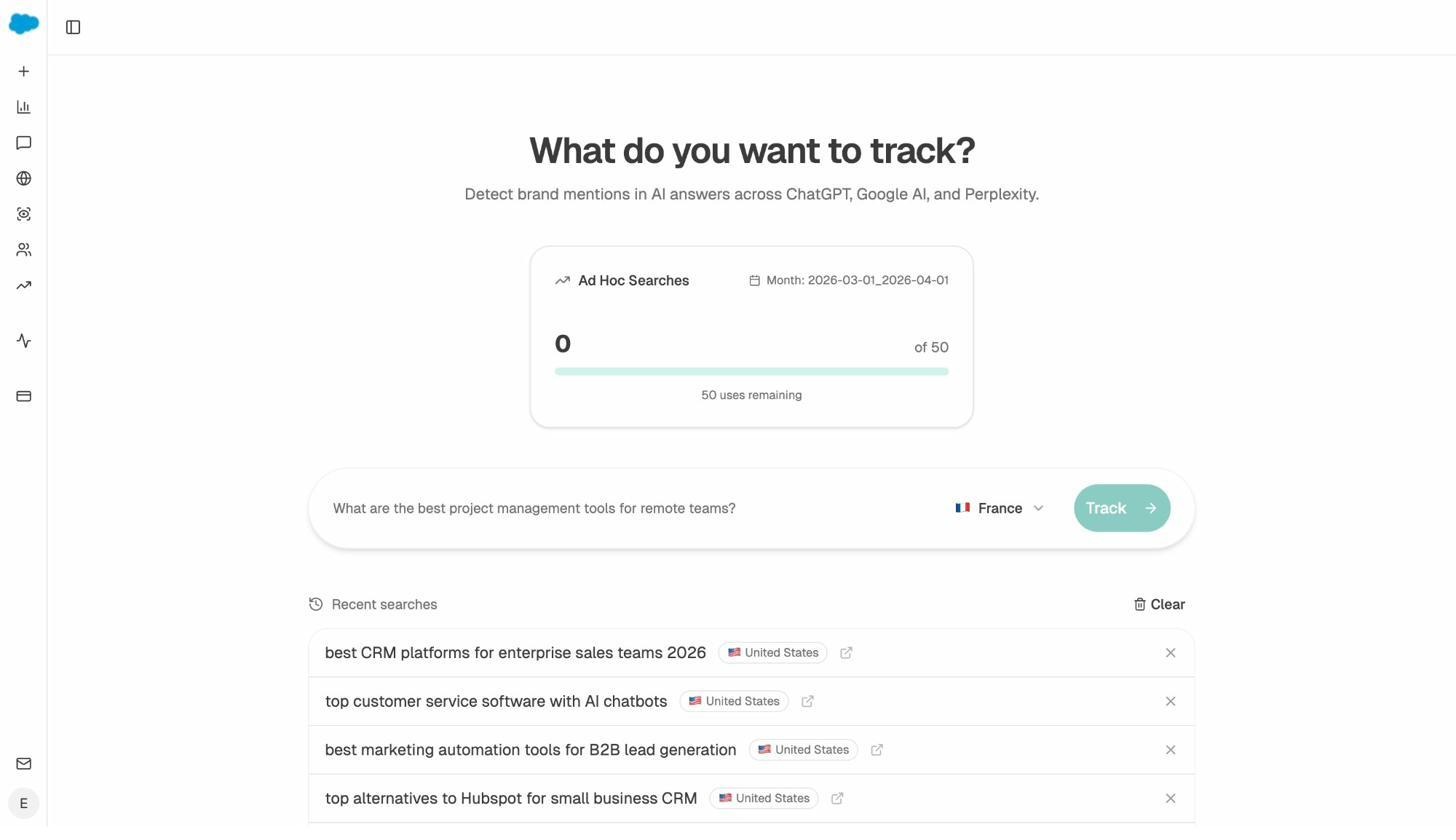
You can also use Ad Hoc Prompt Searches to run a one-off query and see which brands get cited for any prompt.
Step 3: Find Their Actual Email Address
This sounds basic, but it’s where a shocking number of outreach campaigns go wrong.
Too many people rely on automated tools to guess email addresses. They’ll try [email protected] or [email protected] and hope for the best. These guessed addresses get caught by catchall servers and immediately signal that the sender didn’t care enough to look.
Here’s how to find the right email address:
Check the website. Most bloggers and journalists list their email on an About page, Contact page, or Author bio. This takes 30 seconds.
Check their social profiles. Twitter bios, LinkedIn profiles, and personal websites often include a direct email address or a preferred contact method.
Use an email finder tool. Tools like Hunter.io let you search for verified email addresses associated with a domain. This is faster than guessing and far more accurate.
![[Screenshot description: Hunter.io Domain Search showing verified email addresses for a website]](https://www.datocms-assets.com/164164/1776794442-blobid9.png)
Check their LinkedIn. If you’re connected (or share mutual connections), LinkedIn sometimes surfaces contact details directly.
The rule is simple: if you can’t find their real email address, you haven’t researched them enough to be emailing them.
Step 4: Give Them a Reason to Care
The single biggest problem with most outreach emails is that they’re all “ask” and no “give.”
You want a link. You want a tweet. You want to be featured. But what does the recipient get out of it?
If you don’t answer that question in your email, you’ll get ignored.
Here’s how to make your outreach about them, not you.
Show them something new and valuable
If your content contains original research, unique data, a contrarian take, or a genuinely fresh perspective, say so. Don’t just say “check out my article.” Explain what’s in it that they haven’t seen before.
Bad:
I wrote a great article about email outreach. I think you’d find it useful.
Good:
We analyzed 4,200 outreach emails and found that emails sent on Tuesday mornings get a 31% higher response rate than emails sent on Friday afternoons. I thought you’d find the data interesting since you wrote about outreach timing last month.
The difference is specificity. The first email is vague and self-serving. The second gives the recipient a concrete reason to click.
![[Screenshot description: Example outreach email showing a specific data point used as a hook]](https://www.datocms-assets.com/164164/1776794446-blobid10.jpg)
Feature them in your content
People are almost physically incapable of ignoring content that mentions them. It’s human nature.
If you can feature a prospect in your article — a quote from their blog, a reference to their tool, a mention of a framework they created — do it before you reach out. Then let them know.
This works because you’re giving them something (exposure) before asking for anything in return.
I referenced your framework for cold email sequences in our new guide to outreach. Thought you’d want to see how we applied it: [link]
That’s an email most people will open.
Offer a content upgrade
If the prospect published a post with outdated information, missing sections, or broken links, offer to fill the gap. Don’t be condescending about it — frame it as a complement to their existing work.
Use Analyze AI’s free Broken Link Checker to find broken links on a prospect’s page. If their article links to a dead resource, you can offer yours as a replacement. That’s one of the most natural and effective outreach excuses there is.
![[Screenshot description: Analyze AI Broken Link Checker showing broken links on a prospect’s webpage]](https://www.datocms-assets.com/164164/1776794451-blobid11.png)
Step 5: Only Pitch Your Best Work
Here’s a hard truth: most of your content isn’t worth doing outreach for.
If you published a solid but unremarkable article, the right promotion strategy is internal linking, social sharing, and SEO optimization. Outreach should be reserved for your absolute best work — the kind of content that makes people say, “I’ve never seen this explained this way before.”
Why? Because you only get one chance to make a first impression on a prospect. If the first article you pitch them is mediocre, they’ll mentally file you under “not worth reading” and ignore future emails.
How to know if your content is outreach-worthy
Ask yourself three questions:
-
Does it contain something truly original? Original data, a unique framework, a first-person case study, or a perspective that nobody else in your space has published.
-
Does it already have social proof? If your article has been upvoted on Reddit, shared by recognized names, or cited by other publications, mention that in your outreach. Social proof is the fastest way to establish credibility with a stranger.
-
Is it better than what already ranks? Pull up the top 5 results for your target keyword. If your article doesn’t add anything those results don’t already cover, it’s not outreach-worthy yet.
Use Analyze AI’s free Keyword Rank Checker to see what’s currently ranking for your keyword and benchmark your content against it.
![[Screenshot description: Analyze AI Keyword Rank Checker showing current rankings for a target keyword]](https://www.datocms-assets.com/164164/1776794452-blobid12.png)
Build social proof before you pitch
Don’t rush into outreach the day you publish. Instead, spend the first few days gathering momentum:
-
Share the article in relevant communities (Reddit, Indie Hackers, niche Slack groups, LinkedIn).
-
Send it to your email list.
-
Post it on social media and engage with replies.
Once you have comments, shares, or upvotes, weave that into your outreach email:
Our guide to [topic] hit the front page of /r/[subreddit] last week with 120+ upvotes. Thought it might be relevant to your readers since you covered a similar angle.
That’s not bragging — it’s evidence that other people found the content valuable. And it dramatically increases the chances that the recipient will click.
Step 6: Craft a Compelling Outreach Excuse
The three worst outreach excuses in existence:
-
“You tweeted this post, and I wrote a similar one.”
-
“You published this post, and I wrote a similar one.”
-
“You linked to this post, and I wrote a similar one.”
“Similar” is not an excuse. Nobody wants to read something similar to what they already read. They want something different, better, or more complete.
A good outreach excuse answers this question: why should they care about your content specifically?
Here are excuses that actually work:
The contrarian angle: “You wrote about [topic] and I disagree with one of your main points. I’ve explained why in this article with data to back it up.”
The missing piece: “Your article on [topic] is excellent, but it doesn’t cover [specific subtopic]. I wrote a deep dive on that exact gap.”
The updated data: “Your article references [year] data. We just ran a fresh analysis and the numbers have shifted significantly. Here’s what we found.”
The complementary resource: “Your post on [topic A] does a great job covering the theory. We just published a step-by-step walkthrough that shows how to implement it in practice. Your readers might find it useful as a companion piece.”
Each of these requires you to actually read the prospect’s content and figure out how yours relates to it. That’s the effort that separates successful outreach from inbox noise.
Step 7: Write an Email That Doesn’t Look Like a Template
Templates are fine. You can’t write 100+ completely original emails from scratch. The goal isn’t to eliminate templates — it’s to write templates that don’t look like templates.
Here’s how.
Write subject lines that create curiosity, not suspicion
Bad subject lines:
-
“Hi [Name], Compliment on one of your posts”
-
“Quick question about your blog”
-
“Partnership opportunity”
These scream “mass email.” The recipient has seen them a thousand times.
Good subject lines are short, specific, and create a small amount of curiosity:
-
“[their domain] + outreach data”
-
“re: your [topic] post”
-
“broken link on [specific page title]”
The goal is to make the recipient curious enough to open the email, without being misleading.
Break the pattern
Most outreach templates follow a predictable structure:
-
Hi [Name]
-
I found your article [URL]
-
I loved it
-
I have a similar article [URL]
-
Please link/tweet it
The recipient sees this pattern in the first two sentences and deletes the email. Break the pattern by starting with something unexpected — a specific observation about their work, a data point, or a direct statement of what you’re offering.
Here’s a template that works because it doesn’t feel like one:
Hey [Name],
I stumbled onto your article about [what their article covers].
[One specific, thoughtful sentence about something you noticed in their article — not generic flattery]
I figured you might find this interesting: we just published a [brief description of your content and what makes it different].
[Link]
If you think your readers would get value from it, I’d love for you to check it out. No pressure either way.
Thanks, [Name]
The structure is simple: mention their work, show you read it, plug your content with a clear differentiator, and make the ask easy to decline.
Drop the fake flattery
Every bad outreach email starts with something like:
“I’m a long-time reader of your amazing blog.”
“I just read your outstanding article and learned so much.”
“Your post about [topic] is truly exceptional.”
This flattery is hollow and the recipient knows it. If you’re going to compliment someone, be specific:
“Your breakdown of the ‘cluster’ approach to content marketing is the first time I’ve seen someone explain why hub-and-spoke models underperform. I’ve been testing your framework and seeing better results.”
The specificity proves you actually read their work. Generic praise proves nothing.
Step 8: Check Your AI Search Reputation Before You Hit Send
Here’s something nobody talks about in outreach: before most savvy recipients reply to your email, they Google you. And increasingly, they ask AI about you.
If someone you’ve never met emails you about their company, what do you do? You look them up. You search for their brand. And if you use ChatGPT, Perplexity, or Google’s AI Overview, you’ll get a quick summary of who they are, what they do, and how people talk about them.
If the AI response paints your brand positively — mentions you as an authority in your space, cites your content, and describes your product favorably — you’ve got a head start. The recipient is already primed to trust you.
If the AI response doesn’t mention you at all, or worse, describes you in a way that doesn’t match what you’re claiming in your email, your credibility takes a hit before the conversation even starts.
This is why monitoring your brand’s AI search presence matters for outreach — not just for SEO.
In Analyze AI, the Perception Map shows you exactly how AI models describe your brand. You can see the sentiment, the language used, and the attributes associated with your name.
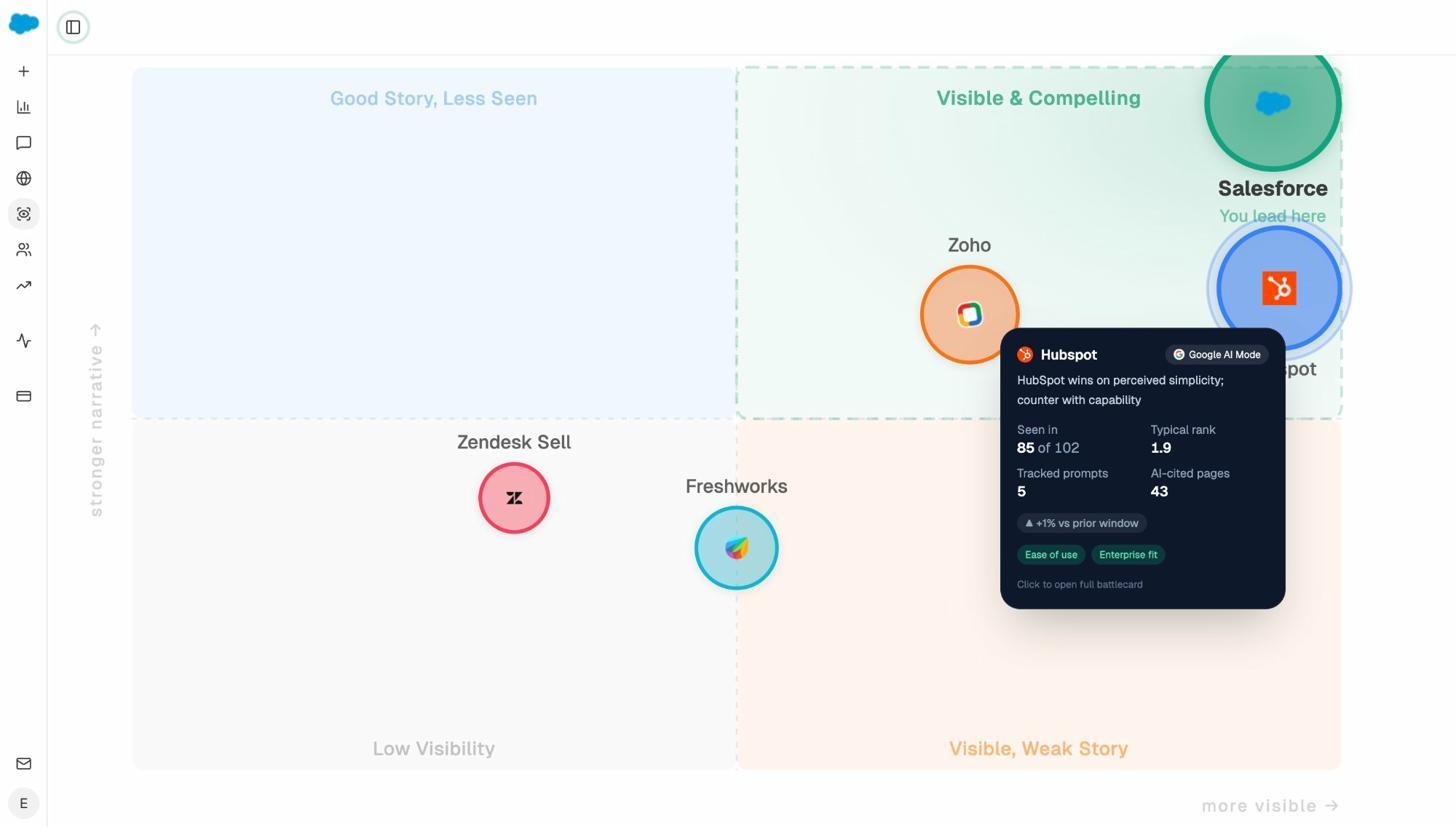
If the perception doesn’t match your positioning, that’s a signal to invest in improving your AI search visibility before scaling outreach campaigns.
You can also use the Competitors dashboard to see which brands AI models mention alongside yours. If your competitors are getting cited in AI responses and you’re not, your outreach emails are fighting uphill because the recipient’s AI-powered research won’t validate your authority.
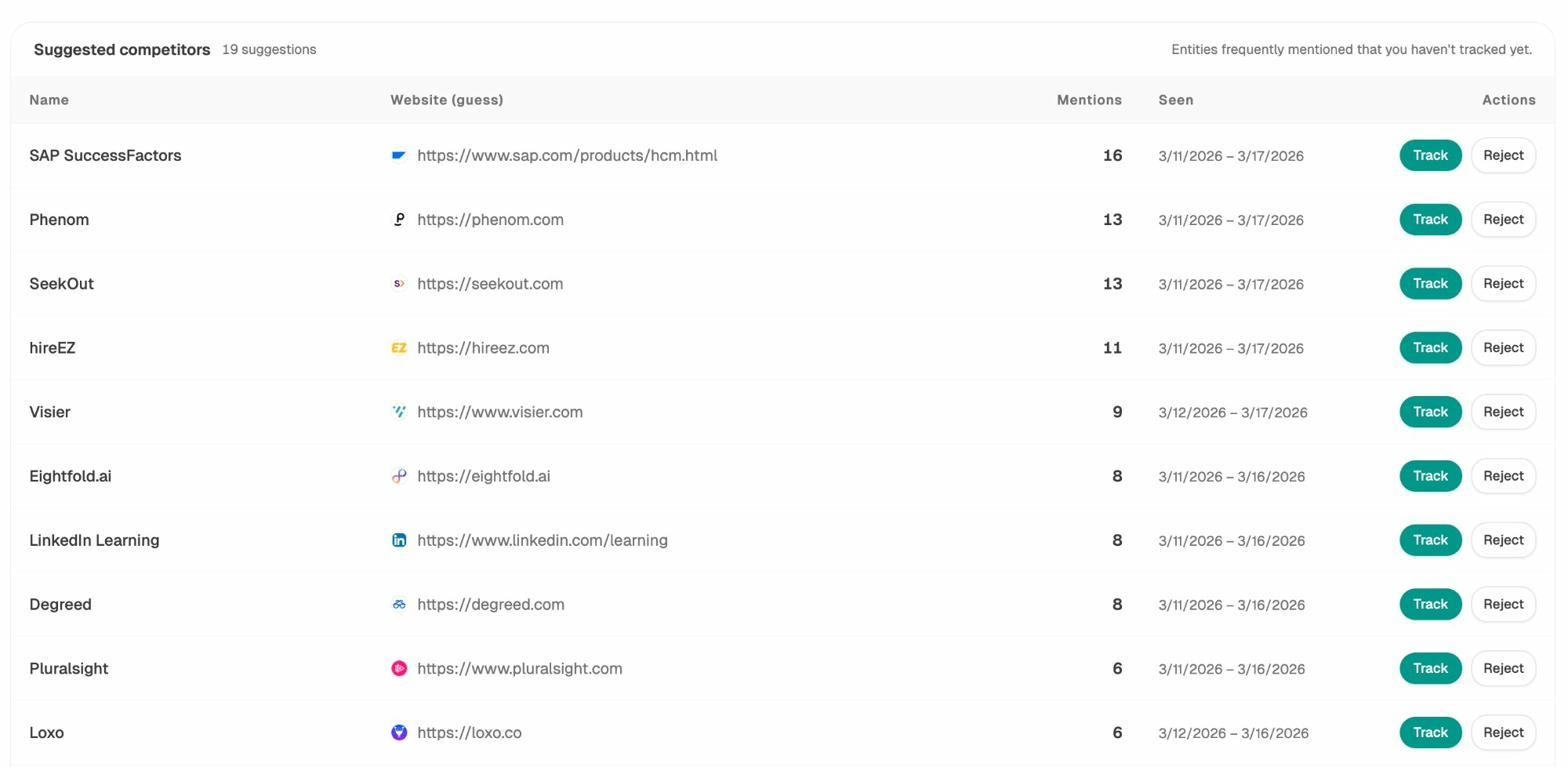
Think of it this way: outreach used to be a two-step process — send the email, hope they click. Now it’s three steps: send the email, they research you (often through AI), then they decide. That middle step is the one most marketers ignore.
Step 9: Time Your Outreach
Timing is one of the most underrated factors in outreach success.
Reach out when the content is fresh
If someone published an article yesterday, they’re still thinking about it. They’re checking comments, sharing it on social media, and looking for ways to improve it. That’s your window.
If they published it six months ago, they’ve moved on. Your email about their old post isn’t going to get a response.
Set up monitoring for real-time opportunities
Use Google Alerts to track when new content is published on your topic. Better yet, use a tool like Analyze AI to monitor when AI search engines start citing new sources for your target prompts. If a new source shows up in AI citations, it means the content is fresh and the author is likely open to engagement.
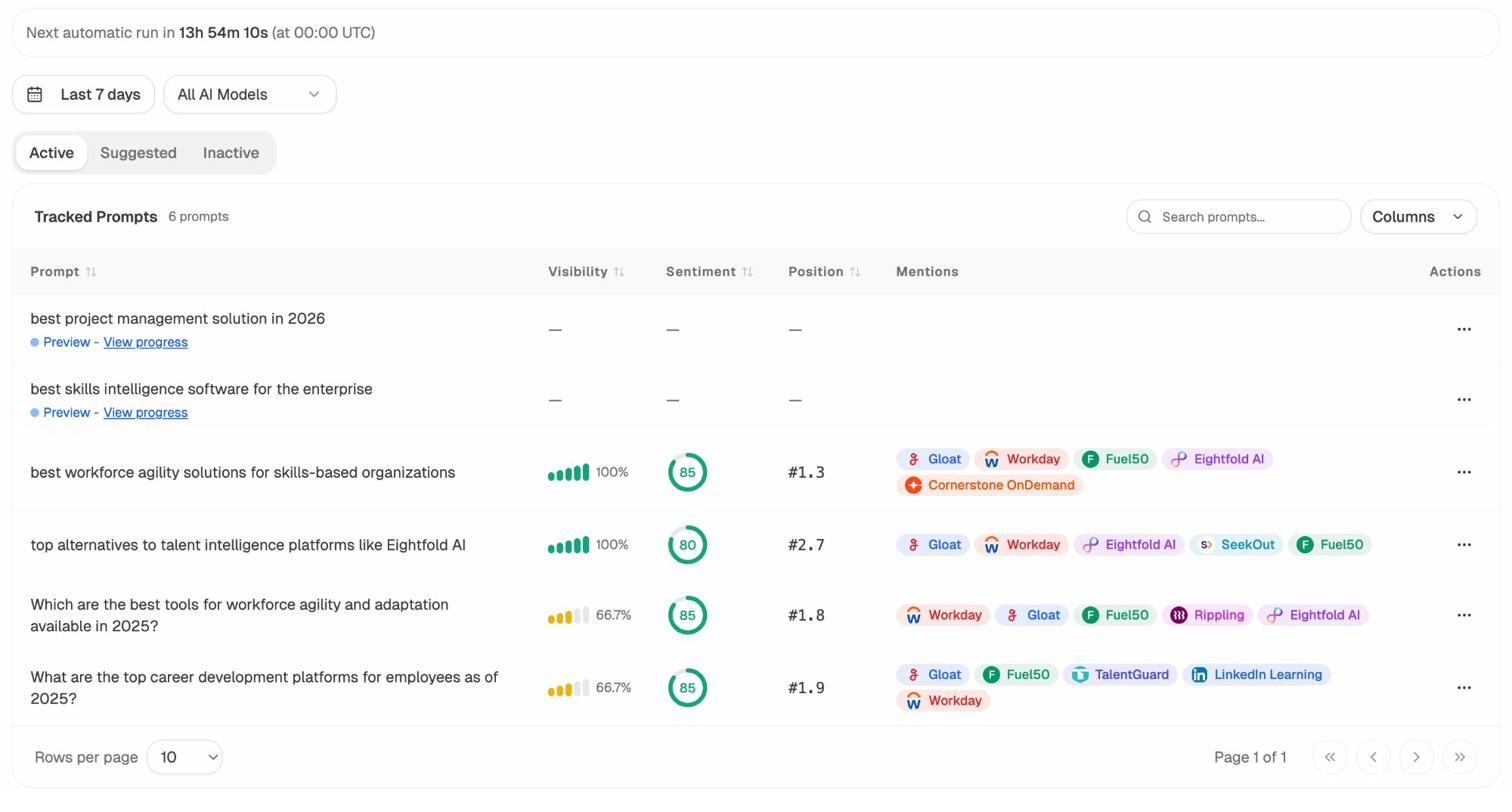
The Suggested Prompts tab in Analyze AI can also surface new prompts where your competitors are gaining visibility, which means there’s likely new content being created in your space that you should know about.
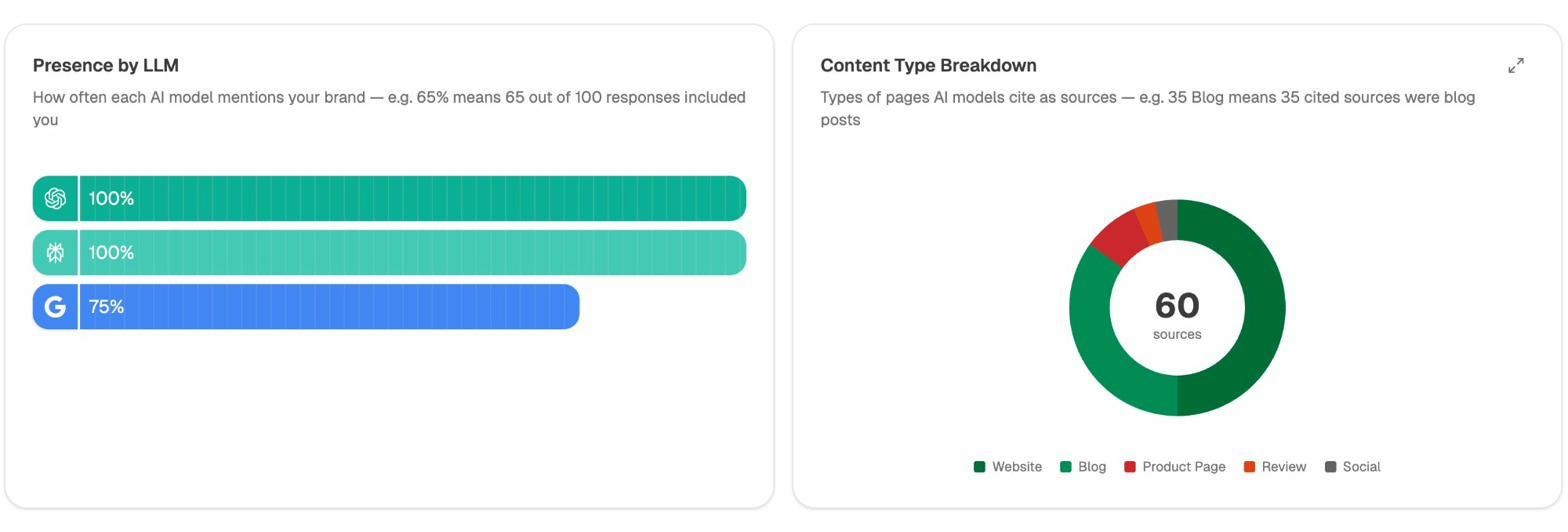
Avoid Mondays and Fridays
This isn’t a hard rule, but data from multiple email marketing studies suggests that Tuesday through Thursday mornings tend to have the highest open rates. Monday inboxes are flooded after the weekend. Friday attention spans are shot.
Send your outreach emails Tuesday or Wednesday morning, ideally between 9-11 AM in the recipient’s local time zone.
Step 10: Ask Wisely
How you frame your request matters as much as the request itself.
Don’t ask for shares
If the recipient likes your content, they’ll share it. You don’t need to ask. Asking puts them in an uncomfortable position — if they don’t want to share it, they now have to either ignore your email or explicitly say no.
Neither outcome is good for your relationship.
Make the link ask easy to decline
Instead of:
Could you add a link to our article in your post?
Try:
If you think your readers would get value from this, it might be worth mentioning in your article (or a future one). Totally up to you.
The second version asks for the same thing but gives the recipient an easy out. They don’t feel pressured, which paradoxically makes them more likely to say yes.
Suggest a specific placement
If there’s a natural place in their article where your link would add value, point it out. This removes the work of figuring out where to place it.
In your section on “finding email addresses,” you mention that manual research is time-consuming. We have a free tool that automates that step — it might be a useful addition for your readers right there.
This is specific, helpful, and makes the link feel like a natural fit rather than an imposition.
Step 11: Follow Up Once (And Only Once)
People forget to reply. It happens. A single, short follow-up is reasonable.
Here’s what it should look like:
Hey [Name],
Just a quick follow-up in case my last email got buried. No worries if you’re not interested — I won’t bug you about it again.
Thanks, [Name]
That’s it. One follow-up. Seven days after the original email.
Do not send a second follow-up. Do not send a third. Do not send a “just checking in” every three days for a month. This is the fastest way to get blocked and ruin any chance of a future relationship.
Outreach Email Templates That Actually Work
Here are four outreach templates for specific use cases. Each one follows the principles above: specific, value-driven, and pattern-breaking.
Template 1: Broken Link Replacement
Subject: broken link on [their page title]
Hey [Name],
I was reading your article on [topic] and noticed that the link to [dead resource] in your [section name] section is broken.
We have a resource that covers the same topic: [your URL]
It [one sentence explaining what makes your resource good — e.g., includes updated 2026 data, has step-by-step instructions, etc.]
Might be a good replacement if you’re updating the post. Either way, wanted to give you a heads up about the dead link.
Thanks, [Name]
Why it works: You’re offering value (alerting them to a broken link) before asking for anything. The link suggestion feels like a helpful recommendation, not a demand.
Use Analyze AI’s Broken Link Checker to find broken links on prospect pages at scale.
Template 2: Fresh Data Pitch
Subject: new data on [topic] — thought you’d want to see
Hey [Name],
Your post on [topic] references data from [year]. We just published a study with updated numbers and the results shifted in a few interesting ways.
Quick takeaway: [one specific, surprising finding from your study]
Full study here: [your URL]
Given that you’re one of the most-referenced voices on this topic, I figured you’d want to see the updated numbers. Happy to share the raw data if it’s useful for a follow-up post.
Best, [Name]
Why it works: You’re leading with a concrete data point, positioning yourself as a resource (not a competitor), and offering something extra (raw data) that makes the relationship transactional in the best way.
Template 3: Featuring Them
Subject: mentioned you in our [article topic] guide
Hey [Name],
We just published a guide on [topic] and referenced your [specific framework/article/quote] as one of the best examples of [what it illustrates].
Here’s the section where we mentioned you: [link to the specific section]
No ask here — just wanted to let you know. If you think the piece is worth sharing with your audience, that’d be great. But mainly I wanted to say thanks for the work you’ve put out. It’s been useful for our team.
Cheers, [Name]
Why it works: You’re giving before asking. The “no ask here” phrasing is disarming, and the genuine compliment (backed by the action of featuring them) makes the recipient feel valued rather than targeted.
Template 4: Content Gap Pitch
Subject: missing piece in your [topic] article
Hey [Name],
Your article on [topic] is one of the best I’ve seen on the subject. One thing I noticed is that it doesn’t cover [specific subtopic].
We just published a deep dive on exactly that: [your URL]
It covers [brief summary of what your article adds]. Your readers might find it useful as a companion piece, especially the section on [specific part].
Worth a look if you’re planning to update the post.
Best, [Name]
Why it works: You’re framing your content as complementary, not competitive. And you’re suggesting a specific section that adds value, which shows you’ve read their article and thought about how the two pieces fit together.
How to Measure Outreach Results
Sending emails is only half the job. Tracking results tells you what’s working and what to fix.
Here are the metrics that matter:
|
Metric |
What It Tells You |
Benchmark |
|---|---|---|
|
Open rate |
Whether your subject line and sender name are working |
40-60% for personalized outreach |
|
Reply rate |
Whether your email body and offer are compelling |
10-20% is solid |
|
Link acquisition rate |
Whether your content and ask are strong enough |
5-15% is realistic |
|
Bounce rate |
Whether your prospect list and email verification are accurate |
Keep below 5% |
If your open rates are low, the problem is your subject line or your sender reputation. If your open rates are high but reply rates are low, the problem is your email body or your content.
Track these numbers for every campaign and iterate.
Track the downstream effect on AI search visibility
Links don’t just help your Google rankings. They also influence whether AI search engines cite your content.
AI models like ChatGPT and Perplexity tend to cite sources that are well-linked, frequently referenced, and considered authoritative on a topic. Successful outreach campaigns build exactly that kind of profile.
In Analyze AI, you can monitor how your citation share changes over time as you build more backlinks and mentions. The Overview dashboard shows your visibility trends across AI models, and the AI Traffic Analytics report shows which of your pages are receiving traffic from AI search engines.
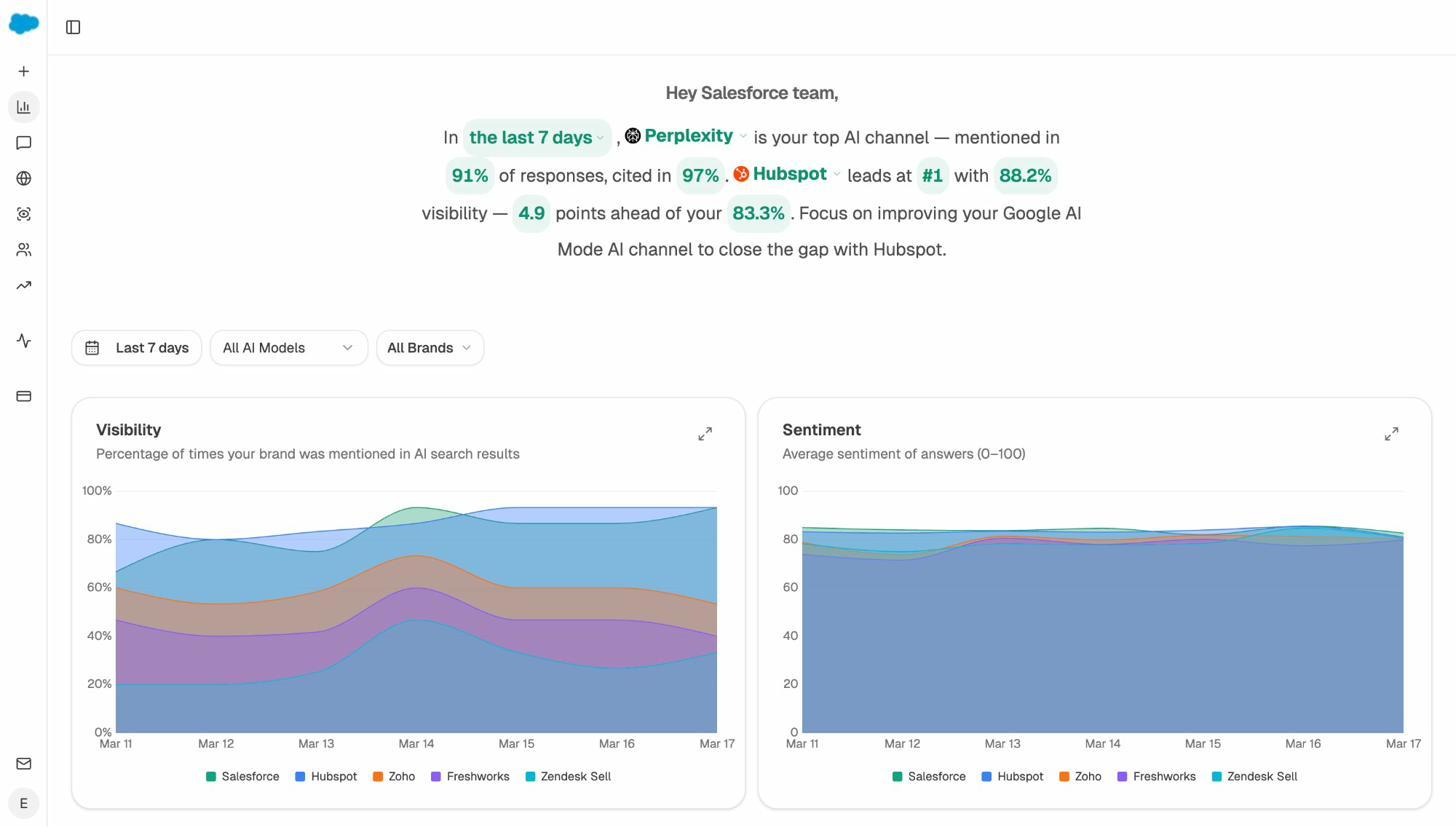
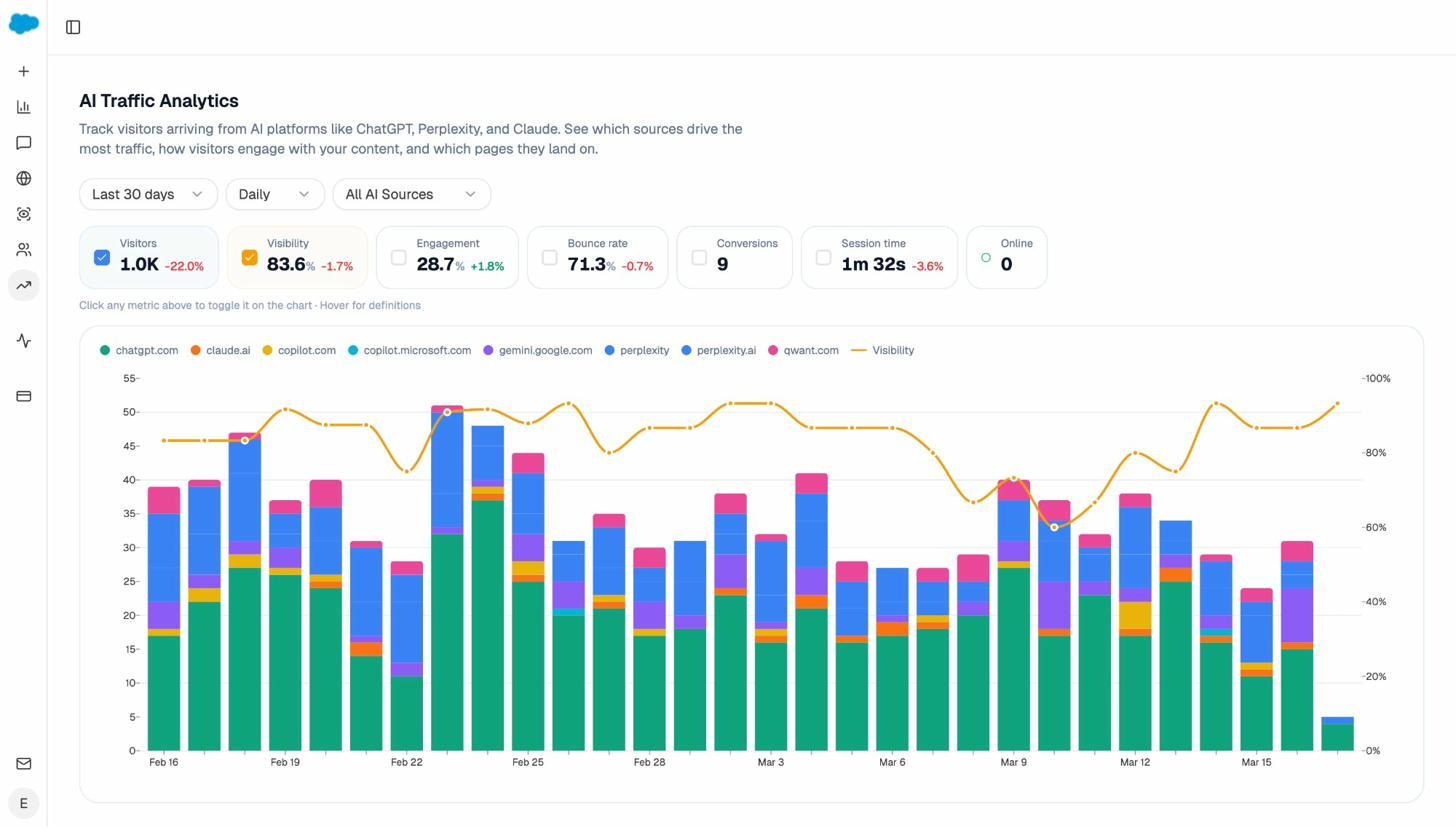
If you see a spike in AI citations after a successful outreach campaign, that’s a signal that the links you earned are being recognized by AI models — not just Google. This is what makes outreach a compound strategy: one campaign improves both your traditional SEO and your AI search presence.
Common Outreach Mistakes to Avoid
Even experienced marketers make these errors. Here’s what to watch for.
Emailing info@ or contact@ addresses. These go to a shared inbox (or nowhere). Always find the individual’s email.
Mass-emailing with CC or BCC visible. If the recipient sees they’re one of 50 people in the same email, your credibility is gone. Use a proper outreach tool that sends individual emails.
Using a free email domain. Sending outreach from a Gmail or Yahoo address signals that you’re not a serious operation. Use your company domain.
Ignoring deliverability. If your emails are landing in spam, it doesn’t matter how good your copy is. Warm up your sending domain, authenticate with SPF/DKIM/DMARC, and use a tool like Analyze AI’s Website Traffic Checker to verify that your prospects’ sites are actually active before you spend time on a personalized email.
Writing long emails. Nobody reads a 500-word outreach email. Keep it under 150 words. Get to the point fast.
Being dishonest about your reason for emailing. Don’t pretend to be a “long-time reader” if you just discovered their blog 10 minutes ago. People can tell. Honesty is more disarming than flattery.
The Bottom Line
Good outreach is not a shortcut. It’s not a hack. It’s a relationship-building process that requires effort, research, and genuine value.
The people who succeed at outreach are the ones who treat it like content marketing — a long-term investment in building authority and trust. Not a numbers game where you blast 1,000 emails and hope for the best.
Here’s the playbook in summary:
-
Segment your prospects. Focus on Small Fish and Big Fish.
-
Find the right people using competitor analysis, SERP research, and AI citation data.
-
Get their real email address. If you can’t find it, you haven’t done enough research.
-
Lead with value. Show them something new, feature them, or fix a problem.
-
Only pitch your best work. Let mediocre content promote itself through other channels.
-
Craft a specific outreach excuse. “Similar article” is not an excuse.
-
Write emails that don’t look like templates. Break the pattern, drop the fake flattery, and be specific.
-
Check your AI reputation first. What AI says about your brand affects how recipients evaluate your email.
-
Time your outreach. Reach out when their content is fresh and they’re still engaged with the topic.
-
Ask wisely. Don’t ask for shares. Make the link ask easy to decline.
-
Follow up once. One polite follow-up, then move on.
Do this consistently and your response rates will improve. Not because you found a magic template, but because you earned the right to be in their inbox.

Ernest

Ibrahim


