The 9 Best LLM Monitoring Tools for Brand Visibility in 2026
Written by
Ernest Bogore
CEO
Reviewed by
Ibrahim Litinine
Content Marketing Expert

This piece gives you a clear breakdown of the 9 LLM monitoring tools worth evaluating in 2026 — what they actually do, who each one is built for, and where they fall apart. By the end, you’ll know exactly which platform fits your goal: a simple pulse check, competitive intelligence, or a full-funnel view that proves whether AI visibility is driving sessions, signups, or revenue.
Table of Contents
What to look for in an LLM monitoring tool
Choosing the right LLM monitoring platform starts with knowing which capabilities actually change outcomes—not just which dashboards look impressive. Engine coverage should include the major answer systems your audience uses: ChatGPT, Perplexity, Gemini, Claude, Copilot, and Google AI Overviews. You also want strong brand and competitor monitoring so you can see visibility, citations, sentiment shifts, and how often competitors replace you in answers.
A useful tool should reveal source influence—which domains shape AI answers—and go beyond passive reporting by offering clear actions that help you improve visibility instead of simply measuring it. If performance matters, look for attribution features that connect AI answers to real sessions, conversions, or revenue. Granularity is just as important: the best tools break results down by prompts, subtopics, product lines, personas, and regions, so you can see where you win or disappear. Trend monitoring, alerts, and drift detection help you catch changes early and respond before they compound.
Which features matter most depends on whether you want simple snapshots, competitive intelligence, or full-funnel attribution.
TL; DR
| Tool | Best for | Core Strengths | Where It Falls Short | Ideal When You… |
|---|---|---|---|---|
| Analyze AI | Full-funnel AI search analytics | AI-referral attribution (sessions; conversions; revenue); prompt + sentiment + citation tracking; GA4 integration; strong competitor insights | Best fit for SMB/mid-market rather than heavy enterprise | Want to treat AI search as a real acquisition channel and prove ROI |
| Ahrefs Brand Radar | Large-scale AI visibility & share-of-voice at dataset depth | 100M+ prompts; multi-engine SOV; no setup required; strong competitive benchmarking | No attribution to traffic/revenue; lighter GEO guidance; pricing tied to Ahrefs ecosystem | Need broad visibility across many prompts and want AI insights inside Ahrefs |
| Semrush AI Visibility Toolkit | Teams already inside Semrush | AI visibility + SEO + content workflow in one place; prompt research; brand performance reports | No attribution; precision still evolving; bundled pricing can feel heavy | Want AI visibility without adding another standalone tool |
| XFunnel | Segmented AI visibility tied to behavior | Region/persona/funnel segmentation; GA4-connected attribution; recommendations & playbooks | Setup heavier; segmentation requires clarity on ICPs; custom pricing | Need segmentation by audience + GA4 performance in one workflow |
| Peec AI | Budget-friendly; multi-language visibility tracking | Affordable; multi-market coverage; competitive comparison; simple onboarding | Lighter on optimization workflow; limited source-influence depth; add-ons raise total cost | Want clean visibility data across languages without enterprise pricing |
| Am I On AI? | Lightweight brand-presence checks | Simple yes/no visibility; source impact; sentiment snapshots; easy for non-technical teams | No segmentation; no attribution; minimal workflows; weekly resolution | Need a fast pulse on brand presence before investing in GEO tools |
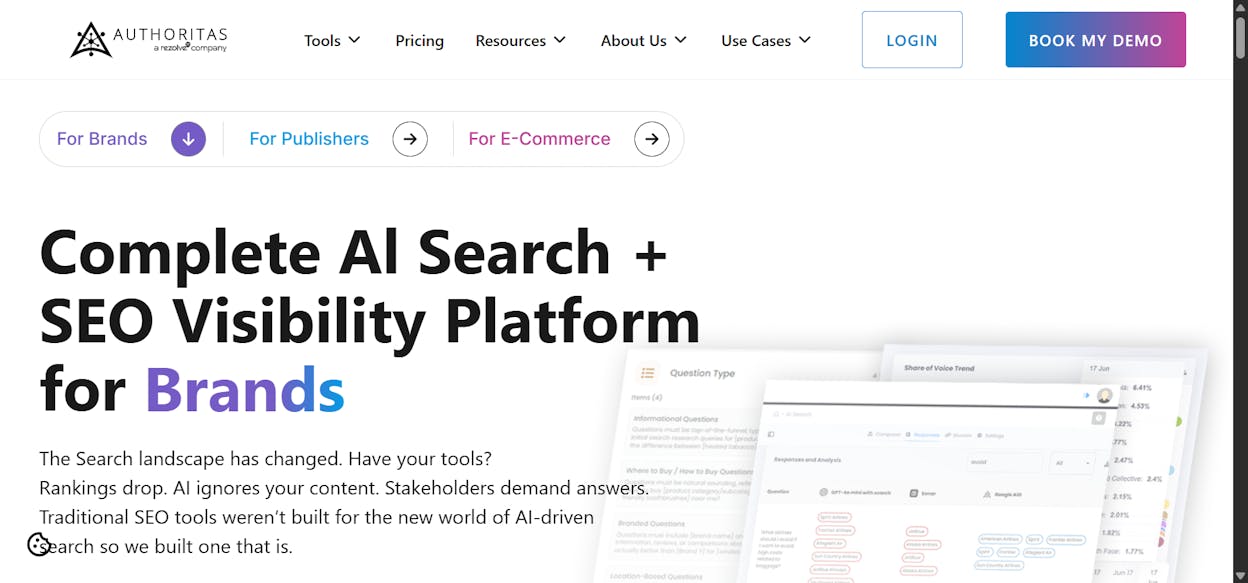
| Authoritas | SEO teams wanting AI visibility inside an SEO suite | Strong citation mapping; multilingual prompt tracking; SEO + AI visibility unified | Pricing complexity (credits + SEO license); GEO depth lighter than specialists | Want SEO + AI visibility together with strong citation intelligence |
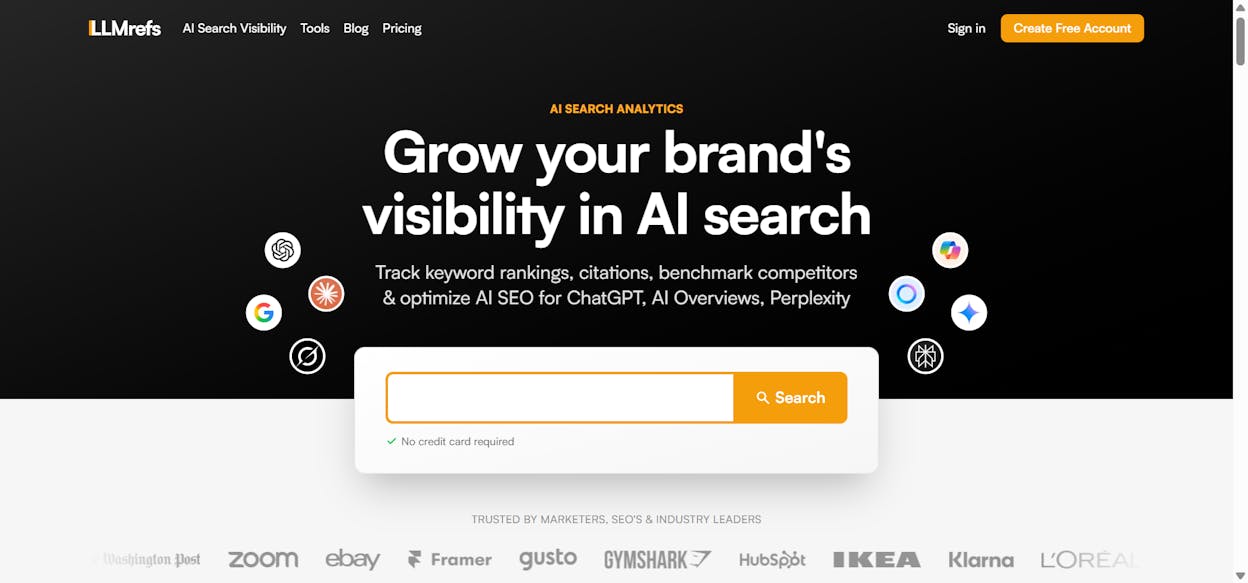
| LLMrefs | Lightweight LLM citation tracking | Clear LS score; citation mapping; multi-language; API export; easy to communicate | No attribution; monitoring-focused; limited optimization guidance | Want simple; LLM-focused visibility tracking without SEO overhead |
| Hall | Sentiment; citations & competitive framing | GEO-native; deep citation & sentiment mapping; agent analytics; answer-quality focus | Lighter documentation; smaller brand vs giant suites; no attribution | Care about narrative; sentiment; and competitive framing more than traffic |
Analyze AI: best LLM monitoring tool for full-funnel AI search analytics

Key Analyze AI standout features
Tracks brand visibility across major AI answer engines like ChatGPT, Perplexity, Claude, Copilot, and Gemini
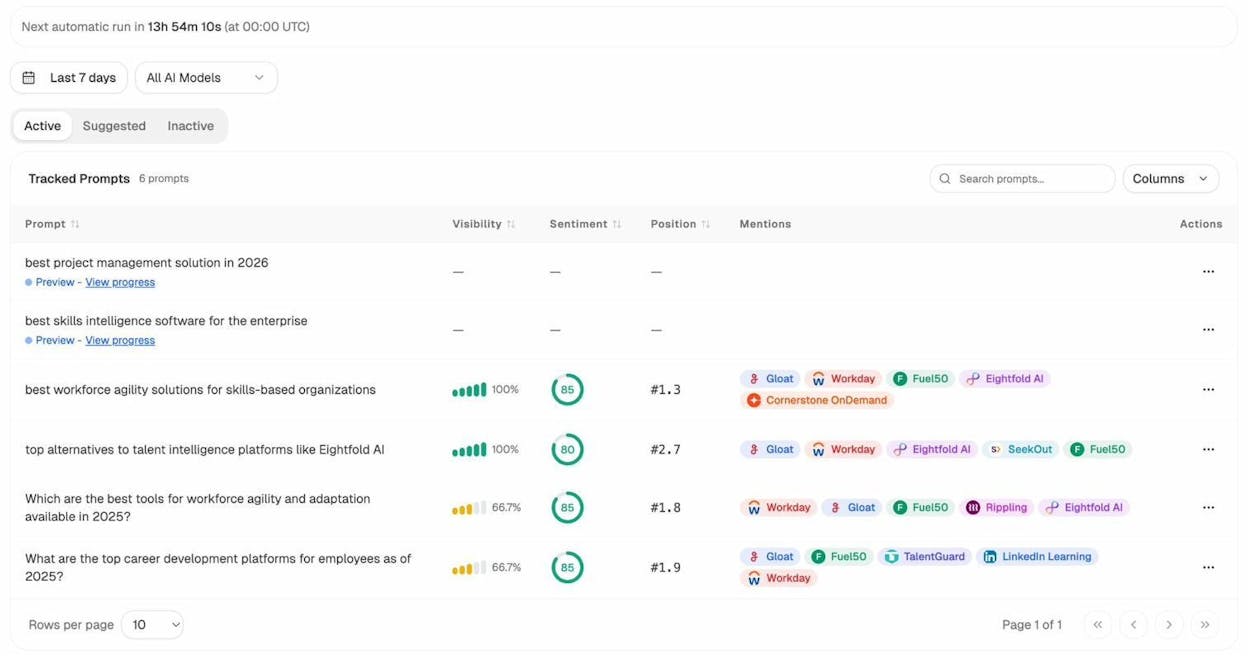
Shows prompt-level visibility and sentiment so you see where you win and where you vanish
Reveals which sources and citations shape answers in your market
Connects AI referrer visits to sessions, conversions, and revenue through GA4 integration
Organizes work into a clear loop: Discover → Measure → Improve → Govern
Analyze AI begins with a clear premise: knowing that your brand appears in an AI answer is only useful if you also know what happens next. Many tools stop at visibility, but Analyze goes further by linking every appearance to traffic, behavior, and results.

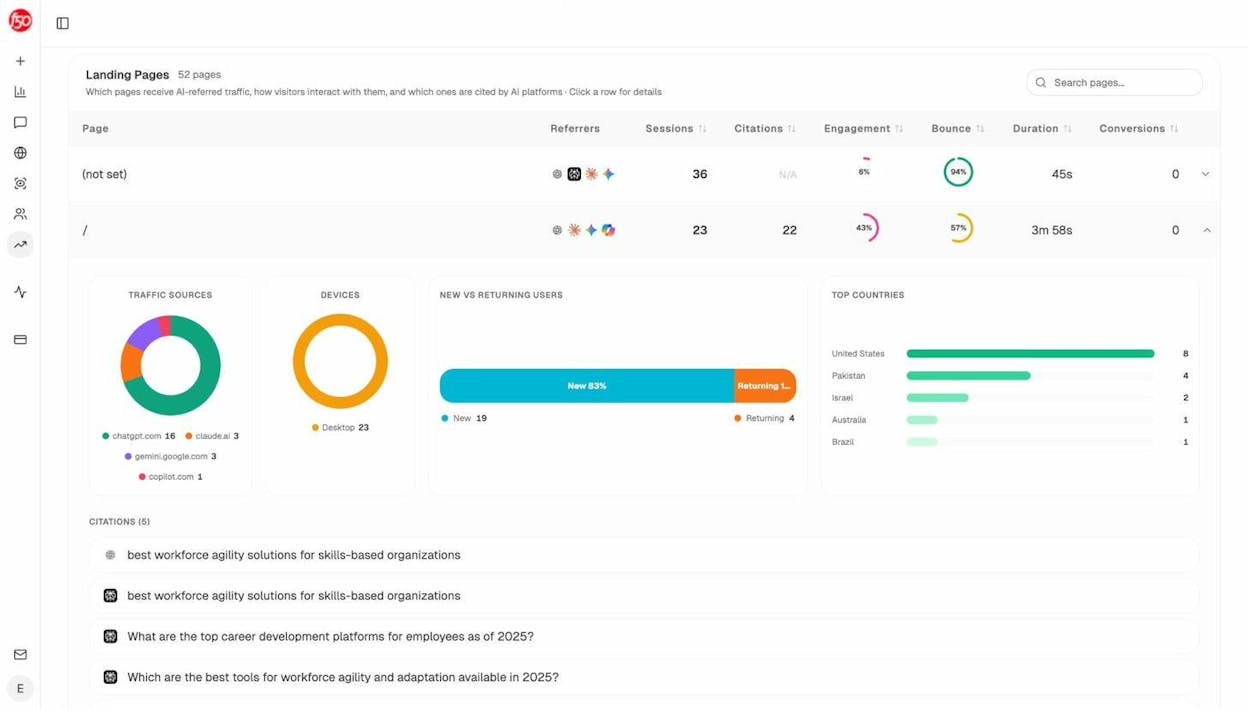
This full-funnel view matters because AI search is now a real entry point for buyers, and the tool makes that entry point measurable. Instead of treating AI answers like a vanity metric, Analyze AI ties each mention to the sessions it produces, the pages those visitors see, and the conversions they trigger. By merging visibility with performance data, the platform helps teams understand which prompts and engines deliver value and which ones only create noise.

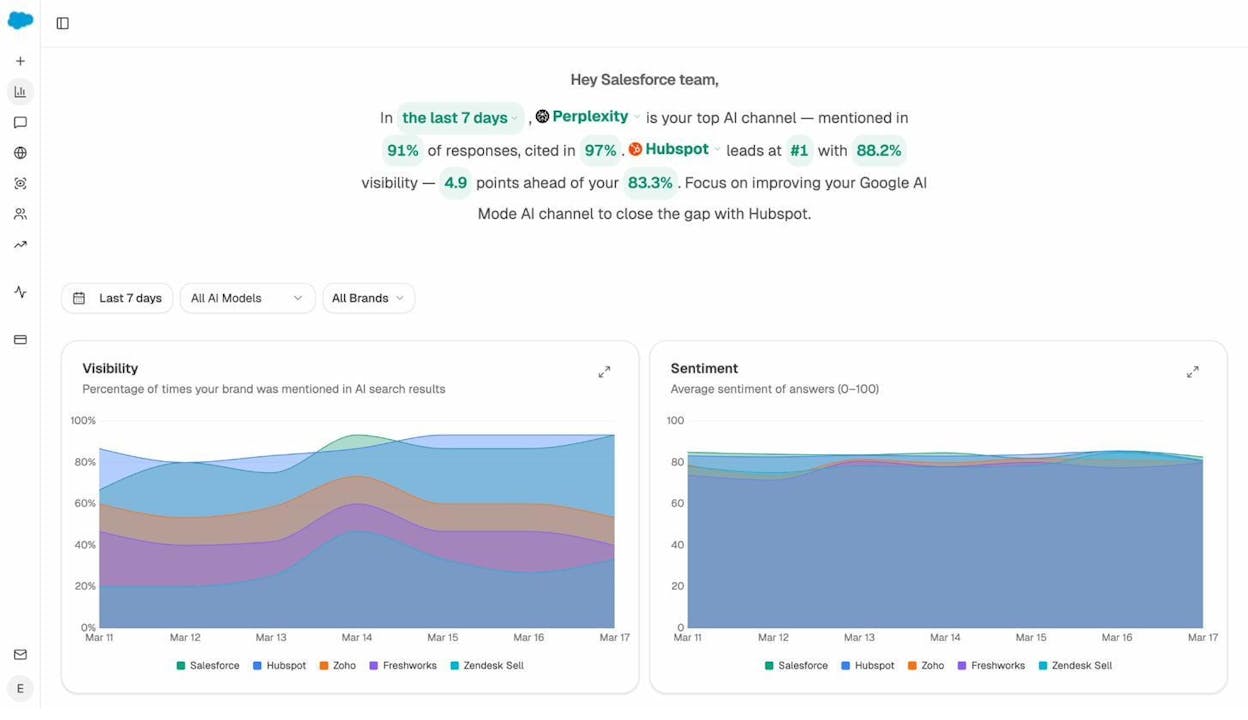
This structure influences how the product works in daily use. When you open the dashboard, you see which engines send traffic and how that traffic changes over time, making it easier to understand which models treat your brand as relevant.

Each tracked prompt becomes a small demand surface where you can see how often you appear, how you are framed, and who you compete with inside the answer. The tool also highlights which domains the models cite when building their responses, which gives you a clear path for improving authority and shaping future answers.

Because Analyze AI connects prompt signals with landing pages and conversions, it builds a complete view that helps teams prioritize work based on impact instead of instinct.
As teams scale their use of the platform, some limitations become more visible. Analyze AI assumes that you have a working analytics setup and a defined view of what counts as a conversion, because the attribution features rely on GA4 and event data.

If these basics are not in place, the platform still works, but the depth feels limited and the value of the insights becomes harder to act on. The starter plan covers a specific number of engines and prompts, which works well for focused programs, but deeper monitoring may require add-ons or higher tiers as your needs expand. These constraints do not reduce the tool’s strength, but they shape how quickly teams can unlock its full value.

There is also a fit consideration that matters for buyers choosing between tools. Analyze AI is built with SMBs and growth teams in mind, and the product design reflects that focus through simple setup, clear dashboards, and direct links to performance.

This makes the platform easier to adopt and maintain, yet it may feel less aligned with the needs of very large enterprises that want custom rules, on-prem deployment, or advanced data engineering. For most teams, this streamlined focus creates an advantage because it reduces friction and accelerates results, but it also means that buyers expecting heavy enterprise infrastructure may find limits in the current feature set.
Pricing plan for Analyze AI
Analyze AI uses a simple structure that gives small and mid-size teams a low-friction entry point. The starter plan costs $99 per month and includes three core answer engines—Claude, Perplexity and ChatGPT—along with twenty-five tracked prompts per day, which produces about two thousand two hundred fifty answers each month and offers enough coverage to monitor the most important questions in your category. The plan also includes fifty ad-hoc searches for testing new prompts, unlimited competitor tracking for flexible benchmarking, and full GA4 integration so you can see which AI engines send traffic, which pages receive those visits and how often they convert. Unlimited seats, priority support and a short onboarding workshop make it easy to roll out across multiple teams, while additional engines such as Gemini, DeepSeek, Grok or specialized modes can be added as your coverage needs grow. For organizations that need higher prompt volume or deeper engine tracking, larger tiers are available once the starter plan’s limits are exceeded.
Analyze AI at a glance
| Dimension / metric | How Analyze AI performs | Why this matters for brand visibility in LLMs |
|---|---|---|
| Engine coverage | Covers key AI answer engines in the base plan and adds more through simple add-ons | Lets you see where your brand appears across the engines your buyers actually use |
| Brand; product; and competitor depth | Tracks prompts; positions; sentiment; and which rivals share space with your brand | Shows when you lose ground on key questions and which competitor takes that demand |
| Citation and source insight | Lists domains and URLs that models trust and counts how often each one appears | Guides your content and outreach toward sources that shape answers in your category |
| Attribution to sessions; conversions; and revenue | Connects AI referrals to GA4 so you see landing pages; events; and revenue by engine and by prompt | Turns AI visibility from a vanity score into a channel you can defend and scale |
| Actionability and workflow loop | Uses a Discover → Measure → Improve → Govern flow with clear prompts; opportunities; and risk views | Helps teams move from watching dashboards to running a steady program that changes results |
Best-fit use cases for Analyze AI
Teams that want to treat AI search as a real acquisition channel, not a surface metric
SMBs and mid-market companies that need clear links between AI answers and pipeline
Growth, SEO, and PMM teams that need prompt insight, sentiment, and citation maps
Leaders who want simple dashboards that tie AI visibility to GA4 events and outcomes
Takeaway
Ahrefs Brand Radar: best LLM monitoring tool for large-scale AI visibility and share-of-voice

Key Brand Radar standout features
Massive AI visibility index built from six datasets and over one hundred million prompts
Tracks AI visibility, impressions, sentiment, and share-of-voice
Shows where competitors outperform you across prompts and topics
Works with no setup because the dataset is prebuilt
Includes modules that link AI visibility with branded search and web mention patterns
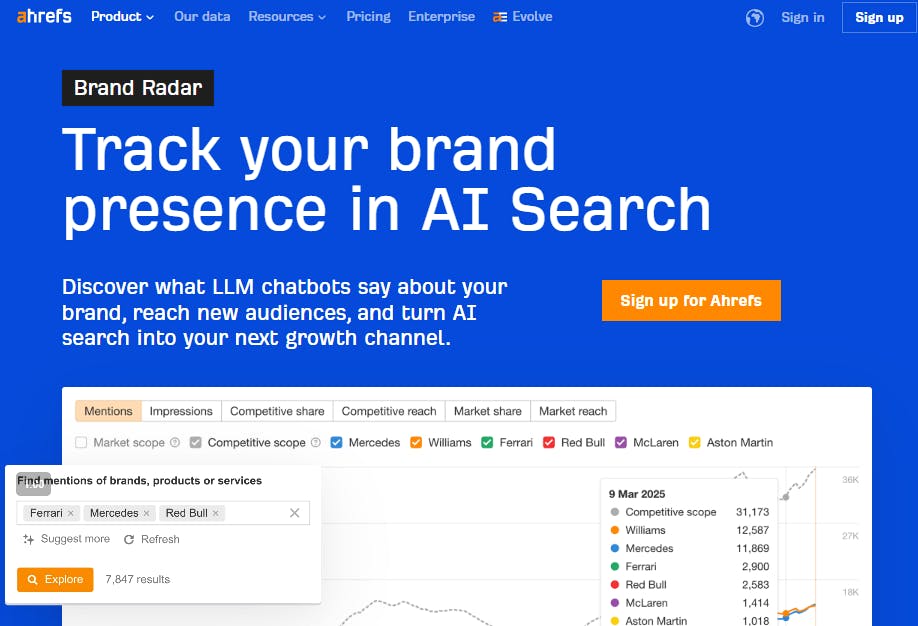
Ahrefs Brand Radar focuses on giving teams a broad and deep window into how AI engines talk about their brand, and it does this by drawing from one of the largest prompt datasets available. Instead of requiring you to build your own prompt list or set up crawlers, the tool starts with a ready-made index that spans millions of query patterns across multiple AI platforms. This approach matters because it lets teams see how models describe their brand at scale, not only within a handful of prompts but across the wide universe of questions users actually ask. Once you enter your brand, the system surfaces visibility, sentiment, and share-of-voice signals that reveal whether AI engines treat your brand as a known leader, a secondary option, or a missing name in your category.

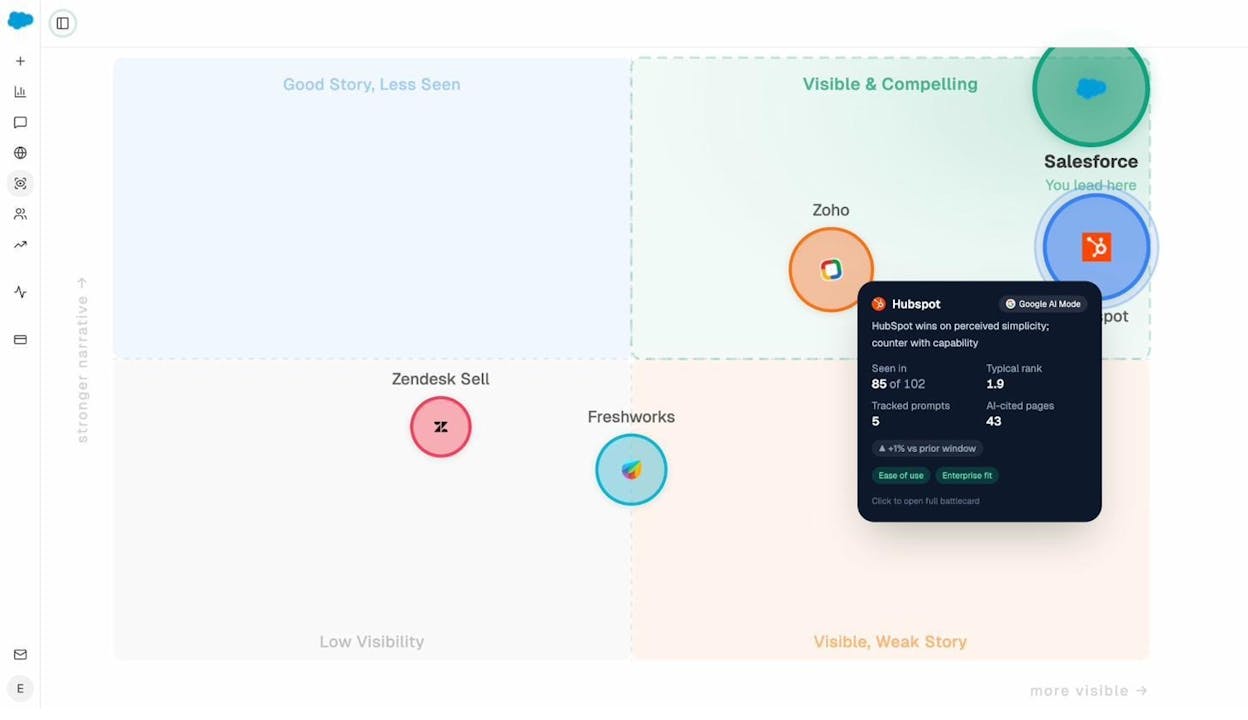
As you begin exploring the data, the strength of Brand Radar becomes clearer through its competitive benchmarking layer. The tool highlights which prompts and topics your rivals dominate and which clusters show your brand fading or missing entirely, allowing you to see gaps that would be invisible without a large index. Because the platform also includes modules for branded search demand and web citation visibility, you can track how AI visibility moves alongside real search interest and authority signals on the web. This creates a fuller picture that helps you understand whether changes in AI answers reflect shifts in user demand, content strength, or broader authority patterns. By linking these signals together, the platform builds a coherent story of your brand's position in both AI search and traditional discovery, rather than leaving you to interpret isolated metrics.
Even with this breadth, Brand Radar comes with limitations that matter for teams who expect more than visibility alone. The platform focuses on exposure, sentiment, and share-of-voice, but it does not connect those signals to real traffic, conversions, or revenue out of the box. If your goal is to understand whether an AI answer leads to site visits or drives signups, you will need to combine Brand Radar with other analytics tools or custom attribution layers. This creates a natural boundary for teams that want to treat AI search as a performance channel rather than a brand awareness space, because the tool does not show where AI visibility translates into measurable business outcomes.
Another constraint appears when teams move from discovery into optimization. Brand Radar provides strong direction on where competitors win and where your brand shows gaps, yet it does not offer prescriptive GEO guidance or workflows for improving those outcomes. The insights are meaningful, but the next steps often depend on internal strategy, external playbooks, or supplementary tools. The dataset also reflects the shifting nature of AI answers, which means visibility trends can move quickly and require careful interpretation. Larger prompt sets or deeper analysis modes can also increase cost and complexity, placing the platform beyond the reach of smaller or single-market teams that want focused monitoring rather than broad coverage.
Pricing plan for Ahrefs Brand Radar
Brand Radar lives inside the broader Ahrefs ecosystem, and its pricing reflects that integrated structure. Instead of a fixed standalone fee, the cost depends on the Ahrefs tier you use, the size of the Brand Radar dataset you need, and the modules included in your workspace. This works well for brands already invested in Ahrefs because the AI-visibility layer becomes an extension of tools they already rely on, reducing the need for new vendor management or training. At the same time, it means pricing scales with usage, data depth, and organizational size, so teams that want large prompt coverage or multi-market monitoring should expect to request a tailored quote or operate at a higher platform tier. For many companies, this structure feels smooth because it keeps the tools unified, but it can introduce cost considerations for teams that only need AI visibility without the full SEO suite.
Brand Radar at a glance
| Dimension / metric | How Brand Radar performs | Why this matters for brand visibility in LLMs |
|---|---|---|
| Engine and dataset coverage | Uses six datasets with one hundred million plus prompts across major AI engines | Gives a broad and stable view of how often your brand appears across many AI platforms |
| Brand; product; and competitor depth | Tracks sentiment; impressions; share-of-voice; and prompt-level gaps | Helps teams see where they win; lose; or trend downward on key questions |
| Citation and source insight | Reveals which domains and URLs shape AI answers in your category | Guides content work toward domains that influence the answers buyers read |
| Attribution to sessions; conversions; revenue | Not included out of the box | Limits the tool’s use for teams that need performance proof or ROI tracking |
| Actionability and workflow strength | Strong for discovery and benchmarking but lighter on prescriptive GEO actions | Suits teams that want visibility data and competitive insight rather than full optimization |
Best-fit use cases for Brand Radar
Teams that want broad and deep datasets to track brand visibility across many AI engines
Analysts who need share-of-voice and competitive insight at scale
Brands already using Ahrefs that want AI-visibility data in the same workspace
Teams that need no-setup monitoring and large-scope benchmarks
Takeaway
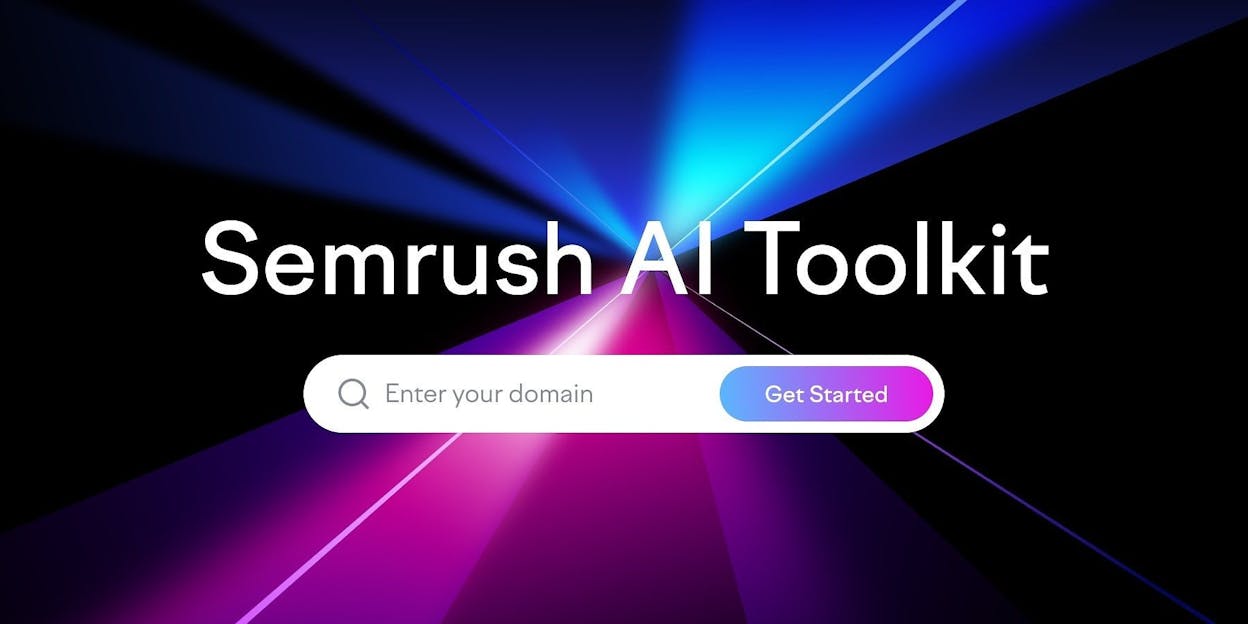
Semrush AI Visibility Toolkit: best LLM monitoring tool for teams who want AI visibility inside an all-in-one SEO ecosystem

Key Semrush AI Visibility Toolkit standout features
Tracks whether your brand appears in AI answer surfaces (Google AI Answers, ChatGPT, Perplexity, Gemini, and others)
Integrates prompt tracking and AI presence metrics into the same UI used for keywords, backlinks, and content analytics
Provides Brand Performance reports that show share of voice, sentiment, top prompts, and competitor dominance
Includes Prompt Research so you can discover and prioritise prompts and topics for AI visibility, like keyword research
Offers AI Search Site Audit and “AI Search Health” checks that flag issues which may limit AI crawler coverage
Semrush’s AI Visibility Toolkit sits inside the wider Semrush One platform, which means it builds on the same data structure and workflow that many SEO teams already use every day. The goal of the toolkit is to help brands understand where they appear across AI-generated answers and how those appearances relate to brand presence in search, content, and backlinks. Because it uses the Semrush interface, the toolkit ties AI visibility to the same systems teams use for keyword research, content planning, and site health, which makes the shift into AI search feel more familiar. This integrated environment lowers friction since teams do not need to manage an extra tool or rebuild workflows from scratch.

Once brands begin exploring the AI Visibility Toolkit, they see that it focuses heavily on making AI visibility accessible rather than overwhelming. The toolkit highlights where your brand appears across major engines and how often your competitors show up on the same prompts, which gives a quick view of who controls which surfaces. The Prompt Research module also extends this view by showing which prompts represent strong opportunities or weak points, similar to keyword research but tailored to AI search. Semrush reinforces this with Brand Performance reports that show how your brand is described and whether sentiment shifts as answer engines reshape the narrative. Because all of this sits next to your SEO metrics, you can connect AI visibility with content quality, backlink strength, and technical site health in a single place.
Still, some limits appear once you move deeper into the data. The toolkit focuses on showing visibility and share-of-voice but does not directly connect those signals to traffic, conversions, or revenue. If you want to know whether an AI answer sends real visitors to your site or whether those visitors take action, you need additional analytics tools or manual attribution work. Some reviewers also note that AI prompt detection is still maturing, so precision may vary depending on the engine or prompt structure. This is natural in a space that changes weekly, but it means teams should treat the insights as directional rather than final.
There is also a cost consideration tied to how Semrush bundles its products. The AI Visibility Toolkit makes the most sense when you already use Semrush for SEO, because the toolkit becomes an extension of an existing workflow. If you are not already in the Semrush ecosystem, adopting the toolkit often means paying for a larger suite of tools that you may not fully use. For large teams with established SEO processes, this is a smooth fit, but for smaller teams that only want AI visibility and nothing else, the bundle may feel heavier than needed.
Pricing plan for Semrush AI Visibility Toolkit
Pricing for the AI Visibility Toolkit sits within the Semrush One ecosystem, and many sources list the entry point around $99 per month for access to the AI SEO Toolkit features. Because the toolkit is part of a larger suite, the exact price depends on your plan level, seat count, and the modules you activate. This structure works well for teams already using Semrush because AI visibility becomes one more layer inside a platform they trust. However, it also means that new users should expect to pay for more than the AI module alone, which increases cost but also expands the value when SEO, content, and backlink tools are part of your workflow.
Semrush AI Visibility Toolkit at a glance
| Dimension / metric | How Semrush performs | Why this matters for brand visibility in LLMs |
|---|---|---|
| Engine coverage | Tracks visibility across Google AI answers; ChatGPT; Perplexity; Gemini; and others | Helps brands see where AI engines surface their name and how often competitors appear |
| Brand; product; and competitor depth | Offers share-of-voice; sentiment; top prompts; and prompt-level gaps | Reveals which prompts drive presence and which ones competitors dominate |
| Citation and source insight | Provides limited direct source-level insight compared to GEO-focused tools | Works best for teams that want presence data rather than deep citation mapping |
| Attribution to sessions; conversions; revenue | Not included out of the box | Limits performance analysis for teams that need to tie AI answers to real outcomes |
| Actionability and workflow loop | Strong integration with SEO workflows but lighter on prescriptive GEO actions | Ideal for teams linking AI visibility to SEO strategy rather than deep AI-specific optimization |
Best-fit use cases for Semrush AI Visibility Toolkit
Brands already inside Semrush that want AI visibility alongside SEO, content, and backlink data
Teams that need broad AI visibility without adding another standalone tool
SEO-heavy organizations that want prompt insights tied to keyword and content workflows
Leaders who need unified reporting on AI presence, SEO health, and brand sentiment
Takeaway
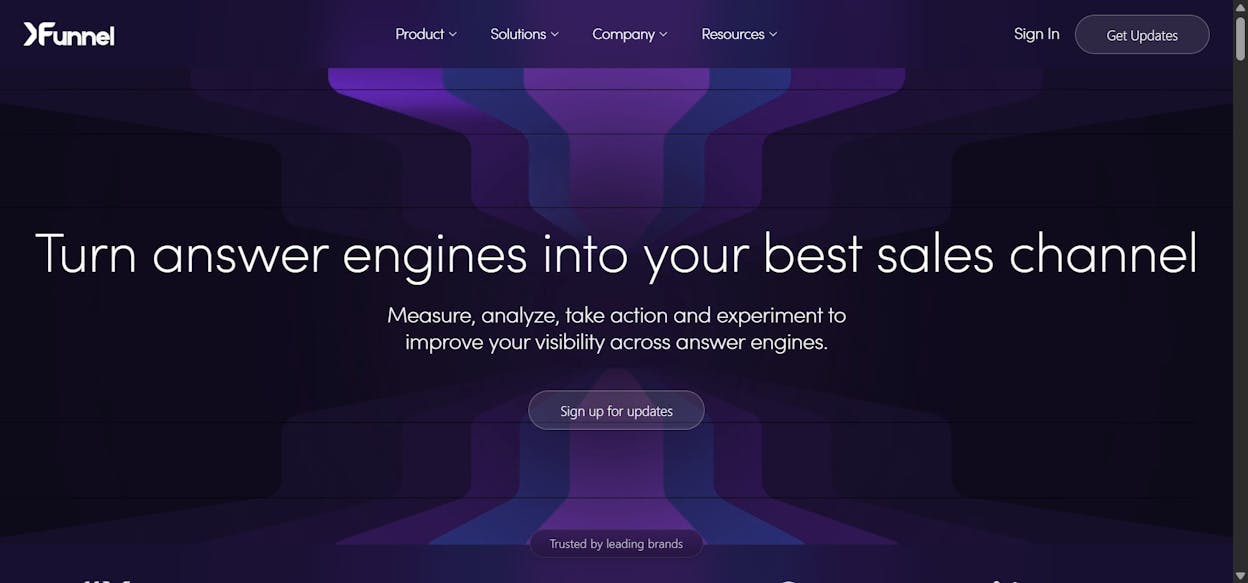
XFunnel AI: best LLM monitoring tool for segmented AI visibility and GA4-connected performance insights

Key XFunnel standout features
Monitors AI search platforms including ChatGPT, Gemini, Claude, Perplexity, Google AI Overviews, and more
Tracks brand share-of-voice, sentiment, and competitive positioning across AI answers
Segments data by region, persona, product, and buyer-journey stage
Integrates AI-visibility data with Google Analytics 4 to show AI-driven traffic, engagement, and conversions
Provides analysis, playbooks, and recommendations that go beyond simple monitoring
XFunnel positions itself as a GEO platform built for teams that need more than surface-level visibility. Instead of showing how often your brand appears in AI answers, it breaks those appearances into meaningful segments such as region, persona, and funnel stage. This structure matters for brands that operate across multiple markets because AI engines often answer questions differently depending on context, location, or phrasing. By layering segmentation on top of base visibility, XFunnel helps teams understand not only whether they show up but where, for whom, and under what conditions those appearances occur. Once teams see these differences, they can identify mismatches between their messaging and the way AI engines present them to different audiences.
This segmented approach becomes more valuable once XFunnel connects visibility to GA4 data. The platform shows which engines send traffic, how those visitors behave across pages, and which segments drive conversions, which gives teams a full picture of AI search performance without building custom integrations. The ability to see behaviour by persona or region helps brands match AI visibility with real audience movement, making it easier to prioritize efforts that create measurable outcomes. XFunnel also reinforces these insights with playbooks and recommendations, helping teams translate segmentation and traffic patterns into actions that improve visibility for the people who matter most.

The same flexibility that makes XFunnel powerful can also make setup more demanding. Because the platform supports segmentation by region, persona, and journey stage, teams must decide which dimensions matter before they begin tracking. This decision-making can slow adoption for smaller teams that have not yet defined clear ICPs or market structures. Implementations may also require integration with existing sales or CRM workflows if teams want deeper segmentation or more accurate persona tagging. These steps are not barriers, but they require more internal alignment than plug-and-play monitoring tools.
Another challenge comes from pricing and product positioning. XFunnel’s public pricing details are limited, and many sources suggest that it operates more like a custom or enterprise-level solution. This structure works for teams that want depth at scale, but it can make the platform feel out of reach for smaller companies that only need basic LLM visibility. The flexibility and breadth of features also mean that teams focused on a single market or narrow use case may not need the full power of the platform, which can make parts of the product feel heavier than necessary.
Pricing plan for XFunnel
XFunnel offers a free Starter audit with limited queries, one language and one region, while all ongoing monitoring sits under a custom Enterprise plan. Pricing depends on how many engines, regions, languages and segments a team needs, along with whether GA4 integration, bot detection, technical audits or SSO are required. Because of this usage-based structure, teams should expect a quote rather than a fixed monthly rate, which makes XFunnel better suited for mid-size or enterprise organizations with defined segmentation needs.
XFunnel at a glance
| Dimension / metric | How XFunnel performs | Why this matters for brand visibility in LLMs |
|---|---|---|
| Engine coverage | Covers major AI search engines including ChatGPT; Gemini; Claude; Perplexity; and Google AI Overviews | Helps you see how visibility shifts across engines used by different audiences |
| Brand; product; and competitor depth | Tracks share-of-voice; sentiment; and competitive position across prompts | Shows when specific segments see competitors more often than your brand |
| Citation and source insight | Provides competitive and sentiment context but less granular citation mapping | Supports strategy without overwhelming teams with technical source-level detail |
| Attribution to sessions; conversions; revenue | Integrates with GA4 to show traffic and conversions segmented by audience type | Connects visibility to performance in a way that reflects real buyer behaviour |
| Actionability and workflow strength | Offers segmentation-based recommendations and visibility playbooks | Helps teams turn complex segmentation insights into practical; targeted actions |
Best-fit use cases for XFunnel
Brands that operate across multiple regions, personas, or product lines
Teams that want AI visibility tied directly to GA4 traffic and conversion behaviors
Companies that need segmentation to understand which audiences see their brand in AI answers
Organizations with established ICP and journey mapping that can leverage XFunnel’s segmentation depth
Takeaway
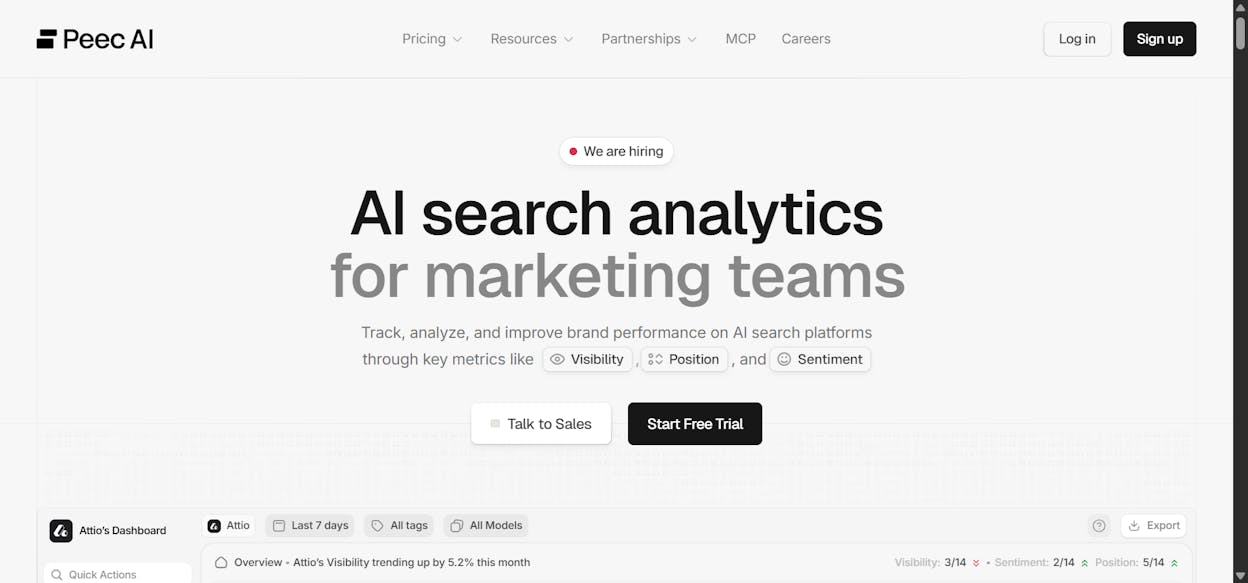
Peec AI: best LLM monitoring tool for budget-friendly, multi-language AI visibility tracking

Key Peec AI standout features
Tracks brand mentions and visibility across multiple AI platforms with regional and multi-language support
Provides competitive benchmarking and progress tracking over time
Positioned as a budget-friendly option with pricing starting around €89/month
Offers prompt-level tracking, visibility dashboards, and citation monitoring
Supports multi-market/multi-language monitoring, unlimited seats on some plans, and simple onboarding
Peec AI positions itself as one of the earliest entrants in the AI-visibility space, and that early entry shapes how the tool works and who it serves best. Rather than building a large SEO suite or complex workflow engine, Peec AI focuses on monitoring how brands appear inside AI answers across multiple languages and markets. This emphasis on cross-market coverage is key for global brands that need to see how different regions or language models interpret their products. By centering its product around visibility, citations, and consistency across AI surfaces, Peec AI helps teams understand whether their brand is visible, missing, or outperformed by competitors as AI answers continue to shift.
Once teams start tracking their prompts and markets, Peec AI shows its value through progress charts and benchmarking tools. The dashboards make it easy to scan which prompts your brand appears in, how often you are mentioned, and where competitors steal visibility. Because many brands operate across several regions or language clusters, the tool’s multi-language support provides a clearer view of global visibility patterns. This structure makes Peec AI straightforward to adopt, even for teams that do not have deep GEO processes in place. Its pricing also fits companies that are experimenting with AI-search monitoring before committing to more expensive enterprise tools.

However, this simplicity introduces limitations for teams that need more than visibility reporting. Many reviewers note that Peec AI focuses mainly on showing where you stand, not on guiding what to do next. Optimization recommendations, source-influence mapping, and deeper diagnostic workflows are not as developed as in GEO-heavy platforms built for advanced analysis. Teams looking to understand why AI models choose certain competitors or which domains shape answers may find themselves pairing Peec AI with other products or building processes internally. While the entry price is attractive, add-ons, engine expansions, or higher prompt limits can increase costs as monitoring scope grows, which may affect teams with large international footprints.
These trade-offs make Peec AI best suited for teams that want clean, budget-friendly visibility insights without the complexity of larger suites. For companies entering the AI-search landscape or brands that operate across many languages, the tool offers an accessible and lightweight starting point. For deeper optimization or cross-engine diagnostics, it may serve as a complementary layer rather than the full stack.
Pricing plan for Peec AI
Peec AI offers three simple plans that scale with prompt volume and support needs. The Starter plan (€89/month) gives growing teams access to ChatGPT, Perplexity and AIO, with up to twenty-five prompts refreshed daily, around two thousand two hundred fifty AI answers analyzed each month, and unlimited countries and seats. The Pro plan (€199/month) increases capacity to one hundred prompts and roughly nine thousand analyzed answers per month, and adds Slack support for faster response times. The Enterprise plan (€499+/month) is designed for organizations that need three hundred or more prompts, twenty-seven thousand or more analyzed answers each month and dedicated account management, with the flexibility to tailor reporting and tracking depth to their internal workflows. All plans include daily model runs, unlimited countries, unlimited users and the ability to start free before upgrading.
Peec AI at a glance
| Dimension / metric | How Peec AI performs | Why this matters for brand visibility in LLMs |
|---|---|---|
| Engine coverage | Covers multiple AI platforms with regional and language-aware monitoring | Helps global brands understand where visibility varies across markets |
| Brand; product and competitor depth | Tracks mentions; citations; and competitive visibility over time | Shows how your brand compares to peers and where visibility gains or losses occur |
| Citation and source insight | Provides basic citation monitoring but less deep source influence analysis | Works well for visibility scans but may require other tools for deeper diagnostic work |
| Attribution to traffic or conversions | Not included; focuses on visibility rather than performance analytics | Best for teams that want presence tracking without funnel analysis |
| Actionability and workflow strength | Strong for monitoring but lighter on optimization recommendations | Suits teams seeking clear visibility data without complex workflows |
Best-fit use cases for Peec AI
Brands that need multi-language or multi-region AI visibility monitoring
Smaller teams or early-stage GEO programs testing AI visibility for the first time
Organizations seeking a budget-friendly LLM visibility tracker
Teams that want simple dashboards and competitive benchmarking without heavy setup
Takeaway
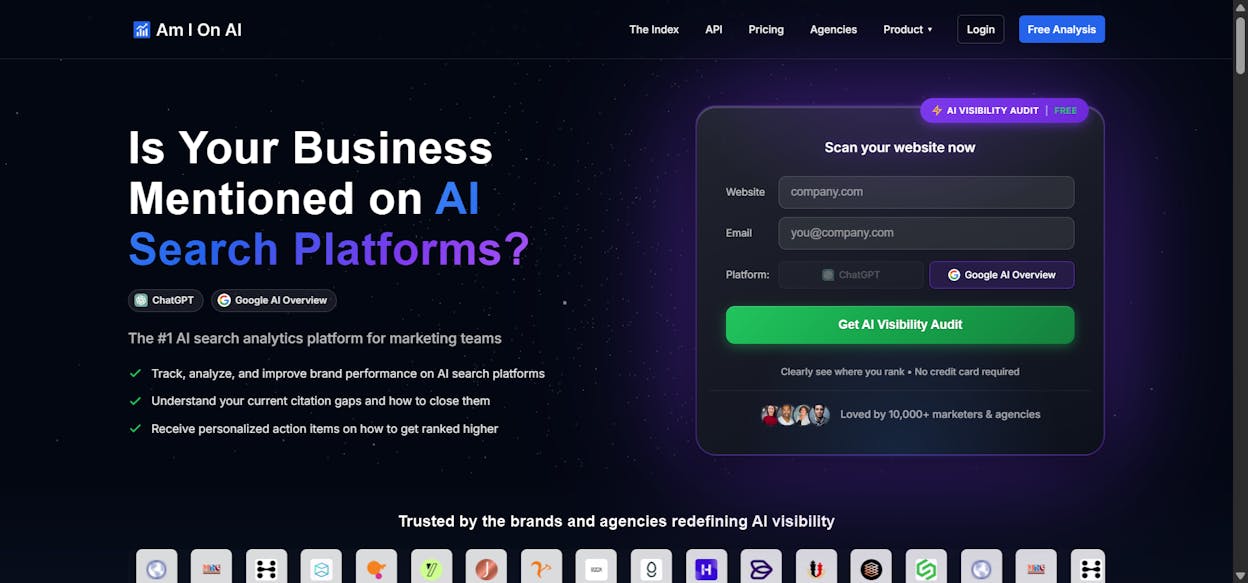
Am I On AI: best lightweight LLM monitoring tool for simple brand presence and source-impact checks

Key Am I On AI standout features
Monitors whether and how your brand appears in generative AI answers across ChatGPT, Perplexity, Gemini and more
Provides dashboards for prompt tracking, source analysis, sentiment monitoring and weekly visibility reports
Emphasises an accessible “yes/no + impact” visibility model for non-technical teams
Highlights which domains drive your visibility in AI answers
Serves as an easy starting point before moving into full-scale GEO platforms
Am I On AI is built for teams that want clarity without complexity. Instead of offering a sprawling suite of GEO features, the platform stays focused on one question: are we showing up in AI answers, and why? Its workflows revolve around simple presence tracking, lightweight sentiment signals and source-impact reports that show which domains shape the narratives AI models generate about your brand. This makes the tool especially approachable for smaller teams or early-stage companies that want to understand their AI visibility before investing in heavier platforms.
Inside the platform, the emphasis is on interpretability rather than depth. You see which prompts mention your brand, how often those appearances change week to week and which sources influence those mentions. Because the UI is intentionally simple, non-technical or cross-functional teams can interpret the results without training. That ease of understanding makes Am I On AI useful as an early “signal” tool—something you check weekly to confirm presence, spot new sources and identify whether competitors start to replace you in key prompts.

The limitations mirror the simplicity. Am I On AI is a point solution rather than a full GEO platform. It does not include multi-team workflows, advanced segmentation, LLM-level attribution, or traffic/conversion analysis. Documented functionality is lighter than larger suites, and teams that need deeper insights will likely outgrow the platform as soon as they want to connect AI-visibility to performance or influence it proactively. Still, for its intended role—a clear, fast, digestible pulse on your AI presence—it performs exactly as expected.
Pricing plan for Am I On AI?
Am I On AI offers straightforward pricing with a $100/month Single plan that monitors one product with weekly scans, up to one hundred prompts, international coverage and unlimited seats. The $250/month Multiple plan expands this to three products and three hundred prompts while maintaining the same weekly cadence and unlimited users. Agencies can adopt a white-label program starting at $250/month for up to three clients, with higher tiers—such as five clients for $375/month and ten clients for $670/month—making it easy to manage multiple brands without individual subscriptions.
Am I On AI at a glance
| Dimension / metric | How Am I On AI performs | Why this matters for brand visibility in LLMs |
|---|---|---|
| Engine coverage | Covers major AI answer engines with simple presence + source checks | Ideal for teams that need quick signals without complex setups |
| Brand; product and competitor depth | Basic presence; sentiment; and source-influence tracking | Enough to validate whether AI answers reflect your brand accurately |
| Citation and source insight | Highlights which domains influence your appearance in AI answers | Helps teams understand which external sources shape the narrative |
| Attribution to traffic or conversions | Not included; focus is visibility and sources | Fits teams that want monitoring; not analytics |
| Actionability and workflow strength | Simple weekly reports and insights | Works as a lightweight pulse-check tool |
Best-fit use cases for Am I On AI
Small teams or founders who want to know whether AI engines recognize their brand
Companies that need basic presence + sentiment + source-impact insights
Teams using it as an early signal before adopting a more advanced GEO platform
Agencies wanting a simple, low-lift monitoring option for multiple brands
Takeaway
Authoritas: best LLM monitoring tool for blended SEO + AI visibility and citation intelligence

Key Authoritas standout features
Tracks brand mentions and citations across AI search engines and LLMs including Google AI Overviews, Bing Copilot, ChatGPT, Gemini, Claude, DeepSeek, and more
Provides share-of-voice and citation-source analysis to reveal which domains AI models trust in your category
Integrates directly with the broader Authoritas SEO and content workflows (rankings, backlinks, content planning)
Supports custom prompt uploads for branded and unbranded queries across languages and markets
Offers competitive benchmarking to compare visibility, citation volume, and trend shifts over time
Authoritas positions its AI Search module as an extension of its established SEO platform, which means the tool is built for teams that want to understand how AI engines mention and cite their brand without leaving the SEO environment they already know. Instead of treating AI search as a separate channel, Authoritas ties brand visibility in AI answers directly to the same data you use for rankings, backlinks, and content strategy. This unified foundation helps teams see whether the pages and sources they invest in are the same ones that LLMs use when generating answers. Because the platform focuses heavily on citation mapping, it gives teams clarity about which domains influence the way AI models talk about their brand and competitors.
The value becomes clearer once teams start exploring how AI models cite different sources. Authoritas shows where your brand appears, how often you are cited, and which domains are shaping the conversation inside AI answers. These insights help teams decide where to strengthen authority, fill content gaps, or build relationships with trusted domains. The ability to upload custom prompts makes the tool flexible for different industries and markets, and multilingual tracking helps teams operating internationally see how visibility changes across regions. Because all of this sits inside a mature SEO suite, teams can connect AI visibility with their existing keyword, ranking, and link-building workflows without adopting a new system.

However, some limitations become apparent when teams rely on the tool for deeper GEO work. The pricing structure, which mixes SEO platform licensing with credit-based usage for AI Search (such as engine credits or prompt credits), can feel complex and may escalate as monitoring needs grow. This model works well for larger teams but can be difficult for smaller groups that want predictable pricing. Another constraint comes from the product’s SEO-first origins. While the AI Search module is strong for tracking citations and share-of-voice, it is less opinionated than tools built entirely around LLM monitoring. Teams that want advanced prompt-level optimization, detailed model-behavior diagnostics, or GEO-specific workflows may find some features lighter than expected.
These factors do not take away from the module’s core strengths but they do shape the ideal buyer. Authoritas works best for teams that want AI visibility and SEO strategy tied together, especially when citation influence is a priority. For organizations seeking deep GEO guidance or highly specialized AI-search optimization, the tool may require pairing with other platforms or frameworks.
Pricing plan for Authoritas
Authoritas uses a hybrid pricing model that combines its SEO platform subscription with a credit-based system for the AI Search module. Credits typically determine how many prompts you can track, which engines you can monitor, and how often results refresh. Because these credits sit on top of the base SEO suite, the total cost depends on your plan level and the volume of AI queries you want to monitor. This structure works for mid-size and enterprise teams that want flexible scaling, but it can feel complex or pricey for smaller teams that prefer a simple, fixed monthly fee. Authoritas provides quotes on demand, and teams evaluating it should expect to size their usage before receiving final pricing.
Authoritas at a glance
| Dimension / metric | How Authoritas performs | Why this matters for brand visibility in LLMs |
|---|---|---|
| Engine coverage | Monitors Google AI Overviews; Bing Copilot; ChatGPT; Gemini; Claude; DeepSeek and more | Helps you track where your brand appears across major AI answer surfaces |
| Brand; product; and competitor depth | Surfaces mentions; citations; share-of-voice; and cross-market patterns | Shows how often models pick your brand and which competitors gain citation authority |
| Citation and source insight | Strong citation-source mapping with domain-level and URL-level references | Helps you target trusted domains and understand what shapes AI models’ answers |
| Attribution to sessions; conversions; revenue | Not built for direct analytics attribution | Best suited for visibility and influence tracking rather than full-funnel performance |
| Actionability and workflow strength | Integrates AI insights with SEO workflows but provides lighter GEO guidance | Ideal for SEO-led teams who want AI visibility blended into existing processes |
Best-fit use cases for Authoritas
SEO teams that want AI visibility without leaving their existing Authoritas workspace
Brands that need citation-source mapping to understand which domains influence AI answers
Organizations tracking both traditional SEO metrics and AI search presence in a unified tool
Teams that want multilingual and multi-market prompt monitoring
Takeaway
LLMrefs: best LLM monitoring tool for lightweight AI citation and visibility tracking

Key LLMrefs standout features
Tracks keyword rankings and brand citations across major AI search platforms and LLMs, including ChatGPT, Gemini, Perplexity, Claude, Grok, and others
Provides a proprietary LLMrefs Score (LS) showing how often and how prominently your brand appears in AI responses
Focuses on visibility tracking and prompt-based analysis rather than classic SEO rank metrics
Supports competitor monitoring, citation-source mapping, and trend tracking across models and languages
Offers API/data export, geo-targeting across countries and languages, and regular visibility reports
LLMrefs positions itself as an LLM-first visibility tool, built for teams that want to understand how AI models cite and surface their brand without the overhead of a full SEO platform. Its focus sits squarely on generative engine optimization: helping brands shift their attention from “how do we rank in Google?” to “how often do AI engines trust us, mention us, or rely on our domain when answering buyer questions?” This tighter focus makes the tool useful when the priority is monitoring brand presence inside AI responses rather than tracking dozens of SEO metrics. Because LLMrefs concentrates on citations, prompt outcomes, and brand mentions, it gives teams a clear view of how frequently they appear and how strongly they are referenced in the AI ecosystem.
This simplicity becomes valuable once teams start reviewing visibility across prompts and engines. The LLMrefs Score condenses visibility into a single metric that shows whether your brand’s presence is growing or declining, which helps teams communicate progress to leadership or clients. The tool also highlights which competitors dominate the same prompts and which sources influence their citations, giving teams a better sense of where authority gaps might exist. Its support for multiple languages and markets adds more flexibility for companies operating internationally, and API/data export options make it easier to blend LLMrefs insights with internal dashboards or analytics tools.

However, the tool’s narrow focus introduces some limits that matter depending on your goals. LLMrefs is designed primarily for monitoring, so it does not include prescriptive workflows or detailed action paths for improving your visibility. Teams that want structured recommendations, optimization playbooks, or deep prompt-level audits may find themselves doing more interpretation on their own. The platform also does not emphasize traffic, conversion, or revenue attribution, meaning you cannot directly connect AI visibility to business outcomes without pairing it with other tools. For organizations that need wide SEO metrics, multi-channel integrations, or enterprise workflow automation, LLMrefs may feel too lean and may need to sit within a broader tool stack.
These factors do not reduce the value of LLMrefs for its intended purpose, but they shape the type of team that benefits most. The platform works best when you want clean, focused insight into citations and visibility across LLMs without the cost or complexity of a full SEO suite. For organizations needing a simple way to track prompt performance, competitive presence, and brand citations, its narrowness becomes an advantage rather than a constraint.
Pricing plan for LLMrefs
LLMrefs offers a free plan for basic monitoring and then moves into paid tiers beginning at $79/month for the Pro plan, which expands tracked keywords, access to more models, and weekly trend reports. Higher tiers—including Business and Enterprise—raise limits on monitored prompts, available AI models, update frequency, and API usage, with enterprise options offering custom limits and SLA-backed support. Because pricing scales with visibility volume and feature depth, teams typically move from the affordable Pro tier into custom plans when they need multi-market tracking, advanced exports, or large prompt sets.
LLMrefs at a glance
| Dimension / metric | How LLMrefs performs | Why this matters for brand visibility in LLMs |
|---|---|---|
| Engine coverage | Tracks major models like ChatGPT; Gemini; Perplexity; Claude; DeepSeek; and Grok | Shows how visibility shifts across the LLMs buyers use most |
| Brand; product; and competitor depth | Surfaces citations; mentions; prompt outcomes; and competitor share | Helps teams see who dominates answers and where their brand drops out |
| Citation and source insight | Supports source mapping and cross-language citation tracking | Reveals which domains shape AI answers and where to build authority |
| Attribution to sessions; conversions; revenue | Not included; focuses on visibility rather than performance | Suited to top-funnel visibility tracking rather than bottom-funnel attribution |
| Actionability and workflow strength | Strong for monitoring but lighter on prescriptive GEO recommendations | Fits teams that want simple tracking without complex optimization tooling |
Best-fit use cases for LLMrefs
Teams that want a lightweight tool focused purely on LLM citation and visibility tracking
Brands needing quick insights into how often and how strongly AI engines mention or rely on them
Organizations that prefer simple prompt → visibility → citation workflows over large SEO suites
Teams that plan to combine LLMrefs with other analytics tools for traffic or conversion insight
Takeaway
Hall: best LLM monitoring tool for sentiment, citations, and competitive AI-search positioning

Key Hall standout features
GEO platform built specifically for AI-search visibility and answer-quality analysis
Tracks sentiment, citations, and competitive positioning across major AI answer engines
Monitors which prompts mention your brand and which sources AI crawlers rely on
Provides agent analytics and content-source mapping to show how AI models interpret your site
Helps teams improve digital presence through citation tracking and structured GEO insights
Hall approaches AI search from the perspective of narrative, authority and competitive framing. Rather than retrofitting old SEO tools to check AI results, Hall builds its system around the elements that shape how LLMs describe a brand: the citations they choose, the sentiment that appears in answers, and the competitors they position alongside you. This framework makes the tool valuable for teams that want to understand not just whether they appear in AI answers but how AI systems talk about them and why those patterns happen.
Inside the platform, the focus shifts to how AI agents, crawlers and models treat your website. You see which prompts mention the brand, which sources support those mentions and how content structure influences the way AI models summarise or evaluate your value proposition. The citation and agent-analytics features surface the domains that influence AI-generated answers across your category, while sentiment tracking shows where narratives tilt positive, neutral or negative. These pieces help teams detect shifts in competitive framing and understand which content investments change how models talk about the brand.

That tight GEO focus comes with a few practical constraints. Compared with large SEO suites, Hall’s public documentation is lighter, and teams often rely on demos or third-party reviews when evaluating workflows. Because the product is not yet a mainstream name like Semrush or Ahrefs, some organisations with conservative procurement processes may hesitate without a strong internal champion. Teams that require broad SEO tooling, backlink data or multi-channel analytics will also need supplemental platforms, since Hall centers itself on sentiment, citations and AI-search positioning rather than traditional SEO operations.
For teams focused on brand narrative, competitive positioning and source influence within LLM answers, Hall’s GEO-first structure offers clarity and depth that repurposed SEO tools cannot match.
Pricing plan for Hall
Hall uses a simple tiered model that starts with a free Lite plan, which includes one project, a small set of tracked questions, weekly updates and limited answer volume. The paid tiers begin with Starter at $199/month, which unlocks daily updates, larger project limits and higher tracked-question capacity, followed by Business at $499/month, which adds more volume, Looker Studio export, SSO/SAML support and deeper analytics access. For teams that need custom limits, enterprise security, API access or unlimited historical data, the Enterprise plan begins at $1,499/month. This structure makes it easy to start with zero cost and scale as GEO maturity grows.
Hall at a glance
| Dimension / metric | How Hall performs | Why this matters for brand visibility in LLMs |
|---|---|---|
| Engine coverage | Strong multi-LLM coverage with citations; sentiment; and agent analytics | Gives brands a broad and detailed view of AI-search visibility |
| Brand; product and competitor depth | Tracks how AI systems position your brand vs competitors | Shows whether AI answers reinforce or weaken your market narrative |
| Citation and source insight | Deep citation and source mapping across LLMs | Helps teams understand which domains influence answers and why |
| Attribution to traffic or conversions | Not included; focused on perception and answer quality | Fits teams prioritizing narrative; sentiment; and brand framing |
| Actionability and workflow strength | Provides GEO-focused insights for improving sources and content influence | Supports teams shaping how AI models describe the brand |
Best-fit use cases for Hall
Teams that need to track sentiment, citations and competitor framing inside AI-generated answers
Brands that care about how AI systems narrate their value, not just whether they appear
Organisations with a strong focus on authority, positioning and source influence
GEO teams that want a platform built natively for AI search, not an SEO bolt-on
Takeaway
Tie AI visibility toqualified demand.
Measure the prompts and engines that drive real traffic, conversions, and revenue.
Similar Content You Might Want To Read
Discover more insights and perspectives on related topics

16 Best Competitor Monitoring Tools & How to Use Them
11 Best Keyword Tracking Tools for 2026 (Tried & Reviewed)

The 9 Best AI Optimization Tools (Our Top Picks)

7 Content Marketing Reporting Tools for Data That Matters

8 AirOps Alternatives for Teams That Need AI Search Visibility Without the Complexity