


Summarize this blog post with:


In this article, you’ll get a hands-on comparison of seven Goodie AI alternatives, evaluated not just on what they track but on what they help you do next. You’ll see which platforms connect AI visibility to revenue, which ones stop at dashboards, and which one gives you a programmable operations layer that replaces entire workflows. You’ll also find pricing, feature breakdowns, and the specific scenarios where each tool earns its keep.
Table of Contents
Why Teams Start Looking for Goodie AI Alternatives
Goodie AI built its reputation on answer engine optimization with strong AI model coverage across 11+ platforms. It tracks brand presence, sentiment, and competitive benchmarking across ChatGPT, Perplexity, Gemini, Claude, DeepSeek, and more.
But three issues push teams to explore alternatives.
Pricing starts at $399 to $495 per month. That is steep for teams that want to test whether AI visibility moves pipeline before committing a full enterprise budget. For startups and mid-market companies, that entry point locks them out before they can prove ROI.
The action layer is thin. You see where you appear and how sentiment shifts. But when you ask “what do I do about it,” the platform gives you recommendations without the tools to execute them. Your team still needs to open a separate content tool, a separate SEO tool, and a separate analytics stack to act on what Goodie shows you.
No programmable automation. If you want a weekly competitor report in Slack, a content pipeline that gates on quality, or an alert that fires when a citation drops, you are building that outside Goodie with Zapier, Make, or manual effort.
The alternatives below solve one or more of these gaps. Here is how they compare.
Quick Comparison
|
Tool |
Best For |
Pricing |
Action Layer |
AI Engines |
|---|---|---|---|---|
|
Full-funnel AI visibility tied to pipeline and automated ops |
$99/mo |
Deep: writer, optimizer, 180+ node agent builder |
ChatGPT, Perplexity, Claude, Copilot, Gemini |
|
|
Goodie AI |
Enterprise visibility and sentiment tracking |
~$399-495/mo |
Light: recommendations, basic content tools |
11+ including Grok, Rufus, Meta AI |
|
Writesonic GEO |
Turning visibility data into quick content fixes |
~$199/mo (Professional) |
Strong: built-in SEO and content editing |
Major AI engines |
|
Profound |
Deep enterprise analytics with real answer snapshots |
~$99-399/mo (tiers) |
Insight-only, no content tools |
10+ AI engines |
|
Conductor |
Unifying SEO and AI visibility in one enterprise stack |
Custom enterprise |
Broad: SEO workflows, content planning |
Major engines |
|
Semrush |
SEO-first teams adding AI visibility to existing workflows |
Tiered with add-ons |
Solid: SEO audits, topic insights |
Major AI engines |
|
Peec AI |
Fast multilingual visibility tracking on a budget |
~€89-199/mo |
Light: dashboards and prompt insights |
Major LLMs |
|
MarketMuse |
Content intelligence to build pages AI engines cite |
Tiered by inventory |
Strategy-focused: topic models, briefs |
SERP analysis only |
1. Analyze AI: The Agentic Platform That Connects AI Visibility to Revenue
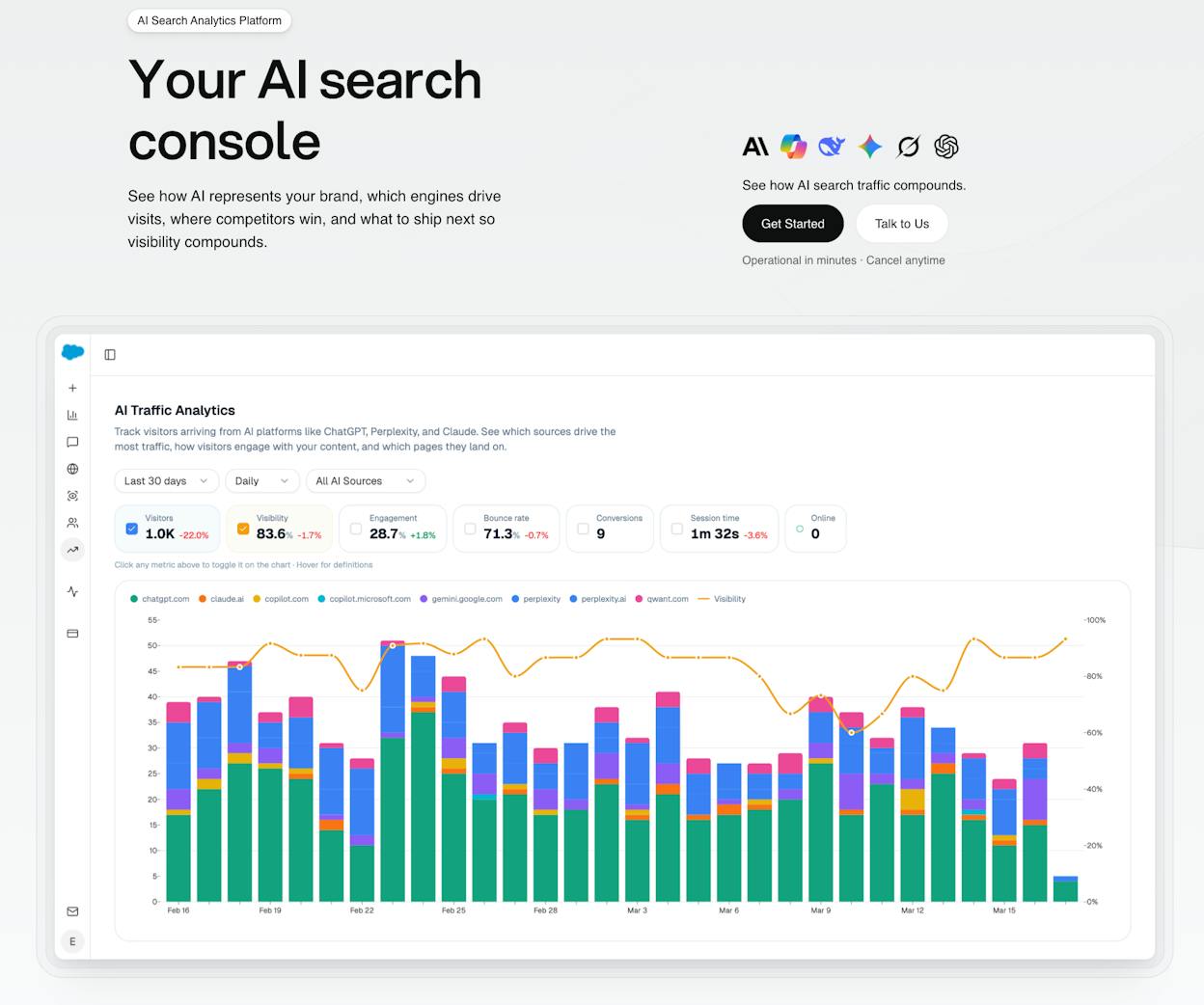
Analyze AI is not just an AI visibility tracker. It is the agentic platform for SEO, AEO, content, and GTM operations that pulls data from GA4, Google Search Console, DataForSEO, Semrush, HubSpot, and every major AI engine, then lets you build workflows that act on it automatically.
The platform follows a four-step loop: Discover where you appear and don’t, Monitor how visibility, traffic, and sentiment shift over time, Improve the content that AI engines ignore, and Govern the narrative before problems compound.
What sets it apart from Goodie AI and every other tool on this list is what happens after the dashboard.
See Which AI Engines Actually Send Traffic (and Where It Converts)
Most tools tell you “your brand was mentioned in ChatGPT.” Analyze AI tells you that ChatGPT sent 248 sessions last month, those visitors landed on your product comparison page, and 12% of them converted to trials.
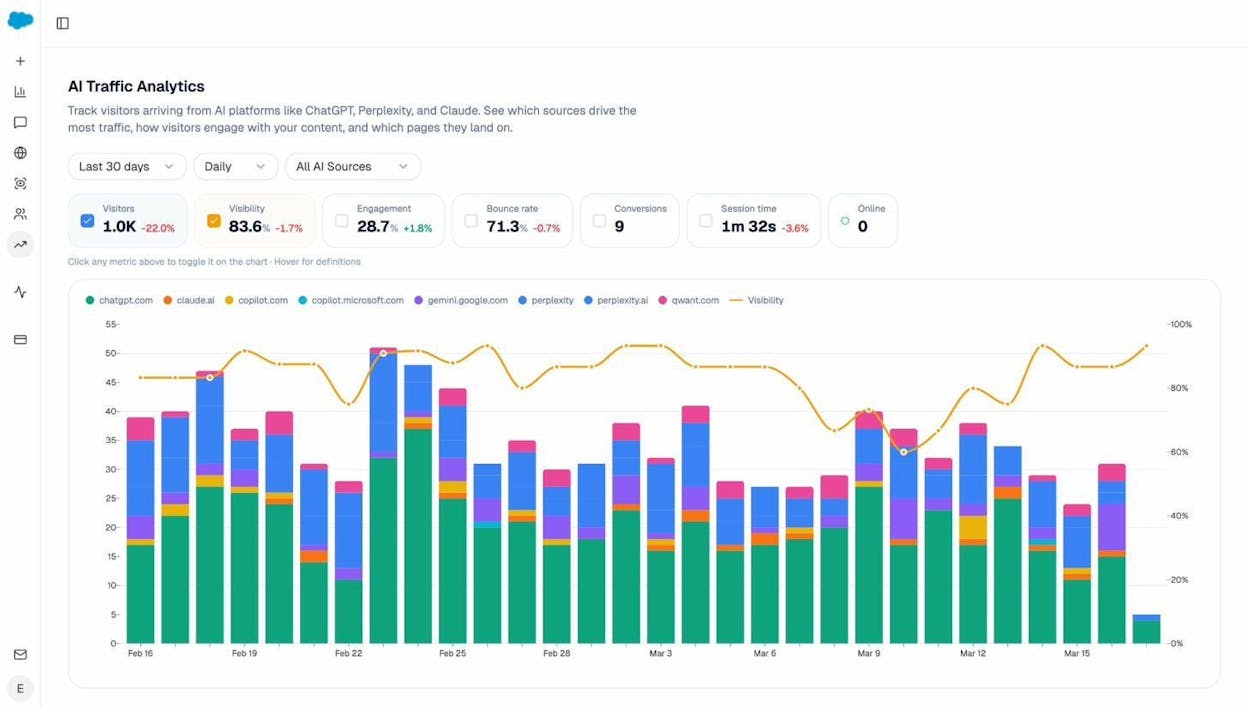
The AI Traffic Analytics module connects directly to GA4 and attributes every AI-referred session to its source engine. You see Perplexity versus Claude versus Copilot, which landing pages receive traffic, and which ones drive revenue. That distinction matters because a brand mention in Claude that sends zero clicks is a different priority than a Perplexity citation driving qualified leads.
This is the feature that makes visibility actionable. Instead of reporting “we appeared in 73% of AI responses,” you report “AI search drove $184K in pipeline this quarter, with ChatGPT contributing 41% of it.”
Track Prompts Across Every Major Engine
Prompt Tracking monitors the exact questions buyers ask across ChatGPT, Perplexity, Claude, Copilot, and Gemini. For each prompt, you see your visibility percentage, rank position, sentiment score, and which competitors appear alongside you.
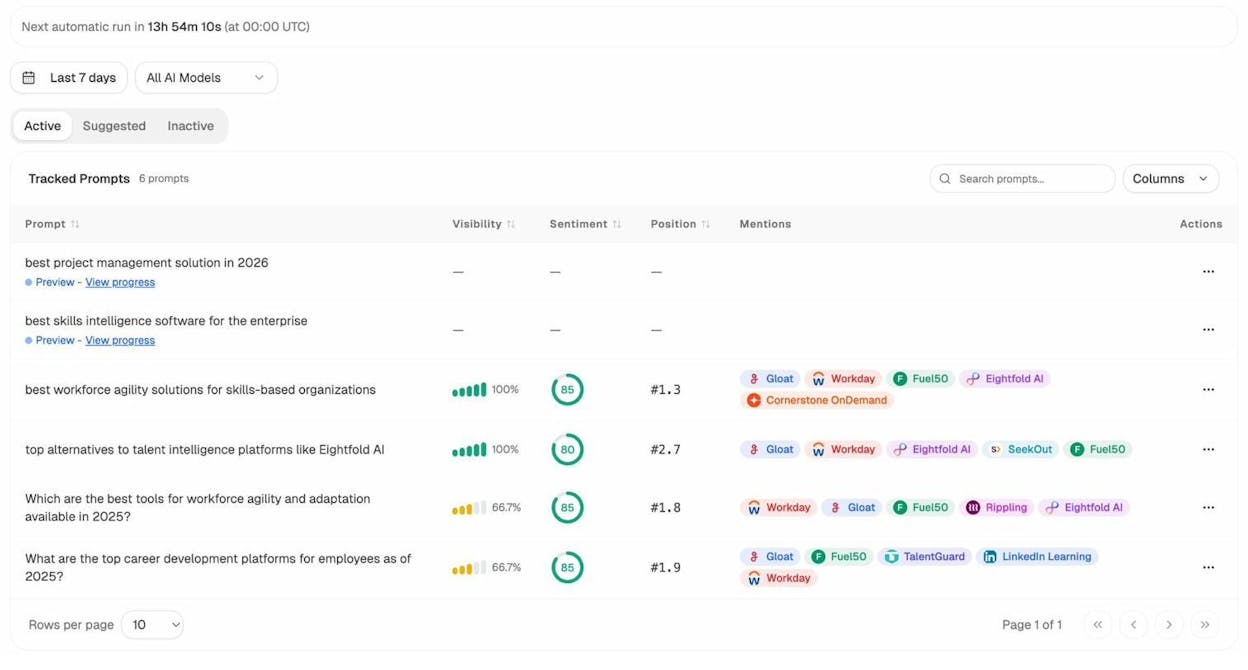
Don’t know which prompts matter for your category? Analyze AI’s Prompt Discovery feature suggests bottom-of-funnel prompts you should be tracking based on your competitive landscape. That means you skip the guesswork and focus monitoring on the queries that drive buying decisions.
Audit the Sources AI Engines Trust
When ChatGPT recommends your competitor, it is because specific domains and URLs shaped that answer. Citation Analytics reveals exactly which sources AI engines rely on in your category.
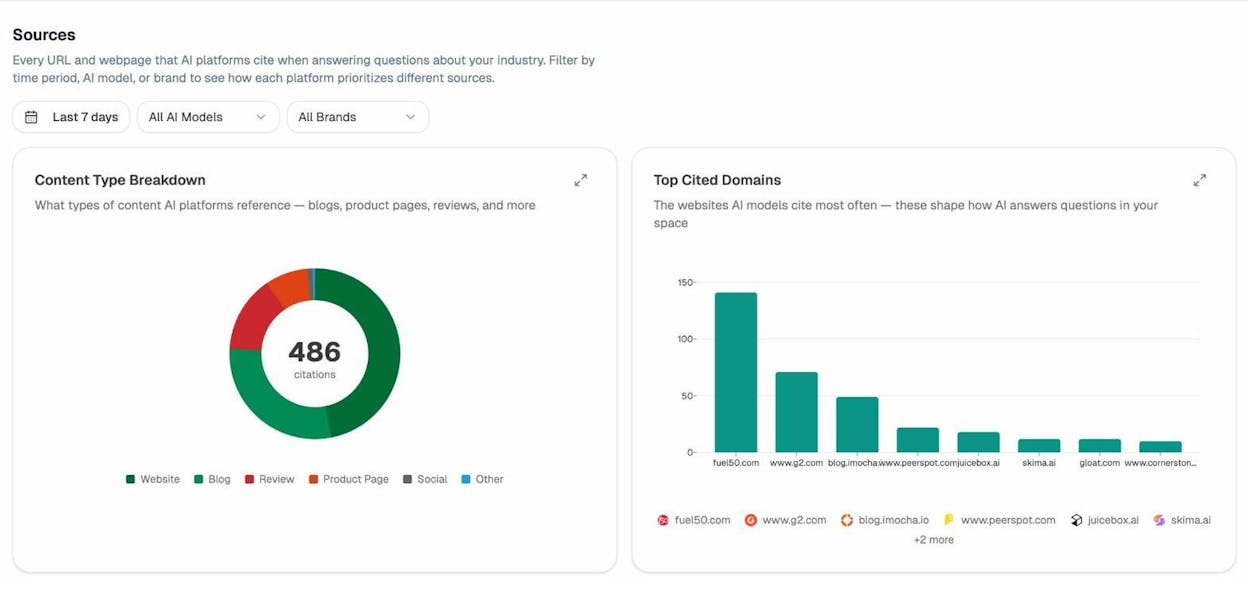
You see usage count per source, which models reference each domain, and when citations first appeared. Instead of generic link building, you target the specific sources that shape AI answers. You earn the citations that move rankings rather than chasing volume.
Map Your Brand’s Position Against Every Competitor
The Perception Map plots every tracked brand on a two-axis quadrant. Visibility sits on one axis, narrative strength on the other. You instantly see who is visible but telling a weak story, who has a strong story but low presence, and where your brand sits relative to each competitor.
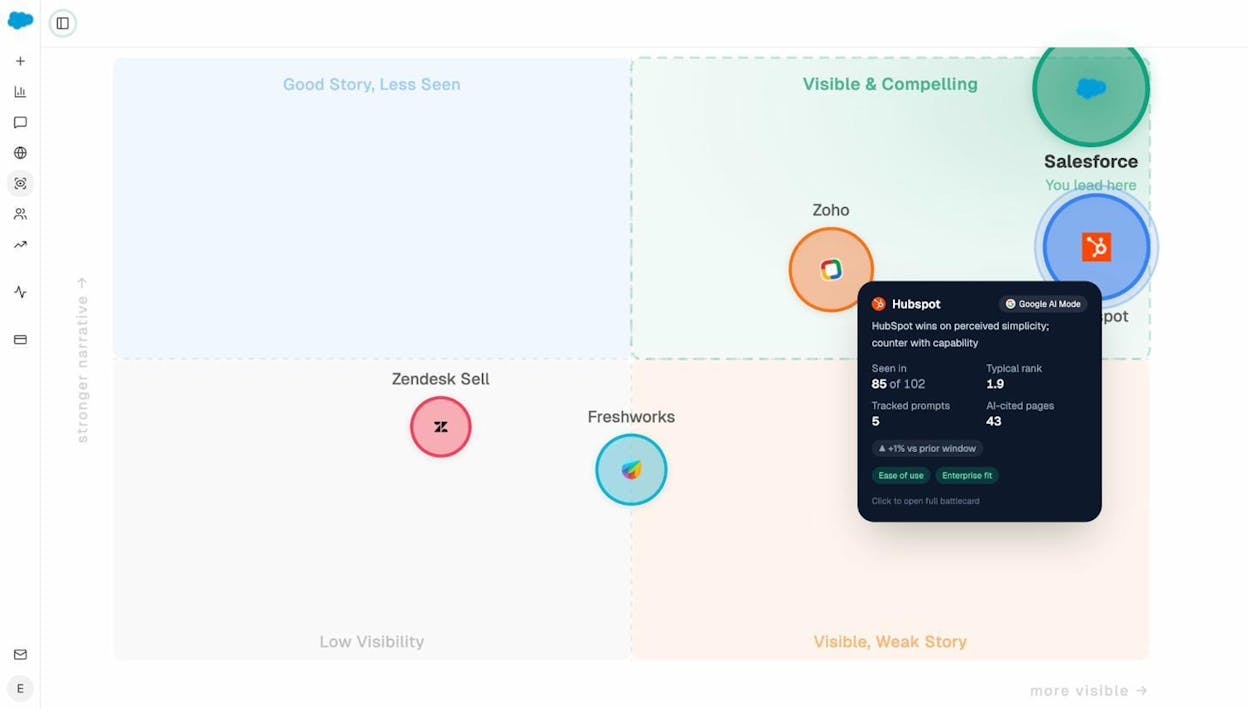
Click any competitor bubble to see their typical rank, how many prompts they appear in, which pages AI engines cite for them, and the themes that define their narrative. Then open the AI Battlecards to get counter-positioning strategies backed by the data.
Write and Optimize Content That AI Engines Actually Cite
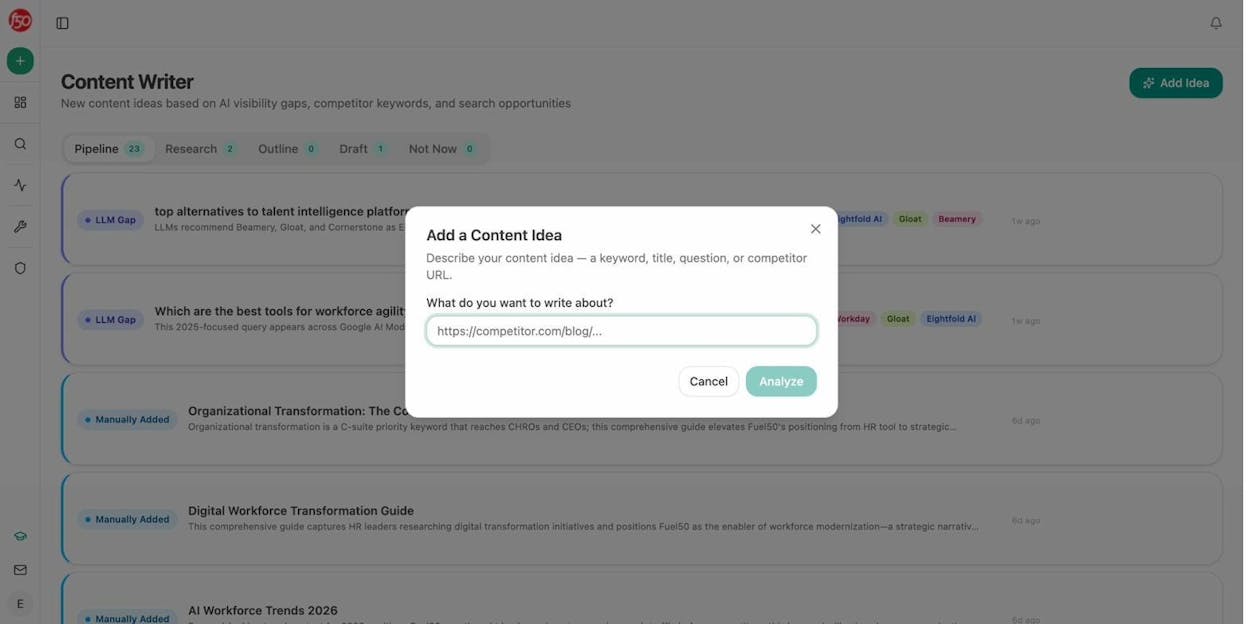
The AI Content Writer does not generate a generic draft. It runs a multi-step pipeline. First, it researches your topic across AI engines and SERPs. Then it produces an outline with strategic comments explaining why each section exists. Finally, it generates a full draft grounded in your brand voice and competitive gaps.
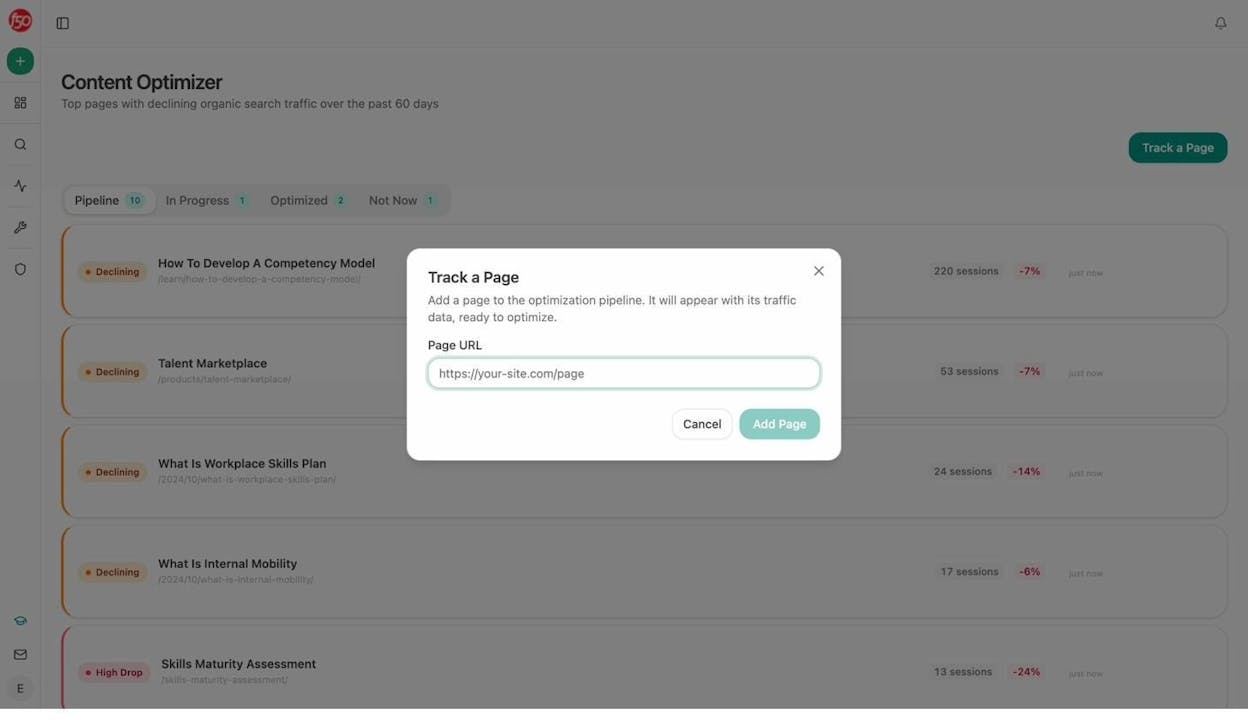
The AI Content Optimizer takes your existing pages, audits them against AI visibility signals, and surfaces specific gaps. It identifies missing entities, structural weaknesses, and citation opportunities, then produces an optimized version with tracked changes so your team can see exactly what shifted.
Both tools inject your Knowledge Base and brand voice rules automatically. No copy-pasting style guides. No drift from messaging.
Automate Entire Marketing Operations With the Agent Builder
This is where Analyze AI separates from every other platform on this list. The Agent Builder gives you 180+ production-ready nodes, 34 pre-built data recipes, 13 input primitives, and three trigger modes (manual, scheduled, webhook) to build workflows that run your operations layer continuously.
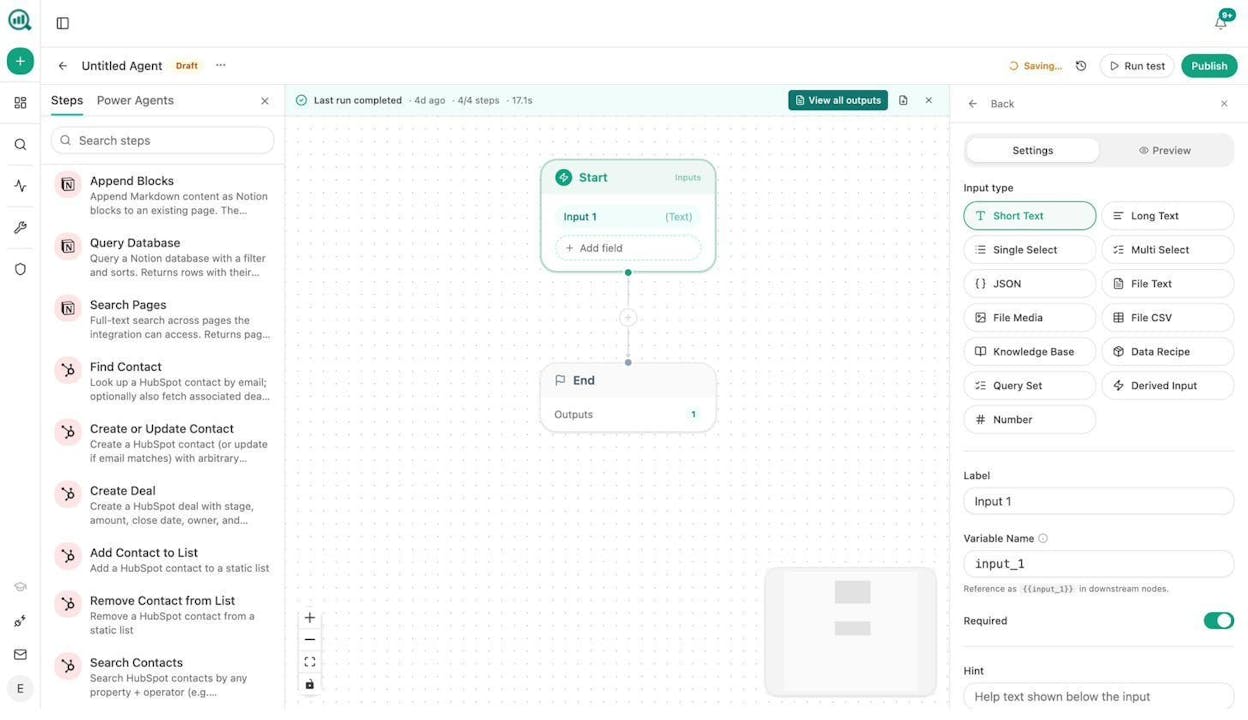
This is not a simple task automator. The node library includes direct integrations with GA4, Google Search Console, DataForSEO, Semrush, HubSpot (full CRM read/write), Notion, WordPress, Contentful, Sanity, Mailchimp, Hunter.io, and Tomba. You can prompt Claude, GPT-4, GPT-5, Gemini, or Perplexity Sonar. You can scrape pages, run SEO audits, generate images, and export to DOCX, PDF, CSV, or Excel.
Here are real workflows teams build:
For CMOs: A scheduled agent runs every Monday at 7am. It pulls your share of voice, GA4 AI traffic, new HubSpot deals, and competitor movement, generates an executive summary in your brand voice, and emails it to leadership. No analyst chase.
For agencies: One agent loops over your entire client list. It assembles a weekly report per client with visibility delta, new backlinks, competitor SERP movement, and AI traffic trends, then emails each PM. Reporting day stops existing.
For content teams: A webhook fires when a brief moves to “approved” in Notion. The agent generates research, outline, and full draft with brand voice injected, scores it against an AEO scorecard, and publishes to WordPress if it passes the quality gate. If it fails, it Slacks the writer with the gaps.
For PR teams: A scheduled agent scans brand mentions every 15 minutes. If negative sentiment spikes, it Slacks the crisis team with source URLs and a draft response before your CEO even knows.
The combinatorics across 180+ nodes means millions of practical configurations. Agencies, content ops teams, marketing leaders, and RevOps can each build the specific workflows their org needs. No code required.
Pricing
Analyze AI starts at $99/month. That is one-quarter of Goodie AI’s entry price for a platform that covers visibility, traffic attribution, content creation, optimization, and programmable automation. See current plans.
Why Choose Analyze AI Over Goodie AI
Goodie AI gives you the dashboard. Analyze AI gives you the dashboard, the attribution, the content engine, and the automation layer to run your entire marketing operations stack. If you need a platform that replaces three or four other tools and connects AI visibility directly to revenue, Analyze AI is where to start.
2. Writesonic GEO: Best for Turning Visibility Into Quick Content Fixes
Writesonic GEO helps teams that want AI visibility data and a way to act on it inside the same workspace. It tracks how often AI tools mention your brand, which prompts bring those mentions, and how that picture shifts over time.
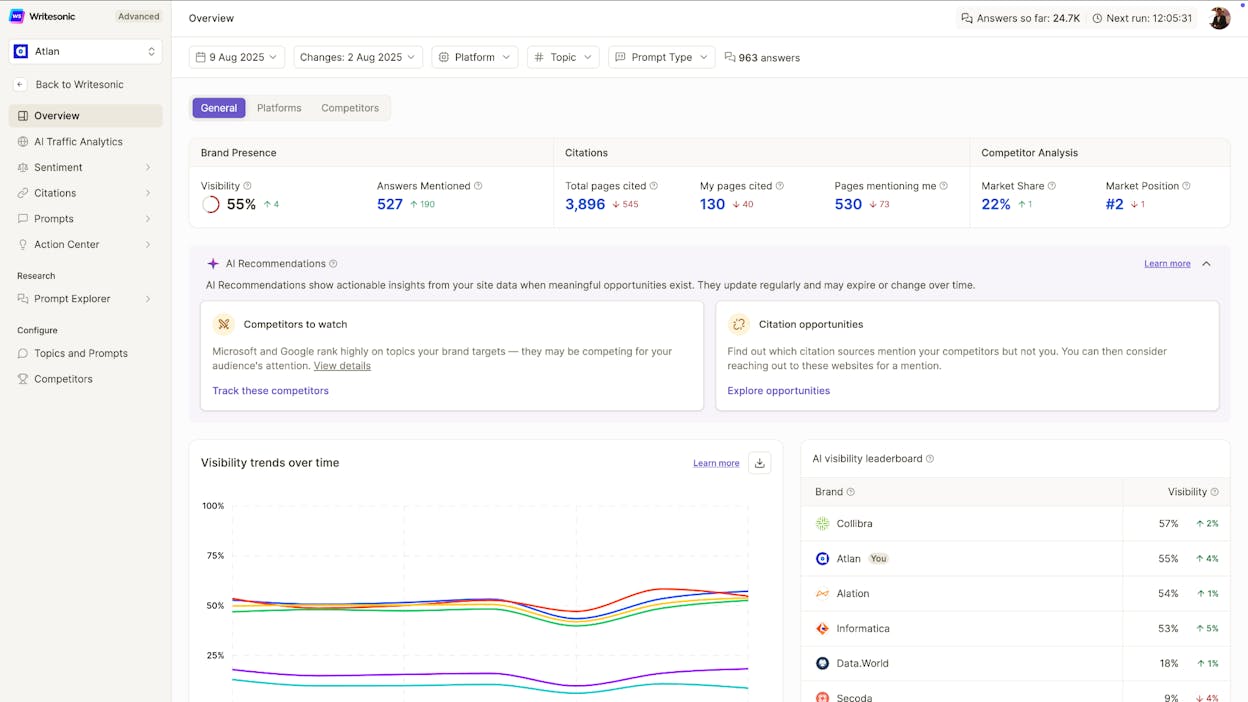
The strength that separates Writesonic from Goodie AI sits in its built-in content and SEO tools. You spot a weak topic, open an editor, and apply fixes without switching platforms. That suits teams that want speed and small feedback loops.
Writesonic also links GEO signals with classic SEO checks. You see pages that rank, pages that get cited, and pages that get ignored on both fronts. One content change can lift results across search and AI engines at once.
Trade-offs: Content tooling is good for quick fixes but lacks the multi-step research pipeline or brand vault injection that more advanced platforms offer. The action layer is built for velocity, not for deep strategic optimization.
Pricing: Starts at ~$39/mo for content-only plans. GEO tracking begins at the Professional plan (~$199/mo annually). A free trial is available.
Choose Writesonic GEO if: You want AI visibility plus a built-in content editor and SEO toolkit at a lower price than Goodie AI. Compare Analyze AI vs Writesonic GEO.
3. Profound: Best for Enterprise Analytics and Real AI Snapshots
Profound captures real snapshots from ChatGPT, Perplexity, Gemini, Copilot, Claude, and others, showing you the complete answer rather than just a score or trend. It ties each answer to crawler patterns so you understand why a model chose a specific page.
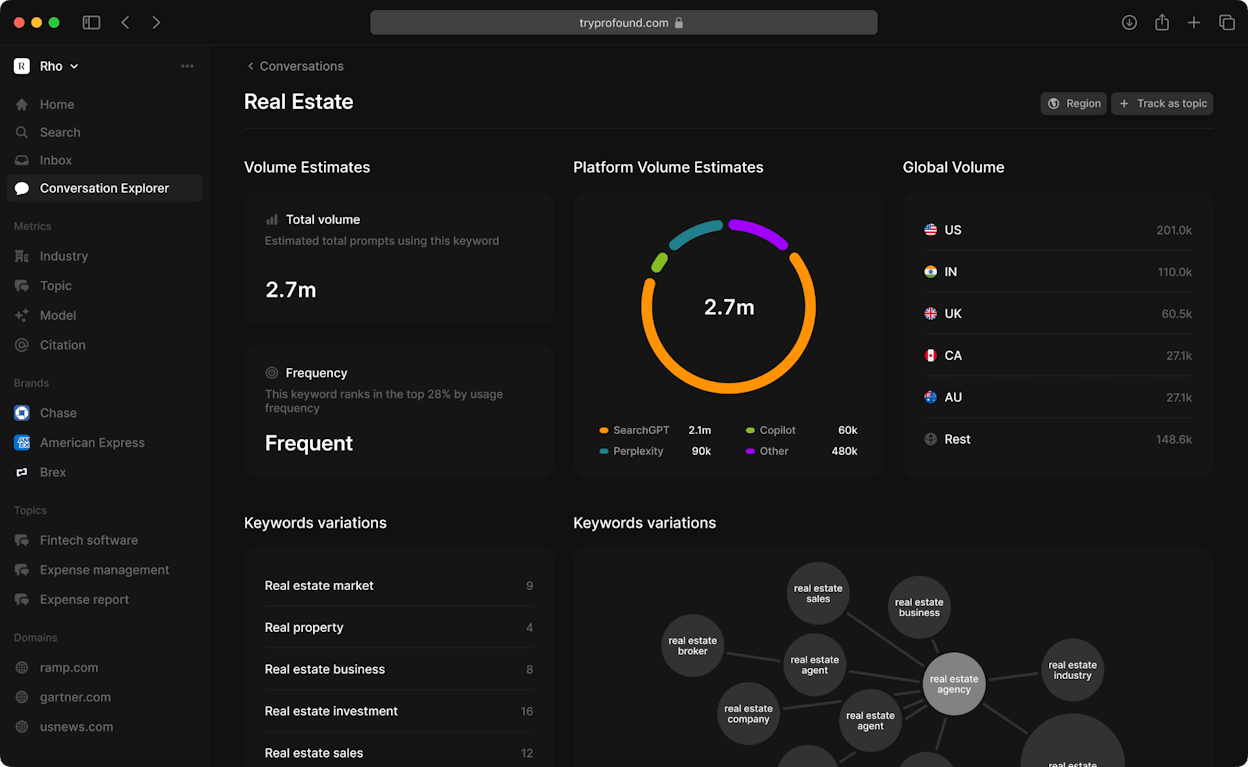
The platform stands apart from Goodie AI through its focus on depth. Profound was built only for AI visibility, without mixing in SEO audits or content tools. That narrow scope gives enterprise teams cleaner data and stronger reporting confidence. SOC 2 Type II compliance and SSO fit the needs of regulated companies.
Trade-offs: Profound focuses on visibility and insight, not execution. You still need separate tools to update pages or adjust content. That adds steps for teams that want fast action. Rich detail can also slow down users without strong analytic skill.
Pricing: Starter and growth tiers begin around $99 and $399 per month. Full enterprise plans are custom. No free tier.
Choose Profound if: You need exact AI answer snapshots, deep analytics, and strict enterprise compliance, and you have a separate content workflow already in place. Compare Analyze AI vs Profound.
4. Conductor: Best for Unifying SEO and AI Visibility in One Enterprise Stack
Conductor brings AI visibility data into the same workspace as SEO metrics, helping enterprise teams see how AI engines cite their content alongside organic search performance. It ties AI insights to topic discovery, audience research, and content workflows.
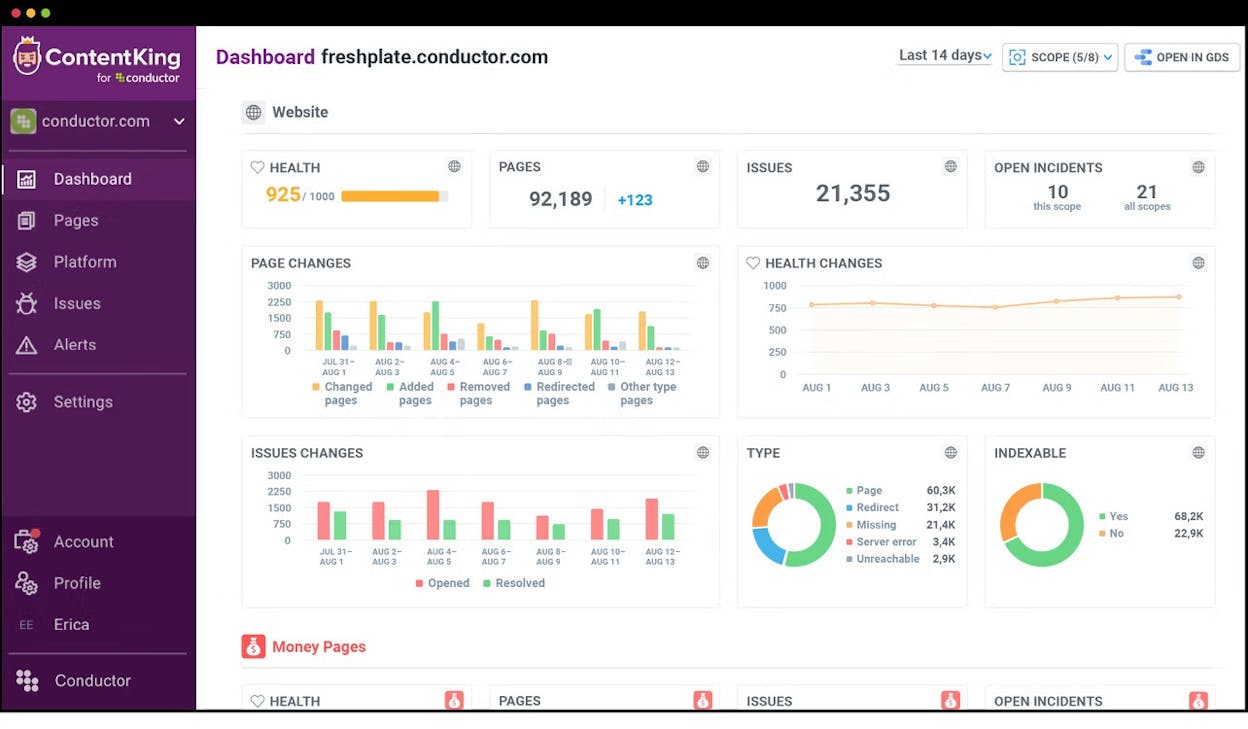
The platform differs from Goodie AI by covering more than visibility alone. It connects AI citations with keyword data, site audits, and content planning. Its integration ecosystem supports teams that depend on BI systems, CMS workflows, and marketing clouds.
Trade-offs: Conductor is a large platform with many layers. AI visibility is one part of a much bigger system. The interface can feel heavy for teams that want quick GEO monitoring. The learning curve is steeper than focused GEO tools. Pricing is custom and enterprise-only.
Pricing: Custom enterprise contracts. No standard public tier.
Choose Conductor if: You manage a large content operation and want AI visibility tied directly to your existing SEO strategy, content planning, and enterprise reporting.
5. Semrush: Best for SEO-First Teams Adding AI Visibility
Semrush gives teams a familiar home where traditional SEO and AI visibility coexist. Its AI Visibility Toolkit shows how often a brand appears in AI results across ChatGPT, Google AI Overviews, Perplexity, and Gemini. These insights live inside the broader Semrush ecosystem, so teams can compare AI citations with organic performance without switching tools.
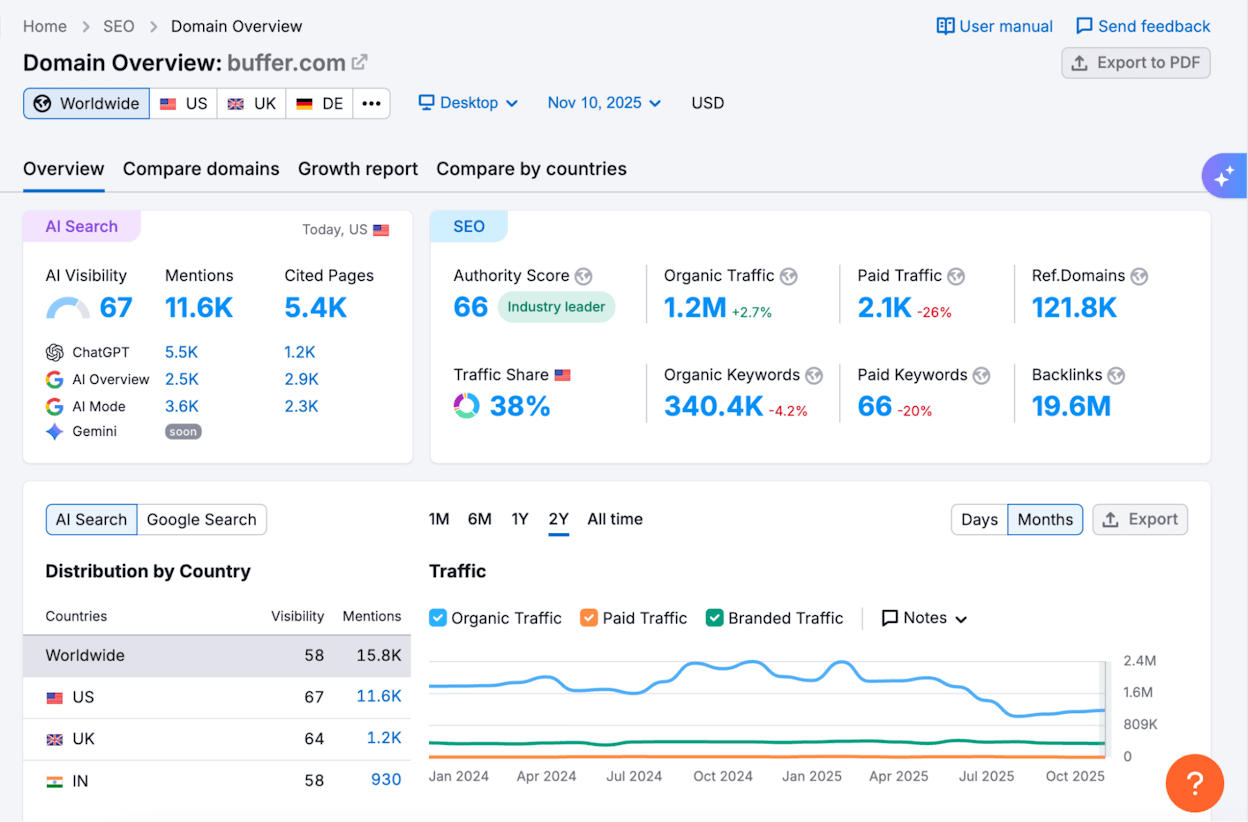
The platform differs from Goodie AI by blending AI visibility with a full SEO stack. Long-standing keyword data, backlink index, rank tracking, and site audit tools give teams a wider strategic view. For organizations already invested in Semrush, adding AI visibility feels natural.
Trade-offs: AI visibility features are spread across multiple modules, so the experience is less focused than a dedicated GEO tool. Managing prompts, domains, or higher usage increases cost. Smaller teams may hit limits sooner than expected.
Pricing: Tiered subscriptions. AI visibility tools are included in higher plans or as add-ons. Compare Analyze AI vs Semrush AI Toolkit.
Choose Semrush if: Your team already lives in Semrush for SEO and wants AI visibility built into the same workflows rather than adding another standalone tool.
6. Peec AI: Best for Fast, Multilingual AI Visibility Tracking
Peec AI focuses on prompt-level visibility across ChatGPT, Perplexity, Claude, and Gemini. Its standout feature is multilingual and multi-region monitoring, which makes it a strong option for brands operating beyond English-speaking markets.
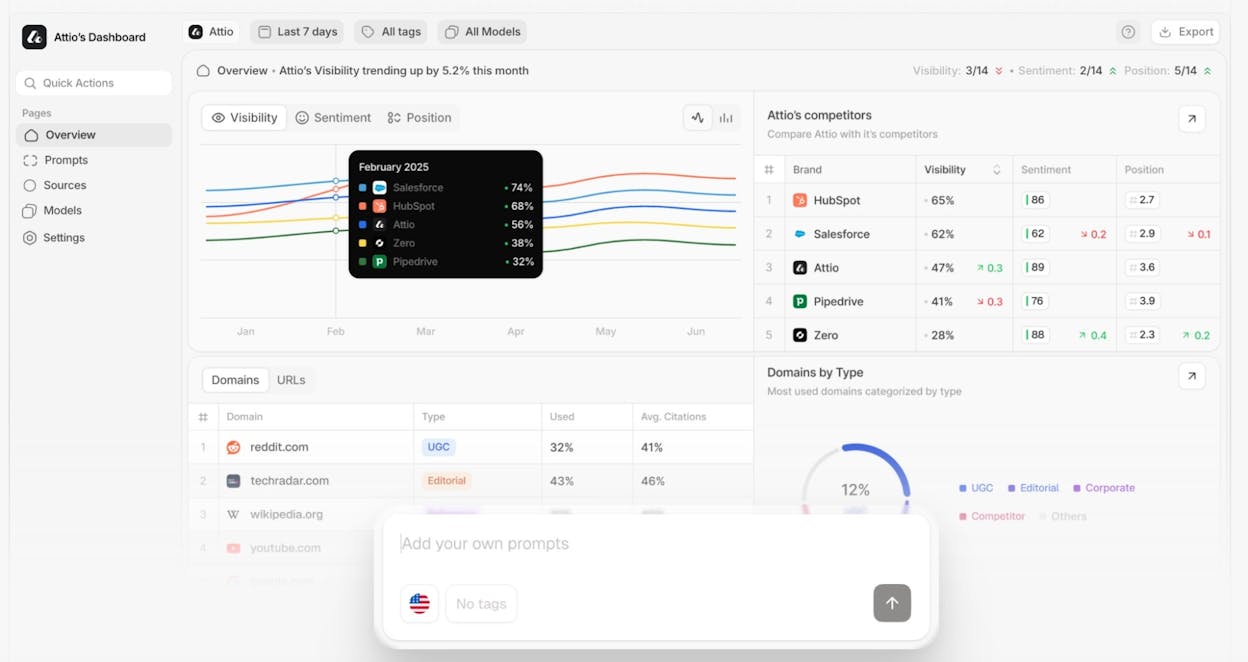
Peec differs from Goodie AI by centering its product around simple, fast analytics rather than enterprise workflows. The pricing makes it accessible for startups, agencies, and mid-market companies to begin GEO tracking without enterprise-tier commitment.
Trade-offs: The platform tracks visibility well but offers fewer prescriptive insights or strategic recommendations than more advanced tools. You often need outside tools or manual workflows to act on prompt-level gaps. Enterprise features like SOC-2, SSO, and deeper API access are still developing.
Pricing: Starter ~€89/month, Pro ~€199/month, Enterprise custom. All tiers include unlimited seats and multi-region coverage. Compare Analyze AI vs Peec AI.
Choose Peec AI if: You need fast, affordable visibility tracking across AI engines in multiple languages and regions.
7. MarketMuse: Best for Content Intelligence Behind AI Visibility
MarketMuse helps teams build content that search engines and AI systems recognize as authoritative. Its topic models analyze how well a page covers a subject and where it falls short, going far beyond keyword usage into topical depth, related subtopics, and competitive content gaps.
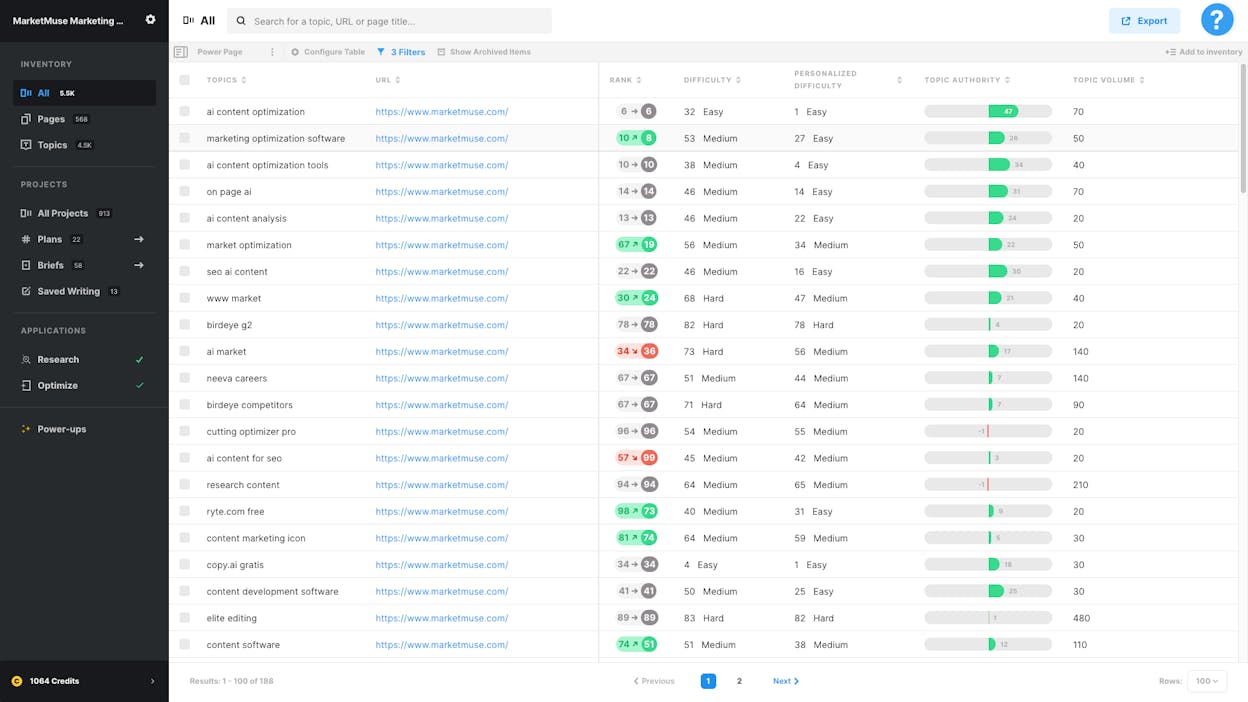
The platform sets itself apart from Goodie AI by focusing on the upstream strategy behind visibility. MarketMuse gives you the structure to build pages that AI engines want to cite. It is not a GEO platform, but it complements GEO tools by helping you understand why certain pages earn mentions.
Trade-offs: MarketMuse does not track AI-generated answers or prompt-level visibility. You still need a GEO-specific tool to measure performance across LLMs. Pricing scales with inventory size and feature depth, which can be hard to justify for small teams.
Pricing: Tiered plans with higher packages unlocking larger content inventories and advanced recommendations.
Choose MarketMuse if: You manage a large content library and want deeper topical authority to support your AI visibility strategy, even though it does not track AI answers directly.
How to Choose the Right Goodie AI Alternative
The right tool depends on what you need beyond visibility tracking.
If you need AI visibility connected to revenue and a programmable operations layer that replaces manual reporting, content production, and competitive monitoring, Analyze AI gives you the most complete platform at one-quarter the price of Goodie AI.
If you need quick content editing alongside visibility data, Writesonic GEO bundles both at a moderate price point.
If you need deep enterprise analytics with real AI snapshots, Profound offers the most forensic view of how models construct their answers.
If you need AI visibility inside an existing SEO enterprise suite, Conductor or Semrush add that layer without requiring a new tool.
If you need fast multilingual tracking on a startup budget, Peec AI gets you started at €89/month.
If you need content intelligence to build the pages AI engines want to cite, MarketMuse strengthens the foundation that GEO tools measure.
Most teams evaluating Goodie AI alternatives want lower cost, clearer connection to business outcomes, and the ability to act on what the data shows without switching to five other tools. Start with Analyze AI and see how AI search compounds into pipeline.

Ernest

Ibrahim


