

![The Ultimate SEO Contract Template [100% Free]](/_next/image?url=https%3A%2F%2Fwww.datocms-assets.com%2F164164%2F1777123455-blobid0.png&w=3840&q=75)

Summarize this blog post with:


In this article, you’ll get a free, fully customizable SEO contract template—plus a clause-by-clause walkthrough so you can tailor every section to your clients, your services, and the way search actually works today (including AI search).
We built this template after reviewing dozens of real SEO contracts from agencies and freelancers at every stage of growth. Every clause is here for a reason, and we’ll explain what that reason is so you never send a contract you don’t fully understand.
Download the free SEO contract template here → (Google Docs — make a copy and customize)
Disclaimer: We are not lawyers. Nothing in this article should be taken as legal advice. Always have a qualified attorney review your contract before sending it to clients.
Table of Contents
Why You Need a Written SEO Contract
An SEO contract is a legally binding agreement between a service provider (you) and a client. It defines what work you will do, when you will do it, how much it costs, and what happens when things go wrong.
You might think a handshake and a few emails are enough. They are not.
Here’s what a written contract actually does for your business:
It builds trust before work starts. A professional contract signals that you take your business seriously. Clients who see a thorough agreement are more likely to view you as a partner, not just a vendor. It tells them you have done this before and you know how to protect both sides.
It protects you legally. In the United States, you can be sued over contracted work even without a written agreement. A written contract doesn’t make lawsuits impossible, but it makes them far less likely because both parties have agreed—on paper—to the same terms.
It prevents scope creep. Without a contract, clients will ask for “just one more thing” until your retainer covers three times the original scope. A contract gives you a reference point to push back politely: “That’s outside our current agreement. Let’s add it as a change order.”
It defines deliverables, not vague promises. Clients don’t buy “SEO.” They buy rankings, traffic, leads, and revenue. Your contract should translate your services into specific deliverables so both sides know exactly what success looks like.
What Happens When You Skip the Contract
Every experienced SEO has a horror story about a project that went sideways because there was no written agreement. Here are the most common outcomes:
Unending arguments about what was promised. You said “on-page optimization.” The client heard “you’ll rewrite every page on my website.” Without a contract defining “on-page optimization” as auditing title tags, meta descriptions, header structure, and internal links for up to 50 pages per month, there is no way to resolve this disagreement cleanly.
Unpaid invoices with no recourse. If your payment terms live in an email thread from three months ago, good luck collecting. A contract with clear payment terms, late fees, and a dispute resolution process gives you actual leverage.
Scope creep that eats your margins. The client wants you to manage their Google Business Profile, write blog posts, fix their site speed, and set up analytics—all for the monthly retainer you quoted for keyword research and link building. Without a scope section in your contract, you have no clean way to say no.
Bad reviews from misaligned expectations. A client who expected page-one rankings in 30 days and didn’t get them isn’t going to blame themselves for having unrealistic expectations. They’re going to blame you. A contract that addresses timelines and sets realistic expectations upfront prevents this.
Worst case: a lawsuit. This doesn’t happen often, but it does happen. And when it does, having a signed contract with a dispute resolution clause can save you thousands in legal fees.
The bottom line: a contract is not bureaucracy. It is the single most important document in your client relationship.
Three Types of SEO Contracts (and Which to Choose)
Not every SEO engagement is the same. The structure of your contract should match the structure of your services.
|
Contract Type |
Best For |
Duration |
Payment Structure |
Risk Level |
|---|---|---|---|---|
|
Retainer |
Ongoing SEO services (most common) |
3–12 months, auto-renewing |
Fixed monthly fee |
Low—predictable revenue |
|
Project-Based |
One-time audits, migrations, launches |
Defined start and end date |
Fixed project fee or milestone payments |
Medium—scope must be airtight |
|
Hourly |
Consulting, ad hoc work |
Per engagement |
Hourly rate with monthly cap |
High—harder to estimate total cost |
Retainer contracts are the gold standard for SEO agencies. They give you predictable revenue and give the client predictable costs. Most importantly, they match the reality that SEO is an ongoing process—not a one-time project.
Project-based contracts work best for a technical SEO audit, a site migration, or a one-time content strategy engagement. The key is defining the scope so precisely that there is no room for interpretation. List every deliverable, every deadline, and every assumption.
Hourly contracts are the riskiest because they create misaligned incentives. The client wants you to work fewer hours; you want to work more. Use these only for consulting engagements where the scope genuinely cannot be defined upfront.
Our template is built for retainer engagements because that’s what most SEO professionals use. But you can adapt it for project-based work by adjusting the duration, payment, and deliverables sections.
How to Customize Every Section of the Template
Our SEO contract template has 15 sections. Each one exists to solve a specific problem. Here’s how to customize every section so it works for your business.
1. Contract Definitions
This is the glossary at the top of your contract. It defines every term that appears later in the document so there is zero ambiguity.
This section might feel unnecessary. It is not. When a client disputes a deliverable six months from now, the definition section is where you go to settle it.
Terms you should always define:
-
“SEO Services” — Specify exactly what this means. Does it include technical audits? Content creation? Link building? AI search optimization? List every category of work.
-
“Deliverables” — The tangible outputs the client receives. Monthly reports, keyword research documents, content briefs, audit reports.
-
“The Client” — The legal entity you’re contracting with. Not “John” — the actual business name.
-
“The Provider” — Your agency or freelance business entity.
-
“Confidential Information” — What counts as confidential and what doesn’t.
Example of a good definition:
“SEO Services” refers to search engine optimization activities including, but not limited to: technical website audits, on-page optimization, keyword research, content strategy, link acquisition, monthly performance reporting, and AI search visibility monitoring. SEO Services do not include paid advertising, social media management, or web development unless explicitly stated in the Scope of Work.
Example of a bad definition:
“SEO Services” means the SEO work we do for you.
The first version protects you. The second version guarantees a dispute.
![[Screenshot: Example of a well-structured contract definitions section in Google Docs]](https://www.datocms-assets.com/164164/1777123455-blobid1.png?auto=format,compress&w=1248&fit=max)
2. Scope of Work (Your Responsibilities)
This is the most important section of your contract. It describes exactly what you will do, when you will do it, and what the client can expect to receive.
The mistake most SEO providers make here is being too vague (“We will optimize your website for search engines”) or too specific (“We will use Screaming Frog to crawl your site on the first Monday of every month”). The first gives you no protection. The second locks you into tools and workflows you may want to change.
The right approach: define deliverables, not processes.
Structure your scope of work around the outputs the client receives, not the internal processes you use to create them. Here’s what to include:
Monthly deliverables (for a retainer contract):
-
Technical SEO audit and implementation (specify page count or crawl limits)
-
On-page optimization for target pages (specify number per month)
-
Keyword research and content briefs (specify number per month)
-
Link building or digital PR (specify approach, not link count—never guarantee link numbers)
-
Monthly performance report with analysis and recommendations
-
Monthly strategy call (specify duration)
One-time deliverables (at the start of the engagement):
-
Initial website audit (technical, on-page, and off-page)
-
Competitive analysis
-
Keyword strategy document
-
Content calendar for the first quarter
![[Screenshot: Example scope of work section broken into monthly and one-time deliverables]](https://www.datocms-assets.com/164164/1777123462-blobid2.png?auto=format,compress&w=1248&fit=max)
Do not promise specific rankings, Domain Rating scores, or traffic numbers. You cannot control Google’s algorithm, and any contract that guarantees a specific metric is setting you up for a dispute.
Instead, define your deliverables and let the results speak for themselves.
Adding AI search services to your scope:
If you offer AI search optimization alongside traditional SEO, this is where you include it. We’ll cover exactly how in the dedicated section below, but the key point is this: AI search services belong in the scope of work, not as a separate contract. They are an extension of the same organic visibility strategy.
3. Client Responsibilities
Your contract is a two-way street. The client has responsibilities too, and this section makes them explicit.
What clients typically need to provide:
-
Access to their website CMS (WordPress, Shopify, etc.)
-
Access to Google Search Console, Google Analytics, and any other analytics platforms
-
Timely feedback on deliverables (specify a response window—e.g., 5 business days)
-
Brand guidelines, tone of voice documents, and approved messaging
-
A single point of contact who has authority to approve work
What clients need to commit to:
-
Not making significant website changes (redesigns, migrations, URL changes) without notifying you in advance
-
Approving or rejecting deliverables within the agreed timeframe
-
Paying invoices on time
Why this section matters: If a client redesigns their website without telling you and traffic drops 40%, that’s not your fault. But without a clause requiring them to notify you of major changes, it becomes very hard to make that argument.
![[Screenshot: Example client responsibilities section listing access requirements and feedback timelines]](https://www.datocms-assets.com/164164/1777123462-blobid3.png?auto=format,compress&w=1248&fit=max)
4. Duration and Renewal
SEO is not a one-month project. Results take time. Your contract should reflect that reality.
Recommended approach:
-
Minimum term: 6 months. This gives you enough time to implement your strategy and start seeing measurable results. Anything shorter than 6 months is not enough time for SEO to work, and you’ll spend the entire engagement setting up rather than optimizing.
-
Renewal: Auto-renewal on a month-to-month basis after the initial term, with 30 days’ written notice to cancel.
-
Early termination: Define a kill fee or notice period for early termination during the initial term.
Sample language:
This agreement is effective for an initial term of six (6) months beginning on [Start Date]. After the initial term, the agreement will automatically renew on a month-to-month basis. Either party may terminate the agreement by providing thirty (30) days’ written notice.
Common mistakes:
-
Setting a 12-month minimum with no termination clause. This traps clients and creates resentment.
-
Going month-to-month from day one. This gives clients no incentive to commit, and you’ll spend more time reselling your services than delivering them.
-
Not defining what “written notice” means. Does an email count? A registered letter? Specify the method.
5. Payment Terms
Your payment section needs to cover five things: how much, when, how, what happens if they’re late, and what happens if they don’t pay at all.
Pricing structure:
State your monthly retainer or project fee clearly. If you offer tiered pricing, include only the tier the client has chosen. Don’t put all your pricing options in the contract—that invites negotiation after the deal is done.
Payment schedule:
-
Retainers: Bill on the 1st of the month, due within 7–15 days. Always bill in advance, not in arrears. You want to get paid before you do the work, not after.
-
Project-based: Bill in milestones. 50% upfront, 25% at midpoint, 25% on completion is a common split.
Late payment penalties:
Invoices not paid within fifteen (15) days of the due date will incur a late fee of 1.5% per month on the outstanding balance. If payment is not received within thirty (30) days, the Provider reserves the right to pause all services until the account is brought current.
Disputed invoices:
Include a clause that requires the client to dispute an invoice in writing within a specific number of days. If they don’t dispute it, it’s considered accepted.
![[Screenshot: Example payment terms section with late fee language and dispute process]](https://www.datocms-assets.com/164164/1777123468-blobid4.png?auto=format,compress&w=1248&fit=max)
6. Reporting and Communication
This section defines how you’ll communicate progress and what reporting the client will receive. It’s not glamorous, but it prevents a huge number of complaints.
What to include:
-
Reporting frequency: Monthly is standard. Some clients want biweekly. Specify what they’ll get and when.
-
Report contents: List the metrics you’ll include. Organic traffic, keyword rankings, backlinks acquired, technical issues fixed, content published.
-
Meeting cadence: Monthly strategy calls at minimum. Specify duration (30 or 60 minutes) and format (video call, phone, in-person).
-
Communication channels: Email for formal requests. Slack or project management tools for day-to-day. Specify response times.
Why this matters for AI search:
If you’re tracking your client’s visibility across AI engines like ChatGPT, Perplexity, and Gemini, your reporting section should reflect that. AI search visibility data—which prompts mention your client, which competitors appear, and which sources get cited—is increasingly valuable to clients. Including it in your contract positions you as a forward-thinking provider.
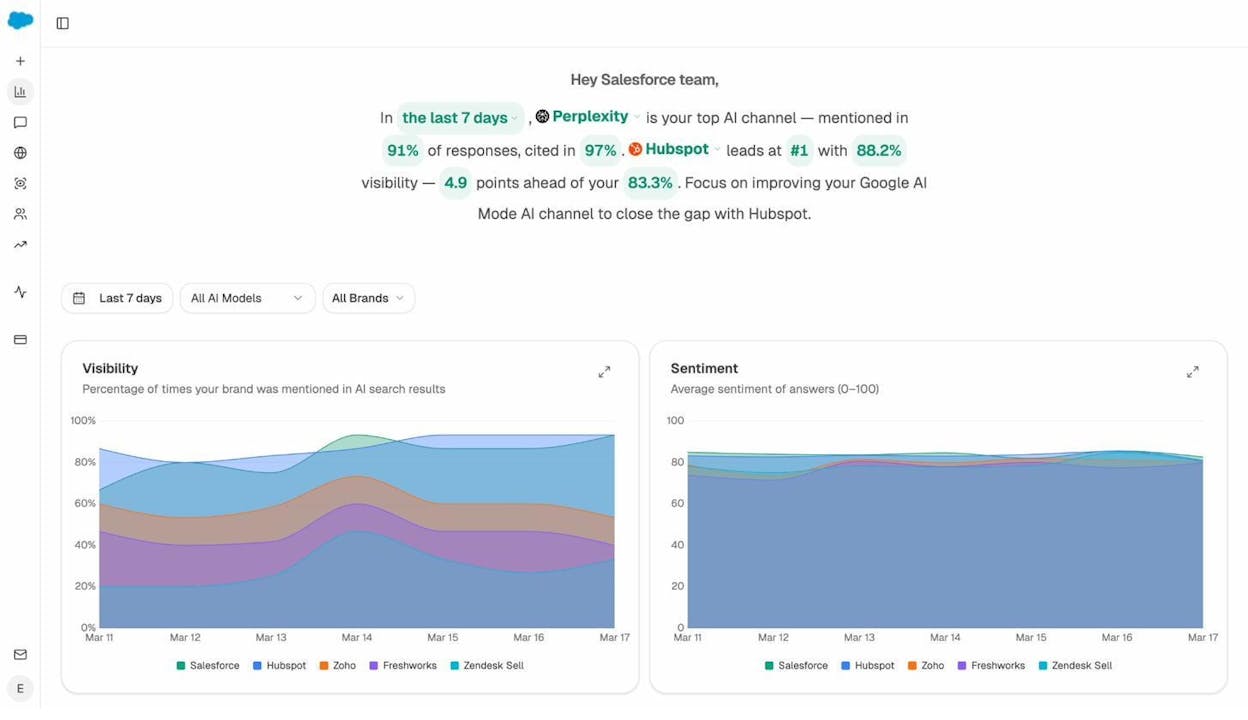
With a tool like Analyze AI, you can pull visibility data across multiple AI engines and include it in your monthly reports. This gives clients a view of their brand performance that no other SEO provider is likely offering yet.
7. Termination
Your termination clause defines how the contract can end—by either party, for any reason, and what happens afterward.
What to include:
-
Termination for convenience: Either party can terminate with 30 days’ written notice after the initial term.
-
Termination for cause: Either party can terminate immediately if the other party materially breaches the agreement and fails to remedy the breach within 15 days of written notice.
-
What constitutes a breach: Non-payment, failure to provide access, misrepresentation, and violation of confidentiality are common examples.
-
What happens after termination:
-
You deliver any work completed up to the termination date.
-
The client pays for all work completed and any outstanding invoices.
-
You return all client assets (login credentials, content, data).
-
Confidentiality obligations survive termination.
Common mistake: Not addressing what happens to work-in-progress. If you’ve started a content campaign and the client terminates mid-month, do they get the half-finished work? Do they pay for it? Define this upfront.
8. Warranties
Warranties are formal promises from both sides. They protect you from unethical behavior and set baseline expectations.
Your warranties (as the SEO provider):
-
You will perform services in a professional and competent manner.
-
You will use only ethical, white-hat SEO practices.
-
You will not guarantee specific rankings, traffic numbers, or other outcomes that are outside your control.
The client’s warranties:
-
They have the legal authority to enter into this agreement.
-
The information they provide is accurate and complete.
-
They will not engage another SEO provider for the same services during the term of the agreement (if exclusivity is part of your arrangement).
Critical warranty to include:
This agreement is entered into with the mutual understanding that no specific search engine ranking, domain authority score, traffic number, or similar metric is guaranteed by the Provider. Search engine algorithms are controlled by third parties and are subject to change without notice.
This single clause has saved more SEO providers from disputes than any other.
9. Liability
Liability defines the limits of your financial exposure if something goes wrong.
Key elements:
-
Limitation of liability: Cap your total liability at the total amount paid by the client under the contract (or the last 3–6 months of fees). This prevents a situation where a client sues you for millions over a traffic drop.
-
Exclusion of consequential damages: You are not responsible for lost profits, lost revenue, lost business, or any other indirect damages. You are only responsible for the direct cost of the services you provided.
-
No liability for algorithm changes: Explicitly state that you are not responsible for changes to search engine algorithms, AI model updates, or any other third-party platform changes that affect the client’s rankings or visibility.
Sample language:
In no event shall the Provider’s total liability under this agreement exceed the total fees paid by the Client in the six (6) months immediately preceding the claim. The Provider shall not be liable for any indirect, incidental, special, consequential, or punitive damages, including but not limited to loss of profits, revenue, or business opportunities.
10. Indemnification
Indemnification protects you from being dragged into legal disputes that aren’t your fault.
How it works: Both parties agree not to hold the other responsible for problems caused by their own actions. If a client asks you to publish content that infringes on someone else’s copyright, and the copyright holder sues, the indemnification clause ensures the client—not you—is responsible.
What to include:
-
The client indemnifies you against claims arising from the content, materials, or instructions they provide.
-
You indemnify the client against claims arising from your negligence or willful misconduct.
-
Both parties agree to notify each other promptly of any claims.
11. Confidentiality
SEO work gives you access to sensitive business data: analytics, revenue numbers, customer data, competitive intelligence, internal strategies. This section protects that information.
What to include:
-
A definition of “Confidential Information” (analytics data, business strategies, customer information, financial data, login credentials).
-
An obligation for both parties to protect confidential information using reasonable security measures.
-
Exceptions: information that is publicly available, already known, independently developed, or required to be disclosed by law.
-
A time limit: confidentiality obligations should survive for 2–3 years after the contract ends.
12. Intellectual Property and Ownership
Who owns the work you produce? This question causes more disputes than almost any other.
Recommended approach:
-
Client owns the deliverables. Any content, reports, strategies, or other materials you create specifically for the client belong to the client after payment.
-
You own your tools and methodologies. Your audit templates, proprietary processes, software tools, and frameworks remain your intellectual property. You grant the client a license to use the deliverables, but the underlying tools stay with you.
-
Pre-existing IP: Anything you bring to the engagement that you created before the contract started remains yours.
This distinction matters. If a client terminates and expects to take your proprietary audit template with them, this clause prevents that.
13. Force Majeure
Force majeure covers events outside anyone’s control: natural disasters, pandemics, wars, government actions, or extended internet outages.
If a force majeure event prevents either party from fulfilling their obligations, neither party is held in breach. Define how long the suspension can last before either party can terminate.
14. Jurisdiction and Dispute Resolution
This section defines which court has jurisdiction if a dispute goes to litigation and how disputes are resolved before they get there.
Recommended approach:
-
Jurisdiction: Choose your local jurisdiction. You don’t want to travel across the country (or to another country) for a dispute.
-
Dispute resolution process: Require mediation before litigation. Mediation is cheaper, faster, and less adversarial than going to court.
-
Governing law: Specify which state’s or country’s laws govern the contract.
15. Signature
Both parties sign and date the agreement. Use an e-signature tool—sending a PDF that needs to be printed, signed, scanned, and emailed back is a friction-filled process that slows down client onboarding.
Popular e-signature options include DocuSign, HelloSign, and PandaDoc.
How to Add AI Search Services to Your Contract
SEO is evolving. Buyers are not just searching on Google anymore—they are asking ChatGPT, Perplexity, Gemini, and Copilot for recommendations. If your agency offers AI search optimization alongside traditional SEO, your contract needs to reflect that.
This does not require a separate contract. AI search visibility is an extension of organic visibility, not a replacement for it. The same content principles that drive traditional SEO performance—clear writing, authoritative sources, structured data, strong backlinks—also drive AI search visibility.
Here’s how to integrate AI search services into each relevant section of your contract:
In Your Definitions Section
Add these terms:
-
“AI Search Engines” — Large language model (LLM) powered search platforms including, but not limited to, ChatGPT, Google Gemini, Perplexity AI, Microsoft Copilot, and Claude.
-
“AI Search Visibility” — The degree to which the Client’s brand, products, or services are mentioned, recommended, or cited in AI-generated responses.
-
“AI Citation” — A reference or link to the Client’s website, content, or brand within an AI-generated response.
In Your Scope of Work
Add a subsection for AI search deliverables:
-
AI visibility monitoring: Track which prompts mention the client’s brand, which competitors appear, and how sentiment trends over time.
-
Citation analysis: Identify which sources AI engines cite in the client’s industry and develop a strategy to earn those citations.
-
Prompt tracking: Monitor tracked and suggested prompts to understand how AI engines respond to queries relevant to the client’s business.
-
AI-specific content optimization: Optimize existing content for AI citation by improving structure, adding entity-rich information, and ensuring factual accuracy.
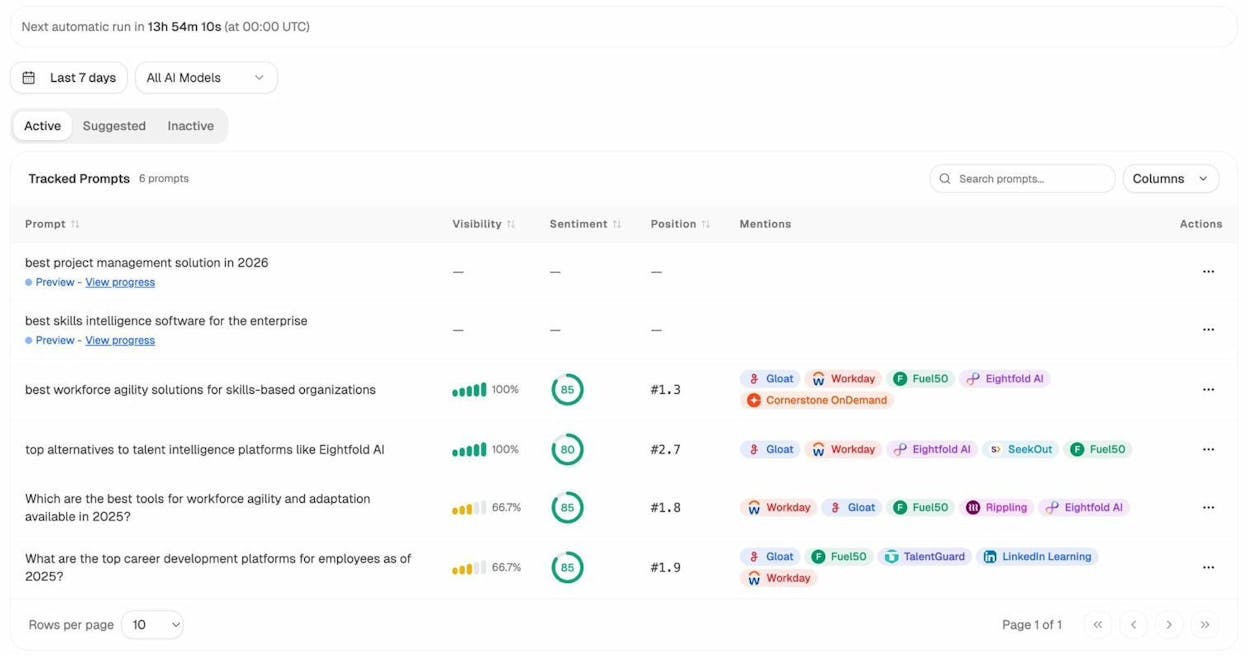
With Analyze AI, you can track exactly which prompts mention your client’s brand across ChatGPT, Perplexity, Gemini, and more. This gives you concrete data to report on each month.
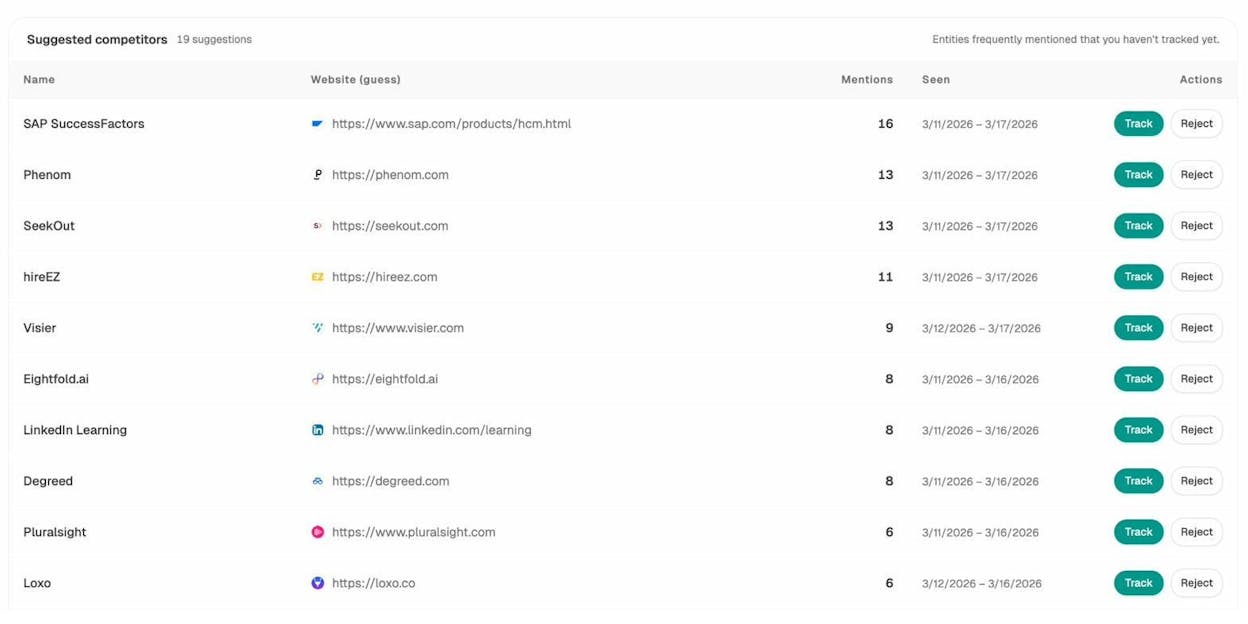
The Competitors dashboard shows you exactly where your client ranks versus competitors on each tracked prompt—so you can identify gaps and prioritize optimization.
In Your Reporting Section
Add AI search metrics to your monthly reports:
-
Prompt visibility: Number of prompts where the client’s brand is mentioned vs. not mentioned.
-
Citation count: How many AI-generated responses cite the client’s website or content.
-
Competitor comparison: Which competitors appear more frequently and on which prompts.
-
Sentiment tracking: How AI engines describe the client’s brand (positive, neutral, negative).
-
AI traffic: How many website sessions originate from AI search engines.
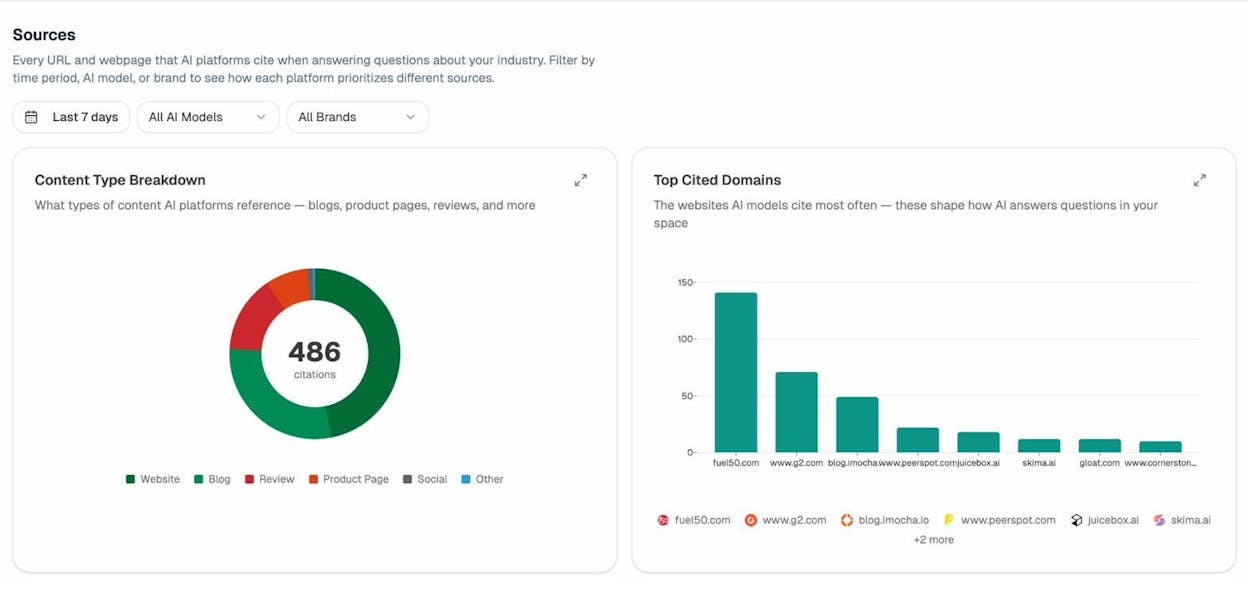
The Sources dashboard in Analyze AI shows which domains and URLs get cited most frequently in AI responses within your client’s space. Use this data to identify citation gaps and earn the sources AI engines trust.
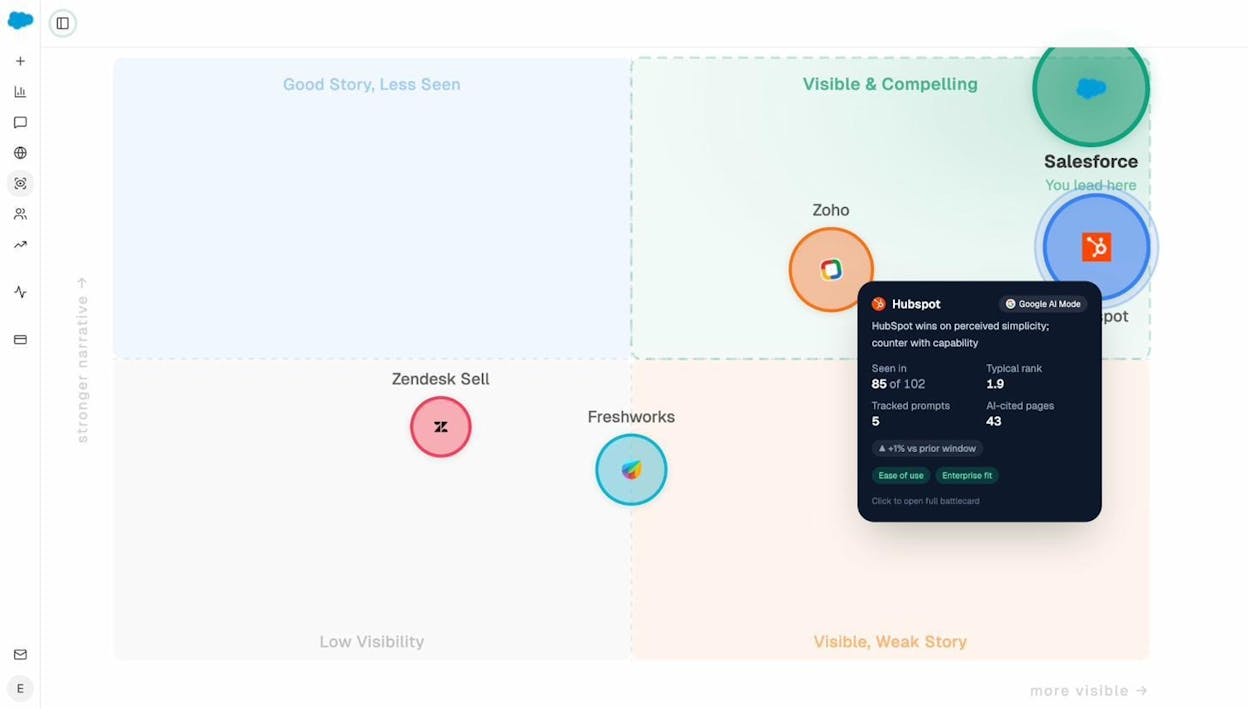
The Perception Map shows exactly how AI engines describe your client’s brand. If there’s a negative narrative forming, you’ll see it here—and you can address it before it spreads.
In Your Warranties Section
Add a warranty specific to AI search:
The Provider acknowledges that AI search engine responses are generated by third-party models and are not within the Provider’s control. No specific AI mention, citation, ranking, or sentiment score is guaranteed.
This mirrors the warranty you already have for traditional search rankings and protects you from unrealistic client expectations.
What KPIs and Metrics to Include in Your Contract
Your contract should reference the specific metrics you’ll track and report on. This sets expectations and gives both parties a shared definition of progress.
Here are the metrics to consider, organized by category:
Traditional SEO Metrics
-
Organic traffic: Monthly sessions from organic search (via Google Analytics or Google Search Console)
-
Keyword rankings: Movement of target keywords in search results (use Analyze AI’s Keyword Rank Checker or a rank tracking tool)
-
Backlinks acquired: Number and quality of new backlinks (check with Website Authority Checker)
-
Technical health: Crawl errors, page speed scores, Core Web Vitals
-
Content published: Number of pages created or optimized
AI Search Metrics
-
AI visibility score: Percentage of relevant prompts where the client’s brand appears
-
AI citation count: Number of AI responses that link to or mention the client’s content
-
Competitor share of voice: How the client’s AI visibility compares to competitors
-
AI-referred traffic: Sessions from ChatGPT, Perplexity, Gemini, and other AI engines
-
Sentiment score: How positively or negatively AI engines describe the client’s brand
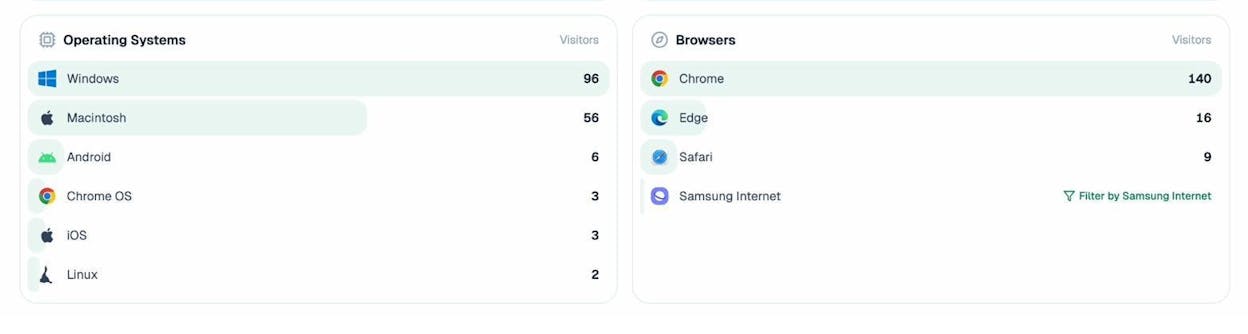
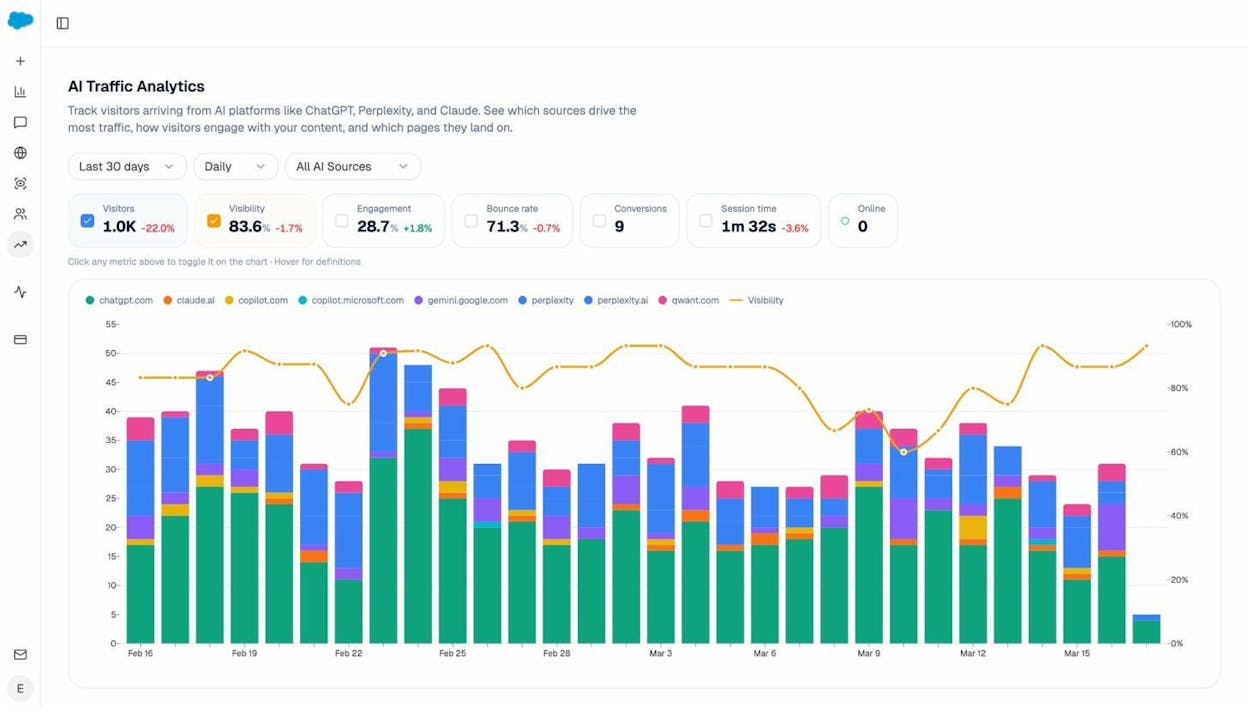
The AI Traffic Analytics dashboard in Analyze AI tracks exactly how many visitors come from each AI engine and which pages they land on. Include this data in your contract’s reporting section so clients can see the real impact of AI search optimization.
Important Note on Metrics
Your contract should list the metrics you’ll track and report on. It should not include specific targets (e.g., “achieve 10,000 organic sessions by month 6”) unless you are extremely confident in the outcome and willing to accept the liability.
Instead, use language like:
The Provider will track and report on the following metrics on a monthly basis: [list metrics]. These metrics are used to measure progress and inform strategy. They do not constitute performance guarantees.
How to Handle Scope Creep in Your SEO Contract
Scope creep is the single biggest threat to your profitability as an SEO provider. It happens when a client asks for work that falls outside the agreed scope—and you do it because saying no feels uncomfortable.
Your contract is your defense.
Prevention: Define Scope Precisely
The more precisely you define your scope of work, the easier it is to identify when a request falls outside it. Compare these two versions:
Vague scope (invites creep):
The Provider will optimize the Client’s website for search engines.
Precise scope (prevents creep):
The Provider will perform the following services each month: (a) Technical SEO audit covering up to 500 pages; (b) On-page optimization for up to 10 target pages; (c) Keyword research and 4 content briefs; (d) Link outreach targeting up to 20 prospects; (e) One monthly performance report; (f) One 60-minute strategy call.
With the second version, if a client asks you to write the blog posts (not just the briefs), you can point to the contract and say: “Content creation isn’t in our current scope. We can add it as a change order.”
Protection: Include a Change Order Clause
A change order clause defines how additional work is requested, approved, and billed.
Sample language:
Any work requested by the Client that falls outside the Scope of Work defined in Section 2 will be treated as a Change Order. Change Orders must be submitted in writing, approved by the Provider, and will be billed at the Provider’s standard hourly rate of $[Rate]/hour or at a project fee to be agreed upon by both parties before work begins.
This clause gives you three things: a formal process for handling extra requests, a billing mechanism for that work, and a written record that the client approved the additional cost.
Real Contract Mistakes (and How to Avoid Them)
Here are mistakes we see in SEO contracts constantly. Avoid them.
Mistake #1: Promising rankings. Any contract that says “We guarantee page-one rankings” is a lawsuit waiting to happen. Google’s algorithm changes constantly. AI search models update their training data regularly. You cannot control either of these. Guarantee deliverables and effort, never outcomes.
Mistake #2: No termination clause. Some contracts lock clients in for 12 months with no exit. This breeds resentment. If a client wants to leave, let them leave—with reasonable notice and payment for work completed. Happy exits lead to referrals. Messy ones lead to bad reviews.
Mistake #3: Forgetting about data access. What happens when the contract ends and the client’s Google Analytics account is linked to your agency’s Google account? Define data ownership and transition procedures in your contract.
Mistake #4: Ignoring AI search. If your competitors are offering AI search visibility tracking and you’re not, you’re leaving money on the table. More importantly, you’re leaving a gap in your service offering that a competitor will fill. Adding AI search to your contract is an immediate differentiator.
Mistake #5: Using a generic template without customizing it. A template is a starting point, not a finished product. Every clause should be reviewed and tailored to your specific business, your services, your pricing, and your local laws.
Tools to Support Your SEO Contract Deliverables
Your contract promises specific deliverables. Here are tools that help you fulfill those promises:
For keyword research and tracking: - Keyword Generator — Find keyword ideas for any topic - Keyword Difficulty Checker — Assess how hard keywords are to rank for - Keyword Rank Checker — Track where your client’s pages rank - SERP Checker — Analyze who ranks for any keyword
For technical SEO: - Broken Link Checker — Find and fix broken links on your client’s site - Website Authority Checker — Check domain authority metrics
For AI search visibility: - Analyze AI — Track brand visibility, citations, sentiment, and competitor rankings across ChatGPT, Perplexity, Gemini, Copilot, and more
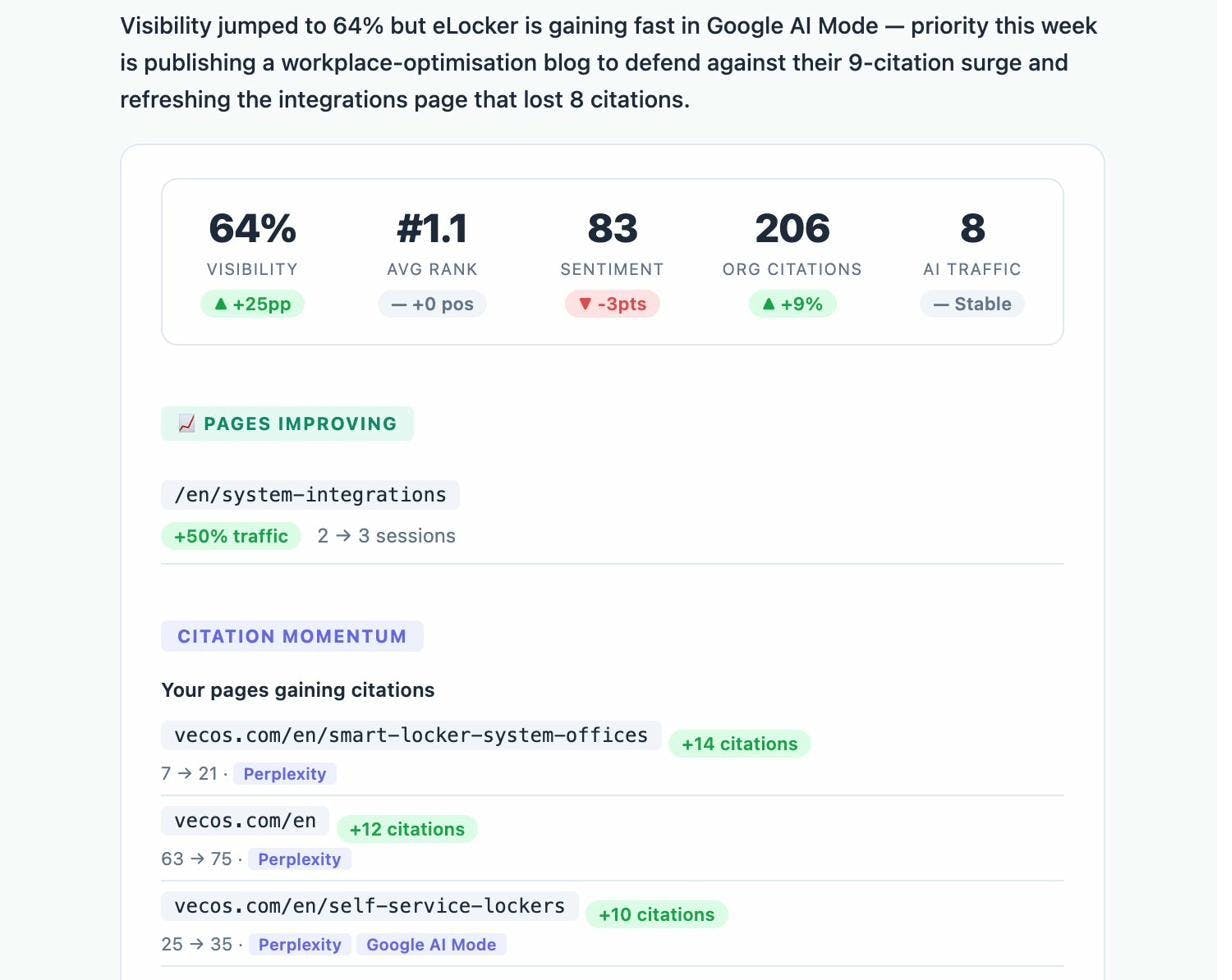
Analyze AI also sends weekly email digests with prioritized actions, citation changes, and competitor shifts. This makes it easy to stay on top of your client’s AI visibility without logging in every day—and it gives you ready-made talking points for your monthly strategy calls.
For multi-platform keyword research: - YouTube Keyword Tool — Find keywords for YouTube content - Bing Keyword Tool — Research keywords for Bing search - Amazon Keyword Tool — Research keywords for Amazon SEO
Final Thoughts
A good SEO contract does three things: it protects you legally, it sets clear expectations with your client, and it positions you as a professional partner—not just another vendor.
As you customize this template, keep two things in mind:
First, be detailed. The more precisely you define your scope, deliverables, payment terms, and termination process, the fewer disputes you’ll have. Vague contracts create vague expectations, and vague expectations create conflict.
Second, include AI search. The search landscape is evolving. Buyers are asking ChatGPT and Perplexity for recommendations alongside their Google searches. Adding AI search visibility monitoring and optimization to your contract isn’t just a nice-to-have—it’s a competitive advantage that differentiates you from every other SEO provider still operating like it’s 2019.
Download the template, customize it for your business, and have your attorney review it before you send it to your first client.

Ernest

Ibrahim


