



Summarize this blog post with:


We analyzed 500 publicly traded companies across the Nasdaq and S&P 500 to find out. The results suggest that organic traffic isn’t just a marketing metric. For many companies, it tracks closely with market value. And with AI search growing as a new channel, this relationship is about to get more complex.
In this article, you’ll learn why organic traffic and stock prices move in the same direction for a surprising number of public companies, which industries show the strongest link, how companies use simple SEO tactics to drive massive traffic, why AI search visibility is becoming the next leading indicator for investors, and how to track all of it.
Table of Contents
Key takeaways
-
The combined stock prices of Nasdaq companies typically rose alongside their total organic traffic. Research shows a strong positive relationship (Spearman correlation of 0.680) between market-cap-weighted standardized price and total organic traffic.
-
32% of Nasdaq companies with at least 100K annual traffic show a moderate or strong positive correlation between organic traffic and stock price.
-
SEO may directly increase the stock value of companies that invest in it. The effect appears strongest in consumer products, healthcare, finance, and real estate.
-
Public companies don’t need unique SEO tactics. The highest-traffic publicly traded sites use the same strategies as everyone else — blogs, landing pages, free tools, and dictionaries. They just execute them with a built-in authority advantage.
-
AI search visibility is emerging as the next leading indicator. Companies that show up consistently across ChatGPT, Perplexity, and Gemini are building a new kind of organic moat that traditional SEO metrics alone can’t capture.
-
Academic research confirms that investors can profit from — or avoid losses with — organic traffic data. Multiple studies show that search data can outperform buy-and-hold strategies.
Please note: correlation does not imply causation, and past performance is not indicative of future results. This article is for informational purposes only and does not constitute investment advice.
Methodology
This analysis draws on data from publicly available APIs and research, including Ahrefs’ API for monthly organic traffic estimates and Polygon’s API for monthly closing prices and market cap data. The study period covers November 2021 through October 2024 — 36 months of data for each ticker.
The Spearman correlation coefficient was calculated for each ticker to measure the monotonic relationship between organic traffic and stock price. Unlike the Pearson coefficient, Spearman doesn’t assume a linear relationship, making it better suited for this type of financial data where outliers are common.
To calculate the percentage of positively correlated tickers and market-cap-weighted data, we used one ticker per company and only the tickers with 36 complete rows of data. That’s why the number of tickers used differs from the total number listed on the Nasdaq.
For the qualitative analysis of SEO tactics, we reviewed approximately 200 sites with at least one million estimated organic visits per year.
The data: organic traffic and stock prices move together
The analysis revealed a strong positive correlation between total organic traffic and the overall value of the Nasdaq. The Spearman correlation was 0.680 and the Pearson correlation was 0.727. Both fall squarely in the “strong” range.
Visually, the relationship is clear. When you plot market-cap-weighted standardized prices against total organic traffic over time, the two lines track each other closely.
![[Screenshot: Line chart showing Nasdaq weighted standardized price and total organic traffic moving in the same direction over a 3-year period, from Ahrefs data]](https://www.datocms-assets.com/164164/1777920796-blobid1.png?auto=format,compress&w=1248&fit=max)
Here’s how the weighted standardized price works:
-
Standardization: each ticker’s stock price is scaled to a 0-to-1 range, so a $5 stock and a $500 stock are compared fairly.
-
Weighting: each standardized price is multiplied by the company’s monthly market cap, so larger companies exert more influence.
-
Summation: the weighted values are added together to produce a single index.
But this doesn’t mean every company on the Nasdaq shows a positive correlation. When you look at individual companies, the ratio of positive to negative correlations is almost even.
![[Screenshot: Bar chart showing percentage distribution of Spearman correlations across all Nasdaq tickers, roughly 50/50 split between positive and negative]](https://www.datocms-assets.com/164164/1777920806-blobid2.png?auto=format,compress&w=1248&fit=max)
That’s expected. Public companies have access to dozens of revenue channels beyond organic search — paid ads, partnerships, offline retail, direct sales. So a strong organic traffic signal can easily be drowned out by other forces.
The more interesting finding is that 32% of companies showed a moderate to strong positive correlation. That’s a substantial chunk. And for companies that actively invest in SEO, the signal is even stronger.
Why the correlation exists (and when it doesn’t)
Not all of this is SEO magic. Many companies benefit from external demand that happens to show up as organic traffic. When Nvidia announced its AI partnerships, search interest in the brand spiked and organic traffic followed. That’s not SEO strategy — that’s a PR event driving branded searches.
![[Screenshot: Google Trends chart for a public company stock-related keyword showing traffic spike after major news event]](https://www.datocms-assets.com/164164/1777920806-blobid3.png?auto=format,compress&w=1248&fit=max)
But for companies that consistently invest in non-branded organic traffic — think Airbnb, Makemytrip, or Wix — the connection between SEO and stock price is much tighter. These companies have a higher ratio of non-branded to branded traffic. Their organic growth comes from capturing demand they created through content, not just demand that already existed.
![[Screenshot: Pie chart showing organic keyword breakdown by intent for a high-traffic public company, with non-branded traffic dominating]](https://www.datocms-assets.com/164164/1777920812-blobid4.jpg?auto=format,compress&w=1248&fit=max)
In these cases, SEO drives stock value in two ways. First, it attracts customers directly and increases revenue. Second, it builds brand awareness over time, which generates more branded searches and strengthens rankings further. It’s a compounding loop.
Which industries show the strongest SEO-stock link?
Consumer products, healthcare, finance, real estate, and technology companies appear most frequently among the positively correlated tickers. These are industries where customers routinely start their journey with a Google search.
![[Screenshot: Bar chart showing percentage distribution of market sectors among positively correlated companies]](https://www.datocms-assets.com/164164/1777920812-blobid5.png?auto=format,compress&w=1248&fit=max)
This makes intuitive sense. When someone needs a mortgage lender, they search. When they want to compare health insurance plans, they search. When they’re looking for project management software, they search. High-intent searches in these verticals translate directly into revenue.
Industries where SEO matters less for stock correlation tend to be deeply B2B, highly regulated, or dominated by offline relationships — defense contractors, specialized industrial manufacturers, and companies where contracts are negotiated through long sales cycles rather than through a website.
The same pattern is emerging in AI search
Here’s what’s new: the same industries that show strong SEO-stock correlations are also the ones where AI search visibility matters most.
When people ask ChatGPT or Perplexity for product recommendations, financial advice, or health information, the brands that show up in those answers are the same ones that invested in organic content over the past decade.
With Analyze AI, you can track exactly which brands appear in AI search results across every major platform — ChatGPT, Perplexity, Gemini, Claude, and Copilot. The Overview dashboard shows your brand’s visibility percentage, sentiment score, and competitive position side by side.
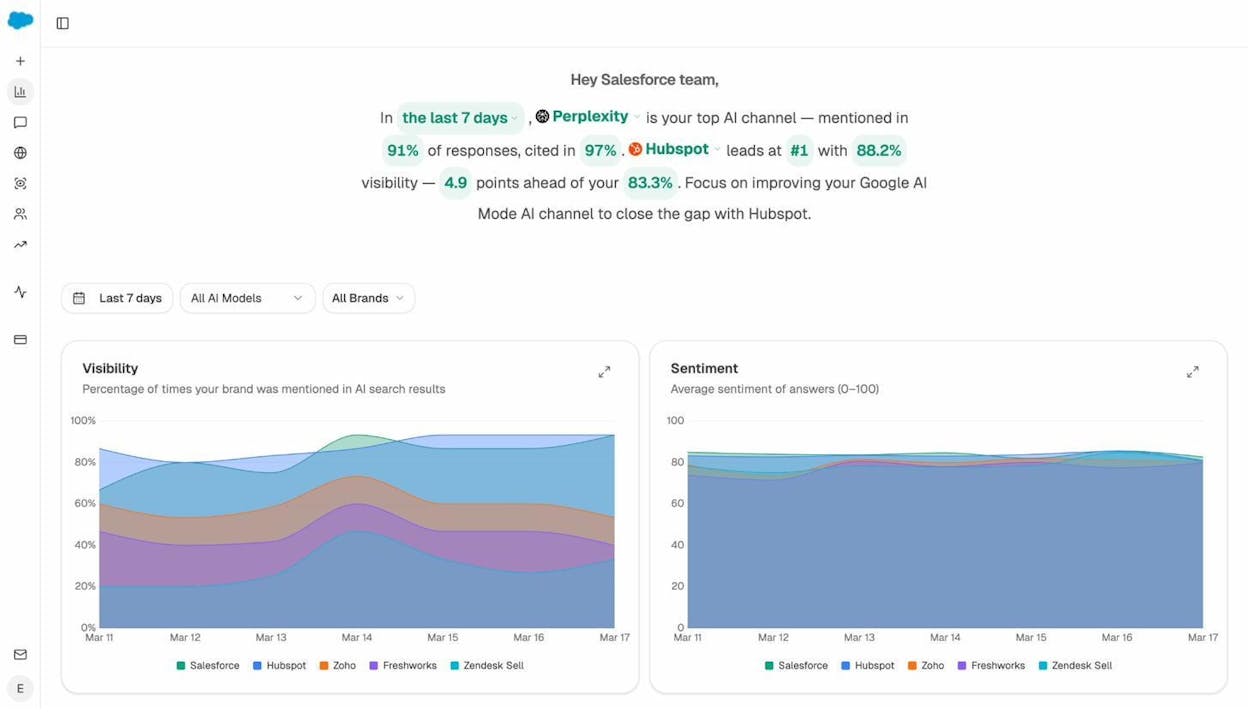
For a public company, this data is becoming as important as organic traffic. If your competitor is mentioned 88% of the time in AI responses while you’re at 83%, that gap will widen as more users shift to conversational search.
Entity SEO gives public brands a built-in advantage
Many public companies rank for keywords they’ve never explicitly targeted. This isn’t a glitch — it’s what happens when Google deeply understands your brand as an entity.
Publicly traded companies have an enormous online footprint: financial news coverage, investor relations portals, press releases, analyst reports, Wikipedia pages, and regulatory filings. All of this helps Google build a rich entity profile that connects the company to specific topics.
For example, companies like Kelly Services rank for “temp services near me” without using that exact phrase anywhere on their site. Robinhood ranks for “buy stocks” even though those words aren’t on the homepage. Google understands what these companies do based on thousands of external signals.
![[Screenshot: Ahrefs position history showing a public company ranking for a keyword not present on their page]](https://www.datocms-assets.com/164164/1777920817-blobid7.png?auto=format,compress&w=1248&fit=max)
This “entity edge” means public companies can rank faster and more easily than smaller competitors. When Nvidia publishes a glossary page about generative AI, it hits the top 10 almost immediately — not because the page is extraordinary, but because Google already trusts Nvidia’s authority on that topic.
![[Screenshot: Position history chart showing a public company’s glossary page quickly reaching top rankings]](https://www.datocms-assets.com/164164/1777920823-blobid8.png?auto=format,compress&w=1248&fit=max)
The anchor text in backlinks from news sites and financial portals reinforces this. When dozens of articles link to Nvidia using anchor text like “AI chipmaker” or “GPU manufacturer,” it strengthens Google’s association between the brand and those topics.
![[Screenshot: Ahrefs anchor text report for a public company showing brand-relevant anchor text from authoritative sites]](https://www.datocms-assets.com/164164/1777920823-blobid9.png?auto=format,compress&w=1248&fit=max)
The entity edge extends to AI search too
Google isn’t the only system that understands entities. ChatGPT, Perplexity, and Gemini all build their responses based on the same kinds of signals — authoritative mentions, citation frequency, and brand associations across the web.
In Analyze AI, the Perception Map shows exactly where your brand stands in the AI search landscape relative to competitors. It plots every tracked brand on two axes: visibility (how often you’re mentioned) and narrative strength (how compelling the story AI tells about you is).
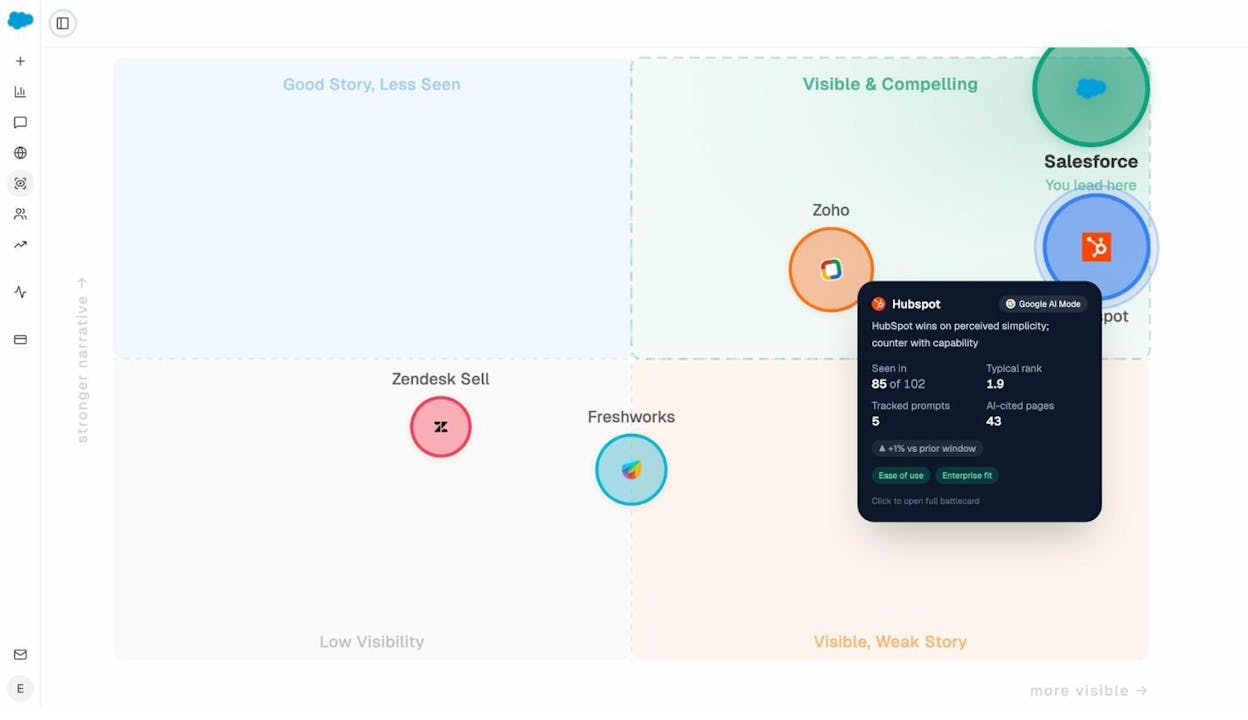
A public company sitting in the “Visible & Compelling” quadrant — high visibility, strong narrative — is the AI search equivalent of having a strong entity profile in Google. The companies in the “Good Story, Less Seen” quadrant have great content but haven’t built enough external signals for AI models to surface them consistently.
This is where the entity edge becomes actionable. If your competitor analysis shows that a rival is mentioned more frequently in AI answers, you can use the Perception Map to understand why — and then work to close the gap.
PR without SEO is a missed opportunity
Media coverage generates backlinks. Backlinks improve rankings. Rankings drive traffic. Traffic (as we’ve shown) correlates with stock value. But many public companies leave this entire chain on the table.
When a company goes public, gets featured on a Fortune 500 list, or announces a major partnership, journalists link to it. These links come from high-authority domains — Forbes, Bloomberg, TechCrunch, Reuters — and carry significant SEO value.
![[Screenshot: Ahrefs referring domains chart for a public company’s newsroom page, showing growth in authoritative backlinks]](https://www.datocms-assets.com/164164/1777920829-blobid11.png?auto=format,compress&w=1248&fit=max)
The problem is that most of these links point to the newsroom or investor relations page. They help overall domain authority, but they don’t drive traffic to the pages that convert visitors into customers. A strategic internal linking structure would channel that authority toward product pages and high-intent landing pages.
Forbes publishes Fortune 500 lists with links back to each company’s homepage. Being on the list alone is enough to generate dozens of additional backlinks from media outlets that reference the ranking.
![[Screenshot: Forbes 500 list page showing company listings with homepage links]](https://www.datocms-assets.com/164164/1777920835-blobid12.png?auto=format,compress&w=1248&fit=max)
Offering expert quotes to journalists is another proven tactic. When you represent a recognized public brand, your quotes carry more weight. Journalists are more likely to feature them — and link back to your site.
![[Screenshot: Example of a public company executive quoted in a news article with a backlink to their website]](https://www.datocms-assets.com/164164/1777920835-blobid13.png?auto=format,compress&w=1248&fit=max)
The principle here is simple: if you’re already generating media coverage, make sure your SEO team is capturing the value of every link, mention, and brand reference.
How AI search amplifies PR signals
This is where things get interesting for modern marketing teams. AI search platforms don’t just index your website — they index every mention of your brand across the web. Every press mention, every analyst report, every Reddit discussion shapes how ChatGPT and Perplexity describe your company.
With Analyze AI’s Sources dashboard, you can see exactly which URLs and content types AI models cite when answering questions about your industry. This tells you where AI models get their information — and where you need to build more presence.
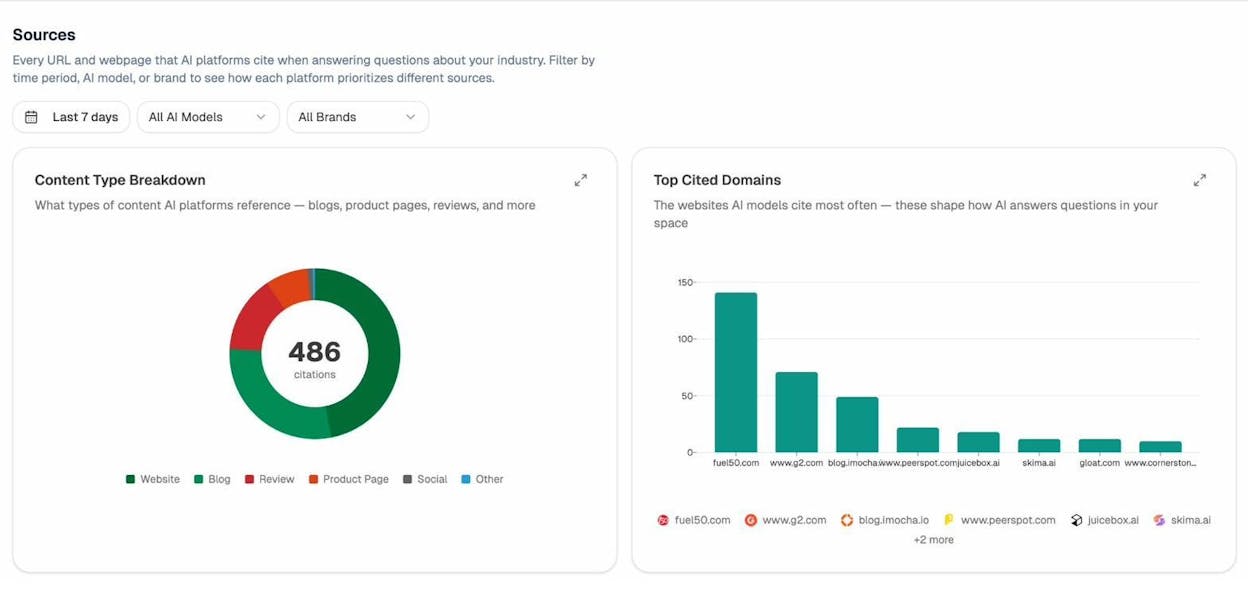
If your brand’s newsroom content is being cited by AI models, that’s a powerful signal. It means your PR efforts aren’t just driving traditional backlinks — they’re shaping how AI describes your company to millions of users who never visit Google.
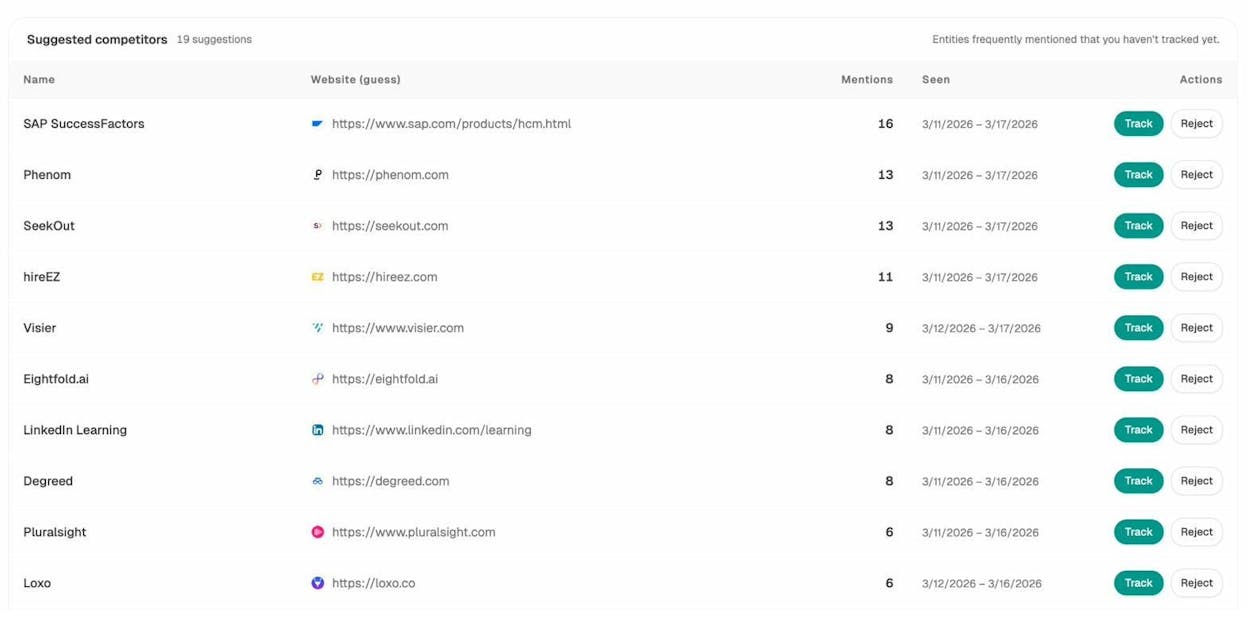
The Competitors view in Analyze AI shows which brands are being mentioned alongside yours in AI responses. If a competitor is getting more mentions, you can drill into their most-cited pages and understand what content is winning.
Public companies don’t need unique SEO tactics
After reviewing over 200 Nasdaq-listed sites with at least one million estimated annual organic visits, the most striking finding was how ordinary their SEO strategies are. The same tactics that work for startups and small businesses — blogs, landing pages, free tools, educational content — work just as well at scale.
The difference isn’t strategy. It’s authority.
Blogs still drive serious traffic
Monday.com’s blog generates over a quarter of the company’s total organic traffic. CyberArk pulls 24,000 monthly visits from a single post. These aren’t revolutionary content strategies. They’re well-executed versions of what every content marketer knows works.
![[Screenshot: Ahrefs top pages report showing Monday.com’s blog traffic as a percentage of total site traffic]](https://www.datocms-assets.com/164164/1777920847-blobid16.png?auto=format,compress&w=1248&fit=max)
Publicly traded companies tend to stick to topics closely related to their core offerings. Freshpet blogs about where to pet a dog. Nvidia blogs about AI developments. They use their domain authority to outrank smaller competitors on topics they know deeply.
![[Screenshot: Ahrefs data for Nvidia blog post showing high traffic and backlinks]](https://www.datocms-assets.com/164164/1777920848-blobid17.png?auto=format,compress&w=1248&fit=max)
Blogging also earns authoritative backlinks. CareCloud’s blog has built enough credibility that Healthline cites it as a source — the kind of backlink most companies can only dream about.
Landing pages capture big (and small) demand
From product pages to topic clusters, public companies create dedicated landing pages for every type of search query. The best examples blend product marketing with educational content so seamlessly that the reader learns something useful while being introduced to the product.
Electronic Arts shares real NFL player stats to promote Madden NFL 25. It’s a content marketing play that attracts sports fans who happen to be potential customers.
Viasat runs a product-focused topic cluster that pulls in nearly 37% of the site’s total organic traffic. Airbnb’s topic clusters cover specific accommodation types — cabins, treehouses, glamping — capturing long-tail searches at scale.
![[Screenshot: Ahrefs topic clusters report for Viasat showing cluster traffic contribution]](https://www.datocms-assets.com/164164/1777920854-blobid18.png?auto=format,compress&w=1248&fit=max)
Makemytrip built a collection of search-optimized travel idea pages — destination guides, trip types, seasonal travel — that generate an estimated 2.5 million visits per month.
Product landing pages with an informational angle are common among Nasdaq companies. Micron uses this approach to rank twice for the same high-volume keyword (“ddr5”) — once with a product page, once with an educational page.
Dictionaries, FAQs, and basic definitions drive surprising traffic
Many public companies generate enormous traffic from glossary pages and FAQ sections. CrowdStrike generates 33% of its organic traffic through a cluster about cybersecurity basics. Qualcomm added 18% to its total traffic (worth $68K) with a single landing page.
This works because of search intent. Google has determined that for many high-volume keywords — like “enterprise cloud” or “what is ransomware” — users want definitions and explanations, not product pages. Companies that match this intent with authoritative content capture traffic their competitors miss.
![[Screenshot: Ahrefs SERP overview for “enterprise cloud” showing informational intent dominating results]](https://www.datocms-assets.com/164164/1777920856-blobid19.png?auto=format,compress&w=1248&fit=max)
Free tools and resources pull in links and leads
Offering a free tool is one of the highest-leverage SEO tactics a company can deploy. Adobe’s background remover generates an estimated 2.9 million visits per month. Their strategy is straightforward: take a premium feature, publish it as a free tool with limited usage, and build a landing page optimized for the target keyword.
Adobe even creates separate tools for separate keywords. Converting PDF to Word and Word to PDF could be one tool — but they’re two separate landing pages optimized for two separate keywords.
![[Screenshot: Adobe’s PDF to Word converter landing page with organic traffic data]](https://www.datocms-assets.com/164164/1777920860-blobid20.png?auto=format,compress&w=1248&fit=max)
SoFi publishes average US salary data that earns thousands of backlinks and visits monthly. The data isn’t even original — it’s publicly available government data repackaged into an accessible format. Baker Hughes has published weekly drilling rig counts since the 1970s, turning commodity industry data into a consistent traffic and backlink engine.
Newegg built an AI-powered PC builder tool that attracts people searching for custom computers and recommends products from its own inventory. Instacart’s ideas directory — metric converters, calculators, and food guides — contributes 11.2% of the site’s overall traffic at 448,000 visits monthly.
![[Screenshot: Newegg’s PC builder tool page showing AI-powered product recommendations]](https://www.datocms-assets.com/164164/1777920862-blobid21.jpg?auto=format,compress&w=1248&fit=max)
Analyze AI follows the same playbook. We offer a full suite of free SEO tools — a Keyword Generator, Keyword Difficulty Checker, SERP Checker, Keyword Rank Checker, Website Authority Checker, Website Traffic Checker, Broken Link Checker, and even specialized tools for Bing, YouTube, and Amazon keyword research. Each tool targets a specific high-intent keyword while giving users a genuine reason to explore the full platform.
Indexing dynamic search results for popular keywords
Some companies let search engines index their internal search results pages — a tactic that works exceptionally well for sites with large inventories.
Adobe ranks for time-sensitive terms like “happy new year 2024” by making their stock search results crawlable and including them in their sitemap. When seasonal search demand spikes, Adobe captures it automatically.
![[Screenshot: Adobe’s sitemap showing dynamic search results pages listed for indexing]](https://www.datocms-assets.com/164164/1777920866-blobid22.png?auto=format,compress&w=1248&fit=max)
Etsy takes this further by leveraging user-generated content to target millions of non-branded keywords. Every product listing becomes a potential landing page.
Low-volume keywords can be hidden gems
Even large public companies target niche keywords with tiny search volumes. The keyword “mass payouts” gets about 100 monthly searches — but those searches come from businesses ready to buy. Two Nasdaq companies compete for it.
![[Screenshot: Ahrefs SERP data showing two publicly traded companies ranking for “mass payouts” with ~100 monthly searches]](https://www.datocms-assets.com/164164/1777920872-blobid23.png?auto=format,compress&w=1248&fit=max)
Beacon targets long-tail keywords tied to high-ticket sales. The search volumes are small, but the customer lifetime value makes each click worth far more than a high-volume informational query.
Local SEO on a national scale
Several national brands apply local SEO at scale. DoorDash’s “restaurants near me” page alone generates an estimated 9.1 million visits per month. Texas Roadhouse and Potbelly use similar approaches, creating location-specific pages that capture demand from searchers who want options nearby.
How to track SEO performance as a leading indicator
If organic traffic correlates with stock price, it raises a practical question: can you use SEO data to predict financial performance?
The evidence suggests yes — with caveats.
Multiple academic studies support the idea that search data can serve as a leading indicator for stock movements. Researchers have found that branded search volume and the sentiment behind it can forecast price changes. One study proposed models that outperformed traditional buy-and-hold strategies by 40%. Another demonstrated that a search-trend-based investment strategy beat average market returns across Korean exchanges during a seven-year test period.
The mechanism makes sense. When a company’s organic traffic starts declining — especially non-branded traffic — it often signals a drop in market demand or competitive positioning. That decline can precede earnings misses by months.
NerdWallet is a real-world example. Its organic traffic started declining well before its stock price dropped. If an investor had checked organic traffic data before the company’s Q2 earnings call, they would have seen months of declining traffic and could have avoided the sell-off.
![[Screenshot: Ahrefs organic traffic chart for NerdWallet showing traffic decline preceding stock price drop]](https://www.datocms-assets.com/164164/1777920875-blobid24.png?auto=format,compress&w=1248&fit=max)
The reverse is also true. When a company’s traffic starts recovering, it can signal a rebound before the market prices it in.
Track AI search visibility as the next leading indicator
Here’s where the landscape is shifting. Organic search traffic from Google is no longer the only signal that matters. AI search platforms — ChatGPT, Perplexity, Gemini, Claude, and Copilot — are sending a growing share of traffic to websites.
According to recent research, 63% of websites now receive traffic from AI platforms. ChatGPT alone accounts for over 80% of AI referral traffic. This isn’t a small blip — it’s a growing channel that public companies can no longer afford to ignore.
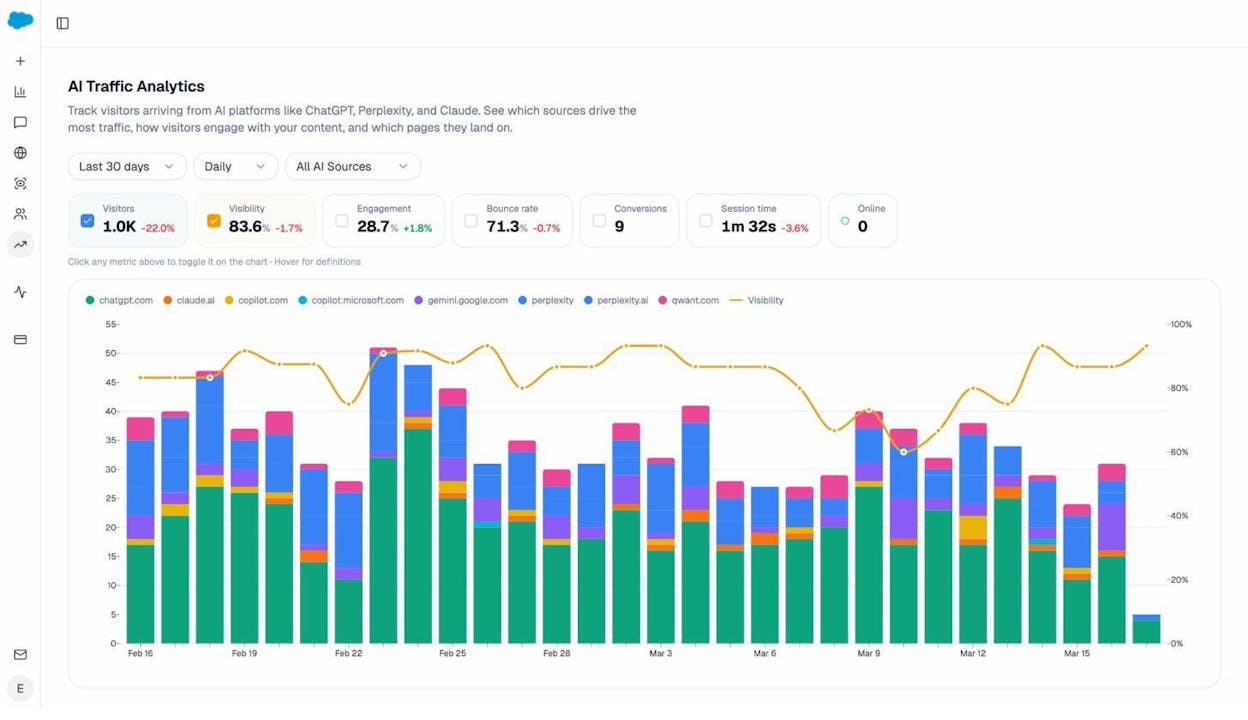
With Analyze AI, you can monitor this in real time. The AI Traffic Analytics dashboard shows exactly how many visitors arrive from each AI platform, which pages they land on, and how they behave compared to visitors from Google.
The Landing Pages report breaks this down page by page. You can see which URLs receive the most AI-referred traffic, which platforms cite them, how long visitors engage, and whether they convert.
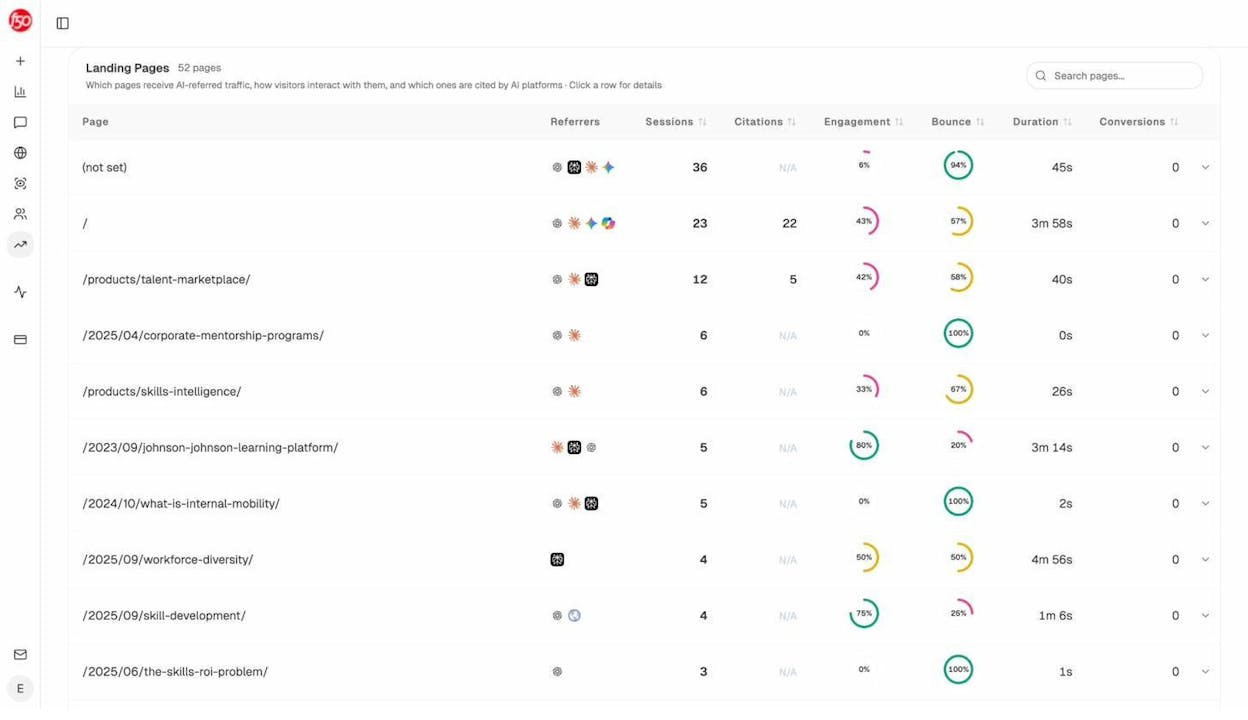
This data reveals patterns that traditional analytics can’t. If a specific blog post is getting heavy citation traffic from Perplexity but almost none from ChatGPT, you know exactly where to investigate. Maybe ChatGPT prefers a competitor’s page for that topic — and the Prompts dashboard will show you which competitor and why.
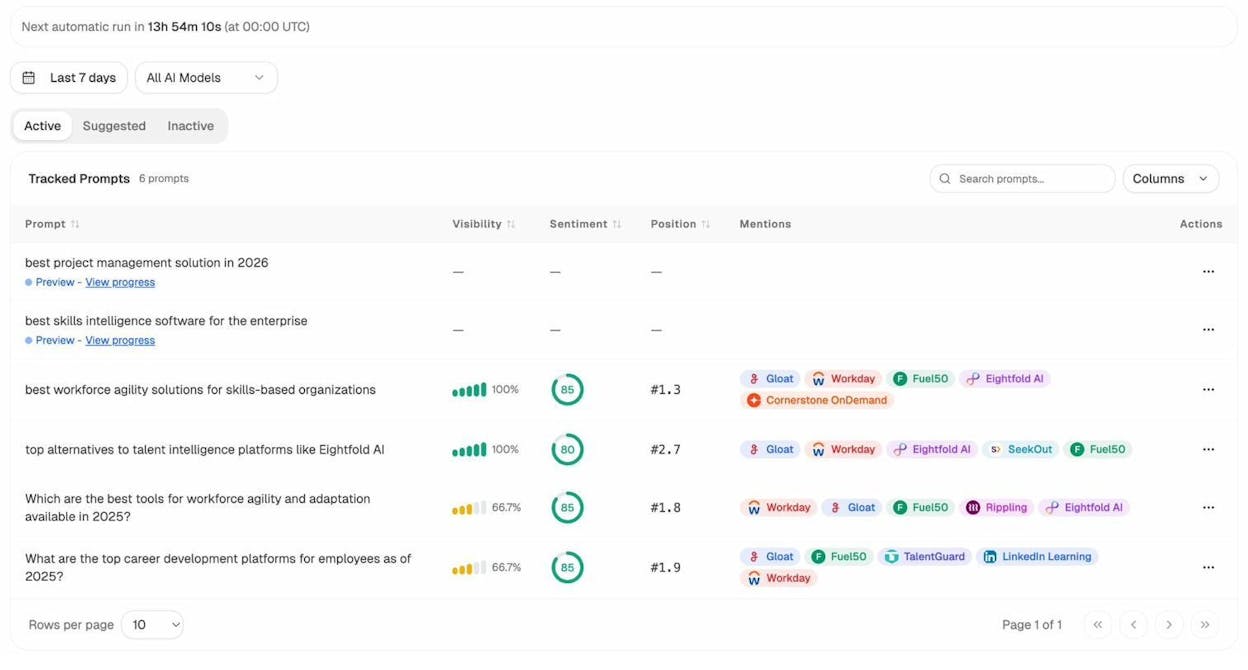
For investors, this is powerful. If a public company’s AI search visibility is declining — fewer mentions in ChatGPT, lower citation rates in Perplexity — it could signal a demand shift before it shows up in traditional traffic metrics. And if AI traffic analytics show engagement and conversions from AI-referred visitors, that’s an even stronger signal of future revenue.
How to build a search visibility strategy that drives stock value
If you’re part of a publicly traded company’s marketing team — or advising one — here’s how to use these findings.
1. Audit your non-branded organic traffic
The strongest SEO-stock correlations show up in companies with high ratios of non-branded to branded traffic. If most of your organic traffic comes from people searching your brand name, your traffic is a reflection of existing demand, not new demand creation.
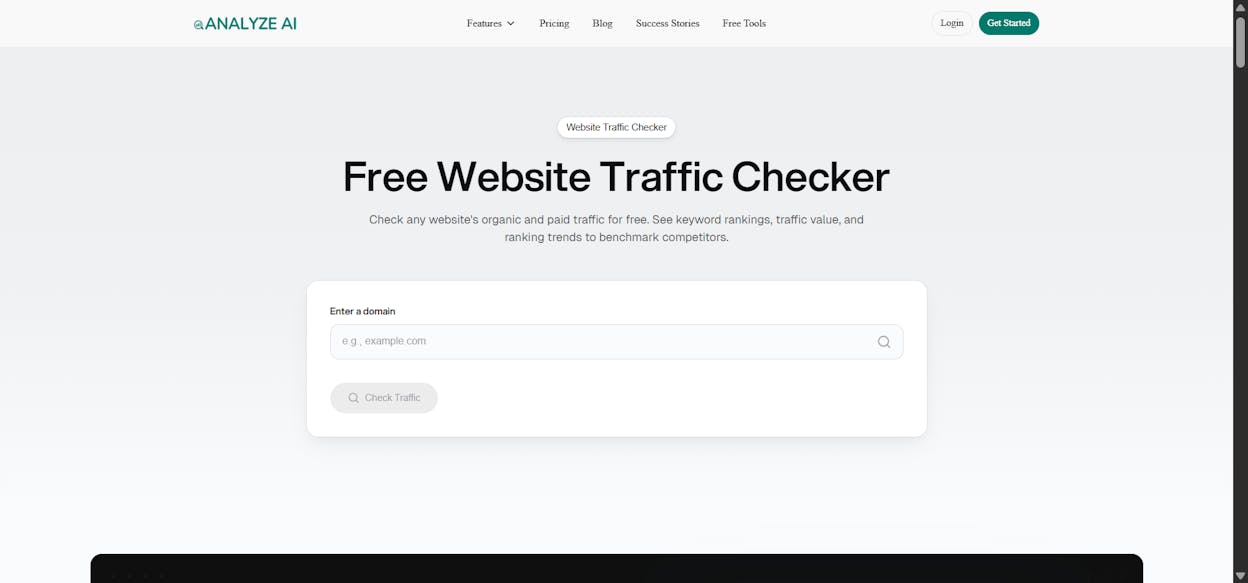
Use a tool like Analyze AI’s Website Traffic Checker to get a baseline, then dig into your search analytics to separate branded from non-branded traffic.
2. Build topic clusters around your core offering
The public companies with the highest organic traffic don’t try to rank for everything. They build deep clusters around the topics closest to their product. Viasat’s product cluster drives 37% of site traffic. CrowdStrike’s cybersecurity basics cluster drives 33%.
Map out the topics your target customers search for before they’re ready to buy. Then create clusters of content that cover each topic from multiple angles — definitions, how-tos, comparisons, and best-of lists.
![[Screenshot: Example topic cluster map showing pillar page connected to related subtopic pages]](https://www.datocms-assets.com/164164/1777920891-blobid29.png?auto=format,compress&w=1248&fit=max)
3. Turn PR into SEO fuel
Every media mention is a potential backlink. Every backlink is potential ranking improvement. Every ranking improvement drives traffic that (as we’ve shown) may correlate with stock value.
Work with your PR team to ensure journalists link to strategic pages, not just the homepage or newsroom. When your company appears on a list, announce an acquisition, or publishes research, make sure the SEO team is ready to capture the link equity.
4. Track AI search visibility alongside organic traffic
This is the new frontier. Use Analyze AI to monitor your brand’s presence across ChatGPT, Perplexity, Gemini, Claude, and Copilot. Track which prompts mention your brand, how your visibility compares to competitors, and which pages get cited.
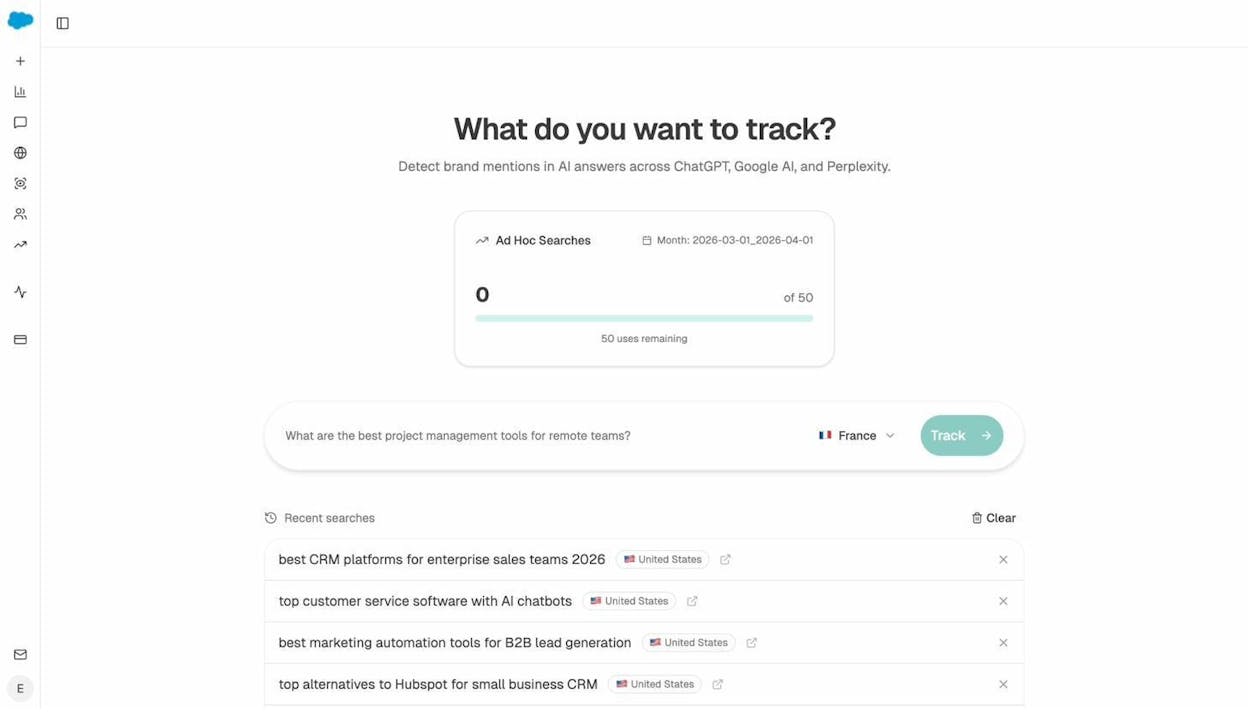
The Ad Hoc Prompt Searches feature lets you test any prompt across multiple AI models in real time. Type a question your customers might ask — “best CRM for mid-size companies” or “how to reduce employee turnover” — and see instantly whether your brand shows up.
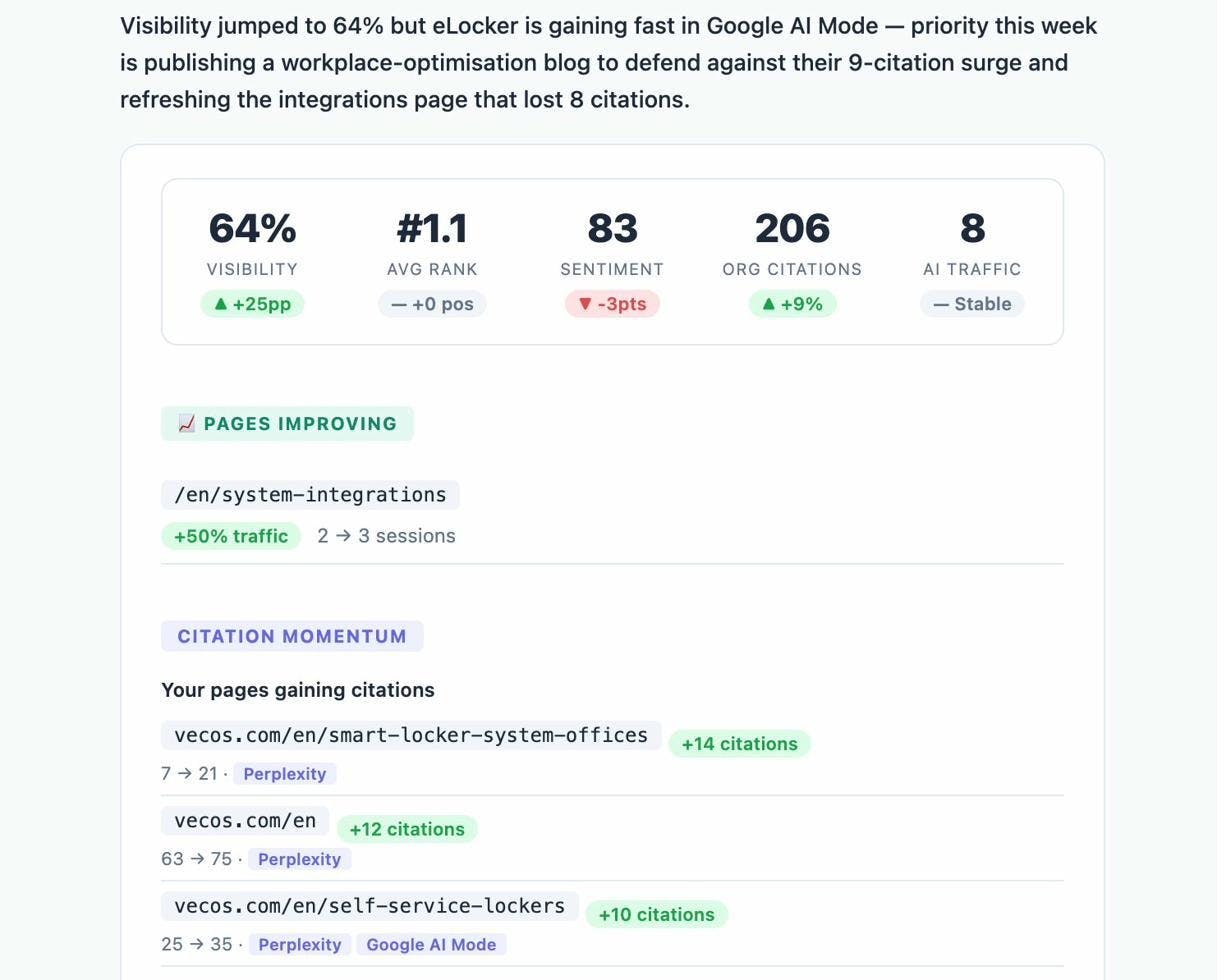
Set up Weekly Email digests to get automated updates on your AI search visibility. These reports summarize changes in brand mentions, competitor movements, and emerging prompts — so your team catches shifts before they become problems.
5. Match SEO content to search intent
The companies that generate the most organic traffic understand that Google rewards intent matching. For a keyword like “enterprise cloud,” the SERP is full of definitions and explainers — not product pages. If you want to rank, you need to match that intent.
The same principle applies in AI search. When someone asks Perplexity about enterprise cloud solutions, the model pulls from authoritative, informational content. Product pages get cited far less often than educational content. Your content strategy needs to account for both channels.
6. Use free tools as traffic engines
Adobe’s strategy of publishing free, limited versions of premium tools is one of the most effective SEO plays in the data. If your product has a feature that can work as a standalone free tool, build it and optimize the landing page for the target keyword.
Analyze AI does this with our Keyword Generator, SERP Checker, and Website Authority Checker. Each tool solves a specific problem, targets a specific keyword, and introduces users to the broader platform.
Final thoughts
There was a time when SEO was the underdog’s game. Small companies with no budget could grab traffic that bigger brands ignored. The playing field was level because the big players didn’t take search seriously.
That’s changed. Large public companies now invest in SEO, and their built-in authority — the entity edge, the backlink advantage from PR, the domain trust from years of coverage — gives them a head start that smaller competitors struggle to match.
But the game is evolving again. Google’s crackdown on site reputation abuse and its helpful content updates have started leveling the playing field. And the rise of AI search is introducing a new dimension entirely.
SEO is not dead. It’s expanding. AI search is not replacing Google — it’s adding a new organic channel alongside it. The companies that understand this will compound their advantage across both channels. The ones that ignore AI search will leave traffic, visibility, and (as this data suggests) stock value on the table.
The smartest public companies will track both organic traffic and AI search visibility as complementary signals. And they’ll use tools like Analyze AI to do it — because the next leading indicator isn’t just how many people find you on Google, but how AI describes your brand when it speaks on your behalf.
Want to see how your brand performs in AI search? Try Analyze AI free and start tracking your visibility across ChatGPT, Perplexity, Gemini, Claude, and Copilot.

Ernest

Ibrahim


