



Summarize this blog post with:


The marketing automation category itself is fracturing. Five years ago, “marketing automation” meant one thing. Today it means at least four different things depending on your role. A CMO means reporting and attribution. A content director means editorial pipelines. An agency owner means multi-client workflows. A growth marketer means lead enrichment and outreach. The tools below are organized so you can find the right fit for your specific bottleneck, not just the tool with the best landing page.
In this article, you’ll get a tested breakdown of the 10 best marketing automation platforms in 2026. You’ll learn what each tool does well, where it falls short, what it costs, and how to pick the right one for your team. You’ll also see how AI search is creating a new automation layer that most platforms haven’t caught up with yet.
Table of Contents
What Is a Marketing Automation Platform?
A marketing automation platform handles repetitive marketing tasks without manual effort. Five years ago, that meant drip emails and form triggers. Today it includes content research at scale, keyword research workflows, internal linking audits, competitor monitoring across AI search engines, CRM enrichment, and full publish pipelines that gate on quality before going live.
Teams now automate tasks that previously required an analyst, a writer, and a project manager working in sequence. A single workflow can pull keyword data from an API, cluster it through an LLM, generate a content brief, and push it to a CMS without a human touching it.
What to Look for in a Marketing Automation Platform
Does it solve your actual bottleneck? An ecommerce brand needs behavioral email triggers. A content team needs editorial pipeline automation. An agency needs multi-client reporting. Define your bottleneck first.
Can you build workflows without engineering support? Look for visual builders, no-code automation, and pre-built templates that get you to value fast.
Does it connect to the tools you already use? Check the integration list before the feature list.
Is the pricing predictable at scale? Many platforms charge per task, per contact, or per seat. At 10x volume, a $30/month bill can jump to $600/month. Model your actual usage before signing.
Does it produce measurable output? You want leads generated, content published, or revenue attributed. If the platform can’t help you measure outcomes, it’s a vanity tool.
10 Best Marketing Automation Platforms in 2026
1. Analyze AI
-
Best for: SEO, content, and GTM teams that need to automate everything from content pipelines to competitive intelligence to AI search visibility
-
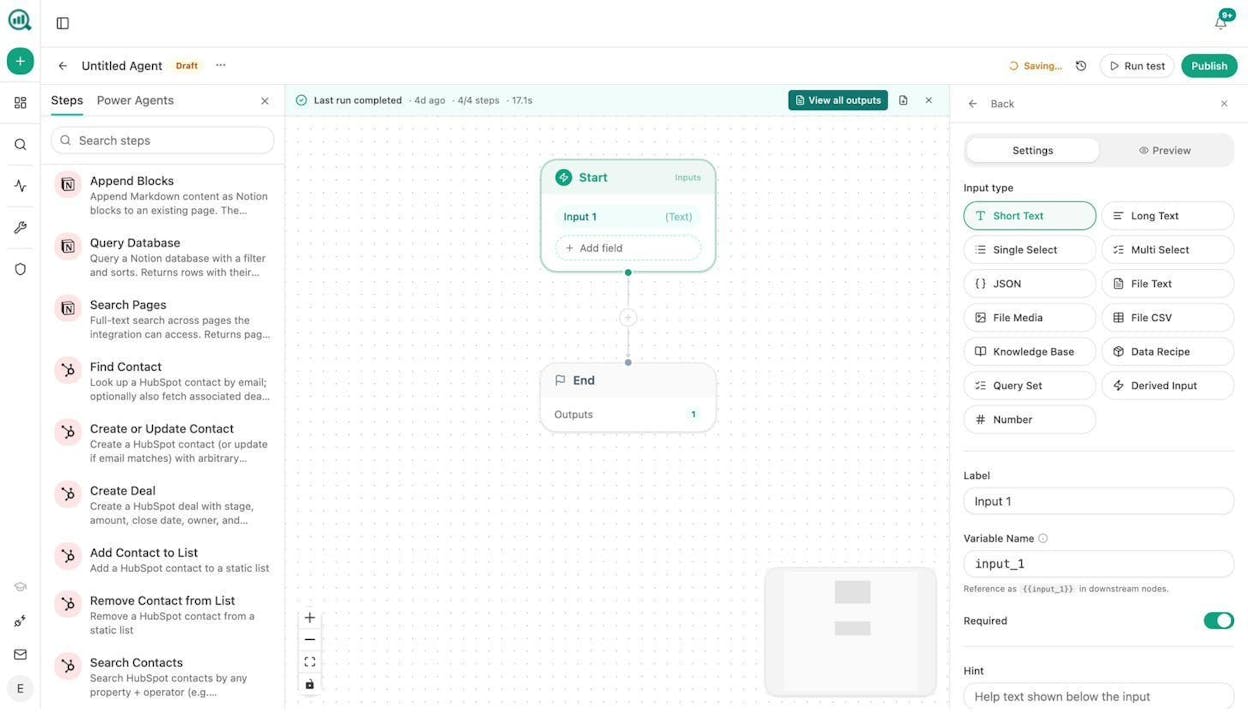
What I like: 180+ nodes, 34 pre-built data recipes, built-in content writer and optimizer, and an agent builder that covers the same surface area as Zapier + Make + Retool combined
-
Pricing: Free trial available. No mandatory onboarding fees
Analyze AI is the platform I reach for when the task goes beyond “send an email when a form is filled.” It’s an agentic platform for SEO, AEO, content, and GTM ops built on a programmable substrate that most marketing tools don’t offer.
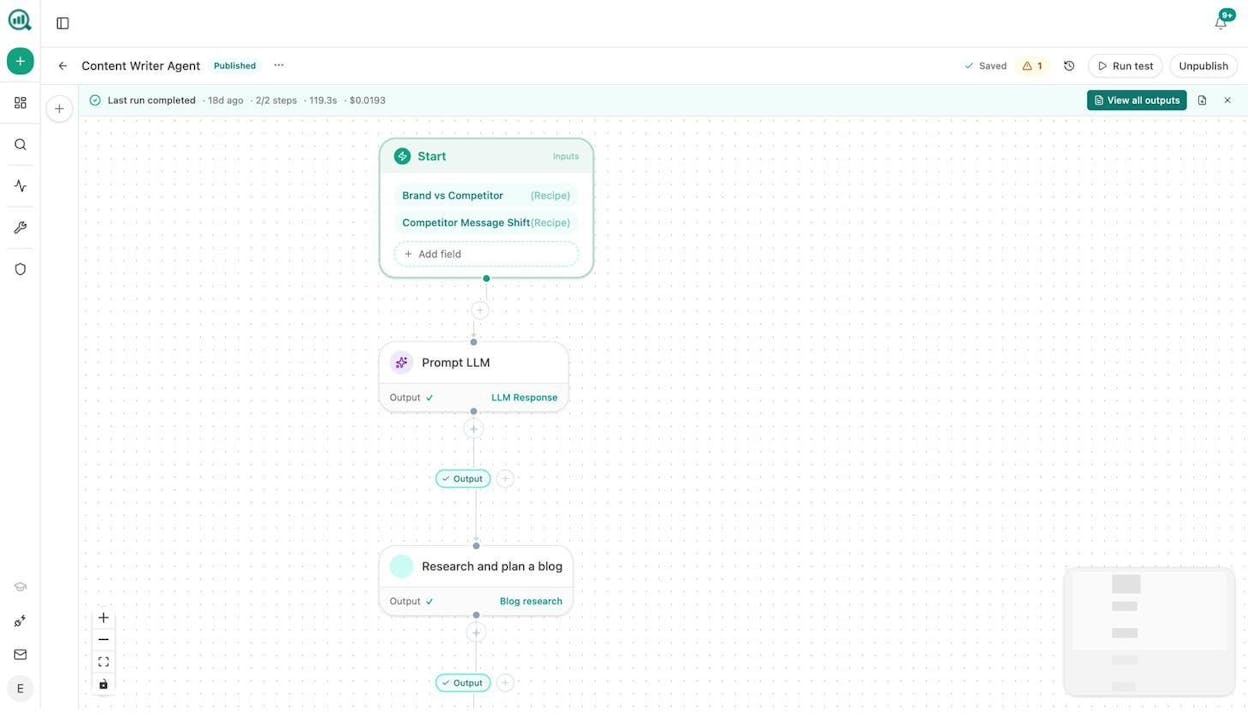
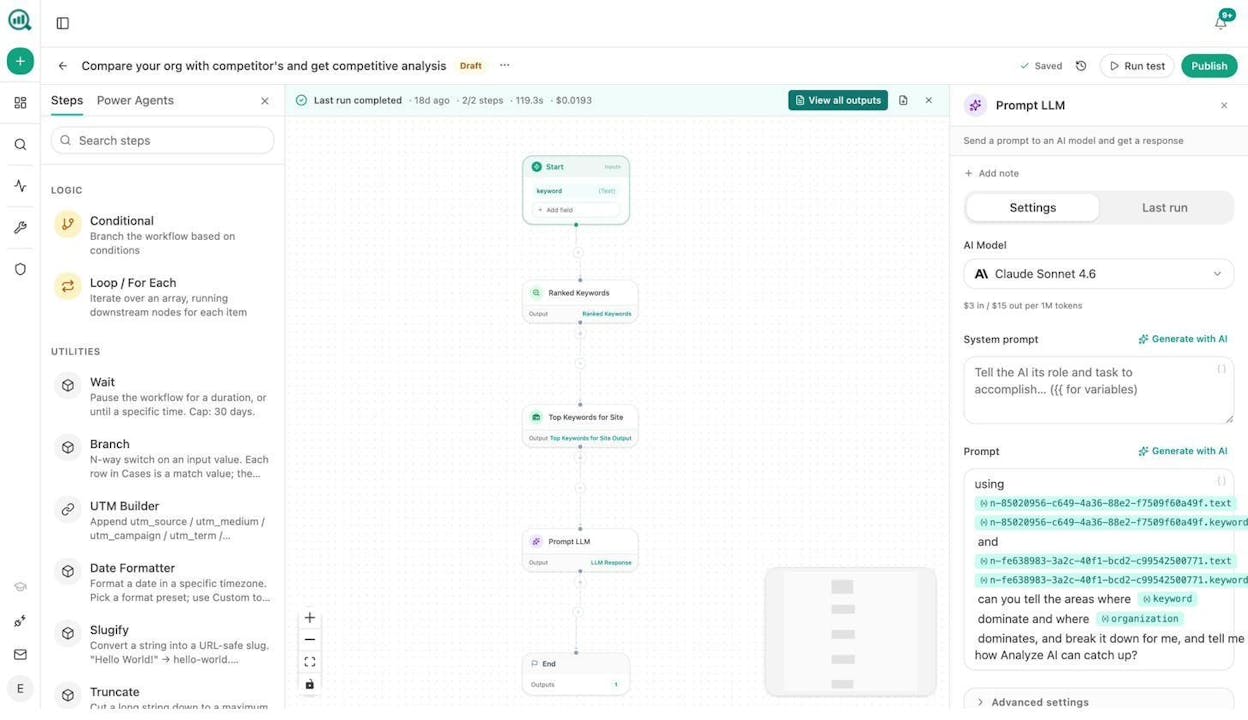
The Agent Builder has 180+ nodes covering GA4, Google Search Console, Semrush, DataForSEO, HubSpot, WordPress, Notion, Slack, LLMs (GPT, Claude, Gemini), and dozens more. It ships with 34 pre-built data recipes that pull from your AI visibility data, search console, and brand vault without you configuring a single API call. Three trigger modes (manual, scheduled, webhook) mean your agents can run on demand, on a recurring cadence, or in response to real-time events like a HubSpot deal closing.
What teams build with it:
-
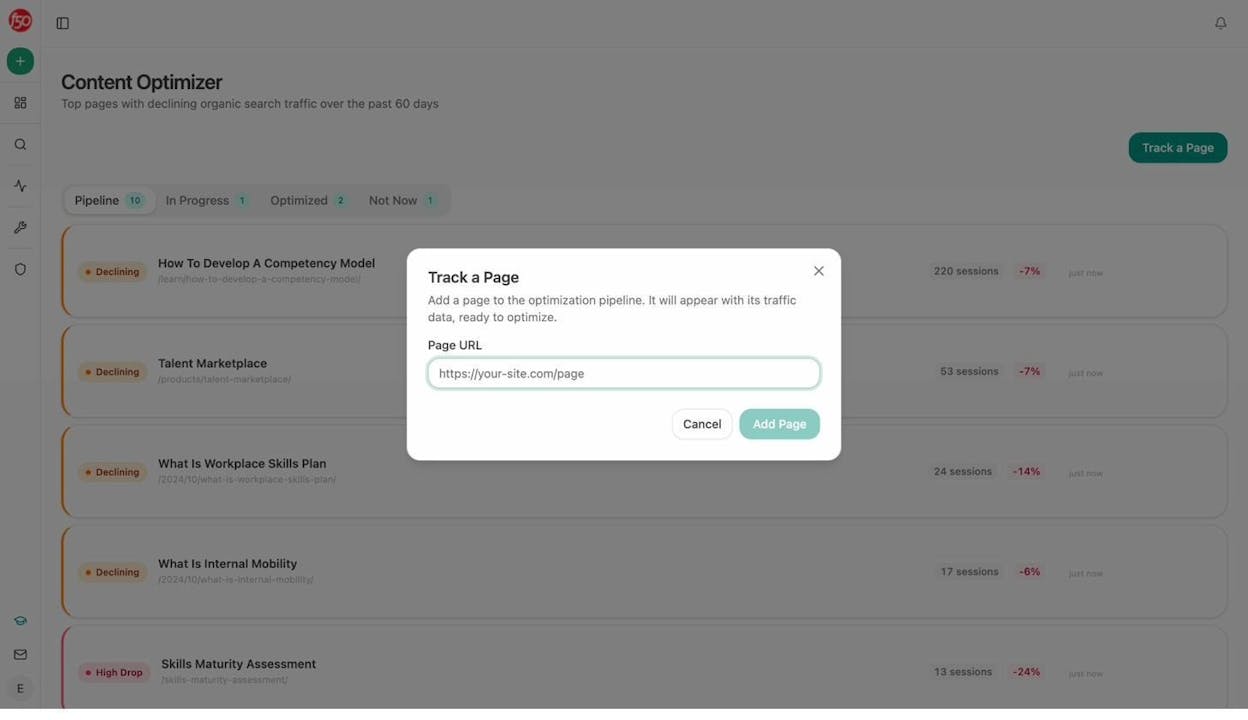
Content refresh at scale: A scheduled agent pulls declining pages from GA4, cross-references AI citation data, rewrites each through an LLM with your brand voice, and pushes the update to WordPress weekly.
-
Content writing at scale: A webhook agent takes an approved brief from Notion, researches, outlines, drafts with brand vault rules, scores against AEO criteria, and publishes only if it passes.
-
Keyword research at scale: Wire DataForSEO to an LLM clustering step, filter by keyword difficulty, and export the final list to Notion in one workflow.
-
Competitive intelligence: An agent runs brand-vs-competitor and competitor-message-shift data recipes for a weekly Slack briefing on visibility across ChatGPT, Perplexity, Gemini, and Google AI Overviews.
-
Link outreach: Combine brand mentions with Tomba Author Finder, enrich contacts, draft personalized pitches through an LLM with your brand context, and send the emails. One click.
Beyond agents, Analyze AI includes a Content Writer and Content Optimizer that score content for argument flow and clarity with inline editorial comments.
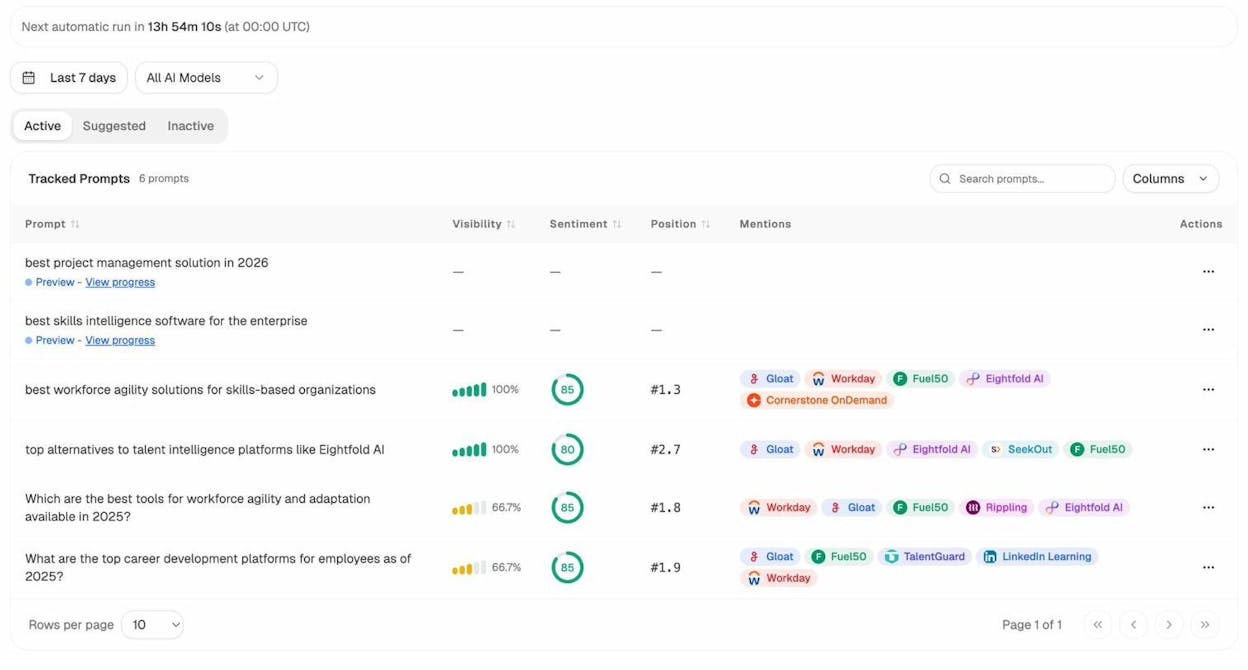
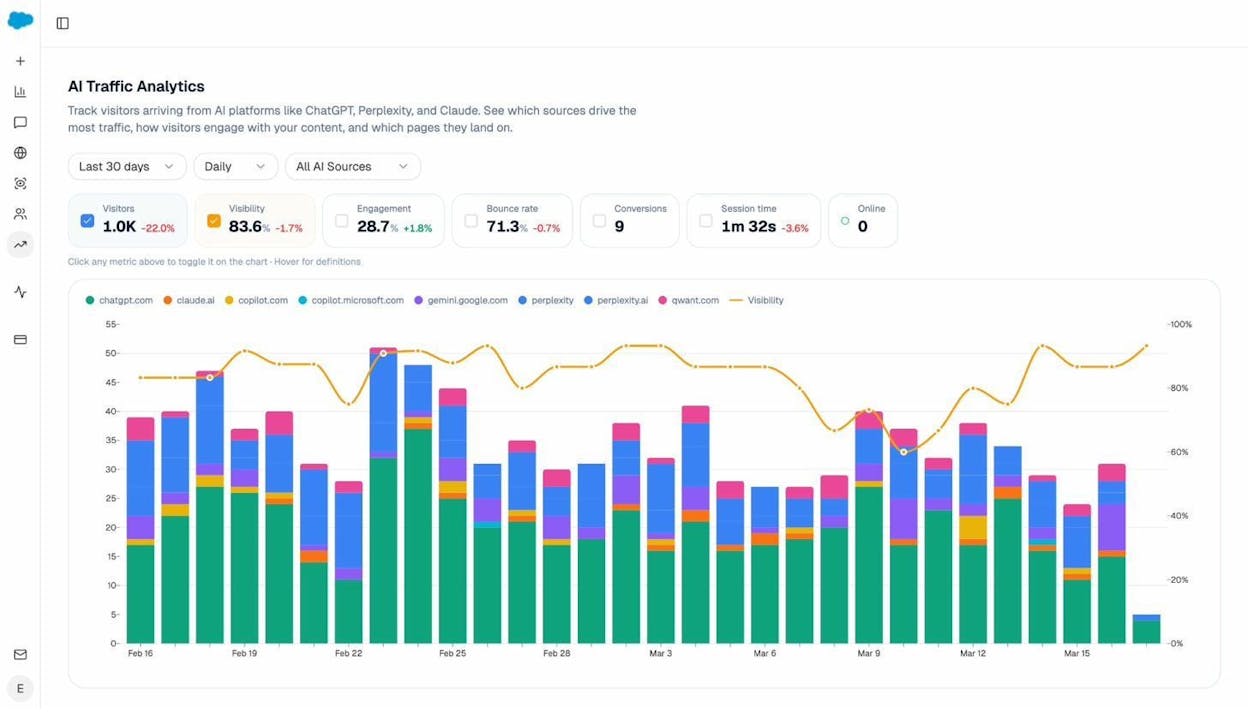
The AI search visibility layer is what most platforms lack entirely. Prompt Tracking shows where your brand appears across every major AI engine. AI Traffic Analytics attributes real sessions and conversions from AI referral traffic. Citation Analytics tells you which pages get cited and which are ignored. The Perception Map visualizes how AI models describe your brand versus competitors. And Weekly Email Digests deliver a summary of your visibility changes without you logging in.
The Sheets feature lets you run any capability at scale across hundreds of inputs in a spreadsheet interface. Need to check keyword difficulty for 500 terms at once? Run a SERP check on your top 200 URLs? Audit broken links across your whole site? Sheets turns single-use tools into batch operations.
SEO is not dead. AI search is an additional organic channel. Analyze AI lets you work both at once.
2. HubSpot
-
Best for: Mid-size to enterprise companies wanting CRM, marketing, sales, and service in one platform
-
What I like: Deep native reporting and a mature workflow builder
-
Pricing: Free CRM. Marketing Hub Starter at $20/seat/month. Professional at $890/month + $3,000 mandatory onboarding. Enterprise at $3,600/month + $7,000 onboarding
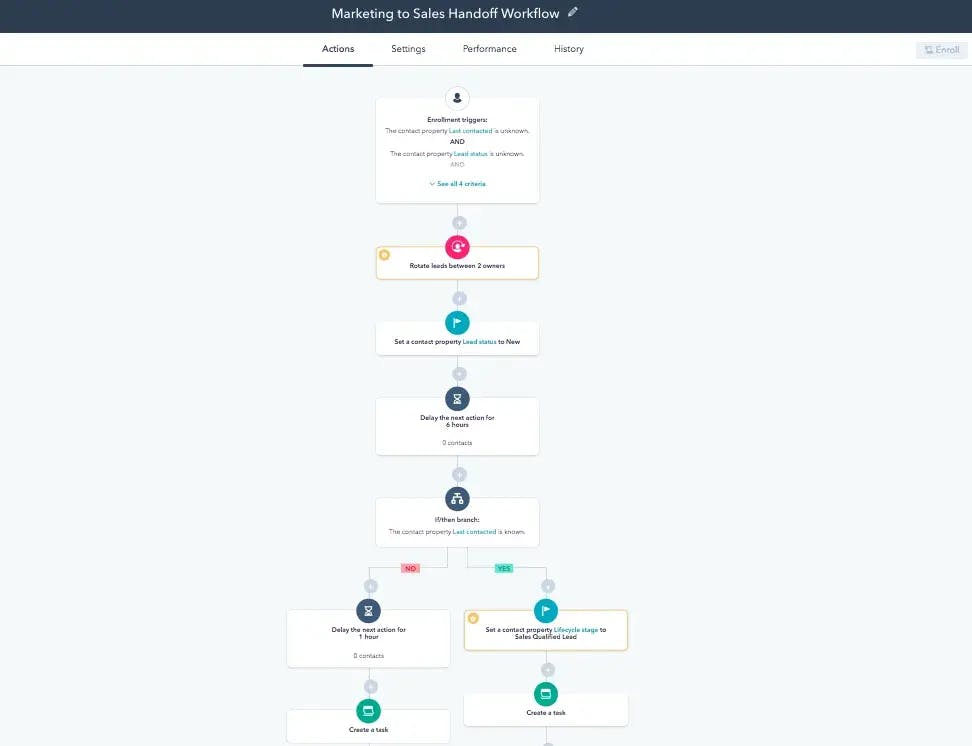
HubSpot is the default for teams that want everything in one place. The workflow builder is powerful, and the lifecycle stage model works well for structured demand gen with clear marketing-to-sales handoffs.
Where HubSpot struggles is cost. Professional at $890/month comes with a non-refundable $3,000 onboarding fee, and every additional 5,000 marketing contacts costs $225/month. For a 15,000-contact database, you’re looking at $1,500/month before adding seats. It also has no AI search visibility features. You won’t know if ChatGPT is citing your pages or sending traffic to a competitor.
Where it works: Companies with 50+ employees, dedicated marketing ops, and budget for Professional. Where it doesn’t: Early-stage startups or teams that need content pipeline automation and AI search visibility.
3. Zapier
-
Best for: Non-technical teams connecting apps with simple automations
-
What I like: 7,000+ app integrations and dead-simple setup
-
Pricing: Free at 100 tasks/month. Professional at $29.99/month for 750 tasks. Team at $103.50/month for 2,000 tasks
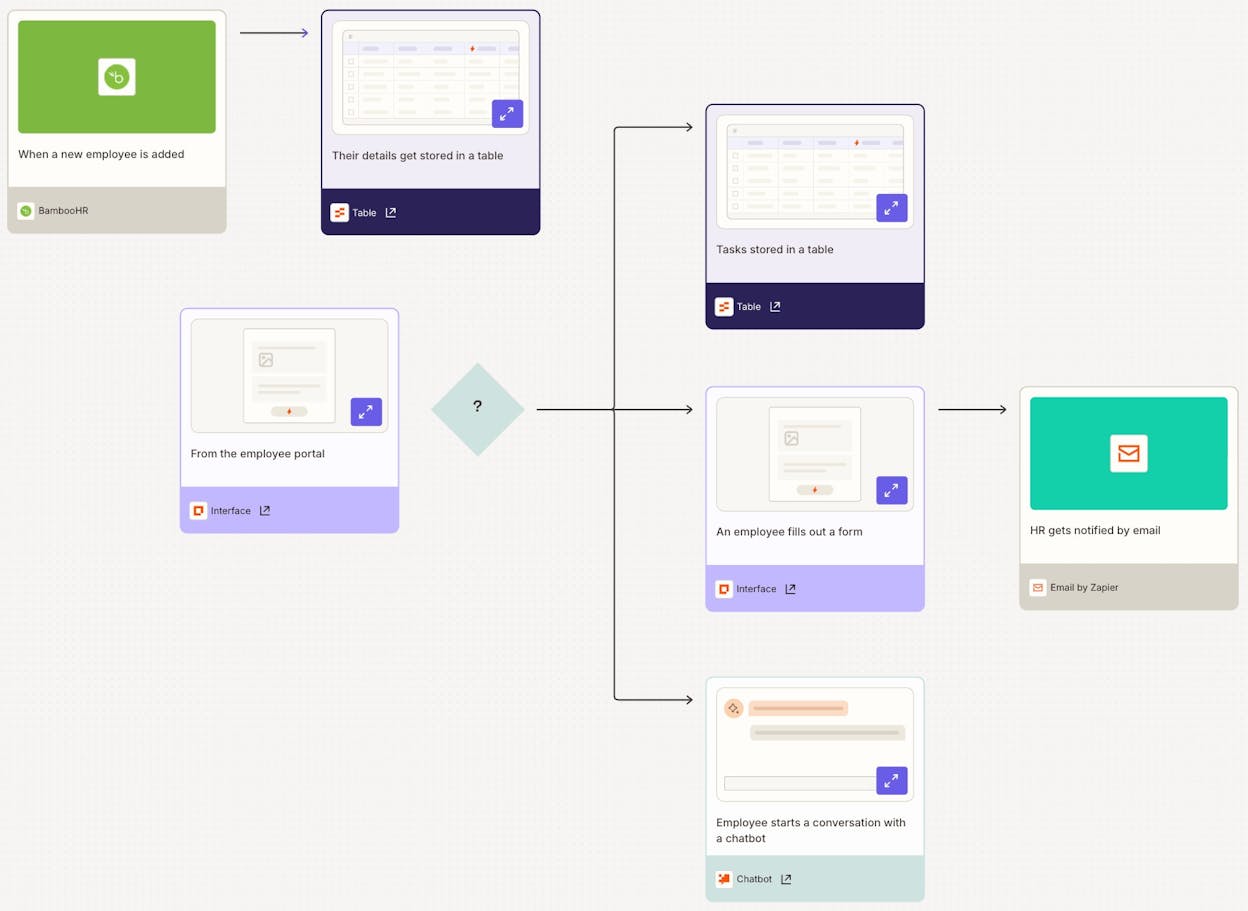
Zapier connects app A to app B without code. That’s its strength and its ceiling. The integration library is unmatched at 7,000+ apps, but it charges per task (each action in a multi-step workflow counts as one). A five-step Zap running 50 times daily burns 7,500 tasks/month, pushing you past $300/month. Make.com offers 10,000 operations at $9/month for comparison.
Zapier also can’t pull keyword rankings, run content audits, or analyze AI citations natively. It’s a connector, not a data platform. You can use it to glue tools together, but you can’t use it to understand your marketing performance. For SEO, content, or GTM automation, you’ll need a platform with native data access.
Where it works: Light automation, non-technical teams, connecting apps that lack native integrations. Where it doesn’t: High-volume workflows or anything requiring native SEO and content data.
4. Clay
-
Best for: GTM teams automating prospecting and lead enrichment
-
What I like: 75+ data providers in one platform
-
Pricing: Free at 100 credits/month. Starter at $149/month. Pro at $800/month
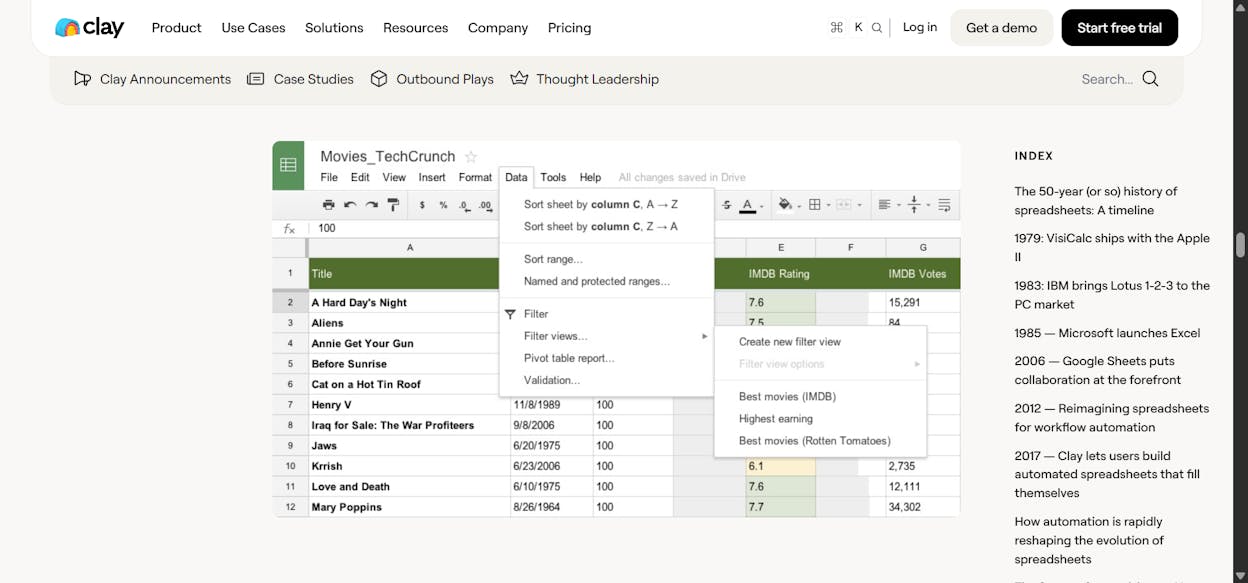
Clay is exceptional for outbound. Feed it a company list, and it enriches contacts from 75+ providers with job titles, tech stacks, funding rounds, and more. It can also generate personalized outreach copy through AI. For agencies and B2B teams running account-based marketing programs, Clay cuts days of manual research into minutes.
The learning curve is steep, and the credit-based pricing adds up fast during high-volume enrichment. Clay is also built exclusively for prospecting. No content automation, no SEO workflows, no AI search visibility. If your bottleneck is lead research, Clay delivers. If it’s content or organic visibility, you need a different tool.
5. ActiveCampaign
-
Best for: Small and mid-size businesses needing email + CRM automation
-
What I like: One of the most flexible email automation builders available
-
Pricing: Starter at $15/month. Plus at $49/month. Pro at $79/month. Enterprise at $145/month
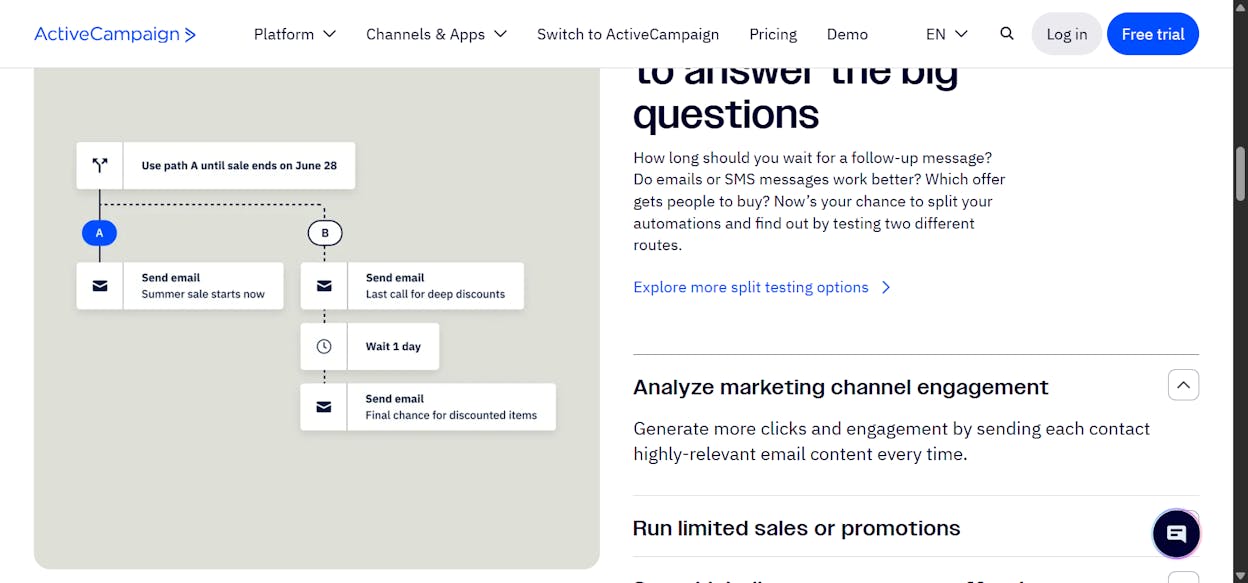
ActiveCampaign sits between simple email tools like Mailchimp and enterprise platforms like HubSpot. The automation builder handles branching paths based on site visits, email engagement, deal changes, and custom fields. The CRM is lightweight but functional. No content tools, no SEO features, no AI search visibility, but strong value for the price if email is your primary channel.
6. Customer.io
-
Best for: SaaS companies needing behavior-triggered messaging
-
What I like: Trigger emails based on actual product usage, not just form fills
-
Pricing: Essentials at $100/month for 5,000 profiles. Premium at $1,000/month
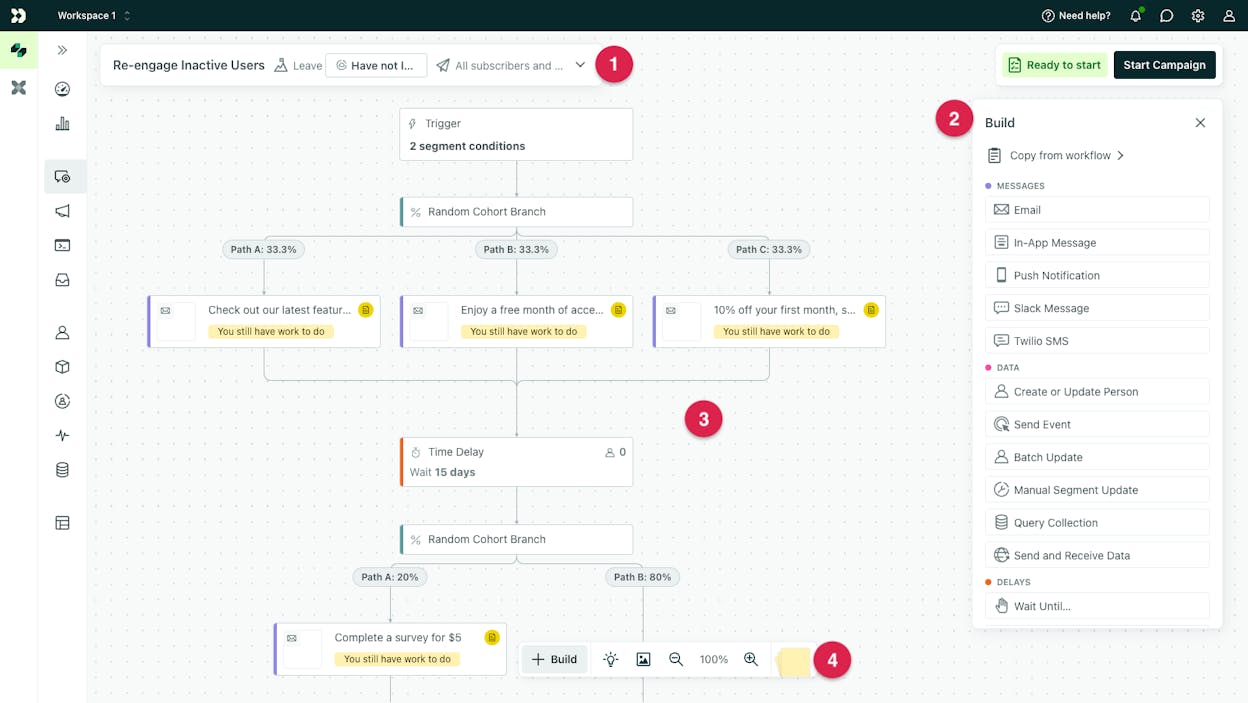
Customer.io connects to your product data layer, so automations respond to feature adoption, login frequency, and trial milestones. If you’ve received a perfectly timed email about a SaaS feature you hadn’t tried, Customer.io was likely behind it. Setup requires technical work, and $100/month for just 5,000 profiles is steep for smaller teams.
7. Attio
-
Best for: Modern startups wanting a flexible CRM with built-in automation
-
What I like: The UI is genuinely enjoyable
-
Pricing: Free for 3 users. Plus at $36/user/month. Pro at $86/user/month
Attio is the CRM founders keep recommending. The interface is clean and fast. Automations trigger based on deal stages, contact properties, and custom events. It integrates with Segment, Zapier, and Customer.io. It’s a CRM with automation, not a marketing automation platform, but it does that job well.
8. Klaviyo
-
Best for: Ecommerce brands needing email and SMS automation tied to purchase behavior
-
What I like: Revenue attribution showing exactly how much each flow earns
-
Pricing: Free for 250 contacts. Email from $45/month. Email + SMS from $60/month
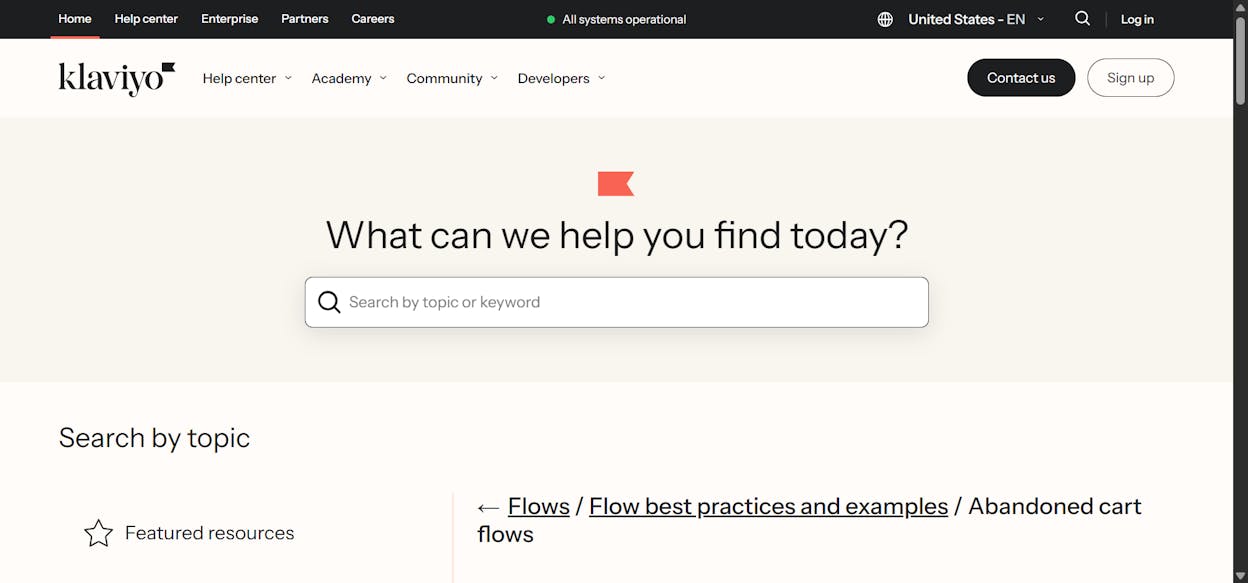
Klaviyo is the default for Shopify-based brands. Automations around purchase history, cart behavior, and customer lifetime value are pre-built and easy to customize. Revenue attribution per flow makes ROI clear. Gets expensive with larger contact lists and is narrowly focused on ecommerce.
9. Loops
-
Best for: SaaS startups needing simple product and marketing emails
-
What I like: It does one thing well. The simplicity is the feature
-
Pricing: Free for 1,000 contacts. Paid from $49/month for 5,000 contacts
Loops is the anti-HubSpot. It handles transactional emails, marketing emails, and basic automations for SaaS companies without the bloat. Fast, clean, and strong deliverability. You’ll outgrow it if you need complex behavioral triggers or CRM features.
10. beehiiv
-
Best for: Newsletter creators and content marketers building an audience through email
-
What I like: Built-in subscriber growth tools, referral programs, and monetization
-
Pricing: Free for 2,500 subscribers. Scale at $49/month. Max at $109/month
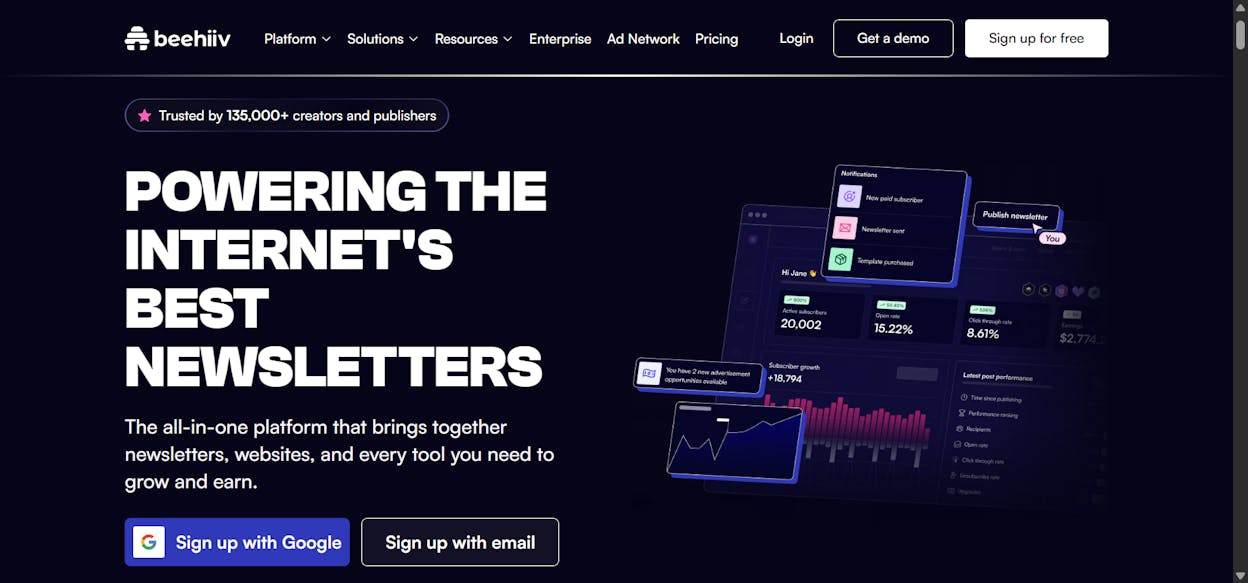
beehiiv is built for newsletters. Referral programs, recommendation networks, SEO-optimized web hosting, and subscribe widgets are all native. If you’re running a newsletter alongside your blog, beehiiv gives you growth mechanics generic email tools lack. Automation capabilities are limited compared to dedicated platforms.
How AI Search Changes the Automation Equation
Most marketing automation platforms were built when Google was the only search engine that mattered. ChatGPT, Perplexity, Gemini, and Google AI Overviews now influence how buyers discover products. AI Overviews reduce clicks by up to 58% on some queries.
SEO is not dead. But AI search is an additional organic channel that runs parallel to traditional search. Here’s what that means for your automation stack:
You need visibility data from AI engines. Tools like Analyze AI’s AI Traffic Analytics connect to GA4 and show you which AI engines send sessions to which pages, and what those sessions convert into.
You need competitive intelligence across AI. Your competitor might be invisible on Google but dominant in ChatGPT responses. Without AI visibility tracking, you’re blind on a channel that influences an increasing share of buyer research.
You need content automation for both channels. A content refresh workflow should optimize for Google AND AI citation likelihood. A keyword workflow should pull SERP data AND prompt discovery data to find topics where AI engines answer questions your brand should own. The teams that build workflows spanning both channels now are the ones compounding visibility while everyone else debates whether SEO is dead. (It’s not. See the Analyze AI manifesto on why.)
How to Choose the Right Platform
If your bottleneck is email, Customer.io (SaaS), Klaviyo (ecommerce), or ActiveCampaign (general) fit.
If it’s CRM, HubSpot or Attio. HubSpot for all-in-one with budget. Attio for speed and flexibility.
If it’s connecting apps, Zapier handles basics. Model your task volume first.
If it’s prospecting, Clay is purpose-built.
If it’s content, SEO, AI search, and GTM ops, Analyze AI is the only platform on this list that covers all four. The Agent Builder handles use cases that would require stitching together three or four other tools. Add the built-in Content Writer, Content Optimizer, AI visibility tracking, and competitive intelligence, and you have a platform that runs the operational layer of your marketing org continuously while your team focuses on judgment, not data wrangling.
You can also check out the Analyze AI free tools to get started without a subscription. The keyword generator, website traffic checker, website authority checker, and AI visibility checker are all available now.

Ernest

Ibrahim


