



Summarize this blog post with:


Most advice on website authority fixates on the number itself. Raise your DR. Get to 50. Hit 70. But chasing a score misses the point. Website authority is an output — a side effect of building high-quality backlinks from sites that matter. And in 2026, those same authority signals that help you rank on Google also influence whether AI search engines cite your content.
So the playbook hasn’t changed as much as people think. What has changed is where that authority needs to show up.
In this article, you’ll learn what website authority actually measures, how Domain Rating is calculated, and how to increase it the right way — with tactics that also strengthen your visibility across AI search engines like ChatGPT, Perplexity, and Claude.
Table of Contents
What Is Website Authority (Domain Rating)?
Website authority is a metric created by SEO tool providers to measure the relative strength of a site’s backlink profile compared to every other site in their index. Every major SEO platform has its own version of this metric, but they all measure roughly the same thing: how strong your link profile is relative to the rest of the web.
At Ahrefs, the metric is called Domain Rating (DR). At Moz, it’s Domain Authority (DA). Semrush uses Authority Score. The names differ, the exact calculations differ, but the core concept is the same.
All of them run on a scale from 0 to 100, and all of them are logarithmic. That last detail is important because it means the scale is not linear. Moving from DR 10 to DR 20 takes far less effort than moving from DR 60 to DR 70.
Think of it like leveling up in a game. Early levels are quick. Later levels take exponentially more effort. And because the scale is logarithmic, a DR 40 site is not merely twice as strong as a DR 20 site — it’s many multiples stronger.
You can check any domain’s authority score for free using Analyze AI’s Website Authority Checker. Enter any domain, and you’ll get a 0–100 Domain Score with color-coded severity grading (green for very strong, yellow for moderate, orange for developing, red for weak), plus organic traffic estimates, total ranked keywords, and a full SERP position distribution showing how many keywords rank at #1, #2–3, #4–10, and beyond.
![[Screenshot: Analyze AI Website Authority Checker results page showing the Domain Score gauge (e.g., “99 — Very Strong” for a high-authority domain), organic traffic, ranked keywords, and SERP position distribution table]](https://www.datocms-assets.com/164164/1774441590-blobid0.png?auto=format,compress&w=1248&fit=max)
That position distribution is especially useful. A domain with thousands of #1 rankings has dominant authority. A domain with most keywords clustered in positions #21–50 is emerging but hasn’t broken through to page one yet. This multi-metric view gives you a much richer picture than a single authority number.
Other free options include Ahrefs’ Website Authority Checker and Moz’s Domain Analysis tool.
What Website Authority Is Not
Before going further, it’s worth clearing up a few misconceptions.
Website authority is not a Google ranking factor. Google has confirmed repeatedly that it does not use any third-party domain authority metric in its algorithms. Google does consider links as a ranking signal, but its internal calculations are far more nuanced than a single 0–100 score.
Website authority also does not directly predict rankings. Two sites can have identical DR scores and rank very differently for the same keyword. Page-level factors like relevance, content quality, search intent match, and page-specific backlinks often matter more than site-wide authority.
So why does website authority matter at all? Because it’s a useful proxy. It gives you a general sense of how competitive a domain is and how much link-building work you’ll need to do to compete in a given space. If you’re a DR 25 site trying to rank for a keyword where every result on page one is DR 70+, you know you’ve got a steep climb ahead. You can check this quickly by running the target keyword through Analyze AI’s free SERP Checker to see who ranks in the top 10 and gauge the competitive landscape.
Why Website Authority Now Matters for AI Search Too
Here’s what most guides on website authority miss entirely: the same signals that drive Domain Rating — authoritative backlinks, editorial mentions, citations from trusted sources — are also the signals that AI search engines use to decide which sources to cite.
When ChatGPT, Perplexity, or Claude generates an answer, it doesn’t just pull from a random set of web pages. It prioritizes sources that have demonstrated authority, trustworthiness, and relevance. That means a strong backlink profile doesn’t just help you rank on Google — it helps you get cited in AI-generated answers.
Our analysis of 65,000 citations across AI engines found that domains with higher authority scores were cited significantly more often than lower-authority domains. The correlation isn’t perfect, but it’s strong enough that ignoring authority building means leaving both traditional and AI search visibility on the table.
You can see this dynamic in action inside Analyze AI. The Sources dashboard shows you which domains AI models cite most often when answering questions in your industry — and they’re overwhelmingly high-authority sites.
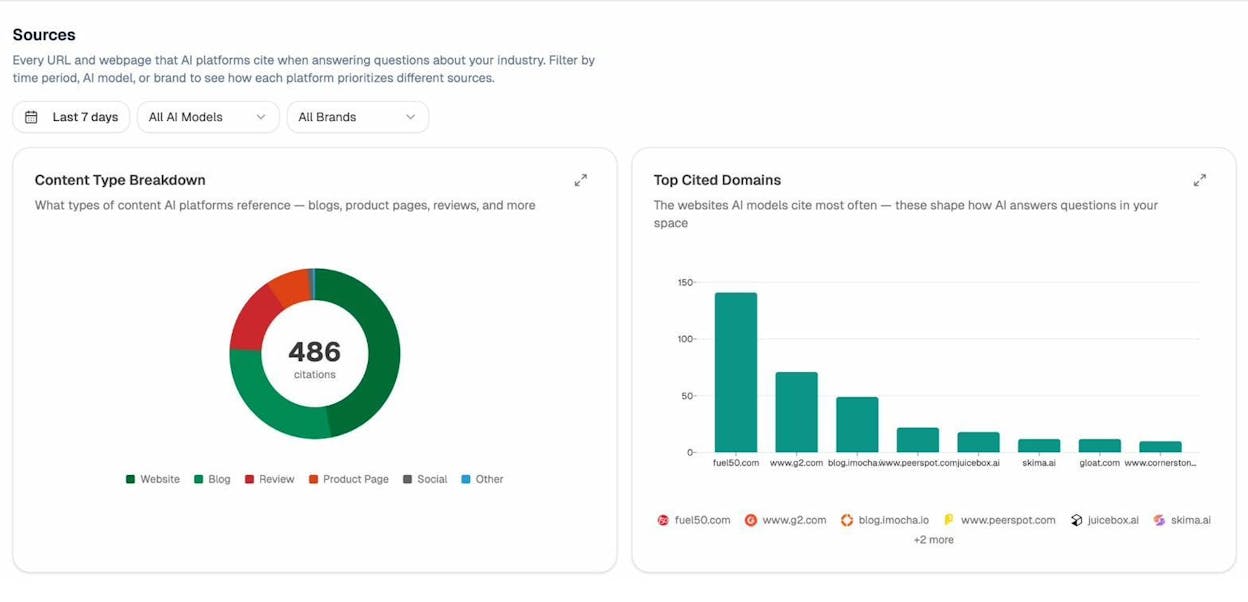
How Domain Rating Is Calculated
If you want to increase your Domain Rating, you need to understand what drives the number. Three factors matter:
1. The Number of Unique Websites Linking to You
This is the most straightforward factor. The more unique websites (referred to as “referring domains”) that link to your site, the higher your DR tends to be.
But there’s nuance here. Ahrefs counts referring domains, not individual backlinks. If the same site links to you 50 times, that counts as one referring domain. Getting 10 links from 10 different websites is worth far more for your DR than getting 50 links from a single site.
Also, only “followed” links count toward DR. Links with nofollow, UGC, or sponsored attributes don’t pass authority in Ahrefs’ calculation. This is an important distinction because many link-building tactics (guest post bio links, forum signatures, social media profiles) often produce nofollow links that won’t move the needle on DR at all.
![[Screenshot: Ahrefs Site Explorer overview showing referring domains count and graph for a website]](https://www.datocms-assets.com/164164/1774441604-blobid2.png?auto=format,compress&w=1248&fit=max)
2. The Authority of Linking Domains
Not all links are created equal. A link from a DR 80 site like The New York Times carries far more weight than a link from a DR 10 personal blog.
This is why tactics like buying links from link farms or participating in low-quality link exchanges rarely produce meaningful DR increases. Those links come from low-authority domains, so they contribute almost nothing to your score.
What makes this factor especially interesting is that it’s dynamic. If you get a link from a DR 20 site today, and that site grows to DR 50 over the next two years, your DR benefits automatically. The link doesn’t change, but the authority behind it does.
This means you should look for link prospects with growth potential, not just current authority. A young publication producing excellent content is likely to grow its authority over time, making early links from them increasingly valuable.
Here’s how to judge a site’s growth potential:
Check their content quality. Sites publishing original research, in-depth guides, and expert-driven content tend to attract backlinks naturally over time.
Check their authority trajectory. Run the prospect domain through Analyze AI’s Website Authority Checker to see their current Domain Score, organic traffic, and keyword distribution. A site with moderate authority but strong keyword rankings in positions #4–10 is likely on an upward trajectory. Then in Ahrefs’ Site Explorer, look at the referring domains graph over the past 12–24 months. A steady upward trend confirms growing authority.
![[Screenshot: Ahrefs Site Explorer referring domains graph showing steady upward growth over time / Running the prospect domain through Analyze AI’s Website Authority Checker to see their current Domain Score, organic traffic, and keyword distribution ]](https://www.datocms-assets.com/164164/1774441605-blobid3.png?auto=format,compress&w=1248&fit=max)
Check their publishing frequency. Sites that publish consistently are more likely to build authority over time than those that post sporadically.
3. How Many Sites Each Referring Domain Links To
This factor is the most overlooked, and it can make a massive difference.
When a site links out to thousands of other domains, each individual link passes less “DR equity.” Think of it like a recommendation. If someone recommends one restaurant, that recommendation carries weight. If they recommend 10,000 restaurants, each individual recommendation means almost nothing.
Here’s a concrete example. The Guardian (DR 92) links out to hundreds of thousands of unique domains. IMDB (DR 92) links to far fewer. Even though both sites have the same DR score, a link from IMDB passes significantly more authority to your site than a link from The Guardian.
This is why a link from a niche industry publication that only links to a few dozen sites can be more powerful for your DR than a link from a massive media outlet that links everywhere.
|
Factor |
What It Measures |
Impact on DR |
|---|---|---|
|
Referring domains |
Number of unique sites linking to you |
More unique domains = higher DR |
|
Linking domain DR |
Authority of the sites linking to you |
Higher-authority links = bigger DR boost |
|
Outbound link count |
How many sites each linking domain links to |
Fewer outbound links from linker = more DR equity passed |
|
Link attribute |
Whether the link is followed or nofollowed |
Only followed links count toward DR |
How to Increase Your Domain Rating (The Right Way)
The formula is simple: build more followed links from authoritative, relevant websites, and your Domain Rating will increase.
But here’s the strategic nuance that most people miss. Building links to random pages on your site won’t help your rankings or organic traffic much. It’ll inflate your DR number, but it won’t drive results.
Data backs this up. Ahrefs’ research found that the number of referring domains to a specific page correlates more strongly with that page’s organic traffic than the overall DR of the website. In other words, page-level links matter more than site-level authority for driving actual results.
So the smartest approach is to build links to the specific pages you want to rank. Your DR will increase as a byproduct, but the real win is improved rankings and traffic for your target keywords.
Here’s how to do that in practice.
1. Create Content That Earns Links Naturally
The most sustainable link-building strategy is to create content that other people genuinely want to reference and link to. That means content with at least one of these three qualities:
Non-commercial. People rarely link to sales pages, product pages, or thinly disguised advertisements. They link to content that helps them make a point, back up an argument, or provide value to their own readers. That’s why most high-link content lives on blogs, resource sections, and knowledge bases — not product pages.
Useful. There are two kinds of useful content that attract links:
Content with utility — tools, calculators, templates, and practical how-to guides that people reference repeatedly. Free tools are a perfect example. Analyze AI offers a full suite of free SEO tools that naturally attract backlinks: a Website Authority Checker, Keyword Generator, Keyword Difficulty Checker, SERP Checker, Keyword Rank Checker, Website Traffic Checker, and Broken Link Checker. These attract links because people use them and cite them in their own content. If you don’t have the resources to build free tools, even a simple downloadable template, checklist, or calculator can serve the same purpose.
Content with citability — original research, statistics, surveys, and data studies that writers and journalists reference when making a point. Data-driven content is a link magnet because it gives other creators something concrete to cite. Our study on how LLMs cite sources is an example — it contains data that other writers in the AI and SEO space reference regularly.
A history of attracting links. Before creating content around a topic, check whether existing content on that topic has attracted backlinks. This is a leading indicator of whether your content is likely to earn links too.
Here’s the step-by-step process:
Step 1: Install the Ahrefs SEO Toolbar browser extension.
Step 2: Search Google for your content topic. Look at the referring domain counts for the top-ranking pages directly in the search results.
![[Screenshot: Google search results with Ahrefs SEO Toolbar showing referring domains count next to each result]](https://www.datocms-assets.com/164164/1774441613-blobid4.png?auto=format,compress&w=1248&fit=max)
Step 3: If the top results have 50+ referring domains, that’s a sign the topic is link-worthy. If they have fewer than 10, you’ll likely struggle to earn links from that topic regardless of how good your content is.
Step 4: Make sure the topic isn’t a fad. Check the referring domains graph for top results. If most links were acquired in a short burst years ago, the topic’s link-earning potential has likely dried up. You want topics with a steady, ongoing accumulation of links.
How to Find Link-Worthy Topics Systematically
If you need more topic ideas, here’s a repeatable process using keyword research tools:
Step 1: Open a keyword research tool and search for a broad seed keyword related to your niche. You can use Analyze AI’s free Keyword Generator for quick topic ideation, or Ahrefs Keywords Explorer for deeper analysis with keyword difficulty and traffic potential data.
![[Screenshot: Ahrefs Keywords Explorer with a seed keyword entered and the keyword ideas report open]](https://www.datocms-assets.com/164164/1774441620-blobid5.png?auto=format,compress&w=1248&fit=max)
If you’re also looking for keyword opportunities on platforms beyond Google, Analyze AI offers free Bing, YouTube, and Amazon keyword tools — useful if your content strategy spans multiple search platforms.
Step 2: Go to the “All keywords” report to see related keyword ideas.
Step 3: Use the Include filter to add modifiers that signal link-worthy content types. Add words like: statistics, study, template, calculator, tool, guide, what is, how to, examples, checklist. Toggle “Any word” to match any of these modifiers.
![[Screenshot: Ahrefs Keywords Explorer Include filter with link-worthy modifiers added]](https://www.datocms-assets.com/164164/1774441620-blobid6.jpg?auto=format,compress&w=1248&fit=max)
Step 4: Filter for keywords with a Keyword Difficulty (KD) score of 40 or higher. KD is based on the average number of referring domains to top-ranking pages, so high-KD keywords indicate topics where top results already have many backlinks — a strong sign of link-worthiness. You can quickly validate KD scores using Analyze AI’s free Keyword Difficulty Checker if you want a second opinion before committing to a topic.
![[Screenshot: Keywords Explorer results filtered by KD 40+ showing topics with high link potential]](https://www.datocms-assets.com/164164/1774441630-blobid7.jpg?auto=format,compress&w=1248&fit=max)
Step 5: Review the filtered list for relevant topics, then check search intent by looking at the top results. Create content that matches what searchers expect to find.
Create Content That AI Engines Want to Cite Too
Everything above helps you earn traditional backlinks. But if you also want AI search engines to cite your content — which drives real traffic — there are a few additional factors to consider.
AI engines favor content that provides clear, structured answers to specific questions. That means your content should include well-organized sections with descriptive headings, concise definitions and explanations that models can extract cleanly, original data and statistics (AI engines frequently cite original research), expert attribution with named authors and credentials, and recently updated content that signals freshness. If you’re new to optimizing for AI engines, our guide to answer engine optimization covers the full framework.
You can track whether your content is actually being cited by AI engines using Analyze AI. The Citation Analytics dashboard shows you exactly which of your URLs are being cited, by which AI engines, and how often.
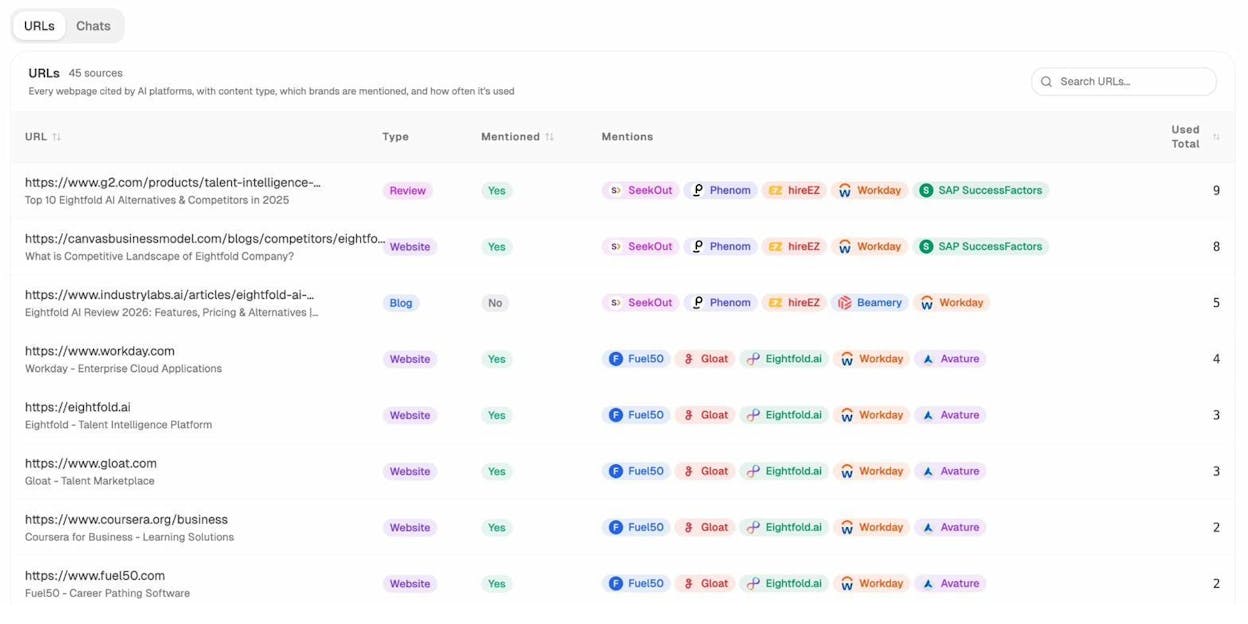
This is how you close the feedback loop. Instead of guessing whether your content improvements are working, you can see the direct impact on AI citations within days.
2. Pitch Authoritative and Relevant Websites
Creating great content is necessary but not sufficient. You also need to actively promote it to the people who are most likely to link to it.
This is where outreach comes in. And the key to effective outreach is targeting the right people — not blasting generic emails to hundreds of random sites.
Here are three high-conversion outreach targets:
People featured in your content. If you’ve mentioned someone, quoted them, or included their data in your article, let them know. People are far more likely to share and link to content that features them. This is one of the highest-ROI outreach tactics available.
People who’ve published content on the same topic. If someone has already written about a topic, they’ve demonstrated interest in it. A well-crafted email showing how your piece adds new data, a fresh angle, or a more comprehensive treatment gives them a reason to reference it in future updates or new articles.
People who’ve linked to competing content. This is the classic “Skyscraper Technique.” Find pages that link to your competitors’ content on the same topic, then reach out to show them your superior version. Tools like Ahrefs’ Content Explorer or Site Explorer make finding these link prospects straightforward. Before you start outreach, run your competitors through Analyze AI’s Website Traffic Checker to gauge the size and authority of the sites you’re competing against — this helps you prioritize which competing articles are worth targeting.
![[Screenshot: Ahrefs Site Explorer backlinks report for a competing article, showing a list of referring domains you could outreach to]](https://www.datocms-assets.com/164164/1774441639-blobid9.png?auto=format,compress&w=1248&fit=max)
For each outreach target, keep your email short, specific, and focused on what’s in it for them. Explain why your content would be valuable to their audience. Avoid generic templates that read like mass emails.
Build Authority Signals That AI Engines Recognize
Here’s where traditional link building and AI visibility start to converge.
AI search engines don’t just evaluate your backlink profile. They evaluate your overall brand authority — how often you’re mentioned, how positively you’re discussed, and whether trusted sources reference your expertise. This is a key part of off-page SEO in 2026 — it’s not just about links anymore, it’s about brand signals everywhere.
This means that beyond building links, you should also focus on earning brand mentions in places AI engines are likely to index. That includes industry publications and trade media, expert roundups and interviews, podcast appearances (transcripts are indexed), conference talks and webinar content, and third-party review sites and comparison pages.
With Analyze AI’s Competitor Overview, you can see which competitors are being mentioned in AI responses and how often. This helps you identify which authority signals your competitors have that you’re missing — and where to focus your outreach efforts.
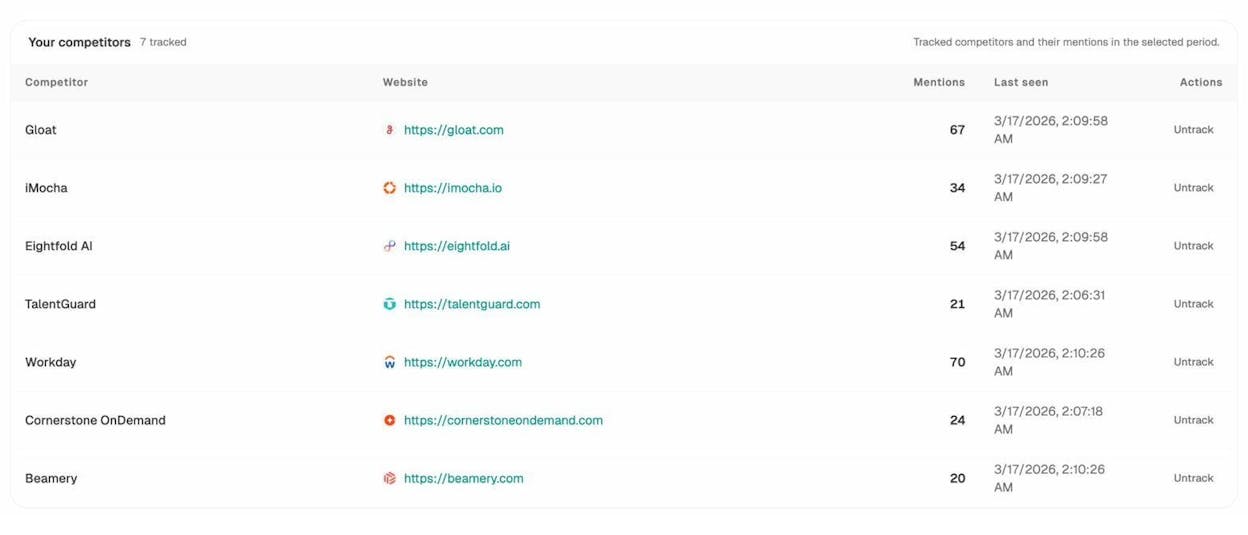
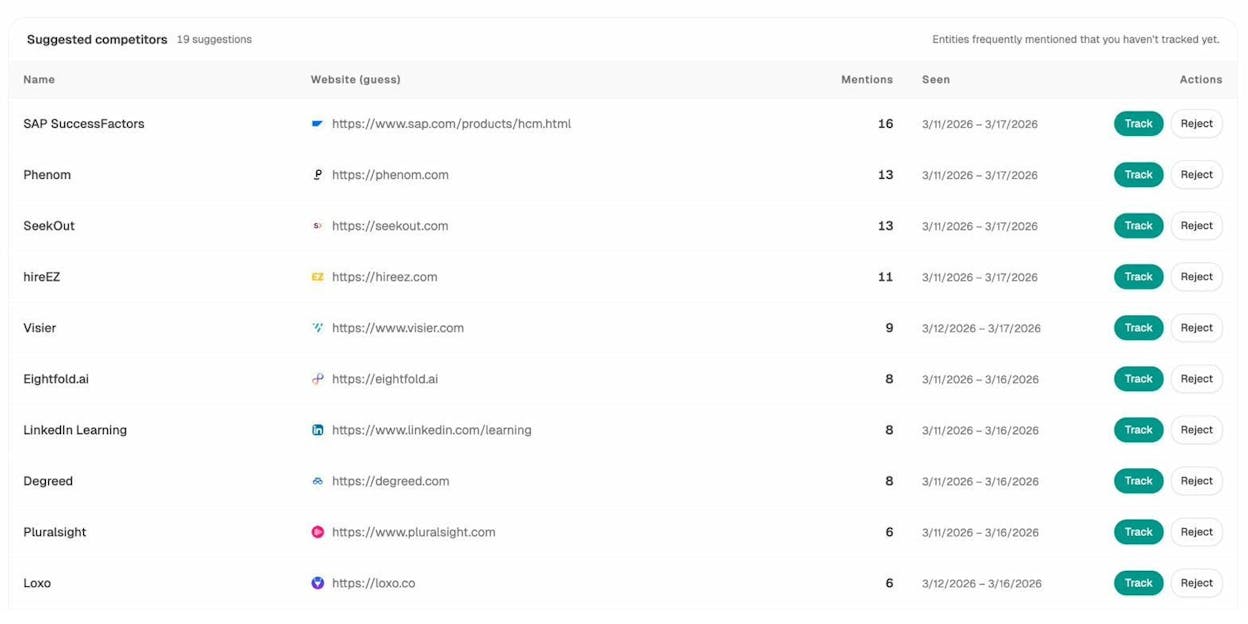
You can also use the Opportunities report to find specific prompts where competitors appear and you don’t. Each of these is a gap you can close by building authority around that topic through content creation and targeted outreach.
3. Use Internal Linking to Distribute Authority to Key Pages
Not every page on your site will attract backlinks directly. Product pages, conversion pages, and commercial content are notoriously hard to earn links for. But they’re often the pages you most need to rank.
That’s where internal linking comes in.
The strategy is straightforward: build backlinks to your link-worthy content (research studies, tools, guides), then use internal links from those pages to pass authority to the commercial pages you want to rank.
This is sometimes called the “Middleman Method” — your link-worthy pages act as middlemen, funneling authority from external backlinks to your target pages through internal links.
Here’s how to execute this:
Step 1: Identify your priority pages — the pages that drive conversions or target your most valuable keywords. Use Analyze AI’s Keyword Rank Checker to see which keywords each page currently ranks for, and identify where stronger internal linking could push rankings from page two to page one.
Step 2: Identify your link magnets — the pages on your site that have the most referring domains. In Ahrefs, go to Site Explorer > Pages > Best by links to find these.
![[Screenshot: Ahrefs Site Explorer “Best by links” report showing pages with the most referring domains]](https://www.datocms-assets.com/164164/1774441655-blobid12.png?auto=format,compress&w=1248&fit=max)
Step 3: Add contextual internal links from your high-authority pages to your priority pages. Use descriptive anchor text that includes relevant keywords.
Step 4: Audit your internal links regularly. Use Analyze AI’s Broken Link Checker to ensure none of your internal links are broken — dead links waste the authority you’ve worked so hard to build. As you publish new link-worthy content and earn new backlinks, update your internal linking to distribute that authority effectively.
Use AI Traffic Data to Inform Your Internal Linking Strategy
Here’s a tactic most people haven’t considered: use AI referral traffic data to identify which of your pages are already performing well in AI search, then use internal linking to strengthen those pages further and funnel their authority to conversion pages.
Analyze AI’s Landing Pages from AI Search report shows you exactly which pages are receiving traffic from AI engines, broken down by source (ChatGPT, Perplexity, Claude, etc.), with engagement metrics, bounce rate, session duration, and conversions for each page.
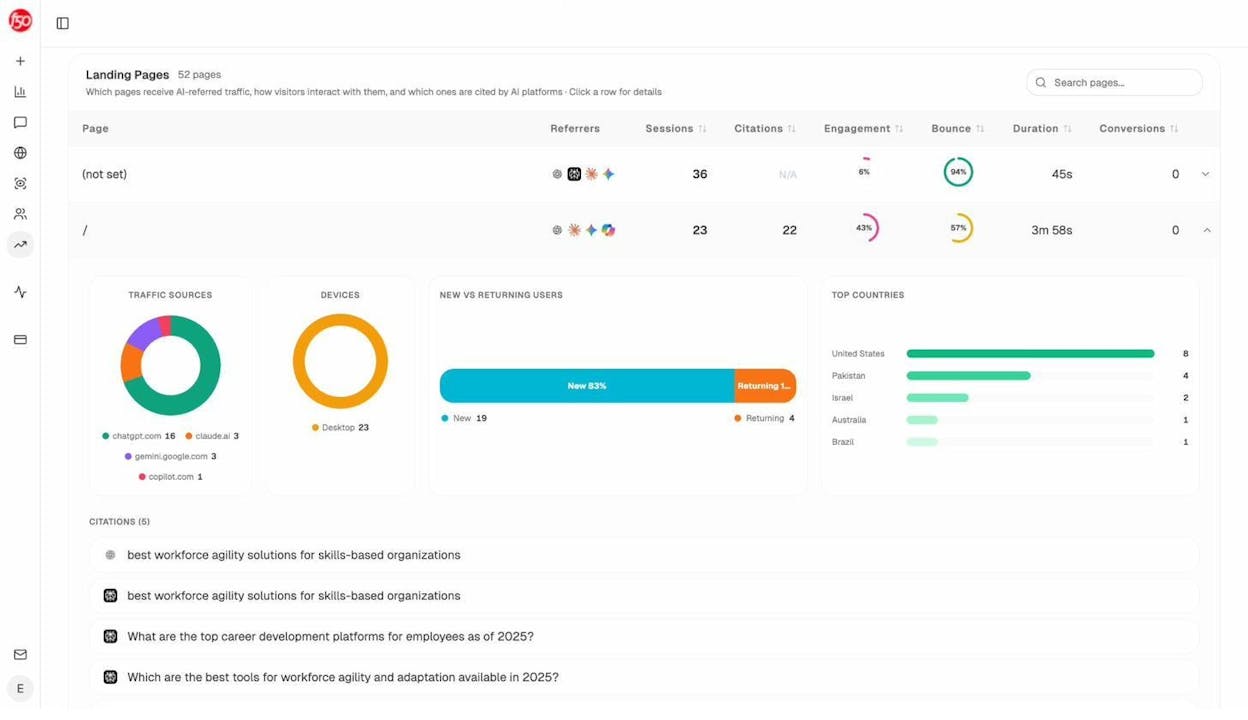
If a page is already getting AI referral traffic, that’s a strong signal that AI engines see it as authoritative for its topic. Strengthening that page with more internal links from other high-authority pages can compound its performance in both traditional and AI search.
You can also check the AI Traffic Analytics dashboard for a broader view — it shows total visitors from AI platforms, visibility trends, engagement rates, bounce rates, conversions, and session times, all broken down by AI source (ChatGPT, Claude, Copilot, Gemini, Perplexity, and more).
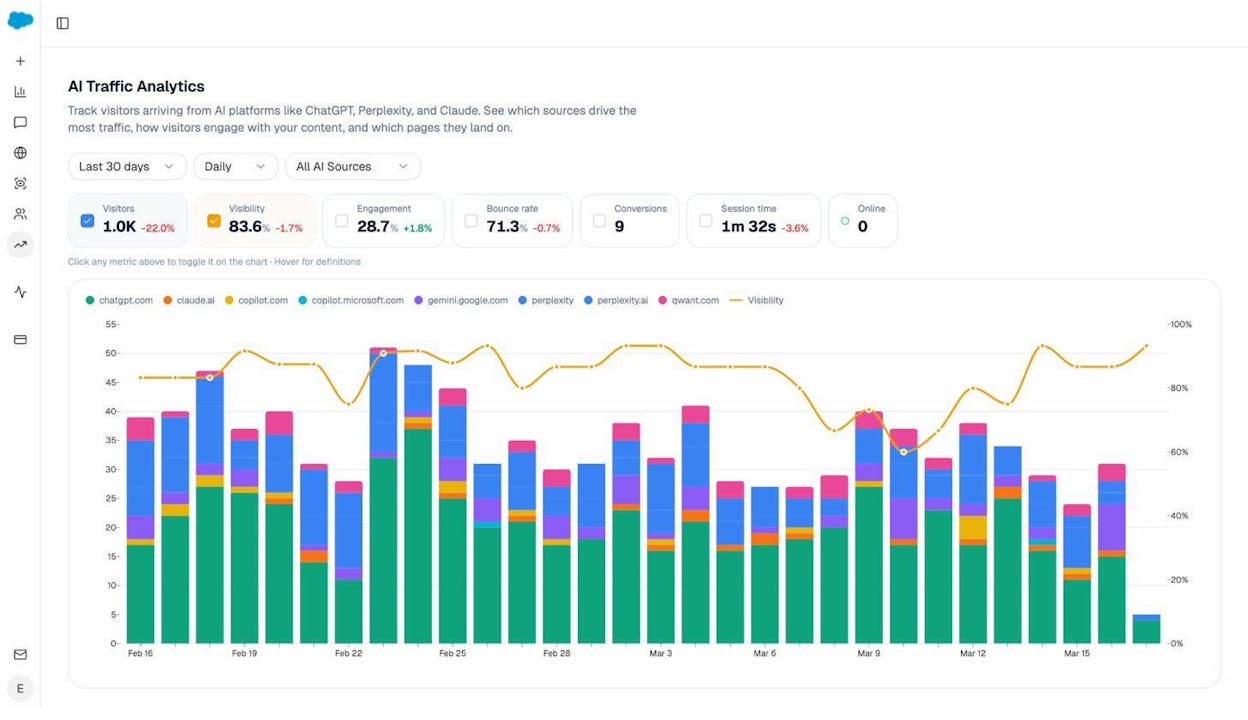
This kind of data turns authority building from a guessing game into a measurable, iterative process.
How to Track Your Progress
Building website authority is a long-term effort. You won’t see results overnight, and you need to track the right metrics to know if your strategy is working.
Track Your Domain Rating Over Time
Check your DR monthly using Analyze AI’s free Website Authority Checker, Ahrefs, or your preferred SEO tool. Look for a steady upward trend rather than dramatic jumps. Sudden spikes in DR can sometimes indicate low-quality link acquisition, which may not be sustainable.
The Analyze AI checker is especially useful here because it shows your authority score alongside organic traffic and keyword rankings in one view. If your authority is rising but traffic is flat, that’s a signal your content strategy needs work alongside your link building.
![[Screenshot: Analyze AI Website Authority Checker showing the traffic and ranking metrics alongside the authority score — demonstrating how authority and traffic should grow together]](https://www.datocms-assets.com/164164/1774441668-blobid15.png?auto=format,compress&w=1248&fit=max)
Track Referring Domains, Not Just Backlinks
The number of unique referring domains matters more than the total backlink count. A site with 500 backlinks from 50 domains is generally in a stronger position than a site with 500 backlinks from 5 domains.
Track Page-Level Link Growth
Since page-level links drive rankings more directly than site-wide authority, monitor the referring domain counts for your priority pages. Use Ahrefs’ Site Explorer to check individual page backlink growth over time.
Track Your AI Search Visibility Alongside Traditional Metrics
As your authority grows, you should see improvements not just in Google rankings but in AI search citations too. Use Analyze AI to track your visibility across AI engines on a weekly or monthly basis.
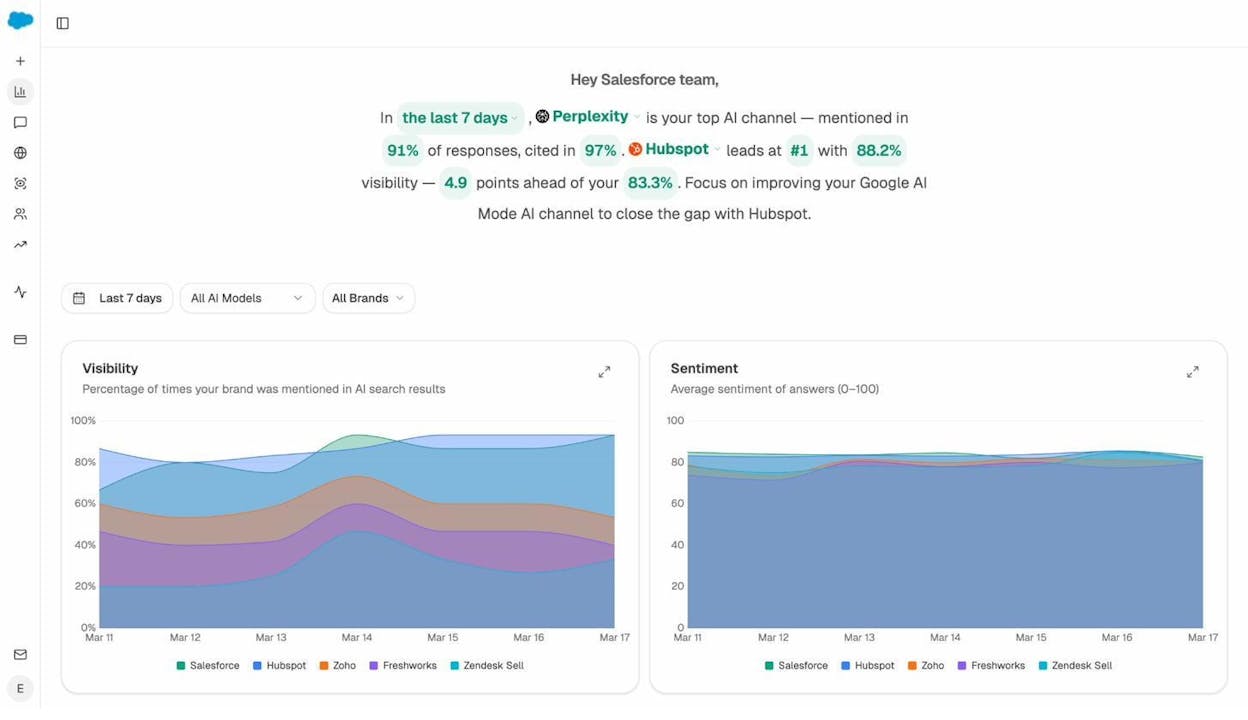
The Prompt Level Analytics view shows your visibility score, sentiment, and position for specific prompts across different AI engines over time. This is the equivalent of rank tracking, but for AI search.
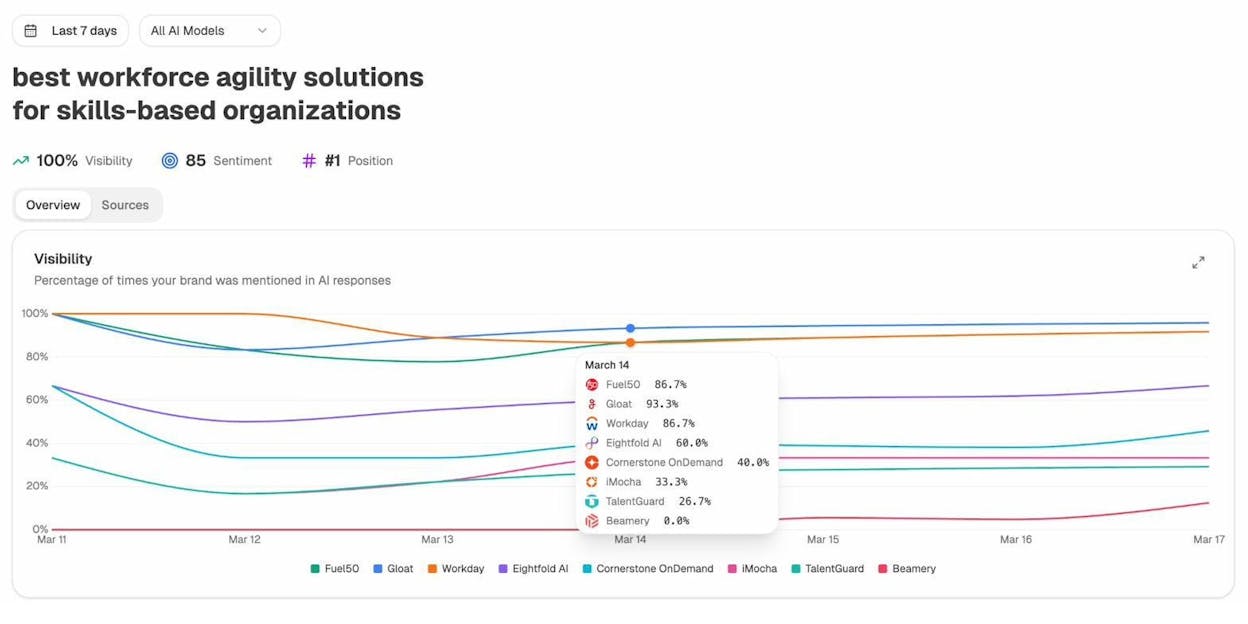
You can also use the tracked Prompts dashboard to monitor your visibility, sentiment, position, and which competitors appear alongside you across all your tracked prompts at a glance.
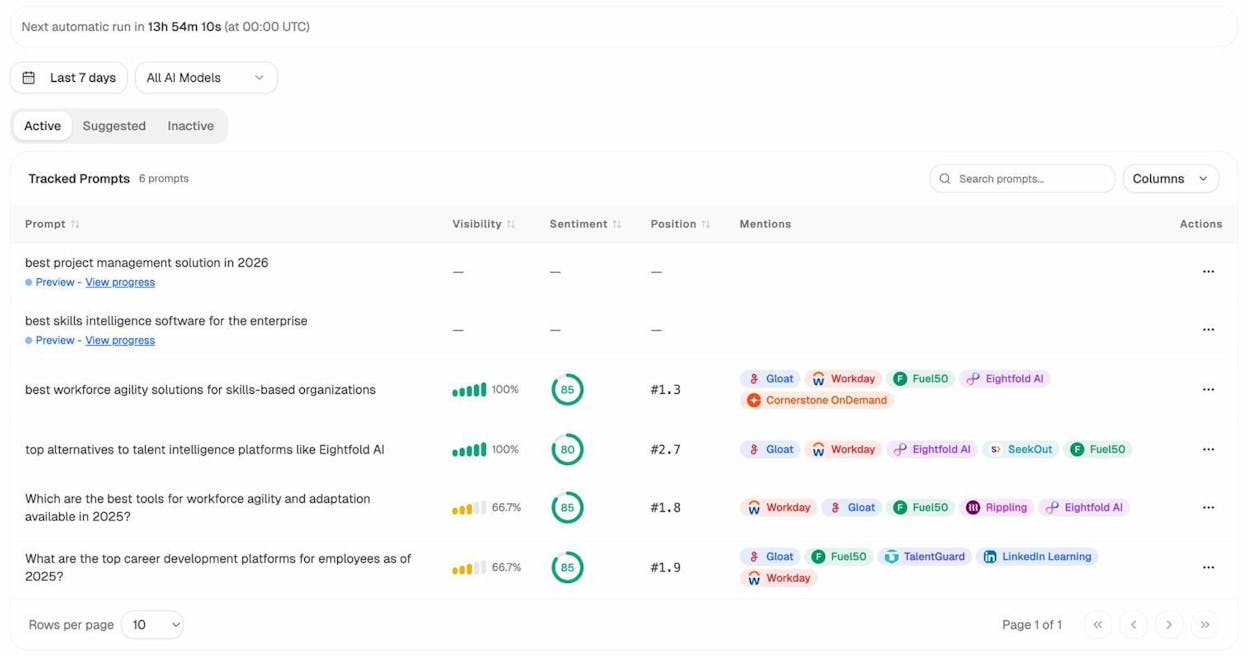
And for a complete picture, the main Overview dashboard gives you a high-level summary of your brand’s visibility and sentiment trends across all AI models and competitors over time.
Common Mistakes to Avoid
Building website authority is straightforward in theory, but several common mistakes can slow your progress or even hurt your site.
Buying links in bulk. Purchasing hundreds of links from low-authority sites or PBNs (private blog networks) can temporarily inflate your DR, but it carries serious risk. Google’s spam detection has become increasingly sophisticated, and a manual action can tank your rankings overnight. More importantly, low-quality links don’t build real authority — they create a hollow metric that doesn’t translate into rankings or AI visibility.
Ignoring link relevance. A link from a site in your industry is worth far more than a link from a completely unrelated site, even if the unrelated site has higher DR. Relevance matters both for traditional SEO and for AI search, where topical authority heavily influences which sources get cited.
Chasing DR as an end goal. DR is a proxy metric, not a business outcome. If your DR goes from 30 to 50 but your organic traffic and conversions stay flat, you haven’t actually accomplished anything. Always tie your authority-building efforts back to the pages and keywords that drive revenue. Run your site through Analyze AI’s Website Traffic Checker regularly to verify that authority gains are translating into actual traffic growth.
Neglecting content quality. No amount of link building can compensate for thin, generic content. In fact, the 2024 and 2025 Google core updates hit sites hard that had high authority but low content quality. And AI search engines are even more sensitive to content depth and originality, because they need substantive source material to generate useful answers.
Forgetting AI search entirely. Many marketers still treat link building as a Google-only activity. But the same authority signals also influence AI visibility. If you’re building links and earning mentions but not tracking your AI search performance, you’re missing a growing channel. AI referral traffic is increasing month over month for most categories, and the brands that build authority now will compound that advantage.
Not auditing for broken links. Dead links on your site waste the authority that backlinks are passing to you. If a high-authority page links to your resource, but that resource returns a 404, you’ve lost the value of that link entirely. Run your site through Analyze AI’s Broken Link Checker at least once a month to catch and fix broken links before they erode your authority.
A Practical 30-Day Authority Building Plan
If you want a structured approach to getting started, here’s a 30-day plan you can follow:
Week 1: Audit and Baseline
Start by checking your current authority score with Analyze AI’s Website Authority Checker — note your Domain Score, organic traffic, ranked keywords, and position distribution. Then check your referring domain count and top-linked pages in Ahrefs. Set up Analyze AI to baseline your AI search visibility across relevant prompts. Identify your 5 most important pages (the ones you most need to rank) and check their individual backlink profiles. Run a broken link audit to fix any dead links that might be leaking authority.
Week 2: Content Creation
Use the link-worthy topic research process outlined above to identify 2–3 content ideas with proven link-earning potential. Use the Keyword Generator and Keyword Difficulty Checker to validate topics before committing. Begin creating the first piece — prioritize original data, unique insights, or a comprehensive resource that improves on existing content.
![[Screenshot: Google search results with Ahrefs toolbar showing low RD count for top results — indicating a topic opportunity where your content can compete]](https://www.datocms-assets.com/164164/1774441681-blobid19.png?auto=format,compress&w=1248&fit=max)
Week 3: Outreach
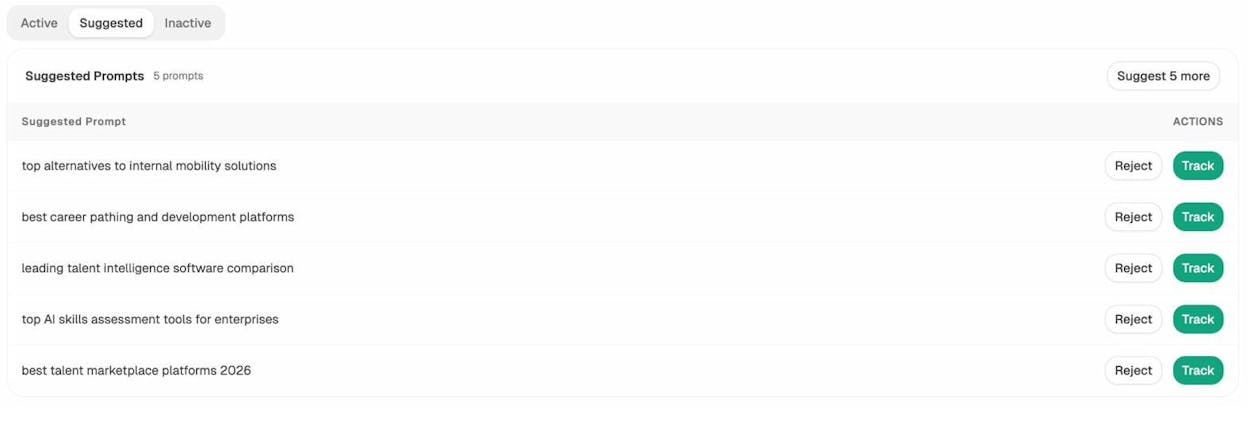
Publish your first link-worthy piece. Build a prospect list of 30–50 relevant sites for outreach. Send personalized outreach emails to people featured in your content, writers on the same topic, and sites linking to competing content. Review Analyze AI’s Prompt Suggestion feature to discover additional prompts where your brand could appear — and track them with one click.
Week 4: Internal Linking and Optimization
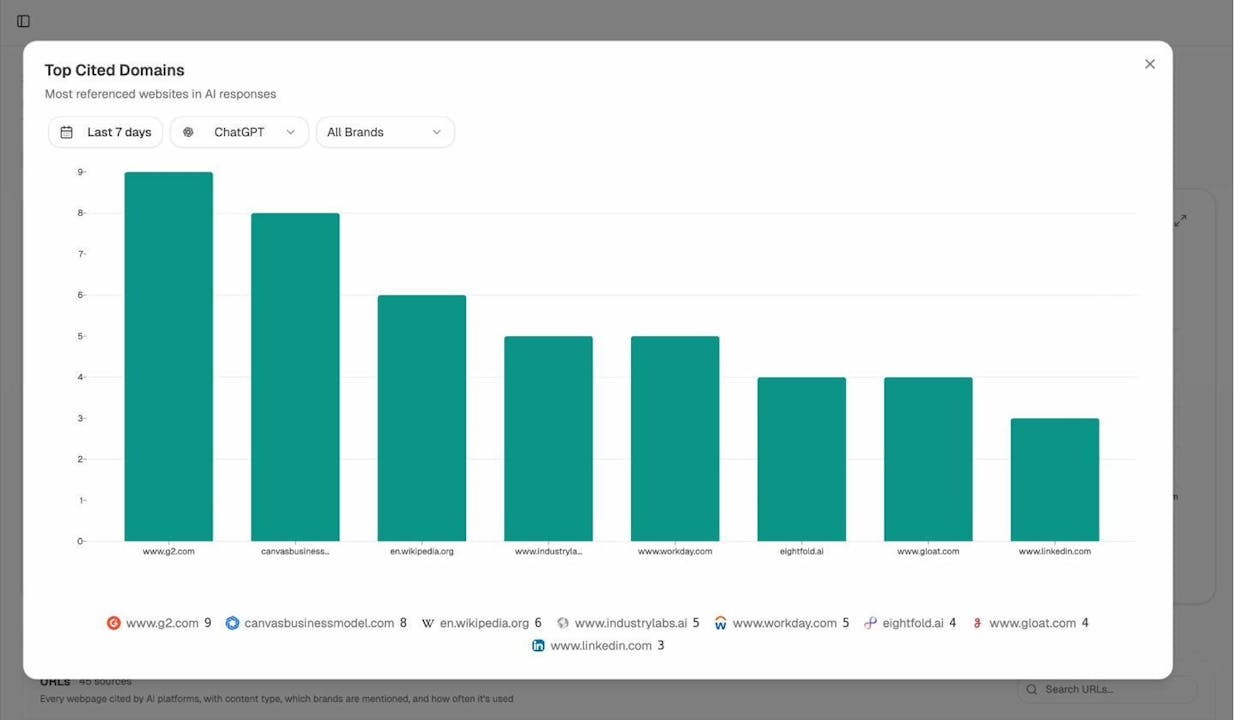
Add internal links from your new link-worthy content to your priority conversion pages. Audit existing high-authority pages for internal linking opportunities. Review Analyze AI’s Top Sources report to see which external domains AI engines currently cite most for your topic area, and prioritize earning mentions or links from those domains.
Repeat this cycle monthly. Authority compounds over time — each link-worthy piece you publish and promote adds to a growing asset that benefits every page on your site.
Analyze AI’s Free SEO and AI Search Tools
Throughout this guide, we’ve referenced several free tools that can help at each stage of your authority-building efforts. Here’s the full list in one place:
|
Tool |
What It Does |
Best Used For |
|---|---|---|
|
Domain score (0–100), traffic, ranked keywords, SERP position distribution |
Benchmarking your site and vetting link prospects |
|
|
Generate keyword ideas from a seed term |
Finding link-worthy content topics |
|
|
KD score (0–100) for any keyword |
Validating whether a topic attracts links |
|
|
See who ranks in the top 10 for any keyword |
Gauging competitive landscape before creating content |
|
|
Check which keywords a site ranks for |
Identifying priority pages for internal linking |
|
|
Estimated organic and paid traffic for any domain |
Evaluating competitor strength and tracking your own growth |
|
|
Find broken links on any page |
Preventing authority leaks from dead internal links |
|
|
Keyword research for YouTube |
Expanding authority-building to video content |
|
|
Keyword research for Bing |
Capturing authority signals beyond Google |
|
|
Keyword research for Amazon |
Finding product-related content opportunities |
Final Thoughts
Improving your website authority is never a wasted effort, but it should never be the goal in itself. The goal is better rankings, more traffic, and stronger brand visibility — both on Google and across the AI search engines that are increasingly shaping how people discover and evaluate brands.
Focus on building high-quality links from relevant, authoritative sources to the pages that matter most to your business. Create content worth citing. Promote it to the right people. Use internal links to distribute that authority strategically.
And don’t treat traditional SEO and AI search as separate channels. The authority you build for one reinforces the other. AI search is not replacing SEO — it’s the next evolution of it. The brands that recognize this and build authority across both channels will have a compounding advantage that’s very hard to catch. If you want to go deeper on this philosophy, explore our four pillars of an effective SEO strategy for the AI search era.
Track your progress with the right tools. Use Ahrefs or Semrush for traditional authority metrics, and Analyze AI to measure how that authority translates into AI search visibility and referral traffic.
The work is the same. The results now compound in more places.

Ernest

Ibrahim


![The Only SEO Checklist You Need in 2026 [With Template]](/_next/image?url=https%3A%2F%2Fwww.datocms-assets.com%2F164164%2F1774288228-image7.png&w=3840&q=75)

