



Summarize this blog post with:


In this article, you’ll get a step-by-step roadmap for learning SEO from scratch. You’ll understand how search engines find and rank pages, learn the four core pillars of SEO, and discover how to put that knowledge into practice on a real website. You’ll also learn how AI search fits into your SEO skill set (without replacing it), how to deepen your expertise, and how to stay current in an industry that changes every month.
Table of Contents
1. Learn the Fundamentals of SEO
Before you start optimizing pages or building links, you need to understand what SEO actually is and how search engines decide which pages to show.
SEO stands for search engine optimization. It is the practice of improving your website so it appears higher in organic (unpaid) search results. The higher you rank, the more people find your site. And unlike paid ads, organic traffic does not stop when you stop paying.
There are four core areas of SEO you need to learn. We will cover each one.
How Search Engines Work
Search engines like Google work in three steps. First, they discover pages. Then they crawl those pages (which means downloading the content). Finally, they store the pages in a massive database called an index. When someone types a query, Google pulls the best matching results from that index and ranks them.
This matters for a simple reason. If Google cannot find your page, it cannot index it. And if your page is not indexed, it will never appear in search results.
Google discovers pages through two main methods:
Sitemaps. A sitemap is an XML file that lists all the important pages on your site. You can submit your sitemap through Google Search Console to tell Google which pages exist.
Links from known pages. Google already has billions of pages in its index. When it finds a link on one of those pages pointing to your site, it follows that link and discovers your page. This is why internal linking matters too. If you publish a new blog post and link to it from your homepage, Google can follow that link to find the post.
![[Screenshot: Google Search Console sitemap submission screen showing a sitemap URL being submitted]](https://www.datocms-assets.com/164164/1777579148-blobid1.png?auto=format,compress&w=1248&fit=max)
Keyword Research
Keyword research is the process of finding what your potential customers are searching for. It matters because no matter how great your content is, if nobody is searching for your topic, you will not get organic traffic.
Google does not make this data freely accessible. So the best approach is to use a keyword research tool. Tools like Analyze AI’s Keyword Generator, Google Keyword Planner, or paid tools like Ahrefs and Semrush let you enter a broad topic related to your industry and see the actual keywords people are typing.
Here is how to do basic keyword research step by step:
Step 1. Start with seed keywords. These are broad terms related to your business. If you sell project management software, your seed keywords might be “project management,” “task tracking,” or “team collaboration.”
![[Screenshot: Google search bar with autocomplete suggestions showing for “project management”]](https://www.datocms-assets.com/164164/1777579156-blobid2.png?auto=format,compress&w=1248&fit=max)
Step 2. Expand your list with a keyword tool. Plug your seed keywords into a keyword research tool. You will see hundreds or thousands of related terms along with their monthly search volume (how many people search for that term each month) and keyword difficulty (how hard it is to rank).
![[Screenshot: A keyword research tool showing keyword suggestions with volume and difficulty metrics for “project management” related terms]](https://www.datocms-assets.com/164164/1777579164-blobid3.png?auto=format,compress&w=1248&fit=max)
Step 3. Filter by search intent. Not every keyword is worth targeting. Look at what the current top-ranking pages are doing. If the top results for a keyword are all product comparison articles and you want to rank a product page, that keyword probably won’t work for you. The top results tell you what Google thinks searchers want.
![[Screenshot: Google SERP showing results for a keyword to illustrate search intent analysis]](https://www.datocms-assets.com/164164/1777579166-blobid4.png?auto=format,compress&w=1248&fit=max)
Step 4. Prioritize by traffic potential. Search volume for a single keyword can be misleading. A page that ranks number one for “best project management tools” will also rank for hundreds of related terms like “top project management software” and “project management tool comparison.” Look at the total organic traffic the current top-ranking page gets. That is a better indicator of what you can expect.
Use the Analyze AI Keyword Difficulty Checker to quickly assess how hard a keyword will be to rank for. And the SERP Checker to study what is already ranking.
Learn more: SEO Keywords: How to Find and Use Them to Rank Higher
On-Page SEO
On-page SEO is about optimizing the actual content on your pages so search engines understand what the page is about and rank it for the right queries. It has two main components: matching search intent and optimizing on-page elements.
Search intent is the reason behind a search. When someone searches “best protein powder,” they want to compare options. They are not ready to buy yet. So the top results are all comparison blog posts, not product pages. If you tried to rank a product page for that keyword, you would struggle because it does not match what the searcher wants.
Before you write a single word, search your target keyword and study the top 10 results. Ask three questions:
-
What type of content ranks? (Blog posts, product pages, videos, tools)
-
What format do they use? (Listicles, how-to guides, opinion pieces)
-
What angle do they take? (Beginner-focused, data-driven, expert roundup)
Then create content that matches the dominant pattern while adding something the existing results are missing. This is what Animalz calls “information gain” and it is how smaller sites compete with larger ones.
On-page elements you should optimize include:
|
Element |
What to Do |
|---|---|
|
Title tag |
Include your primary keyword near the front. Keep it under 60 characters. |
|
Meta description |
Write a compelling summary under 155 characters. It does not directly affect rankings, but it affects click-through rate. |
|
H1 tag |
Use one H1 per page. It should closely match your title tag. |
|
Subheadings (H2, H3) |
Use them to structure your content logically. Include related keywords where natural. |
|
URL |
Keep it short, descriptive, and include your keyword. Use hyphens between words. |
|
Internal links |
Link to other relevant pages on your site. This helps Google discover pages and understand your site structure. |
|
Image alt text |
Describe each image accurately. This helps Google understand images and improves accessibility. |
![[Screenshot: An example blog post in a CMS with title tag, meta description, and heading hierarchy visible]](https://www.datocms-assets.com/164164/1777579172-blobid5.png?auto=format,compress&w=1248&fit=max)
Learn more: How to Use Keywords in SEO: 14 Practical Tips
Link Building
Link building is the process of getting other websites to link to yours. These links (called backlinks) are one of Google’s most important ranking factors. Think of each backlink as a vote of confidence from another site.
Not all backlinks are equal. A link from a high-authority, relevant website in your industry is worth far more than a link from a random, low-quality site. Quality matters more than quantity.
Here are the most effective link building strategies for beginners:
Guest posting. Write articles for other blogs in your industry. Most will let you include a link back to your site in your author bio or within the content.
Creating linkable assets. Original research, free tools, comprehensive guides, and data-driven studies naturally attract links because other writers reference them as sources. For example, if you publish a study on industry benchmarks, bloggers writing about that topic will link to your data.
Broken link building. Find pages in your niche that link to resources that no longer exist (404 errors). Reach out to the site owner and suggest your content as a replacement. You can use a broken link checker to find these opportunities.
Digital PR. Create newsworthy content (surveys, data studies, expert commentary) and pitch it to journalists. One mention in a major publication can drive dozens of high-quality backlinks.
The key insight about link building is that it gets easier over time. When your site has strong authority and great content, people start linking to you without being asked. Focus on creating content worth linking to, and the links will compound.
Learn more: The 9 Best Backlink Building Tools in 2026
Technical SEO
Technical SEO ensures that search engines can find, crawl, and index your content without any issues. If Google cannot access your pages, nothing else matters.
Here is what to focus on as a beginner:
Crawlability. Your robots.txt file tells search engines which pages they are allowed to crawl. Make sure you are not accidentally blocking important pages. You can check your robots.txt at yourdomain.com/robots.txt.
Indexability. Even if Google can crawl a page, you might be blocking it from being indexed with a “noindex” meta tag. Use Google Search Console’s URL Inspection tool to check if your pages are indexed.
Site speed. Slow pages frustrate users and can hurt your rankings. Google’s Core Web Vitals measure loading performance, interactivity, and visual stability. Use Google PageSpeed Insights to test your pages and get specific recommendations.
Mobile-friendliness. Google uses mobile-first indexing, meaning it primarily looks at the mobile version of your page when deciding how to rank it. If your site does not work well on phones, your rankings will suffer.
HTTPS. Your site should use HTTPS (the padlock icon in the browser). Google has confirmed this is a ranking signal, and users trust secure sites more.
Sitemaps and site structure. Submit an XML sitemap to Google Search Console. Keep your site architecture flat, meaning any page should be reachable within three to four clicks from the homepage. Use clear, logical URL structures.
![[Screenshot: Google PageSpeed Insights results page showing Core Web Vitals scores for a sample site]](https://www.datocms-assets.com/164164/1777579174-blobid6.png?auto=format,compress&w=1248&fit=max)
For an in-depth look at all types of SEO, including technical, on-page, and off-page, check our complete breakdown.
2. Understand How AI Search Fits In
Here is where most “learn SEO” guides stop. But we are in 2026, and ignoring AI search means ignoring a growing share of how people find information.
Let’s be direct about something: SEO is not dead. Google still processes billions of searches per day. Organic search still drives the majority of website traffic for most businesses. What has changed is that a new organic channel has emerged alongside it.
Millions of people now ask questions to AI search engines like ChatGPT, Perplexity, Google AI Overviews, Claude, and Copilot. These AI models read the web, synthesize information, and give direct answers. When they do, they often cite sources. Those citations drive real traffic. And the brands that show up in those citations are getting a new stream of visitors they were not getting before.
This is not about replacing your SEO strategy. It is about adding another layer to it. The Analyze AI manifesto puts it simply: the way buyers find you is changing, but the reason they choose you is not. Quality content still wins. It just needs to work for AI models too, not just Google.
What Makes AI Search Different from Traditional SEO
In traditional SEO, you optimize a page to rank for a keyword. The output is a list of blue links. In AI search, a user asks a question in natural language. The AI reads multiple sources, synthesizes an answer, and cites the pages it used.
This creates a few important differences:
No fixed “position 1.” AI answers do not have a consistent order like Google’s search results page. Your brand might be cited first in one response and third in another, depending on the question and the AI model.
Citations are the new rankings. Getting cited by ChatGPT or Perplexity means your page was used as a source in the AI’s response. That citation often includes a clickable link, and it drives traffic.
The queries are longer and more conversational. People do not type “best CRM” into ChatGPT. They ask “What is the best CRM for a 50-person sales team that integrates with Slack?” AI search handles these long, specific queries much better than traditional search.
Multiple AI platforms matter. Unlike Google (which dominates traditional search), AI search is split across ChatGPT, Perplexity, Google AI Mode, Claude, Gemini, and Copilot. Each one works slightly differently.
How to Start Learning AI Search Optimization
If you are learning SEO, adding AI search to your skill set is straightforward because the foundations are the same. Clear, well-structured, authoritative content that ranks well in Google tends to get cited by AI models too.
But there are specific things you can learn and track:
Discover which prompts mention your brand. Tools like Analyze AI let you track the actual prompts (questions) people ask AI platforms and see which brands get mentioned in the responses. This is the AI search equivalent of keyword research.
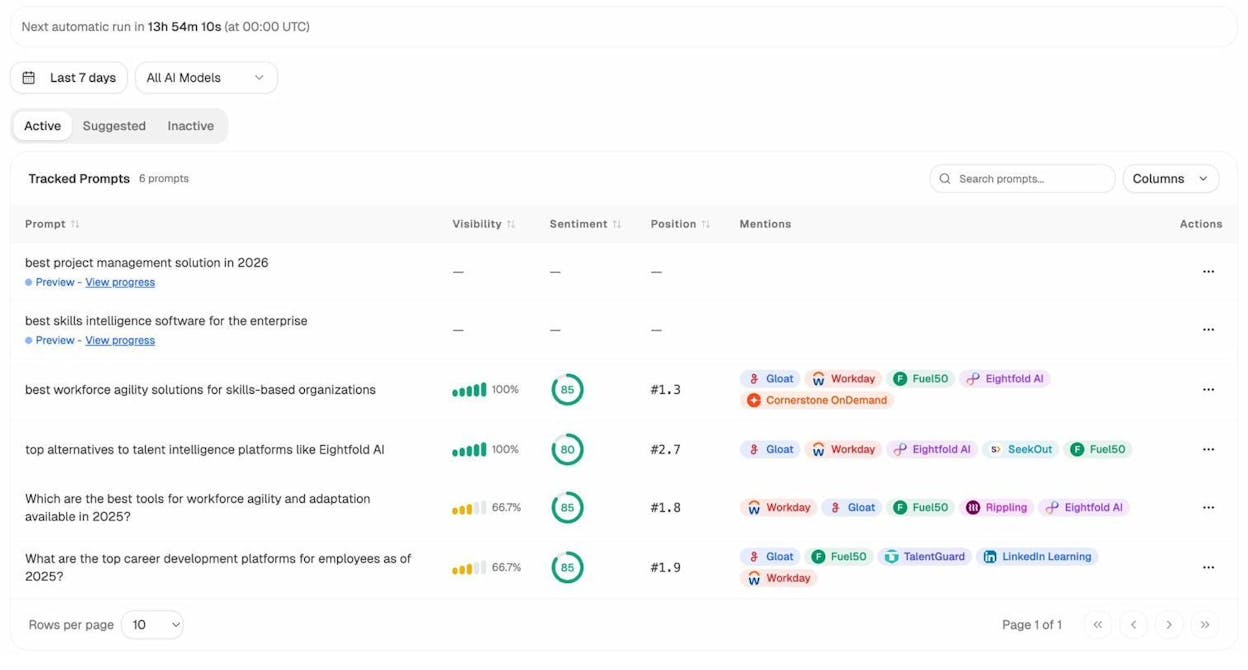
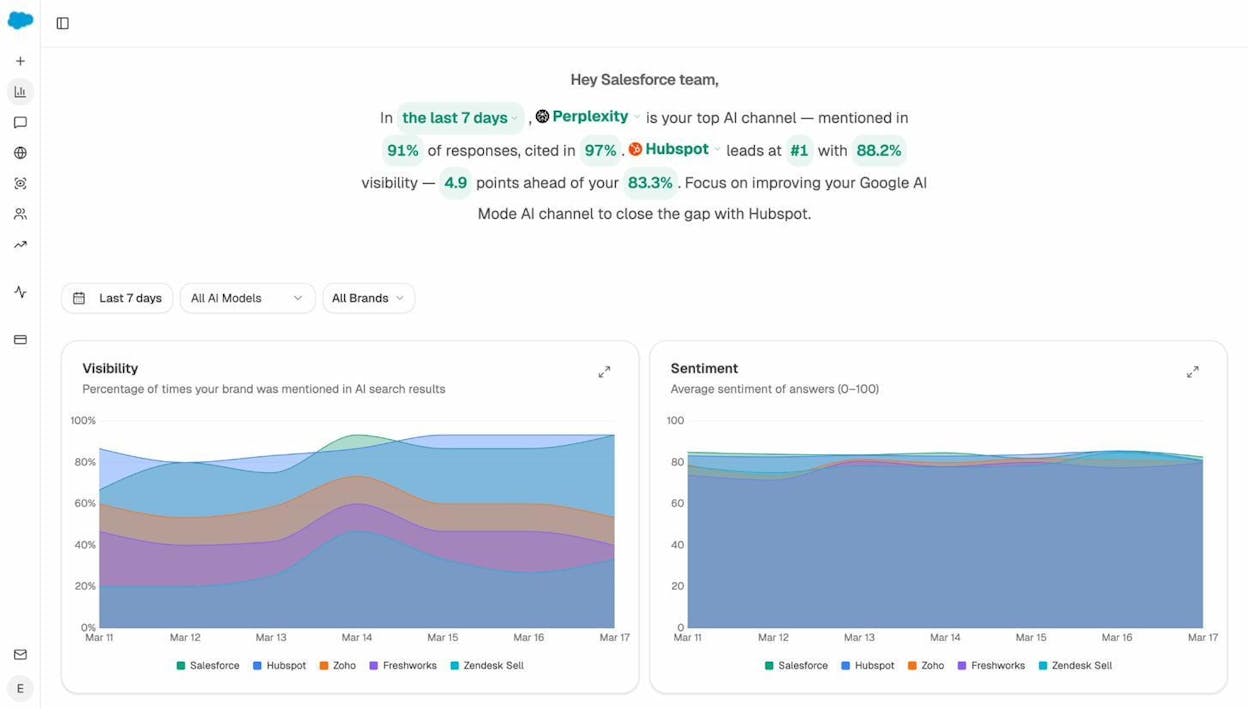
Track your visibility across AI engines. Just like you would track your Google rankings with a rank tracker, you can track how often your brand appears in AI search results. Analyze AI’s AI Visibility Tracking monitors your brand mentions across ChatGPT, Perplexity, Gemini, Claude, and Google AI Mode.
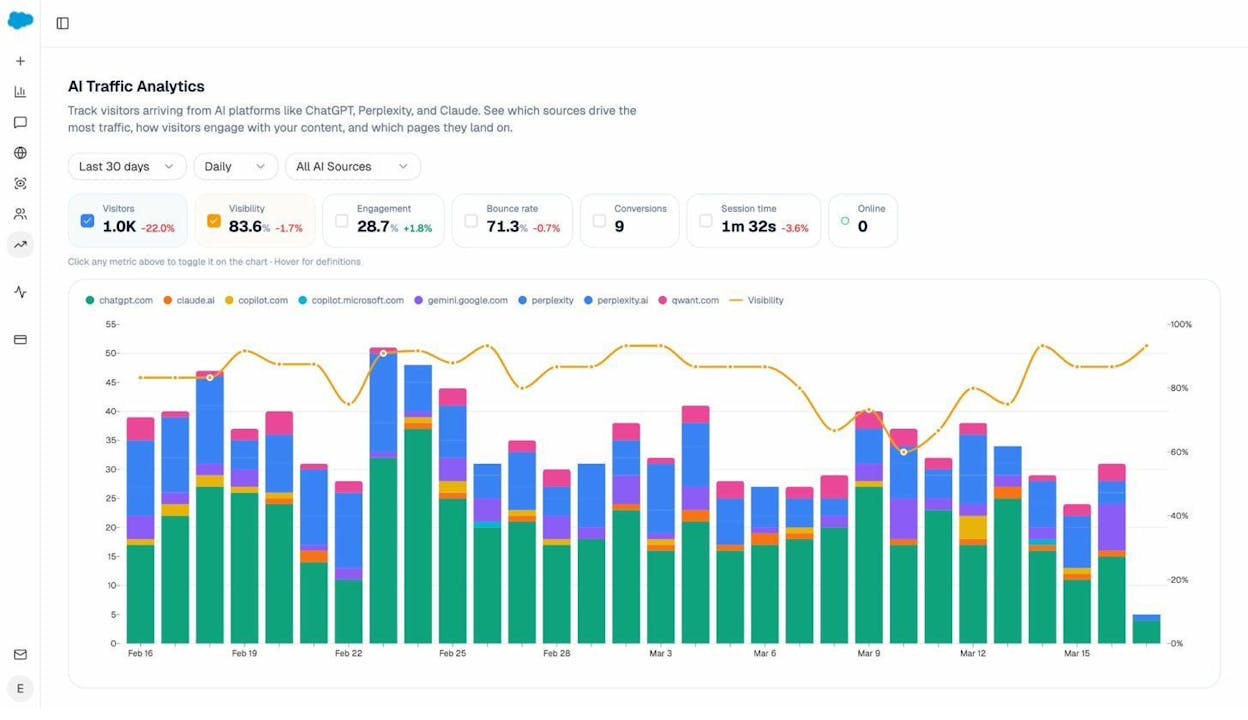
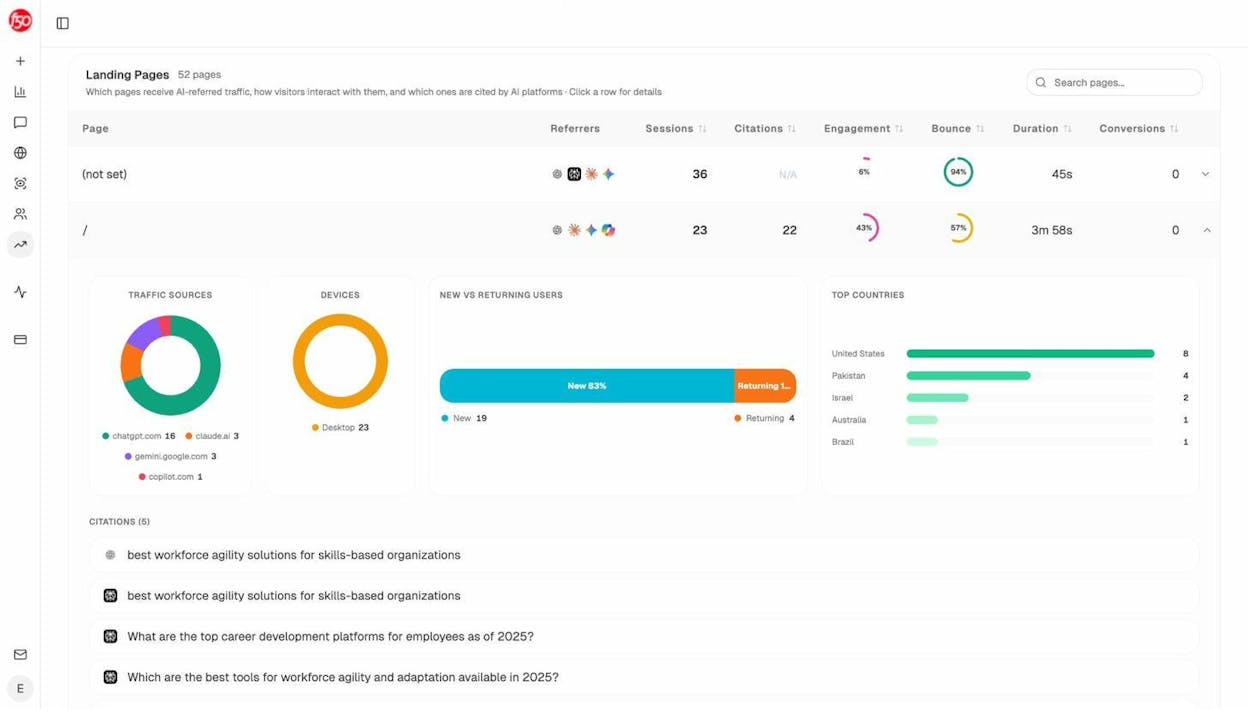
Understand your AI traffic. If AI chatbots are citing your pages, some of those users click through to your website. Analyze AI’s AI Traffic Analytics shows you exactly which pages are getting traffic from AI referrals, which AI platforms are driving it, and whether those visitors convert.
The bottom line: learning SEO in 2026 means learning traditional SEO as your foundation and adding AI search optimization as another organic channel. They reinforce each other. Good SEO content gets cited by AI. And content that AI platforms cite consistently often ranks well in Google too.
Learn more: What Is Generative Engine Optimization (GEO)? and GEO vs SEO: Key Differences & Similarities Explained
3. Put Your Knowledge into Practice
Reading about SEO is a good start. But you will learn more from optimizing one real website than from reading ten more articles. Theory becomes real when you see the results (or the lack of results) in your own data.
Start a Practice Website
Pick a topic you genuinely care about. It does not have to be related to your job. Fitness, cooking, personal finance, gaming, travel tips for your city. Whatever you will enjoy writing about. The topic matters less than the commitment to publish consistently.
Here is a practical launch plan:
Week 1: Set up the technical foundation.
-
Buy a domain and set up hosting. Use WordPress, Webflow, or whatever platform you are comfortable with.
-
Install Google Analytics 4 and Google Search Console.
-
Submit your sitemap to Google Search Console.
-
Make sure your site is on HTTPS, mobile-friendly, and loads fast.
![[Screenshot: Google Search Console dashboard showing a newly verified property with the sitemap submission section]](https://www.datocms-assets.com/164164/1777579190-blobid10.png?auto=format,compress&w=1248&fit=max)
Week 2-3: Do keyword research and plan your first 10 posts.
-
Use a keyword research tool to find 10 keywords in your niche with moderate search volume and low-to-medium difficulty.
-
Check search intent for each one by studying the top 10 results on Google.
-
Create a simple content calendar.
Use Analyze AI’s Keyword Generator to brainstorm keyword ideas, and the Keyword Difficulty Checker to assess competition.
Week 4+: Start publishing and building links.
-
Write and publish one to two posts per week.
-
Optimize each post for on-page SEO (title tag, meta description, headings, internal links, images).
-
Build a few links through guest posting or digital PR.
-
Track your rankings in Google Search Console.
Learn from What Works (and What Doesn’t)
Here is where real learning happens. After two to three months of publishing, you will start seeing patterns.
Some posts will get traffic. Others will sit on page 3 forever. Some will rank quickly. Others will take months to climb. The posts that rank well will teach you about keyword difficulty and content quality. The ones that do not rank will teach you about competition and search intent mismatches.
The most valuable SEO lesson I ever learned came from a mistake. I rewrote the copy on a page that was already ranking well, and the rankings dropped within a week. That taught me something no blog post ever could: if a page is working, do not change what is working about it.
Practice AI Search Optimization Too
While your practice site is building organic Google traffic, also track how AI search engines handle your niche.
Use Analyze AI’s Ad Hoc Prompt Searches to ask specific questions related to your topic and see which brands get mentioned. This gives you a real-time view of what AI models consider authoritative in your niche.
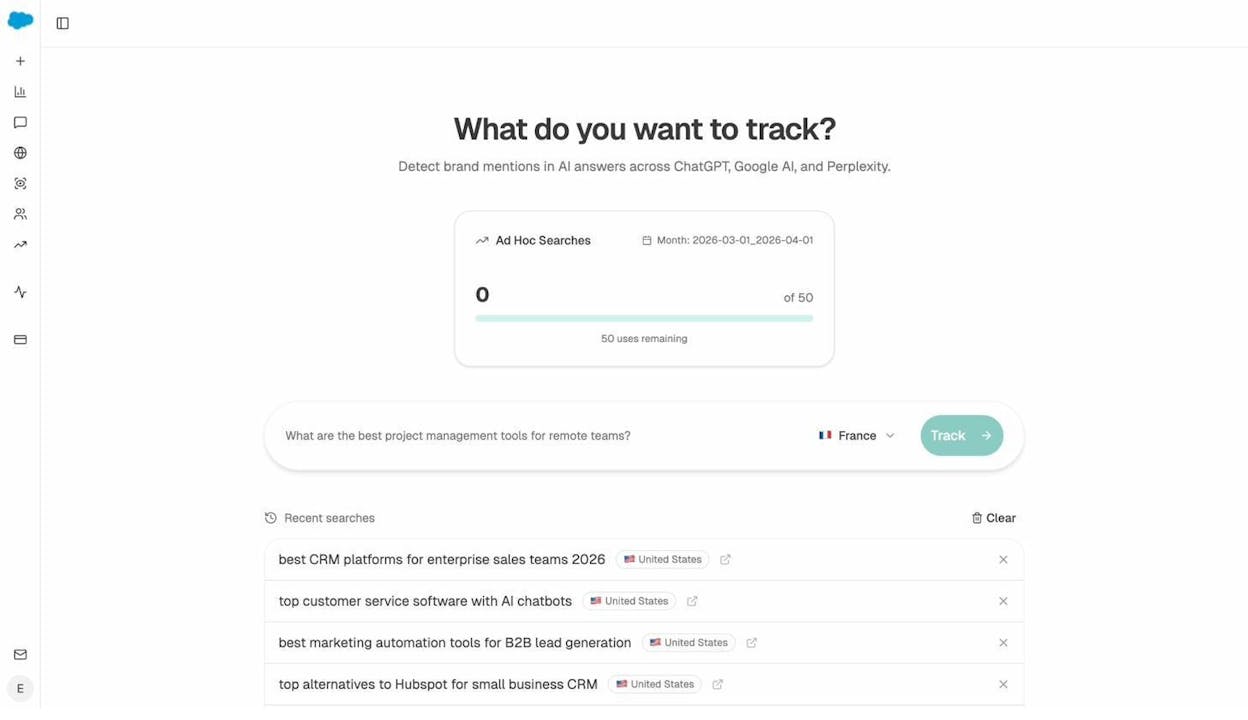
Study the pages that AI models cite most often. What do they have in common? They tend to be well-structured, factual, and comprehensive. They often come from domains with strong authority. And they almost always rank well in Google too. That overlap is what makes learning both SEO and AI search together so effective.
Learn more: How to Rank on ChatGPT? Based on 65,000 Citation Data and How to Rank on Perplexity AI? Based on 65k Citation Data
4. Deepen Your SEO Knowledge
SEO is too broad for anyone to master every part of it equally well. After you spend time in the trenches and see which aspects you enjoy most, it is time to specialize.
This is called becoming a T-shaped SEO. You maintain a broad understanding of all four pillars (keyword research, on-page SEO, link building, technical SEO) while going deep in one area.
|
Specialty |
What it Involves |
Good Fit If You… |
|---|---|---|
|
Technical SEO |
Site architecture, crawl optimization, Core Web Vitals, structured data, JavaScript rendering |
Enjoy problem-solving and have a developer mindset |
|
Content/On-page SEO |
Content strategy, search intent analysis, on-page optimization, content audits |
Are a strong writer who thinks strategically about topics |
|
Link Building |
Outreach, digital PR, linkable asset creation, relationship building |
Are a strong communicator and enjoy networking |
|
Keyword Research |
Market analysis, competitor research, keyword clustering, forecasting |
Are analytical and love working with data |
|
Local SEO |
Google Business Profile, local citations, review management, local content |
Work with businesses that serve specific geographic areas |
Going deep in one area does not mean ignoring the others. It means knowing enough about everything to have informed conversations, but being the person others turn to for one specific thing.
Some SEOs go even more specific. Instead of “technical SEO” as a whole, they specialize in site migrations, or Core Web Vitals, or international SEO. This kind of hyperspecialization makes you the go-to expert for that niche problem. It is an especially good strategy if you are building a career as an SEO consultant.
Go Deep on AI Search as a Specialty
AI search optimization is emerging as a new area of specialization. If you are learning SEO today, getting deep experience in this area gives you a skill set that is still relatively rare.
Here is what going deep on AI search looks like:
Learn how AI models select and cite sources. Our analysis of 83,670 AI citations reveals patterns in what gets cited. Understanding these patterns helps you create content that AI platforms reference more often.
Study the competitive landscape in AI search. Use Analyze AI’s Competitor Intelligence to see which competitors appear in AI responses for prompts in your industry. Identify gaps where competitors get mentioned and you do not. Those gaps are your opportunities.
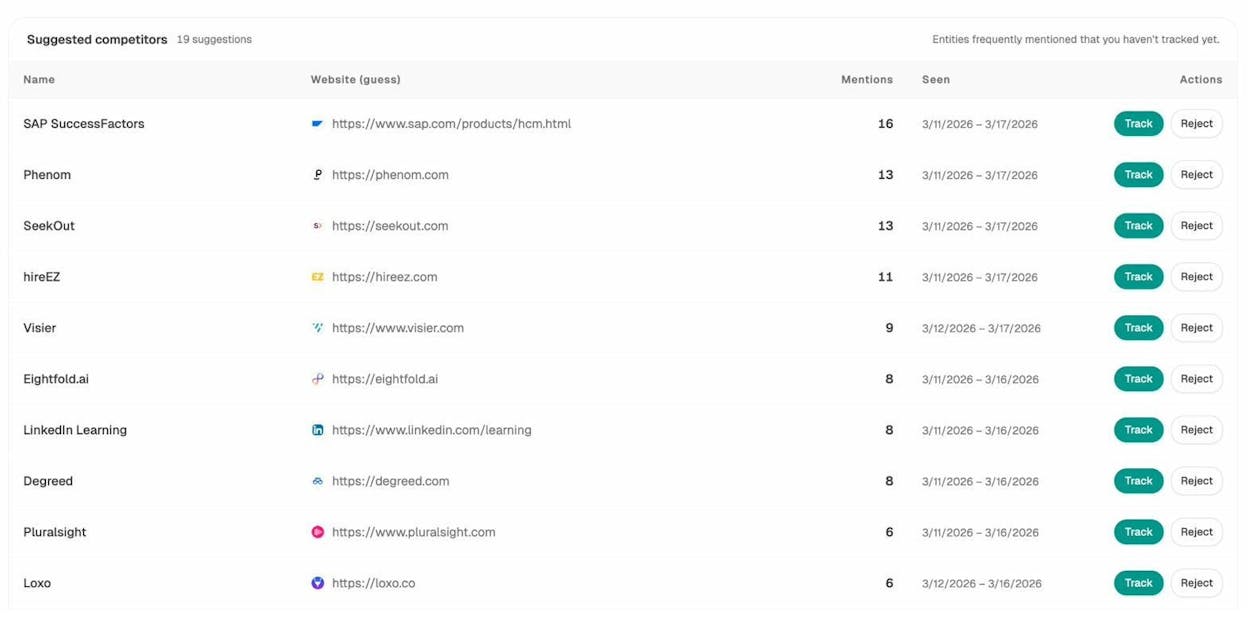
Learn to read AI search data. Understanding AI visibility metrics (visibility percentage, sentiment score, citation count, position rank) takes practice, just like learning to read Google Analytics. Spend time with Analyze AI’s dashboard and you will start to see patterns in how your brand appears across different AI engines.
Learn more: How To Get Mentioned in AI Search (From 65k Citations Data) and Answer Engine Optimization: 8 AEO Strategies
5. Track and Measure Your Results
You cannot improve what you do not measure. Tracking is where many beginners fall short because the tools can feel overwhelming at first. But once you know which metrics actually matter, it becomes straightforward.
Essential SEO Metrics to Track
Organic traffic. The number of visitors coming from search engines. Track this in Google Analytics 4 under Acquisition > Traffic Acquisition. Filter by “Organic Search.”
Keyword rankings. Which positions do your target keywords hold in Google? Track this with Google Search Console (free) or a dedicated keyword rank checker.
Click-through rate (CTR). The percentage of people who see your page in search results and actually click. Find this in Google Search Console under Performance. Low CTR on a high-ranking page usually means your title tag or meta description needs work.
Backlinks and referring domains. How many other websites link to you, and from how many unique domains? Use the Analyze AI Website Authority Checker for a quick overview.
Conversions. SEO is not just about traffic. It is about traffic that does something valuable, like signing up, purchasing, or contacting you. Set up conversion tracking in Google Analytics 4 so you can tie your SEO work to business outcomes.
Track AI Search Performance Too
On top of traditional SEO metrics, you now have AI search metrics to monitor:
AI visibility. What percentage of relevant AI prompts mention your brand? This is the AI search equivalent of “ranking position” in traditional SEO.
AI citations. How often do AI platforms cite your actual URLs as sources? Track which of your pages get cited most often and double down on what works.
AI referral traffic. How many visitors reach your website from AI platforms? Analyze AI’s AI Traffic Analytics shows you this broken down by platform (ChatGPT, Perplexity, Claude, Gemini, Copilot) along with engagement metrics and conversions.
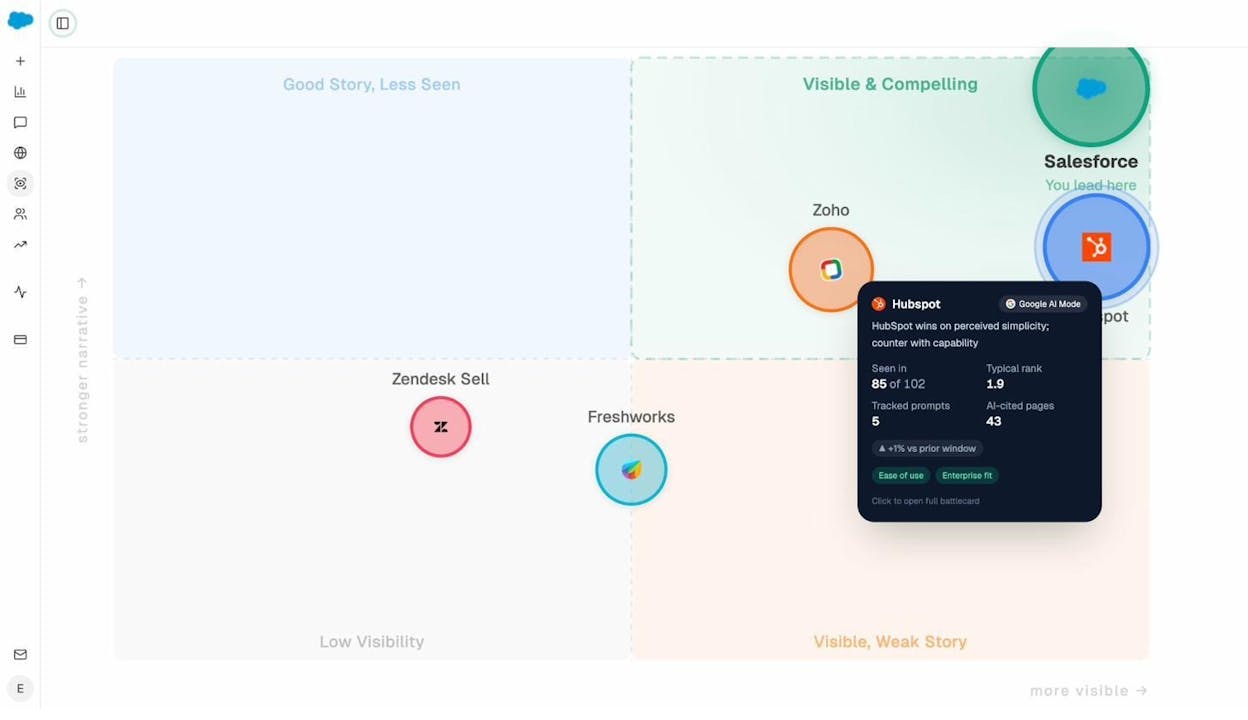
AI sentiment. How positively or negatively do AI platforms describe your brand? This is a metric that does not exist in traditional SEO. Analyze AI’s Sentiment Monitoring and the Perception Map visualize where your brand sits relative to competitors on two axes: visibility and narrative strength.
If you see a page driving strong AI traffic, that is a signal to create more content like it. If you see competitors getting cited in AI responses for prompts where you are absent, that is an opportunity to create content that fills the gap.
Learn more: SEO Reporting Tools: 8 Free Options and Best Tools for Tracking Visibility in AI Search
6. Keep Your Finger on the Pulse
The fundamentals of SEO are stable. Good content, solid technical foundation, quality backlinks. These have mattered for 20 years and they will keep mattering. But the details change constantly. Google rolls out algorithm updates multiple times per year. New features appear in search results. AI search platforms evolve rapidly.
Staying current does not mean reading every SEO blog post published every day. It means having a few reliable sources that filter the noise for you.
Read High-Quality SEO Blogs
Not all SEO content is worth your time. A lot of it is recycled advice written by people who have never ranked a website. Focus on blogs that publish original insights, data studies, and tested strategies.
A few worth following:
-
Ahrefs Blog publishes original data studies and practical SEO tutorials backed by real examples.
-
Animalz focuses on content strategy for B2B companies and consistently publishes frameworks you can apply right away.
-
Grow and Convert specializes in content marketing that drives actual conversions, not just traffic.
-
Search Engine Land covers industry news and Google updates as they happen.
-
Google Search Central Blog is the official source for Google algorithm updates and search guidance.
For AI search, the Analyze AI blog publishes data-driven research on AI citations, visibility trends, and practical optimization strategies.
Listen to SEO Podcasts
Podcasts are useful because you can learn while commuting or exercising. A few solid options:
-
Search Off the Record (Google’s official podcast) gives direct insights from the search team.
-
Authority Hacker shares detailed case studies and interviews with practitioners.
-
Niche Pursuits covers site building and SEO tactics that work today.
Join SEO Communities
The best way to get unstuck on a specific problem is to ask someone who has solved it before. There are active communities on platforms like Reddit (r/SEO, r/bigseo), Facebook groups, and Slack communities for SEOs.
What matters is finding communities where people share real results rather than just opinions. Look for groups where members post their own case studies, traffic reports, and experiments.
Follow Official Sources
Google announces algorithm updates and search changes through a few channels:
-
Google Search Central Blog for official announcements.
-
Google SearchLiaison on X for real-time updates on how Google search is working.
-
Google Search Console will notify you directly if there are issues with your site.
For AI search, follow the announcements from OpenAI, Perplexity, Google (for AI Overviews and AI Mode), and Anthropic. These platforms change fast, and new features can shift how citations and traffic work.
Subscribe to Weekly Digests
If checking multiple sources feels like too much, subscribe to a couple of weekly email digests that summarize the most important changes.
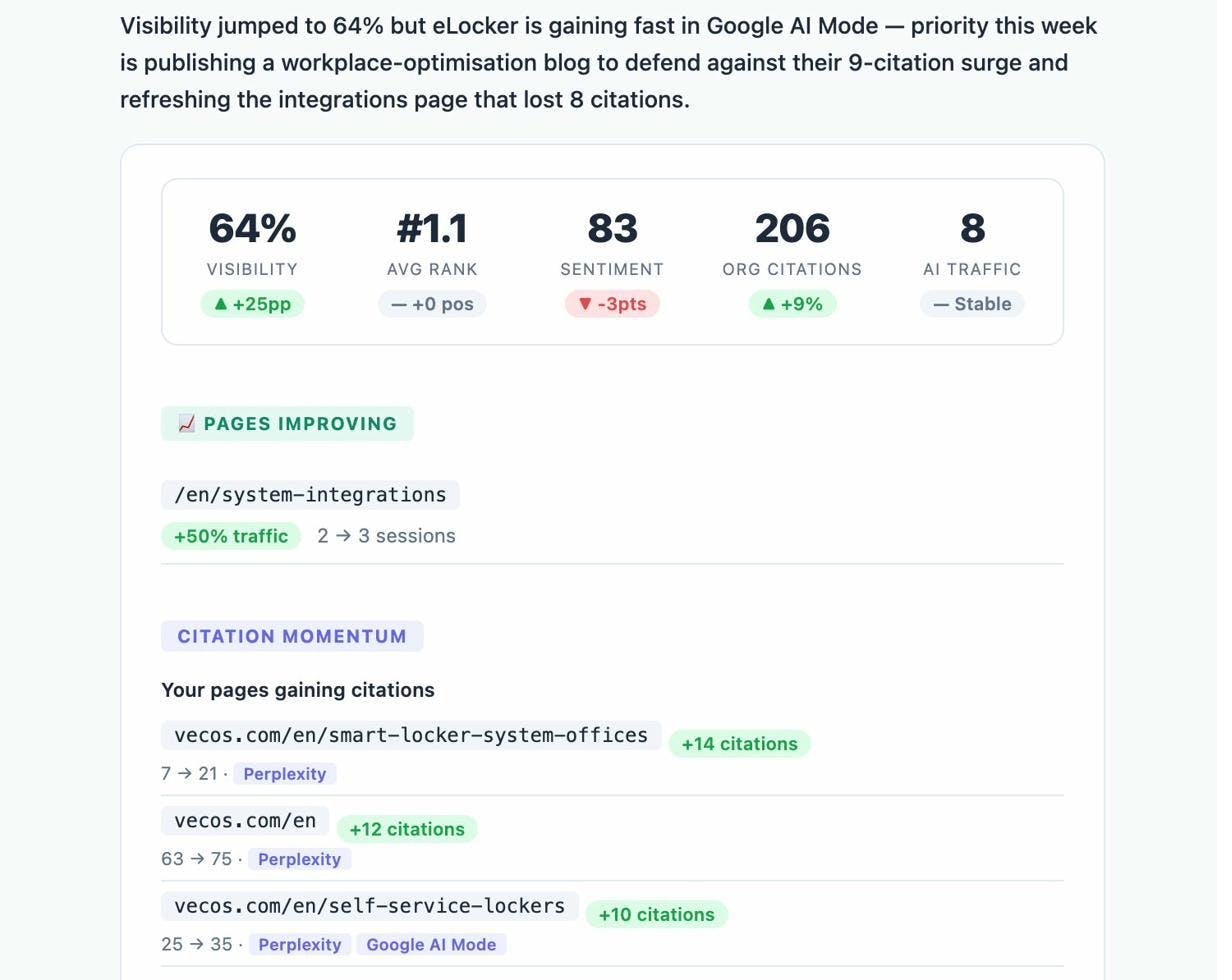
Analyze AI’s Weekly Email Digests are especially useful because they send you a summary of your own brand’s AI visibility performance each week. Instead of logging into a dashboard daily, you get a concise report showing visibility changes, page performance, and competitor movements.
7. Teach Others What You Know (Optional)
This step might sound counterintuitive. You are trying to learn more, not teach. But explaining a topic to someone else is one of the most effective ways to solidify your own understanding.
When you write a blog post explaining how to do keyword research, you quickly discover the gaps in your knowledge. The parts you struggle to explain clearly are the parts you need to learn more about. And when you publish your explanation publicly, people will let you know if you got something wrong. That feedback loop accelerates your learning.
You do not have to start a blog or YouTube channel. You can teach in smaller ways:
-
Answer questions in SEO communities and forums.
-
Write internal documentation for your team about SEO processes.
-
Present what you have learned at a team meeting.
-
Create a case study of your own practice site’s growth.
If you are thick-skinned enough to share publicly, the additional accountability and feedback is worth the vulnerability. Some of the best-known SEOs in the industry built their reputations by sharing their experiments and results online.
One important caveat: do not teach SEO unless you have either researched a topic thoroughly or are sharing personal experience. The SEO industry already has too much misinformation. Make it clear when you are sharing tested knowledge versus sharing hypotheses.
Where to Go from Here: A Practical Study Plan
If you are starting from zero, here is a 12-week plan that puts this roadmap into action:
|
Week |
Focus |
Actions |
|---|---|---|
|
1-2 |
Fundamentals |
Study how search engines work. Read Google’s SEO Starter Guide. Set up your practice site with Google Analytics and Search Console. |
|
3-4 |
Keyword Research |
Use free keyword tools to research 20 keywords in your niche. Study search intent for each one. Prioritize 10 to write about first. |
|
5-6 |
On-Page SEO & Content |
Write and publish your first 4-5 posts. Optimize title tags, meta descriptions, headings, and internal links. |
|
7-8 |
Technical SEO |
Run a site audit on your practice site. Fix any crawl errors, broken links, or speed issues. Set up your sitemap and check indexing. |
|
9-10 |
Link Building |
Reach out to 10-15 sites for guest posting or link opportunities. Create one linkable asset (original data, tool, or comprehensive guide). |
|
11-12 |
AI Search & Measurement |
Set up AI search tracking with Analyze AI. Review your Google Analytics and Search Console data. Identify what is working and what needs improvement. |
After 12 weeks, you will not be an SEO expert. But you will have a functioning website, real data to learn from, and a clear picture of which area of SEO you want to go deeper in.
Tools You’ll Need Along the Way
Here is a quick reference of free tools that cover the basics:
|
Tool |
Purpose |
|---|---|
|
Monitor your site’s presence in Google search. See which queries drive traffic, check indexing, submit sitemaps. |
|
|
Track website traffic, user behavior, and conversions from all sources including organic search. |
|
|
Brainstorm keyword ideas based on seed terms. |
|
|
Assess how hard it will be to rank for a specific keyword. |
|
|
See what currently ranks for any keyword without personalized results. |
|
|
Check where your site ranks for specific keywords. |
|
|
Check domain authority for your site and competitors. |
|
|
Estimate any website’s organic traffic. |
|
|
Find broken links on your site or a competitor’s site for link building opportunities. |
|
|
Analyze page speed and Core Web Vitals. |
For AI search tracking and optimization, Analyze AI’s platform covers prompt discovery, visibility tracking, AI traffic analytics, competitor intelligence, citation analytics, and content optimization.
Final Thoughts
SEO is not something you learn in a weekend. It takes months of reading, testing, and iterating before you start to see consistent results. But the fundamentals are simpler than the industry makes them sound. Create content people want. Make sure Google can find and index it. Get other sites to link to it. And now, make sure it works for AI search too.
The biggest mistake beginners make is reading endlessly without doing anything. The second biggest mistake is ignoring AI search because it feels too new or too different from what they already know.
Neither extreme is right. Learn the fundamentals. Build something real. Track what works. And treat AI search as what it is: another organic channel that compounds alongside your traditional SEO efforts.
For a deeper look at building an SEO content strategy that covers both traditional search and AI search, check our 10-step breakdown. And if you want to understand the 4 pillars of an effective SEO strategy for AI search, that guide breaks down everything in detail.

Ernest

Ibrahim


