



Summarize this blog post with:


In this article, you’ll learn how to start a blog from scratch and turn it into a real income stream. We’ll walk through picking a profitable niche, setting up your site for free (or close to it), finding topics that bring traffic from Google and AI search engines, creating content that ranks, and promoting your blog without spending on ads. Every step includes the exact tools and tactics you need so you can take action today.
Table of Contents
1. Find a Profitable Niche
Your niche determines your ceiling. Pick the wrong one and you’ll write hundreds of posts that never earn a dollar. Pick the right one and a single article can pay your rent.
Here are niches with a proven track record of profitability:
|
Niche |
Typical content |
Blog example |
Last reported monthly income |
|---|---|---|---|
|
Food and cooking |
Recipes, cookware reviews, meal planning |
Pinch of Yum |
$95,196 |
|
Personal finance |
Investing, budgeting, retirement, debt payoff |
Millennial Money |
$33,473 (average) |
|
Parenting |
Product reviews, child-raising advice, kid activities |
The Soccer Mom Blog |
$11,288 |
|
Tech |
Software reviews, buying guides, how-tos, deals |
99signals |
$5,242 |
|
Health and wellness |
Fitness, nutrition, mental health, beauty |
Hot Beauty Health |
$9,655 |
|
Travel |
City guides, gear reviews, digital nomadism |
Local Adventurer |
$41,000 |
|
Entrepreneurship |
Making money online, starting a business, courses |
Smart Passive Income |
$166,559 |
|
DIY/Crafts |
Tutorials, handcraft projects, product reviews |
Jennifer Maker |
$15,158 |
|
Lifestyle |
Home organization, productivity, life hacks |
Abby Organizes |
$41,700 |
|
Fashion |
Outfit ideas, style tips, gift guides |
Chic Pursuit |
$11,376 |
|
Pets |
Pet health, training tips, product reviews |
You Did What With Your Weiner |
$7,720 |
|
Personal development |
Motivation, psychology, financial freedom |
Let’s Reach Success |
$6,652 |
What if your niche is not on this list?
Check these three things before committing:
First, look for affiliate programs. Search “[your niche] affiliate program” on Google. If you find programs with decent commissions (5% to 50%), you have a monetization path. Amazon Associates alone covers thousands of product categories.
![[Screenshot: Google search results for “board games affiliate program” showing multiple affiliate program options]](https://www.datocms-assets.com/164164/1777503536-blobid1.png?auto=format,compress&w=1248&fit=max)
Second, check if competitor blogs are running ads. Visit a few blogs in your niche. If they display ads from Mediavine, AdThrive, or Google AdSense, they are making money from traffic. You can check their estimated traffic using our free website traffic checker to get a rough sense of their revenue. Most blogs earn between $0.01 and $0.25 per pageview from ads.
![[Screenshot: Analyze AI website traffic checker showing traffic estimate for a competitor blog]](https://www.datocms-assets.com/164164/1777503544-blobid2.png?auto=format,compress&w=1248&fit=max)
Third, look at sponsored content. If brands in your niche are paying for sponsored posts on other blogs, they’ll eventually pay you too once you build an audience.
Does your niche need to be something you are passionate about? Not necessarily. The best scenario is that your interests overlap with a profitable niche. But plenty of successful bloggers treat their sites purely as businesses and hire writers to produce content. The key is picking a niche where money flows and sticking with it long enough to see results.
2. Find a Unique Angle
There are over 600 million blogs on the internet. If you write the same content as everyone else, you’ll blend into the noise. A unique angle is what makes readers pick your blog over the other ten in their search results.
Here are angles that work:
Write from personal experience. A parenting blog from a pediatric nurse carries more weight than one from a random content mill. Readers can tell the difference. Google’s E-E-A-T guidelines reward first-hand experience, and so do AI models that pull from authoritative sources.
Serve a specific segment. Instead of writing a generic cooking blog, focus on budget meals for college students, or allergen-free recipes for families. Specificity reduces competition and builds a loyal audience.
Go deeper than anyone else. Most blog posts skim the surface. If you can write the most thorough, most detailed guide on a topic, you’ll win both in search rankings and reader trust. This is what Grow and Convert calls the “detail principle.” The best blog posts back up every claim with examples, data, or step-by-step walkthroughs.
Fill a gap in the blogosphere. Browse the top 10 results for your target keywords. What is everyone missing? Maybe every travel blog covers the same popular destinations but none of them write about off-season travel in lesser-known regions. That gap is your opening.
Use original visuals. Most readers skim. Custom infographics, original photos, and short video walkthroughs catch attention and earn backlinks. Stock photos do neither.
Think of your angle as a brand promise. It is the reason someone bookmarks your blog instead of just reading one post and leaving.
3. Choose a Monetization Method
You need a plan for making money before you write your first post. Not because you’ll earn on day one, but because your monetization method shapes the kind of content you create.
Here are nine proven ways bloggers make money:
|
Method |
How it works |
Typical rate |
|---|---|---|
|
Advertising |
Display ads on your blog. Get paid per impression or click. |
$0.01 to $0.25 per pageview |
|
Affiliate marketing |
Promote products with a unique link. Earn a commission on every sale. |
5% to 50% per sale (some programs go up to 90%) |
|
Sponsored content |
Brands pay you to publish content about their product. |
$25 to $1,000+ per article |
|
Selling digital products |
Sell ebooks, templates, printables, or tools. |
$9 to $97+ per product |
|
Online courses |
Create and sell a course on your topic. |
$50 to $1,000+ per sale |
|
Memberships |
Charge a monthly or annual fee for premium content. |
$10 to $100 per month |
|
Freelance writing |
Use your blog as a portfolio to land paid writing gigs. |
$0.10 to $1.00 per word |
|
Coaching and consulting |
Offer one-on-one sessions based on your expertise. |
$50 to $250+ per hour |
|
Selling the blog |
Build it up and sell the entire site to a buyer. |
Average sale price is around $101,000 according to Empire Flippers |
Most bloggers combine two or three of these methods. A food blog might run display ads, promote kitchen tools through affiliate links, and sell a recipe ebook. A tech blog might earn from affiliate reviews and sponsored content.
One note on affiliate marketing. If you recommend tools related to AI search visibility or SEO software, many platforms offer generous commissions. For example, Analyze AI’s affiliate program pays 20% recurring commission for every customer you refer. Programs like these add up quickly because the commissions repeat every month the customer stays subscribed.
Start with the method that has the lowest barrier. Affiliate marketing requires no inventory and no product creation. Ads require traffic volume (most premium ad networks want at least 50,000 monthly sessions). Courses and memberships require an established audience. Pick what fits your stage and expand from there.
4. Come Up With a Name
Your blog name is your brand. It should be simple, memorable, and relevant to your niche.
Here are the rules that matter:
Keep it short. Two to three words is ideal. Short names are easier to type, easier to remember, and easier to fit on social media profiles.
Make it easy to spell and pronounce. If you have to explain how to spell your domain name over the phone, it is too complicated.
Avoid trend-based names. Trends fade. A name like “2025BlogTips” locks you into a year. Pick something timeless.
Check domain availability first. Before you fall in love with a name, see if the .com is available. A .com domain is still the most trusted extension. If the exact .com is taken, try slight variations before switching to .net or .co.
Does an “SEO-optimized” domain name help? Google has said there is no ranking boost for exact-match or partial-match domains. So choose a name for brand reasons, not for keyword stuffing. “BudgetBites” is a good food blog name because it communicates value. Not because it contains a keyword.
5. Choose a Blogging Platform and Set Up Your Domain
You have two paths here.
Self-hosted (WordPress.org). You buy hosting separately, install WordPress for free, and have full control over your site. This is what 40% to 45% of all websites use. It is free, customizable, has plugins for everything (including SEO), and you own your content completely. You can find a full comparison of options in our best blogging platforms guide.
Hosted platforms (Wix, Squarespace, Weebly). Everything is bundled. Easier to start, but you get less control and fewer customization options.
For a blog you plan to monetize, self-hosted WordPress is the better choice. Here is why:
You can get hosting, a domain, and an SSL certificate for as little as $18 to $36 per year from budget hosting providers like Hostinger, Namecheap, or SiteGround’s starter plan. That package typically includes unlimited bandwidth, one-click WordPress installation, and a free SSL certificate.
![[Screenshot: Example invoice from a hosting provider showing domain + hosting + SSL for under $40/year]](https://www.datocms-assets.com/164164/1777503552-blobid3.jpg?auto=format,compress&w=1248&fit=max)
Compare that to hosted platforms:
Wix starts at $17/month ($204/year) for the plan that removes Wix branding and lets you use a custom domain. Squarespace starts at $16/month ($192/year). WordPress.com (the hosted version) starts at around $4/month ($48/year) for a personal plan.
Self-hosting gives you more control at a fraction of the cost. And when your blog grows, you can upgrade your hosting plan without rebuilding your site.
Pro tip: Choose a hosting provider with servers in the country where you want the most traffic. A US-based server loads faster for US visitors. Speed matters for both user experience and search rankings.
6. Design Your Blog
You do not need a custom design to start. Most successful bloggers launch with a free or premium WordPress theme and customize it later.
When choosing a theme, focus on five things:
Speed. A slow site kills your rankings and your reader’s patience. Google uses page speed as a ranking factor. Test any theme you are considering with Google PageSpeed Insights before installing it.
![[Screenshot: Google PageSpeed Insights showing a fast-loading WordPress theme scoring above 90]](https://www.datocms-assets.com/164164/1777503555-blobid4.png?auto=format,compress&w=1248&fit=max)
Mobile responsiveness. Over 60% of web traffic comes from mobile devices. Your blog must look good and work well on phones and tablets.
Clean layout. Avoid flashy designs with heavy animations. Clarity wins. Readers come for content, not for visual effects.
Ad-friendly structure. If you plan to monetize with display ads, pick a theme that has clear spots for ad placements in the sidebar, header, and within content.
SEO-friendly code. Good themes generate clean HTML with proper heading hierarchy (H1, H2, H3) and schema markup support. Themes like Astra, GeneratePress, and Kadence are popular choices for SEO-focused blogs.
Marketplaces like ThemeForest offer premium WordPress themes for $30 to $60. But honestly, free themes from Astra or GeneratePress are good enough to start. You can invest in a custom design once your blog is generating income.
7. Find Topics With Search Traffic Potential
This is where most bloggers go wrong. They write about whatever comes to mind. They publish a post on “My Thoughts on Morning Routines” and wonder why nobody reads it.
The fix is keyword research. Instead of guessing, you find out what people actually search for, how much traffic those queries get, and how hard it would be to rank for them. Then you write content that answers those searches.
How to do keyword research for a new blog
Since your blog is new and has no authority yet, you want to target low-competition keywords first. These are queries where smaller, newer sites already rank in the top 10.
Here is the process step by step:
Step 1: Start with seed keywords. Think of broad terms related to your niche. For a food blog, that could be “recipe,” “meal prep,” “slow cooker,” “air fryer,” “vegan dinner.” For a personal finance blog, that could be “budgeting,” “save money,” “investing,” “credit score.”
Step 2: Expand your seed keywords using a keyword tool. Enter your seeds into a keyword research tool to generate hundreds of related keyword ideas with traffic estimates. You can use our free keyword generator to get started.
![[Screenshot: Analyze AI keyword generator tool showing keyword ideas for “meal prep” with search volume data]](https://www.datocms-assets.com/164164/1777503559-blobid5.png?auto=format,compress&w=1248&fit=max)
For deeper research, tools like Keywords Explorer (paid) let you filter by keyword difficulty so you can focus on terms where a new blog has a realistic chance of ranking.
Step 3: Filter for low-difficulty keywords. Set your filters to show keywords with a difficulty score below 20 and a monthly search volume of at least 200. This gives you keywords that bring meaningful traffic but are not dominated by massive authority sites.
![[Screenshot: Keyword research tool showing filtered results with low KD and decent search volume]](https://www.datocms-assets.com/164164/1777503564-blobid6.png?auto=format,compress&w=1248&fit=max)
Step 4: Check search intent. Before writing for any keyword, Google it. Look at the top 10 results. Are they blog posts, product pages, or videos? If the top results are all product pages and you are writing a blog post, skip that keyword. Your content type needs to match what Google already rewards for that query.
![[Screenshot: Google SERP for “salad bowl” showing product pages vs “salad bowl recipes” showing blog posts]](https://www.datocms-assets.com/164164/1777503571-blobid7.png?auto=format,compress&w=1248&fit=max)
Step 5: Steal ideas from competitors. Find blogs in your niche that already rank well. Check what keywords they rank for using our free keyword rank checker. This reveals topics you might not have thought of and shows you what works in your niche.
![[Screenshot: Analyze AI keyword rank checker showing keywords a competitor food blog ranks for]](https://www.datocms-assets.com/164164/1777503580-blobid8.png?auto=format,compress&w=1248&fit=max)
You can also use our SERP checker to analyze the top results for any keyword and see the domain authority of ranking pages. If sites with low authority rank in the top 10, that is a green light for your new blog.
For a full breakdown of the process, check our guide on SEO keywords and how to find and use them.
How to find topics that get traffic from AI search
Here is what most blogging guides miss. Millions of people now search through ChatGPT, Perplexity, Claude, and Google AI Overviews. These AI engines pull answers from web content and cite sources. If your blog is one of those sources, you get traffic you would never see in traditional analytics.
The topics that perform well in AI search tend to share certain qualities. They are comprehensive and clearly structured. They provide factual, up-to-date information. They come from sites that demonstrate expertise and authority.
You can use Analyze AI’s Prompt Discovery feature to see what prompts people are asking AI engines in your niche. This reveals the exact questions your target audience types into ChatGPT and Perplexity.
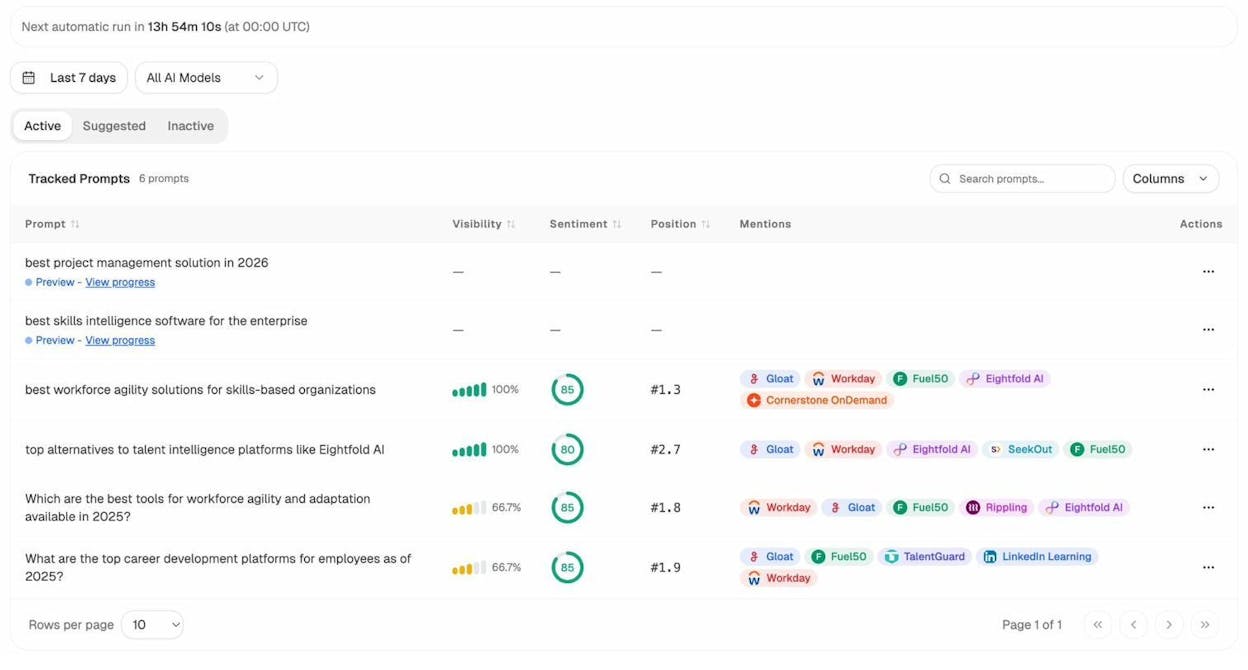
For example, if you run a CRM blog, you can see prompts like “best CRM platforms for enterprise sales teams” along with which brands get mentioned, their visibility percentage, and their position in the AI response.
You can also run ad hoc prompt searches to test any question across multiple AI engines and see which brands and URLs get cited.
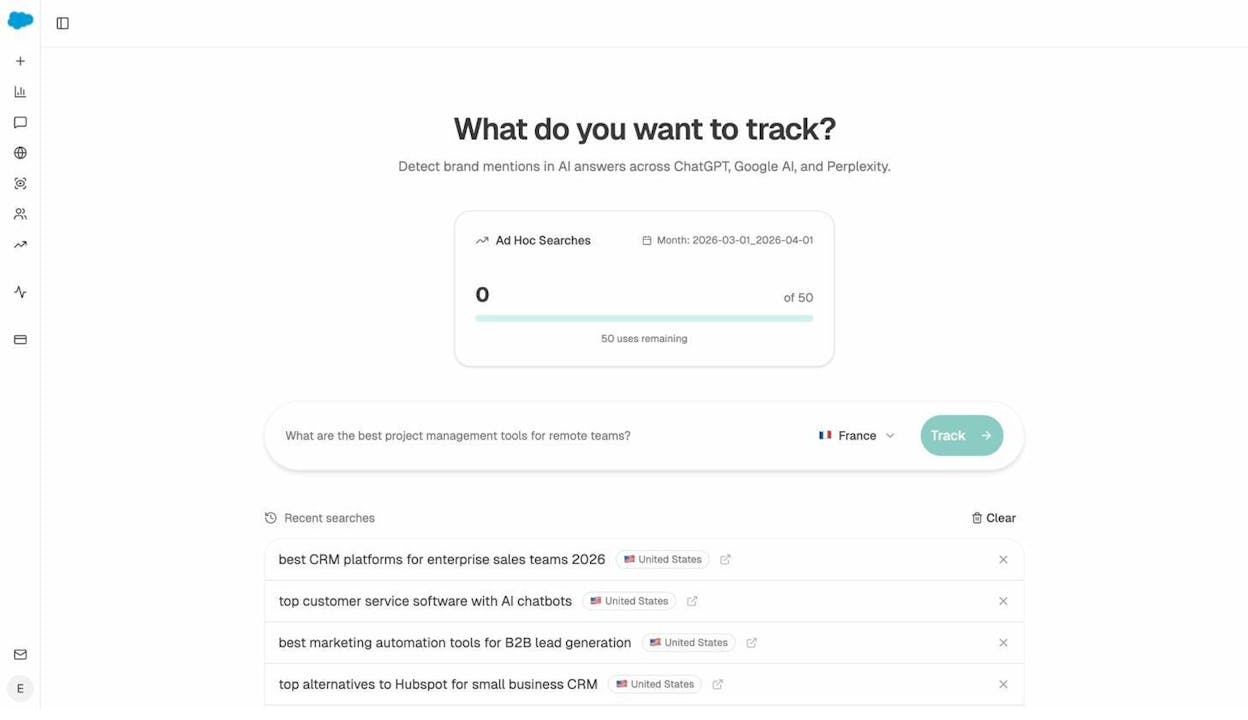
This is like keyword research for AI search. It tells you where the opportunities are, which competitors already dominate, and where gaps exist for your content.
For more on this, read our guide on how to get mentioned in AI search.
8. Create an Editorial Calendar
A content calendar keeps your topics organized, your publishing schedule on track, and your priorities straight. Without one, you will either forget good keyword ideas or publish randomly with no strategy.
You do not need fancy software. Free tools like Notion, Trello, Asana, or even Google Sheets work fine for a one-person blog.
Here is what to track for every topic in your calendar:
Target keyword. The primary search term you are optimizing for.
Search volume and difficulty. So you can prioritize the easiest wins first.
Content type. Is this a listicle, a how-to guide, a review, or a comparison post?
Due date and status. Draft, in review, published, needs update.
Traffic potential. The estimated traffic you could get if you rank in the top 3.
Notes. Any specific angles, subtopics, or internal links to include.
![[Screenshot: Example content calendar in Notion showing a database of topics with keyword, status, volume, and due date columns]](https://www.datocms-assets.com/164164/1777503590-blobid11.png?auto=format,compress&w=1248&fit=max)
How many posts should you publish per week? According to a study from Orbit Media, bloggers who publish two to six times per week are 50% more likely to report strong results. But quality always beats quantity. One thorough, well-researched post per week will outperform five shallow ones.
Start with one post per week. Increase your output once you have a repeatable process and can maintain quality.
9. Create Optimized Blog Posts
This is where most of the work happens. And where most bloggers cut corners.
Creating a blog post that ranks is not just about writing. It is about understanding what the searcher wants, organizing your content to match that intent, and covering the topic more thoroughly than anyone else on page one.
Match the content format and angle to search intent
Before writing, check the top 10 results for your target keyword. Look at two things.
Content format. Are the top results listicles, tutorials, guides, recipes, or comparison posts? If every result is a listicle, write a listicle. Do not fight the format that Google clearly favors for that query.
Content angle. The angle is what makes a result stand out in the SERPs. Look at the title tags of top results. You’ll see angles like “for beginners,” “free,” “in 2026,” “step-by-step,” “with examples.” Find an angle that is not already used and apply it to your post.
![[Screenshot: Google SERP for “how to make money online” showing different title angles used by top-ranking results]](https://www.datocms-assets.com/164164/1777503593-blobid12.png?auto=format,compress&w=1248&fit=max)
Decide what to include in your post
The best-ranking blog posts are not the longest. They are the most complete.
Here is how to figure out what belongs in your article:
Analyze the structure of top-ranking posts. Open the top 3 to 5 results for your keyword. Look at their H2 and H3 headings. Note what subtopics they all cover. These are the baseline expectations. Your post should cover them too.
![[Screenshot: Browser showing the heading structure of a top-ranking article for a target keyword]](https://www.datocms-assets.com/164164/1777503603-blobid13.png?auto=format,compress&w=1248&fit=max)
Find secondary keywords. Tools like Keywords Explorer show you “also rank for” keywords. These are the secondary terms that top-ranking pages also rank for. Covering these in your content makes it more relevant to Google and increases your total organic traffic.
![[Screenshot: Keyword tool showing “also rank for” secondary keywords]](https://www.datocms-assets.com/164164/1777503603-blobid14.png?auto=format,compress&w=1248&fit=max)
Add original value. This is the part that separates great content from copycat content. Include your own data, original screenshots, personal experience, expert quotes, or unique frameworks. Google’s helpful content guidelines reward content that brings something new to the conversation. And AI models prefer citing sources that contain original, factual information.
Check out our full guide on how to write an article for a step-by-step writing process with examples.
Use a content optimization tool
After writing your draft, run it through a content optimization tool to check whether you have covered the right topics and included the right terms.
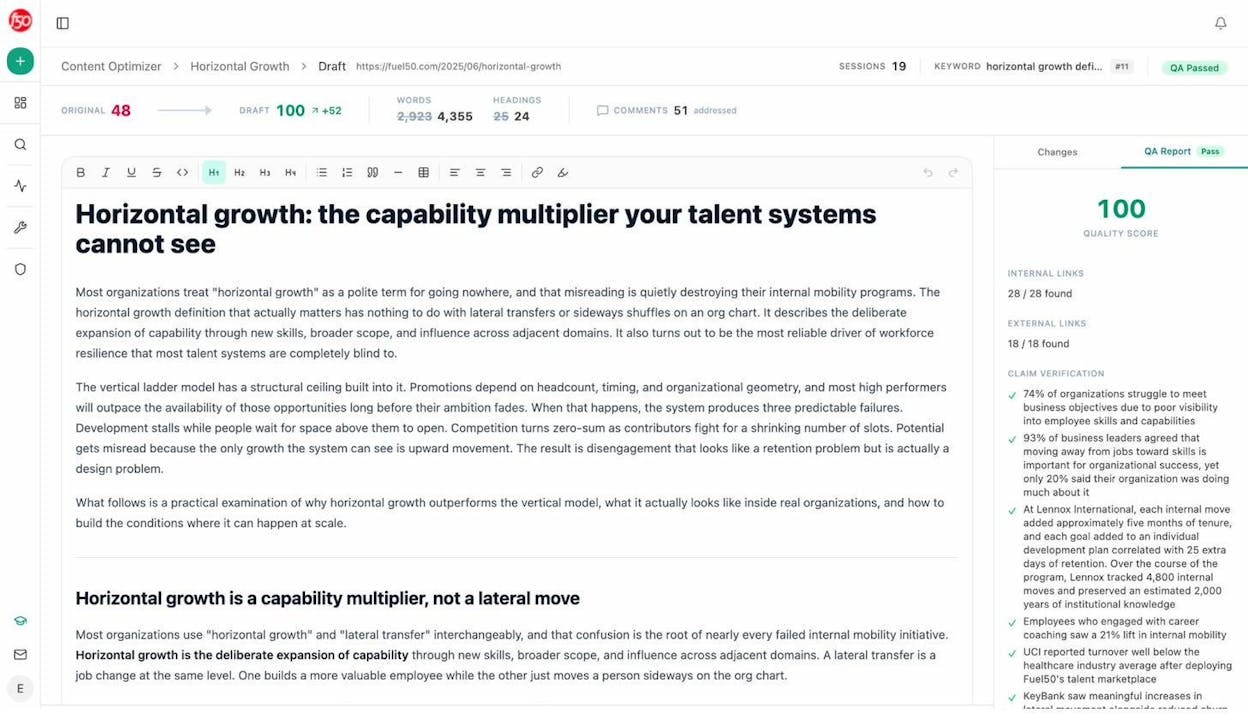
Analyze AI has a built-in Content Optimizer that fetches your existing page (or draft), scores it on argument and flow, clarity and polish, and identifies content gaps compared to top-ranking competitors.
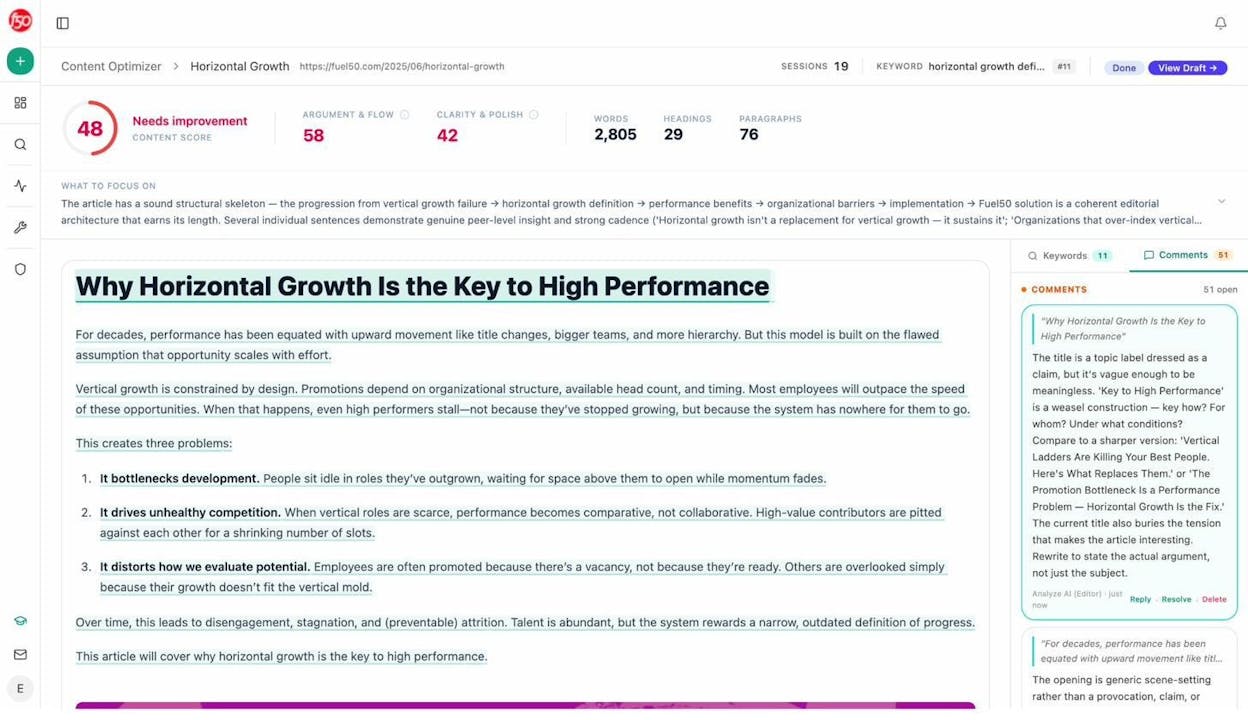
The tool generates AI editorial comments on your content, pointing out where arguments are weak, where flow breaks, and where you can strengthen claims with data. It also shows optimization ideas based on gaps between your content and what top-ranking pages cover.
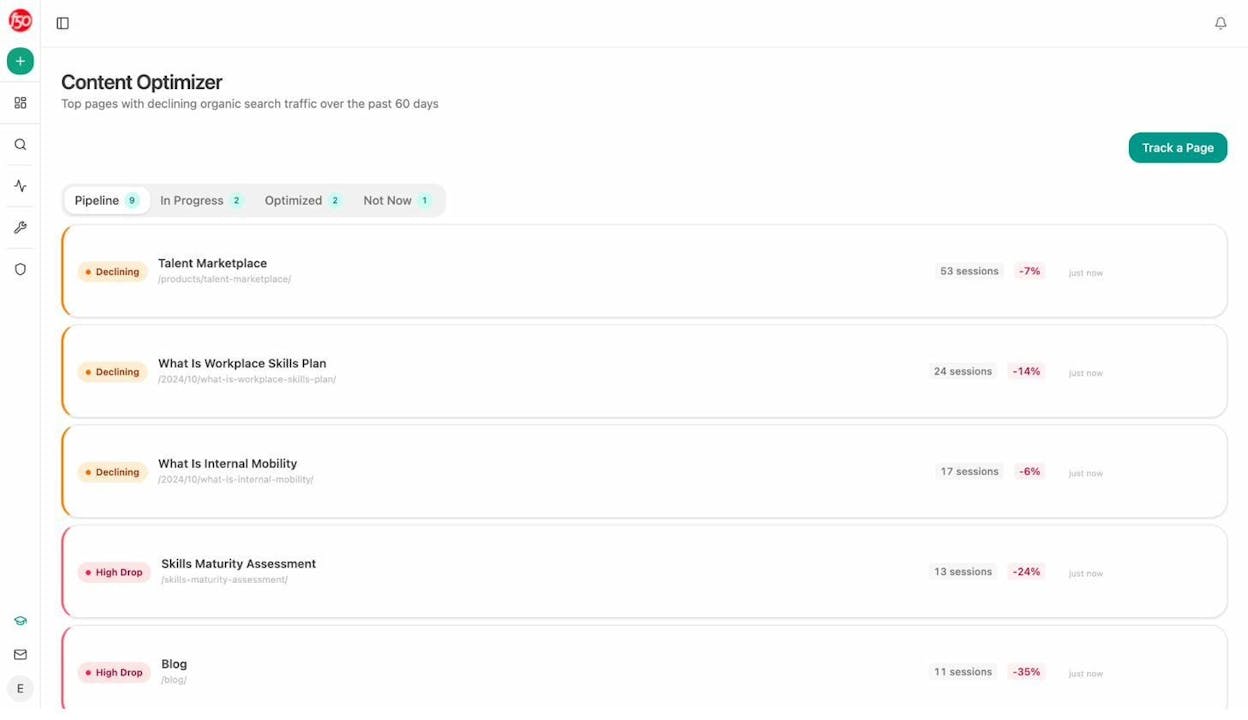
Once you address the feedback, the tool produces an optimized draft with an improved content score.
You can also use Analyze AI’s Content Writer to go from idea to research to outline to full draft, all within one workflow.
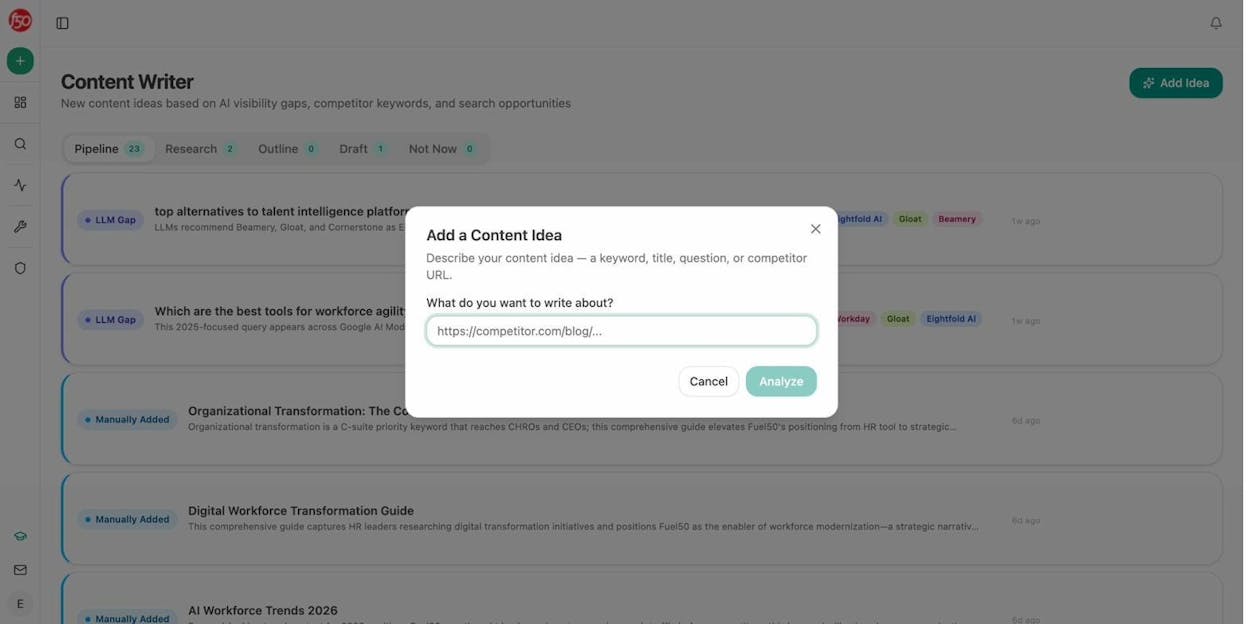
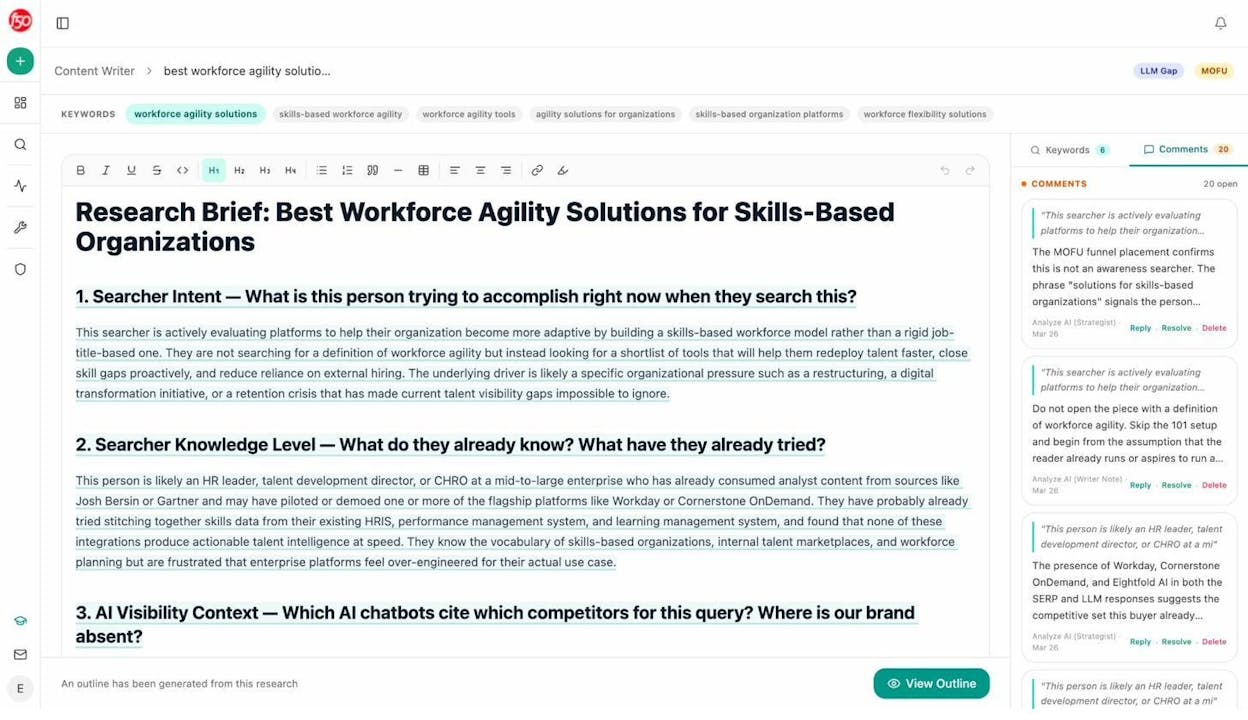
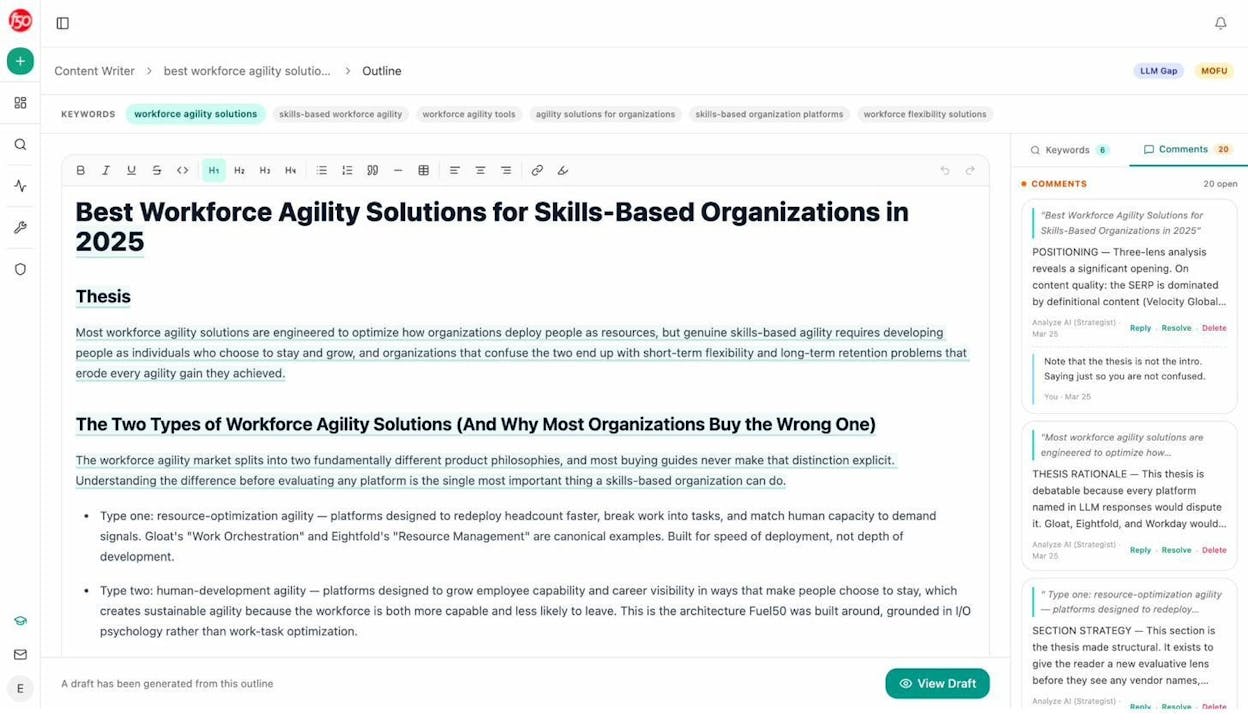
The Content Writer starts with a content idea (a keyword, title, question, or competitor URL), researches the topic by analyzing top-ranking content and AI visibility gaps, builds an outline, and then generates a draft. At each stage you can review, edit, and steer the content.
For a full list of writing and optimization tools, see our best AI content optimization tools roundup.
Create content that Google and AI engines trust
Google evaluates content quality based on its E-E-A-T guidelines (Experience, Expertise, Authoritativeness, Trustworthiness). AI engines use similar signals when deciding which sources to cite.
Here is what this means for your blog posts in practice:
Show your experience. If you are reviewing a product, include your own photos and specific details from using it. If you are writing a how-to, include original screenshots of the process. Generic, stock-photo-heavy content signals to both Google and AI models that the author has not actually done the thing they are writing about.
Demonstrate expertise. Link to credible external sources when making factual claims. Include data and cite your sources. If you are an expert in your field, make that clear in your author bio.
Build authority over time. Authority comes from backlinks, brand mentions, and consistently publishing high-quality content on related topics. This is sometimes called “topical authority.” The more comprehensive your coverage of a topic cluster, the more Google trusts you for every keyword in that cluster.
Be trustworthy. Include an about page, a clear editorial policy, and accurate contact information. Avoid misleading claims.
On-page SEO basics
Do not skip these. They are simple but they matter:
Include the target keyword in your title tag. Keep the title under 60 characters so it does not get cut off in search results.
Write a compelling meta description. This does not directly affect rankings, but it affects click-through rate. A good meta description is a clear, specific summary of what the reader will get. You can generate meta descriptions with our free meta description generator.
Use short, descriptive URLs. Your URL should contain your target keyword. Keep it clean and readable. “/how-to-start-a-blog” is better than “/post-id-18273.”
Add alt text to images. Describe what the image shows in plain language. Google uses alt text to understand images, and it helps accessibility.
Link internally and externally. Link to your own related posts to keep readers on your site and spread link equity. Link to authoritative external sources when citing data or referencing research. For a deeper dive, check our internal linking tips for SEO.
Optimize for featured snippets. If your keyword triggers a featured snippet on Google, structure your content to win it. That might mean including a clear definition, a numbered list, or a comparison table at the right spot in your article.
10. Promote Your Blog
Publishing a blog post is half the job. The other half is getting people to read it. Here are the most effective free promotion tactics.
Build an email list from day one
An email list is the only audience you fully own. Social media algorithms change. Search rankings fluctuate. But your email list is a direct line to readers who chose to hear from you.
Set up a simple sign-up form on your blog. Place it in the sidebar, at the end of posts, and as a non-intrusive pop-up. Offer something valuable in exchange for signing up. A free checklist, a mini course, or exclusive content that is relevant to your niche.
![[Screenshot: Simple email sign-up form on a blog sidebar offering a free checklist]](https://www.datocms-assets.com/164164/1777503644-blobid21.png?auto=format,compress&w=1248&fit=max)
Do not try growth hacks or misleading opt-ins. They attract unengaged subscribers who will never open your emails. The best way to grow your list is to write content worth subscribing to.
One counterintuitive practice: once your list grows, remove contacts who have not opened your emails in 90 days. This improves deliverability and keeps your email tool costs down.
Build backlinks
Links from other websites to your blog are one of the strongest ranking signals for Google. The more quality backlinks you earn, the easier it becomes to rank for competitive keywords.
There are two approaches.
Earn links organically. Create content that is genuinely useful, original, and reference-worthy. Data studies, original research, free tools, and comprehensive guides attract links naturally because other writers want to cite them.
Build links through outreach. Reach out to other bloggers and website owners. Offer your content as a resource. One effective method is broken link building. You find broken links on other sites and suggest your content as a replacement.
Here is how broken link building works:
-
Find competitor blogs in your niche
-
Use our free broken link checker to scan their sites for broken outbound links
-
Check what content those broken links used to point to (use the Wayback Machine)
-
If you have similar content, reach out to the site owner and offer your link as a replacement
![[Screenshot: Analyze AI broken link checker showing broken links found on a competitor site]](https://www.datocms-assets.com/164164/1777503646-blobid22.png?auto=format,compress&w=1248&fit=max)
For more tactics, see our guide on backlink building tools and our breakdown of off-page SEO strategies.
Repurpose your content across channels
Your audience is not all in one place. Some read blogs. Some watch YouTube. Some scroll LinkedIn. Some listen to podcasts. Repurposing lets you reach all of them without creating everything from scratch.
Here are practical ways to repurpose a single blog post:
A detailed how-to guide can become a YouTube tutorial. The key points from a listicle can become a Twitter/X thread. A comprehensive post can be broken into a series of LinkedIn posts. Multiple related posts can be combined into a free ebook or email course. A data-heavy post can become an infographic.
For example, this article you are reading could easily become a 15-minute YouTube video, a 10-tweet thread, and a downloadable checklist. One piece of content feeds four channels.
Follow your audience to other platforms
Guest posting on established blogs in your niche is one of the best ways to build authority and earn backlinks. Find blogs that accept guest contributions. Write something genuinely useful for their audience. Include a link back to your blog in your author bio.
To find guest posting opportunities, search Google for “[your niche] + write for us” or “[your niche] + guest post.” Check the website authority of potential targets. Aim for sites with a Domain Rating of at least 30 to 40 for meaningful link value.
Podcasts are another underrated channel. Many niche podcasts actively look for guests. Being a guest gets your name, your expertise, and your blog in front of an engaged audience. And most podcast hosts link to their guests in the show notes.
Share in communities (without spamming)
Reddit, Quora, niche Facebook groups, and industry Slack communities are places where your target audience hangs out. Do not drop links and run. Instead, become a genuine member. Answer questions. Share insights. When your blog post is genuinely the best answer to someone’s question, share it.
11. Keep Your Blog in Shape
A blog is not a “publish and forget” operation. Ongoing maintenance keeps your content ranking and your traffic growing.
Monitor your SEO health
Technical SEO issues can silently tank your rankings. Broken links, slow page speed, crawl errors, and missing meta tags all hurt performance.
Use two free tools to stay on top of this:
Google Search Console shows you which queries drive traffic to your site, flags indexing issues, and alerts you to manual penalties.
A site audit tool catches technical problems automatically. Check our free SEO tools roundup for the best options.
Run a full site audit at least once a month. Fix critical issues immediately. Minor issues can wait for a quarterly cleanup.
Update your posts regularly
Content goes stale. Statistics become outdated. Competitor pages improve. If you do not update your posts, they will gradually lose rankings.
Here is how to prioritize updates:
Posts ranking in positions 4 to 10 usually need a minor refresh. Update outdated information, add a missing subtopic, improve the introduction, or add new internal links. Small changes can push them onto page one.
Posts ranking below position 10 likely need a bigger rewrite. Reassess search intent, restructure the content, add significantly more depth, and check if the content format still matches what Google rewards for that keyword.
Use our keyword rank checker to track where your posts rank. Then prioritize updates based on position and traffic potential.
Give new posts at least three to six months before making significant changes. SEO takes time, and premature edits can do more harm than good.
Monitor your AI search visibility
Here is what separates a 2024 blogging strategy from a 2026 one. Your blog is now a source that AI engines may (or may not) cite. And unlike Google where you can track rankings with tools like Search Console, AI search visibility requires a different kind of monitoring.
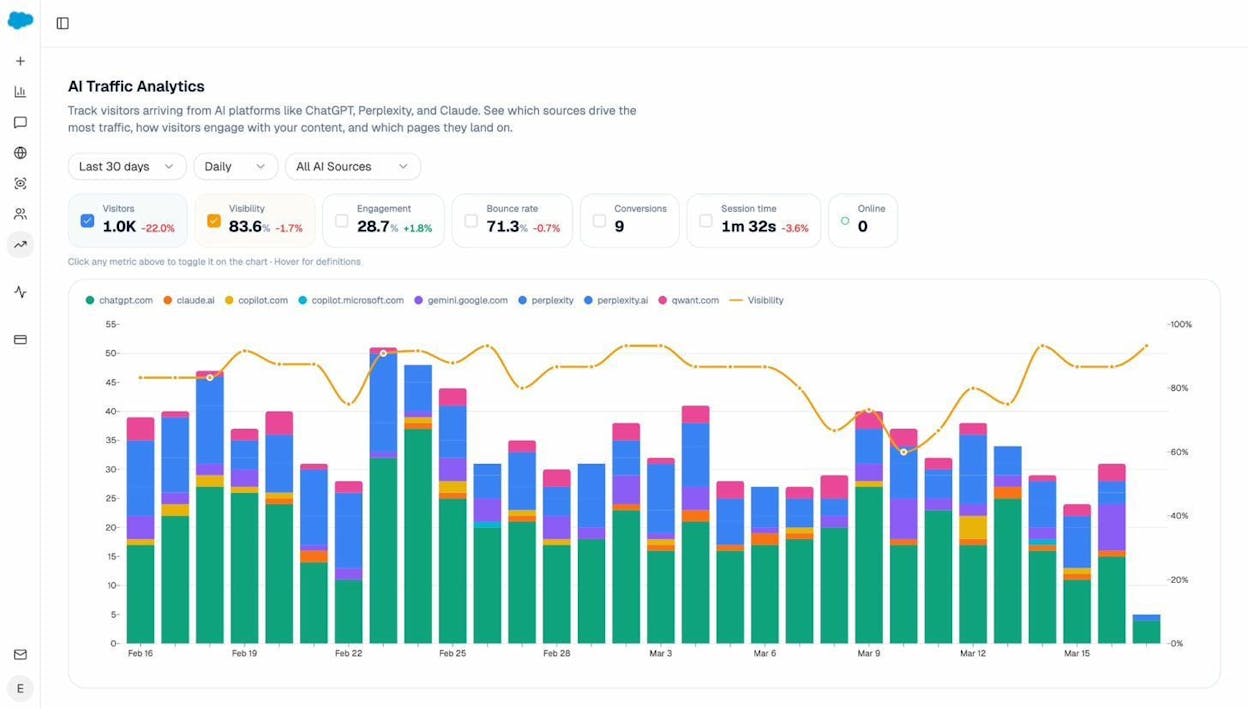
Analyze AI’s AI Traffic Analytics shows you exactly how much traffic your blog gets from AI platforms like ChatGPT, Perplexity, Claude, and Gemini. It breaks down visitors by AI source, shows which landing pages receive AI-referred traffic, and tracks engagement, bounce rate, and conversions.
The Landing Pages report is especially useful. It shows which of your blog posts receive traffic from AI engines, which AI platforms cite them, and how visitors from AI search behave on your site.
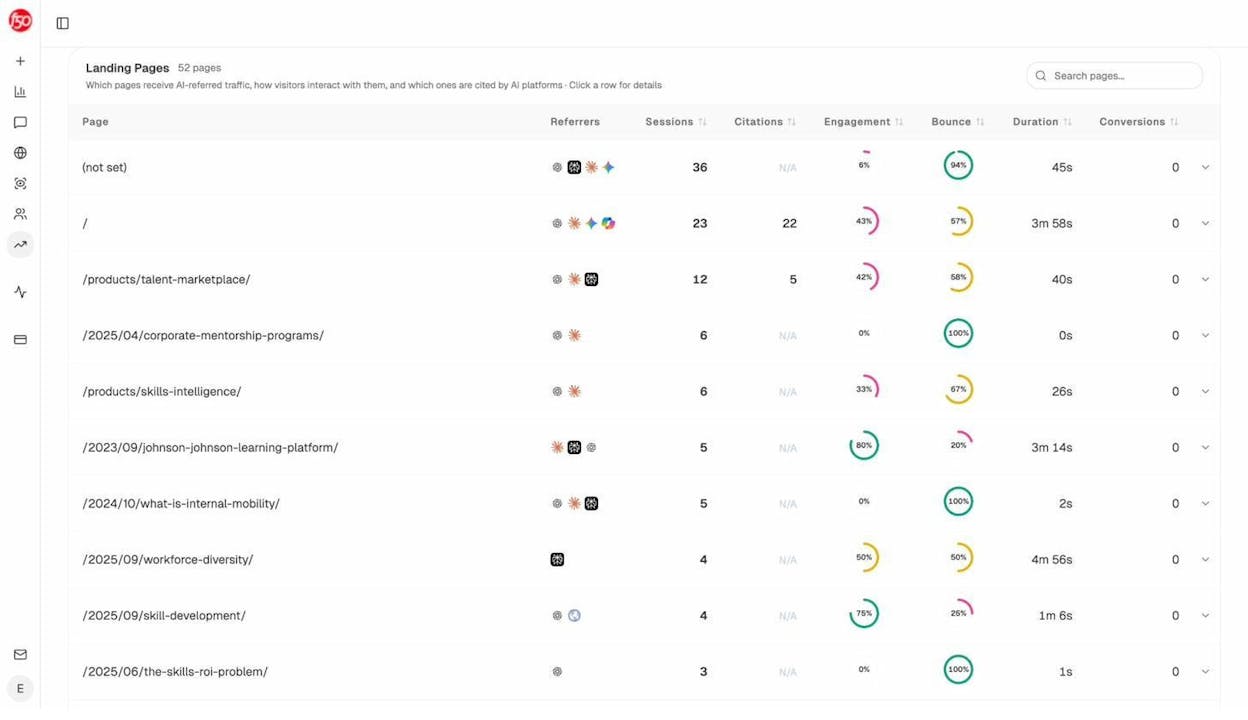
This data tells you what kind of content AI engines prefer to cite in your niche. You can then double down on the formats and topics that work.
You can also use Analyze AI’s AI Visibility Tracking to monitor how often your brand gets mentioned in AI responses over time. If your visibility is dropping, you know it is time to update content or create new pieces targeting the prompts where you are losing ground.
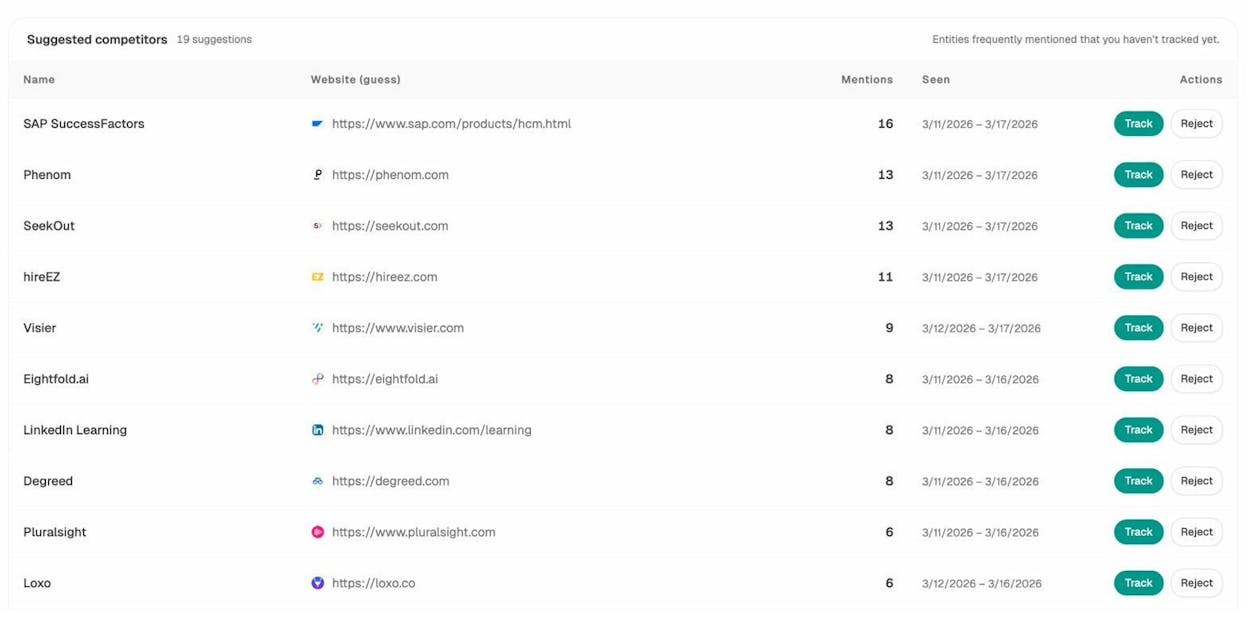
The Competitor Intelligence feature shows you which competitors are getting mentioned in AI responses where you are not. This is the AI search equivalent of a keyword gap analysis.
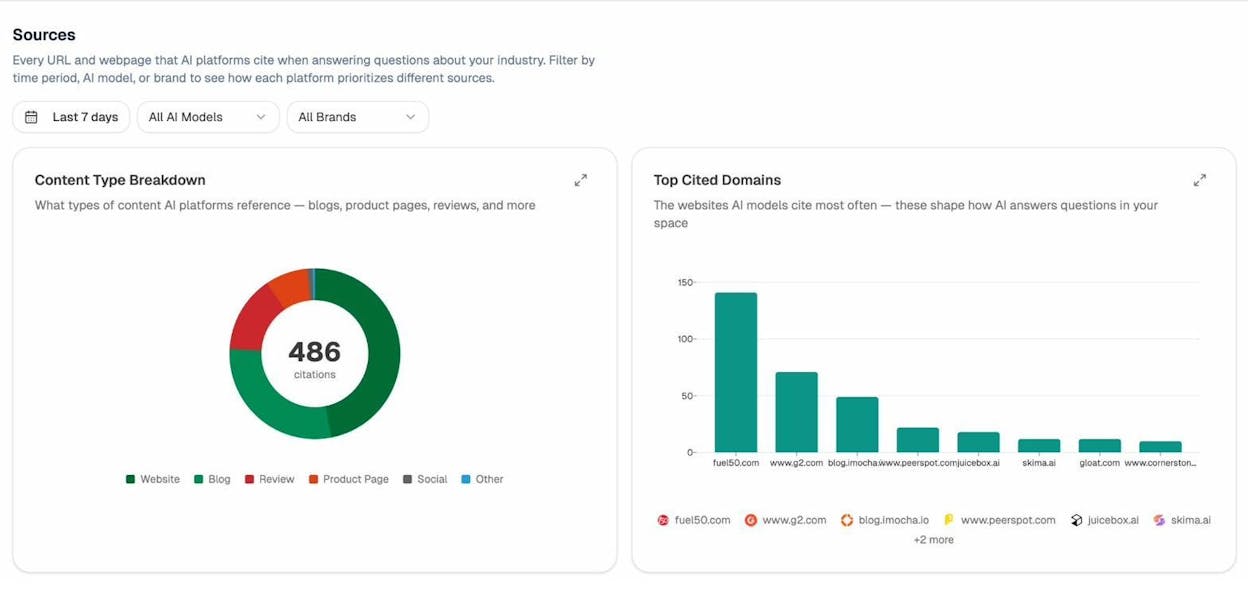
And the Sources report reveals which domains AI engines cite most often in your industry. If certain domains dominate the citations, study what they are doing differently.
For a deeper understanding of how SEO and AI search work together, read our guide on GEO vs SEO and our breakdown of answer engine optimization strategies.
Set up weekly email digests
Staying on top of changes in both SEO and AI search visibility can be overwhelming. Analyze AI offers weekly email digests that summarize your brand’s AI visibility, competitor movements, and key changes across all tracked prompts.
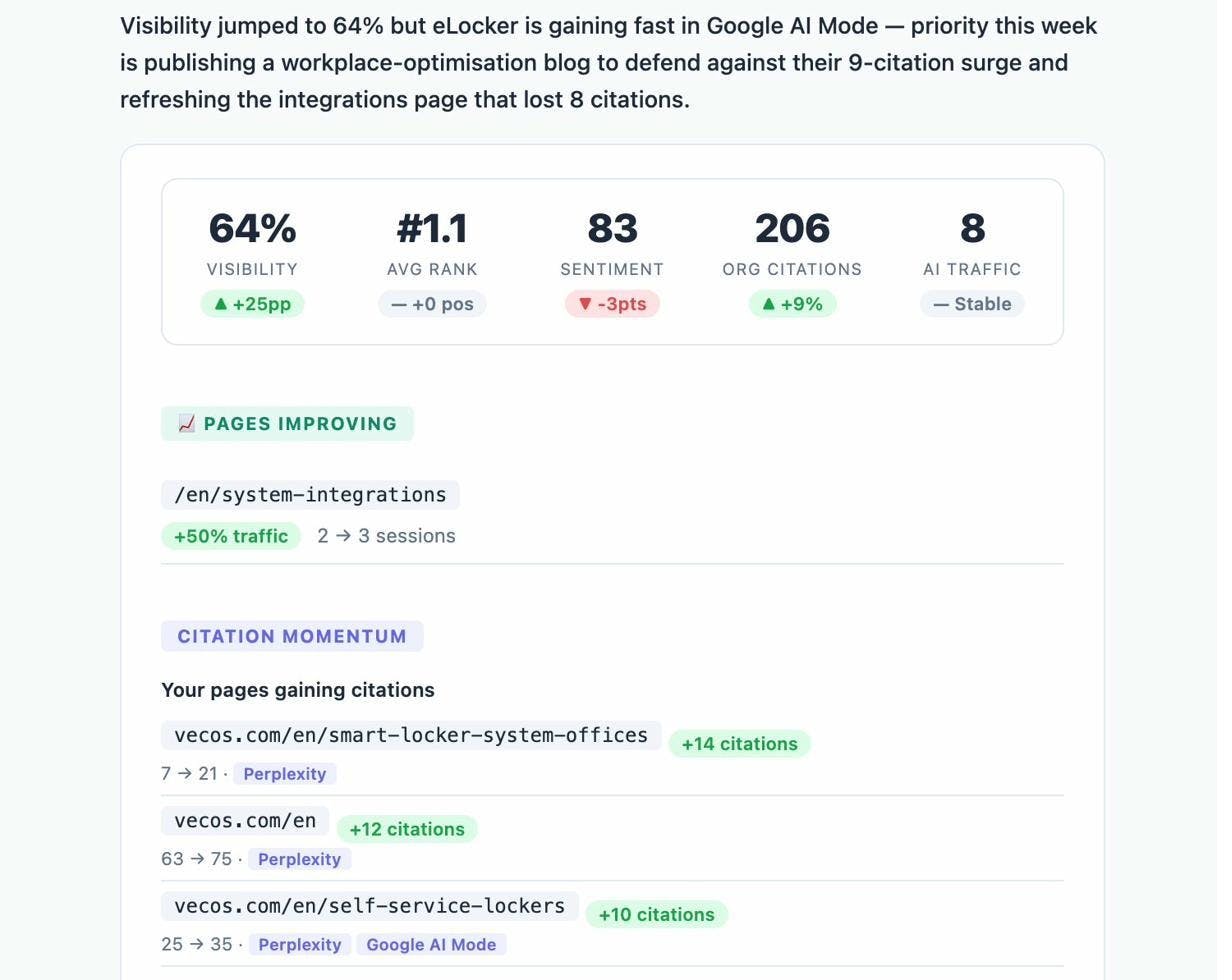
This way, you get a regular pulse check on your blog’s performance in AI search without logging in every day.
FAQ
How do bloggers get paid?
The most common methods are display advertising, affiliate marketing, sponsored posts, selling digital products, and freelance writing. Payment terms vary by method. Affiliate commissions typically pay out 30 to 60 days after a sale. Sponsored posts are usually paid upfront or upon publication. Display ad networks pay monthly based on impressions.
How much money can you make blogging?
It depends on your niche, traffic, and monetization methods. A reasonable target for the first year is $500 to $1,000 per month from a combination of ads and affiliate income. Bloggers who stick with it for two to three years and build traffic to 100,000+ monthly sessions often earn $5,000 to $20,000 per month. The top earners clear $100,000+ per month, but they represent a small fraction of all bloggers.
How long does it take for a blog to make money?
Most bloggers report earning their first income within 6 to 12 months. Significant income (enough to replace a full-time salary) typically takes 2 to 4 years of consistent effort. The timeline depends on your niche, the quality and volume of your content, and how aggressively you promote and build backlinks.
How to start a blog with no money?
You can start with absolutely zero cost by using a free blogging platform like WordPress.com or Blogger and a free subdomain. However, free plans come with limitations (platform branding on your site, no custom domain, limited customization). A more practical approach is to spend $18 to $36 on basic hosting and a domain for the first year. That small investment gives you a professional-looking blog with full control.
How often should I publish blog posts?
Research from Orbit Media shows that bloggers who publish two to six times per week report stronger results. But one high-quality post per week is more than enough to build traffic if each post targets a keyword with real search volume and is optimized properly. Consistency matters more than frequency.
What kinds of blogs make money?
Five main types stand out. Niche blogs focus deeply on a specific topic (food, finance, travel). Affiliate and review blogs exist primarily to recommend products and earn commissions. Personal blogs monetize through a mix of personality-driven content and brand deals. Personal brand blogs establish the author as an expert in a field (often leading to consulting or speaking income). Business blogs drive traffic and leads to a company’s products or services.
Do people still read blogs?
Yes. According to data from multiple surveys, over 70% of internet users read blogs. Blogs remain one of the most trusted sources of information, especially for product research and how-to content. What has changed is how people find blog content. In addition to Google, readers now discover blogs through AI search engines like ChatGPT and Perplexity, social media, email newsletters, and YouTube.
Why do most bloggers fail?
The most common reasons are giving up too soon, publishing inconsistently, writing without keyword research (so nobody finds the content), never monetizing, ignoring SEO, not promoting content, and failing to provide unique value. Blogging rewards patience and persistence. Most of the bloggers who fail quit within the first year before their SEO efforts have time to compound.
Should I optimize my blog for AI search?
Yes. AI search is not replacing traditional SEO. It is an additional channel. When someone asks ChatGPT “what is the best budget meal prep plan?” and your blog gets cited in the answer, that is traffic you would never have gotten from Google alone. The fundamentals are the same. Create comprehensive, well-structured, authoritative content. The only addition is monitoring your visibility in AI responses and adjusting your strategy based on what you learn. Tools like Analyze AI let you track this in real time.
Final Thoughts
Starting a blog that makes money comes down to consistent execution across a few key areas. Pick a profitable niche, find your angle, set up your site cheaply, do keyword research, create the best content for your target keywords, promote it, and keep improving.
The landscape is expanding. Beyond Google, your blog can now attract readers through ChatGPT, Perplexity, Claude, and Google AI Overviews. Bloggers who treat AI search as an additional organic channel alongside traditional SEO will have a meaningful advantage in 2026 and beyond.
Here are a few blogging tools to help you get started, and our 2026 SEO content strategy guide to help you plan your first 90 days of content.
The best time to start was yesterday. The second best time is now.

Ernest

Ibrahim


