



Summarize this blog post with:


In this article, you’ll learn how to build an SEO content strategy that earns rankings on Google and gets cited in ChatGPT, Claude, and Perplexity. You’ll see how to pick topics with real business potential, prioritize the keywords that move first, match content to search intent, and measure performance across both channels in one place.
Table of Contents
1. Identify topics that matter to your business
Every piece of content should solve a problem your product solves. Without that link, traffic shows up and bounces. The blog grows. Pipeline doesn’t.
Start with the actual problems your product addresses. A project management tool naturally covers task prioritization, team coordination, deadline tracking, and resource planning. Each connects to a real user job and a real product feature.
Score each topic 1 to 10 for business relevance, then drop anything below a 6. This single filter prevents the scattered libraries that dilute topical authority and confuse search engines about what your site is actually about.
Build topic clusters, not one-off posts
Random posts don’t compound. Topic clusters do. They tell search engines you cover a subject in depth, and they let internal links pass authority between related pieces.
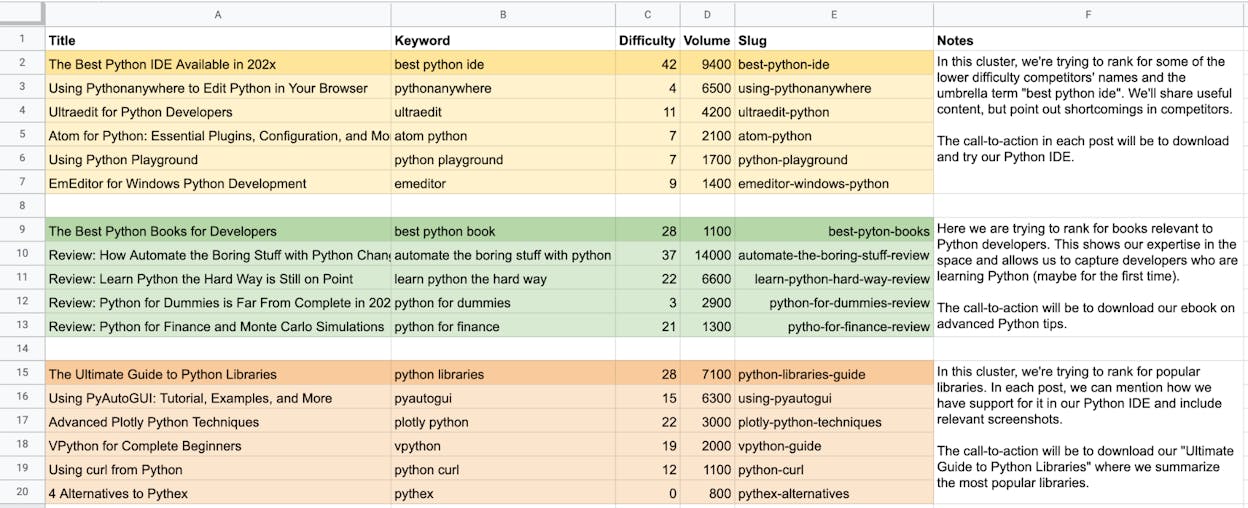
To build one, pick the main topic (“email marketing”), list the obvious subtopics (deliverability, segmentation, automation, list building), then list real questions your customers ask under each subtopic.
Find the AI search side of your topic list
Traditional keyword research tools show what people type into Google. They miss what people now ask ChatGPT, Claude, or Perplexity, which is often longer, more specific, and worded as a real sentence.
Analyze AI’s Prompt Discovery surfaces these prompts for you. You see the actual queries triggering AI responses in your category, with volume and competitor presence on each one.
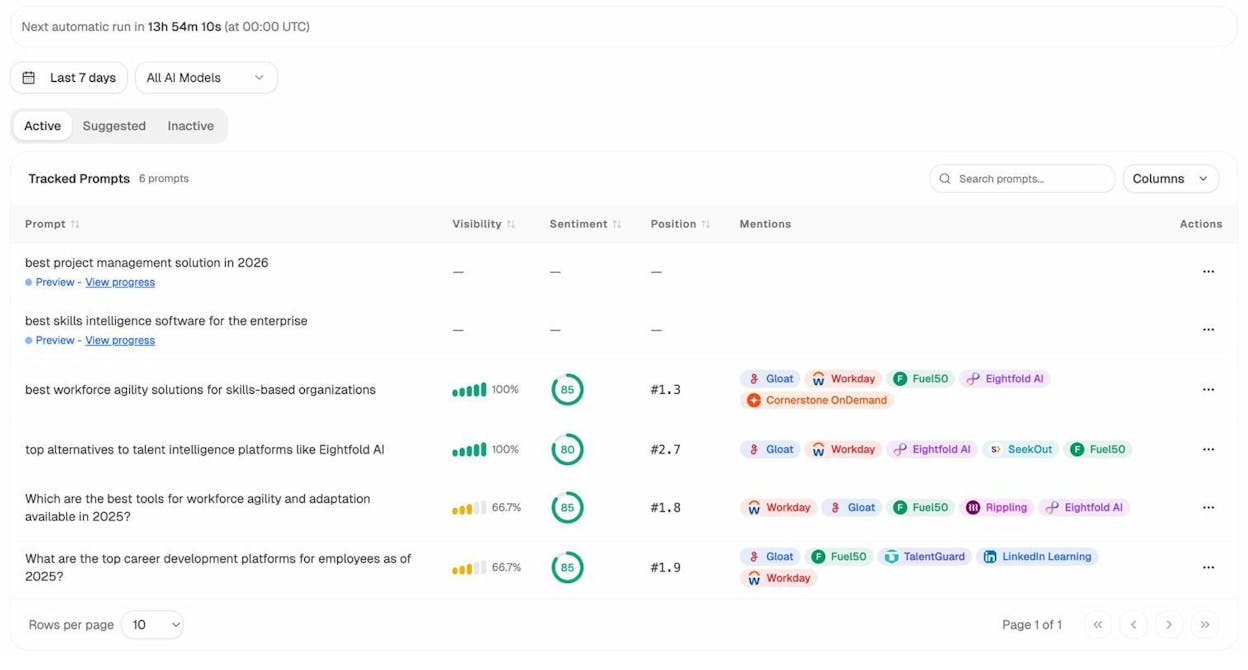
Pull from both sources when building your topic list. Google keyword tools cover the search side. Prompt Discovery covers the AI side. The overlap is gold, topics that earn rankings and AI citations on the same query.
2. Prioritize low-hanging keywords
Not every keyword takes the same effort. Some need years of authority and links. Others can rank in weeks.
Low-hanging keywords share a pattern:
-
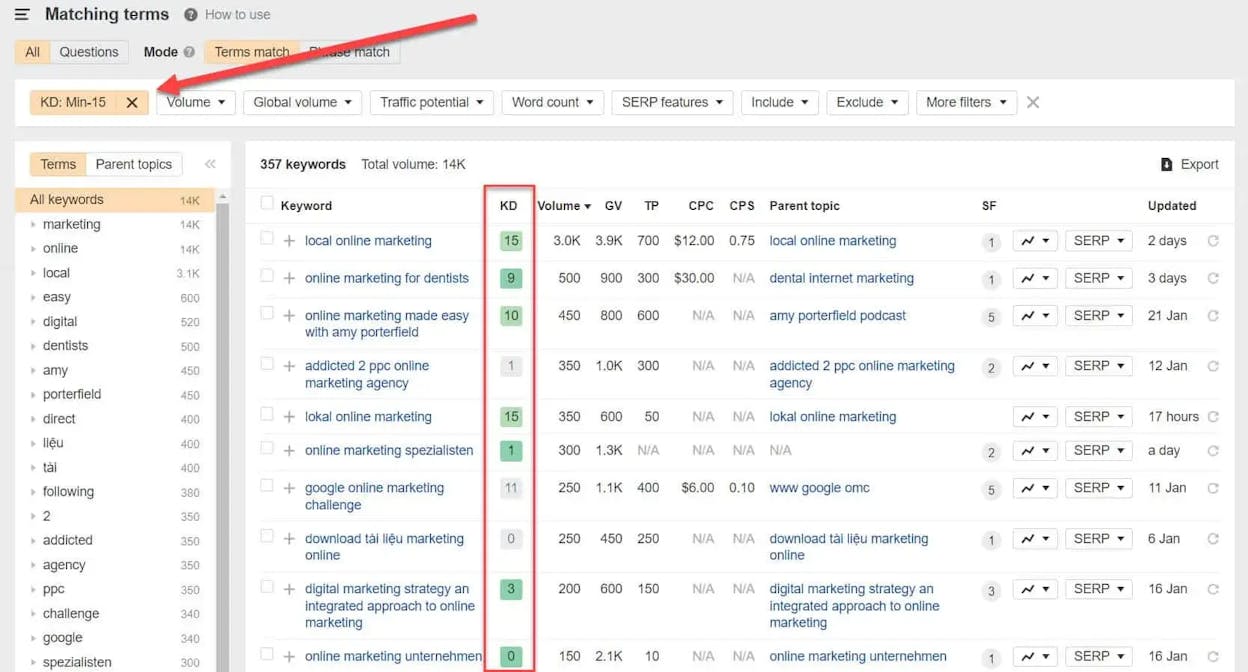
Keyword difficulty under 30
-
Search intent matches a page you can realistically build
-
Search volume is enough to justify the work
-
The topic connects to a product use case
Check difficulty for free with the keyword difficulty checker, or scale up with a paid tool.
Why low-volume terms still pay
A common mistake is dismissing keywords with 50 monthly searches. The math says otherwise.
A term with 50 searches usually attracts 15 to 30 long-tail variations once you rank for it. That brings 200 to 500 visits a month. Stack 20 of those across a quarter, and you’re looking at 4,000 to 10,000 monthly visits from terms competitors ignore. Early wins also feed the system data faster, which is how you learn what to write next.
Manual keyword research without a paid tool
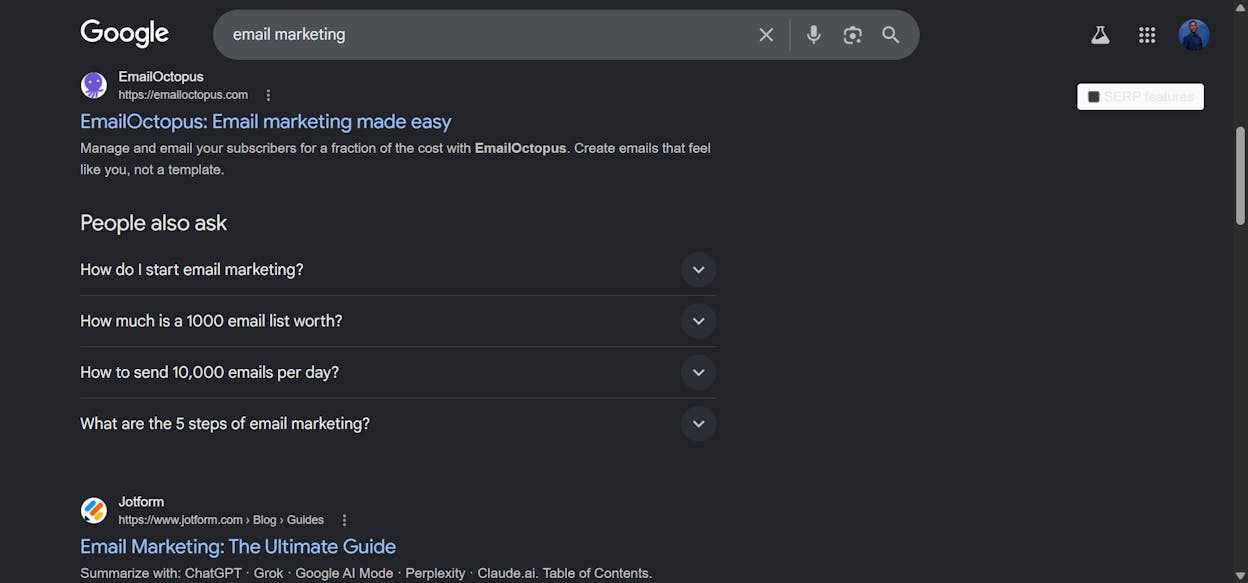
If you don’t have a tool budget yet, you can still find solid keywords. Google your main topic, read the People Also Ask, scroll to Related Searches, type your topic plus each letter of the alphabet into Google Autocomplete, and check what subtopics top-ranking pages cover.
![Google Autocomplete suggestions appearing for a partial query like “email marketing for”]](https://www.datocms-assets.com/164164/1779179626-blobid5.png?auto=format,compress&w=1248&fit=max)
Find low-hanging fruit in AI search
The same logic applies to AI visibility. Some prompts are dominated by a few well-known brands. Others are wide open.
Competitor Intelligence flags prompts where competitors get mentioned and you don’t. Each of those is a winnable prompt in your category.
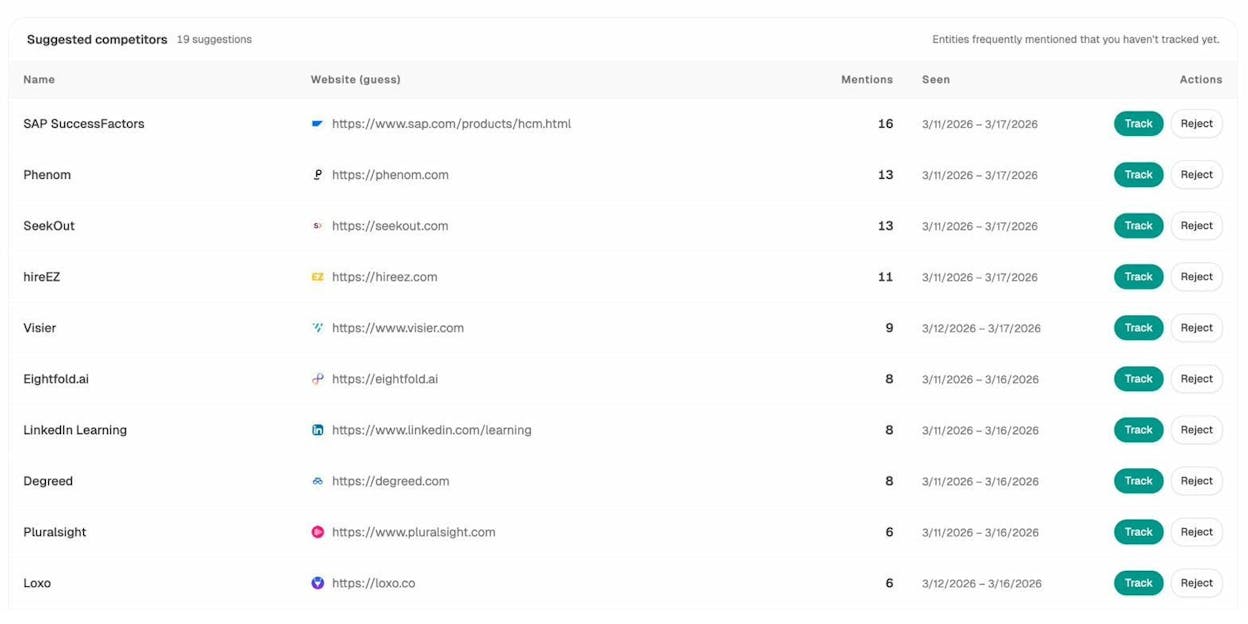
For each opportunity, prioritize prompts where more than one competitor already appears (the prompt is real), where you have related content that could be cited with light optimization, and where the query maps directly to a product use case.
This focuses your AI optimization on prompts you can actually win, not on chasing visibility everywhere at once.
3. Publish long-form, helpful content
Google rewards content that fully answers the query. So do AI engines, which need enough context to cite a specific point. Long-form gives you room to explain concepts properly, cover the next questions readers will ask, show expertise through depth and examples, and naturally include semantic keywords without stuffing.
The right length is whatever the topic actually needs. Some queries deserve 1,500 words. Others need 3,500. The goal is completeness, not word count, as covered in our piece on how long blog posts should be.
Make long-form readable
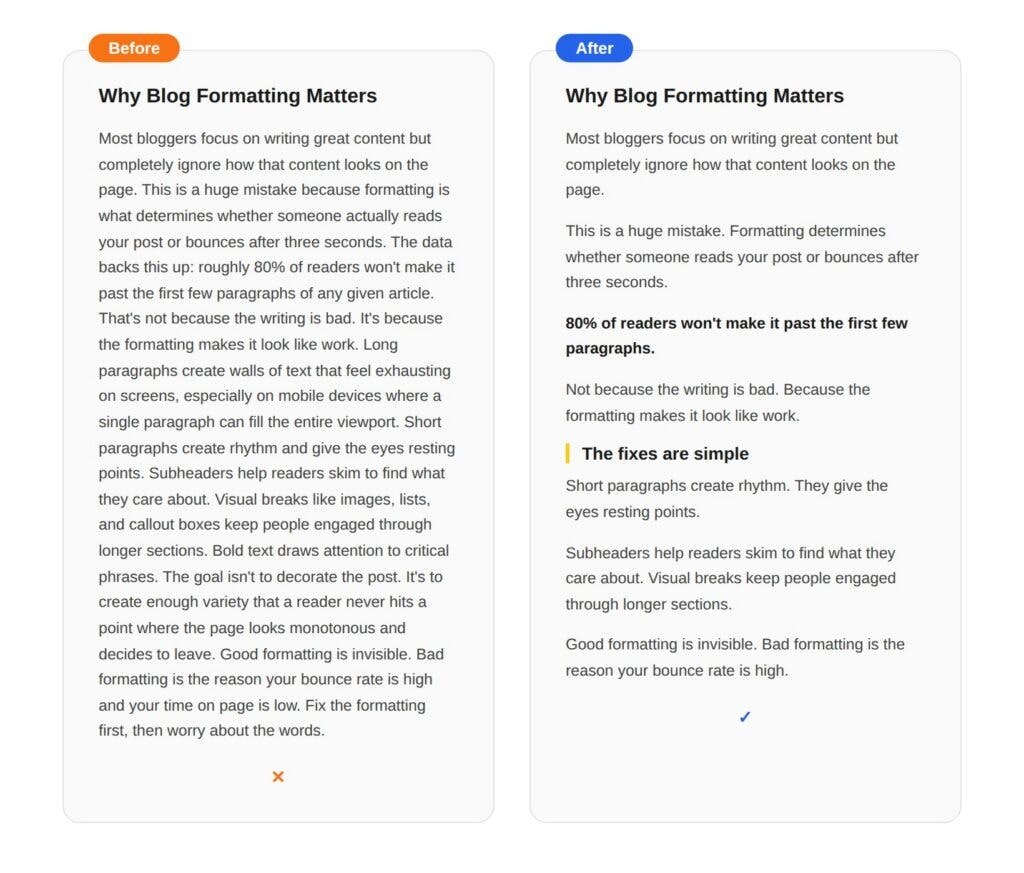
Length without structure kills retention. Break content into clear sections with descriptive H2s and H3s, keep paragraphs to three or four sentences, add screenshots and tables where they earn their place, and write in plain language at roughly a sixth-grade reading level.
Why depth helps AI citations too
Our analysis of 83,670 AI citations showed long-form blog content gets cited far more than thin pages. Claude in particular pulls from blog content 43.8% of the time, against ChatGPT’s 16.7%. ChatGPT and Perplexity lean heavier on product pages and documentation.
The takeaway is simple. Depth provides reference points. A 3,000-word guide gives an AI engine multiple paragraphs to anchor a citation. A 500-word overview gives it almost nothing.
The same content that wins on Google tends to perform well in AI engines, because both reward completeness, structure, and specificity.
4. Write for your target personas
Generic content addresses everyone and resonates with no one. Specificity makes content land.
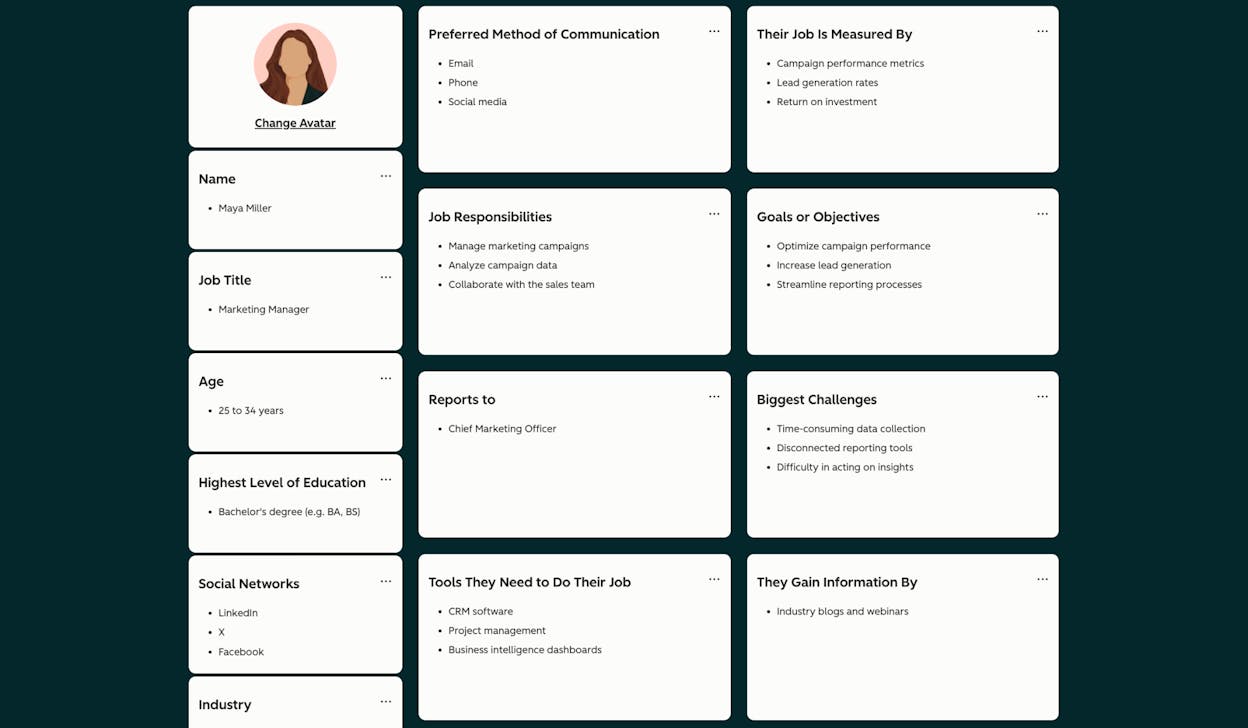
A useful persona is detailed enough to make decisions. “Marketing managers at mid-size companies” tells you nothing. “Director of Marketing at a 50 to 200-person B2B SaaS company who reports to a VP focused on measurable results, has tried content but struggled to prove ROI, and needs to show 6-month results to keep next year’s budget” tells you exactly what to write, what to skip, and what tone will land.
Apply personas as filters
Use the persona as a filter for every content decision. Would they genuinely search for this topic? Do they want a beginner explainer or an advanced tactic? How much do they already know? Do they want formal analysis or a tactical playbook? The same topic written for a solo founder looks very different from the same topic written for an enterprise marketing director.
How AI engines see your brand
Personas shape how readers see you. AI engines build their own perceptions from the sources they cite.
Perception Map shows how each AI engine characterizes your brand on dimensions like positioning, ideal customer, strengths, and weaknesses. The same brand can be rated 79 points apart on the same axis depending on the engine, because each pulls from different sources.
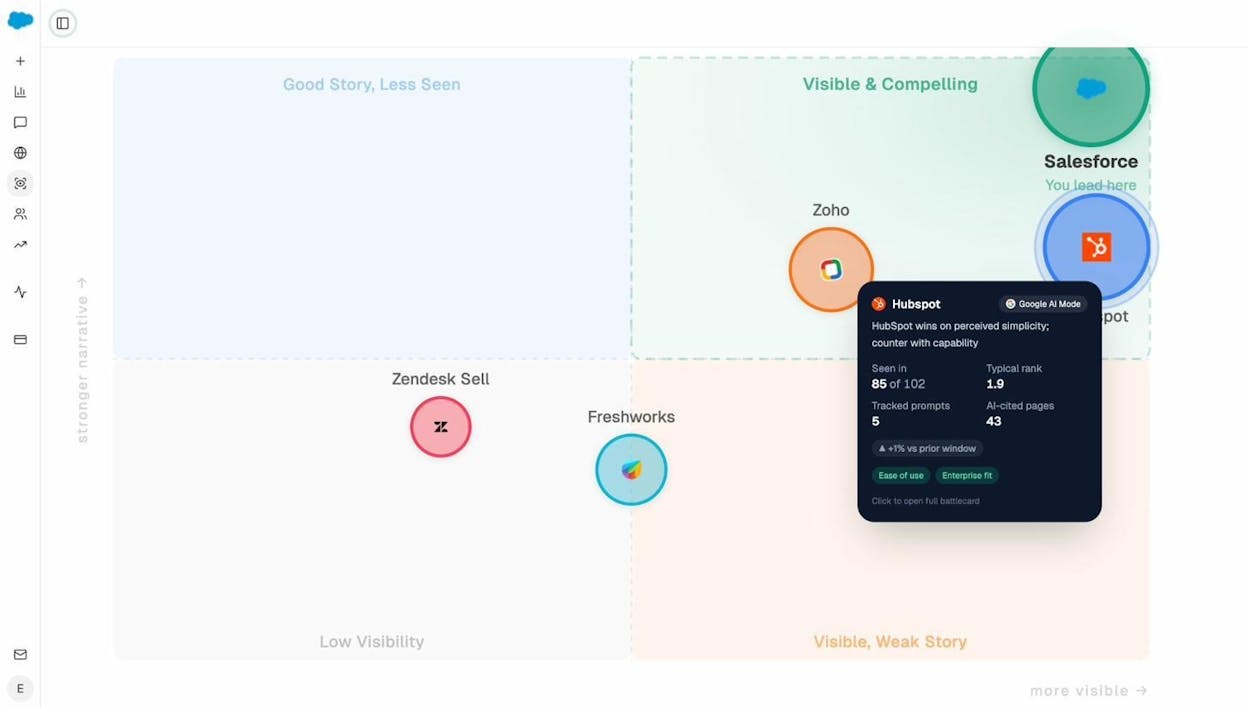
If your perception is misaligned on a key prompt, the issue is rarely on your own site. It’s in the third-party sources the AI engine cites. Fixing it usually means improving those sources through PR, reviews, or guest content.
5. Build brand authority
Brand authority is your insurance policy. When Google updates its algorithm or an AI engine retrains, sites with established brands suffer less. Sites without one usually lose hard.
The test is simple. People search for you specifically and seek you out. If your site lost all rankings tomorrow, would you still get traffic from people typing your brand directly into search? If no, you have work to do.
What actually builds it
Publish consistently, because sporadic posting makes a site look abandoned. Run original research, since other sites cite original data and republished facts get ignored. Name your authors with credentials. Show up off your site through industry publications, podcasts, and conferences. And repurpose ruthlessly, turning each post into a LinkedIn carousel, a video, an email, and a thread.
For a deeper play-by-play, see our Brand SEO framework.
Brand authority in AI search is mostly off-site
Roughly 83% of AI citations point to third-party sources, not the brand’s own site. Your AI authority depends on what other sites say about you.
Citation Analytics ranks the external domains AI engines cite most for prompts in your category.
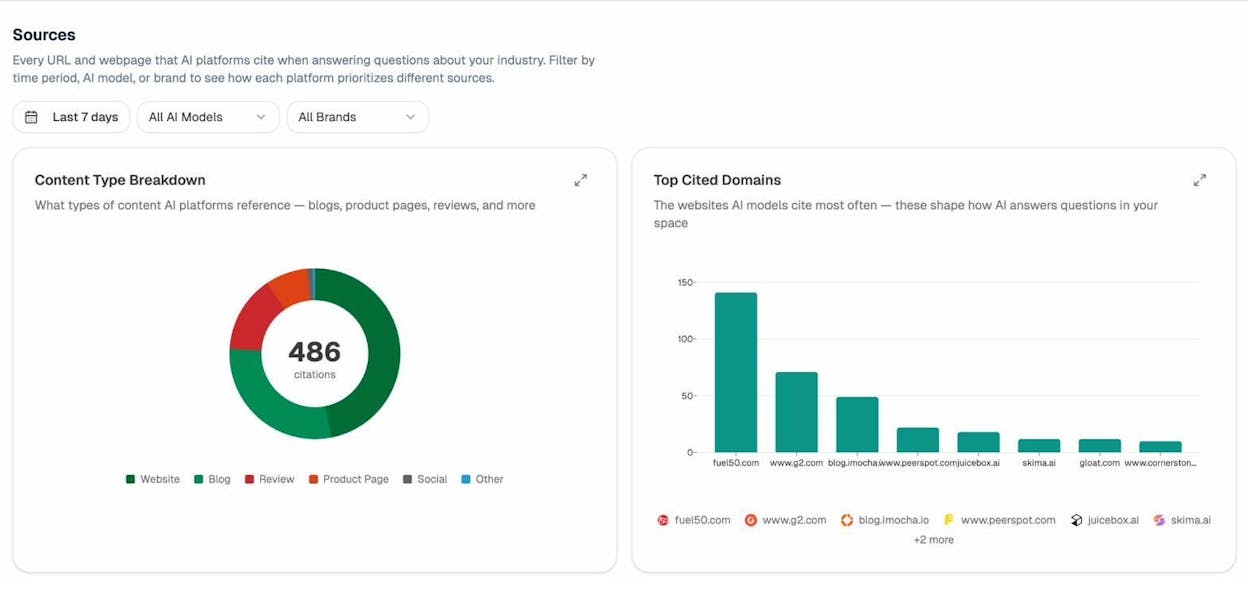
Use this list to prioritize PR pitches toward sources AI engines actually trust, target guest posts at high-citation publications, and flag sources that are starting to drive AI mentions for new entrants. Building AI authority means earning visibility on the external surfaces AI engines already trust, not just optimizing your own site.
6. Cover different search intents
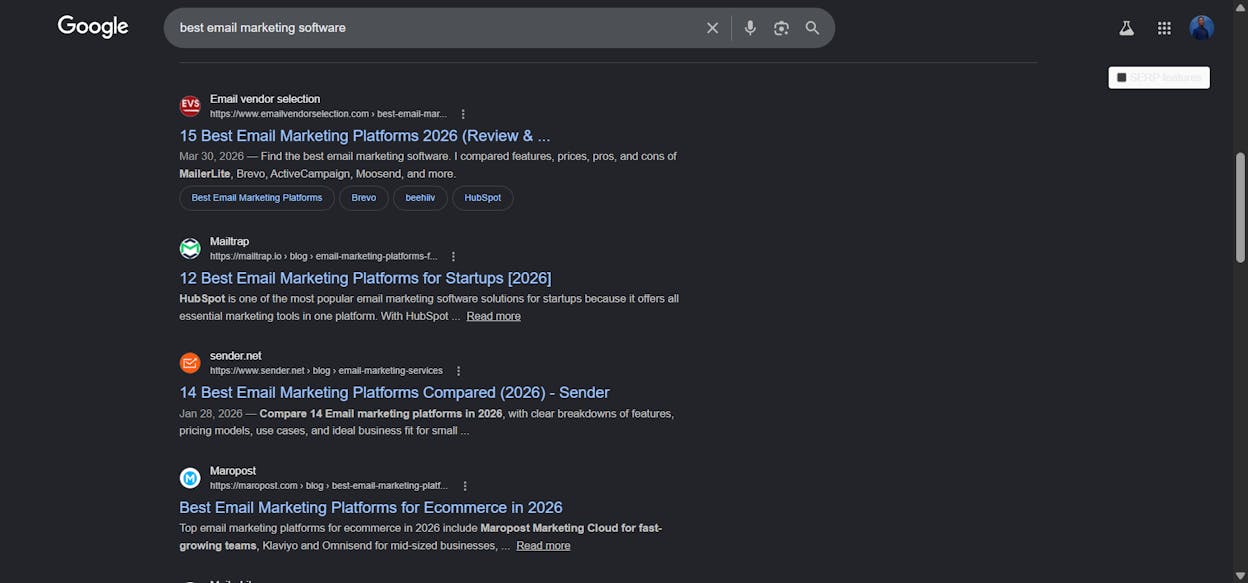
Search intent is the why behind a query. “What is email marketing” wants an explainer. “Best email marketing software” wants a listicle. “Mailchimp pricing” wants a pricing page. Match the intent or you don’t rank.
|
Intent |
What the searcher wants |
Best content type |
|---|---|---|
|
Informational |
Understanding |
Guide, explainer, how-to |
|
Navigational |
A specific page |
Brand site, product page |
|
Commercial |
A purchase decision |
Comparison, listicle, review |
|
Transactional |
To act now |
Pricing, signup, product page |
Before writing, search your target keyword. Whatever Google ranks is what searchers want. Match the format. Differentiate inside it.
Cover the full buyer journey
Most strategies over-index on awareness content because it’s the easiest to write, then wonder why traffic doesn’t convert. Map content to all three stages. Awareness covers the problem (“Why email open rates matter”). Consideration explains the solutions (“How to choose an email marketing platform”). Decision differentiates options (“Mailchimp vs Klaviyo for ecommerce”). Decision-stage content converts the hardest. Awareness fills the top of funnel. You need both. Our deeper take on search intent covers how this is shifting in the AI era.
Position matters in AI search too
In AI responses, intent affects format the same way it does in Google. Informational prompts get explainer answers. Commercial prompts get list-style answers with multiple brands.
Prompt Tracking shows your visibility, sentiment, and position for every tracked prompt across every engine.
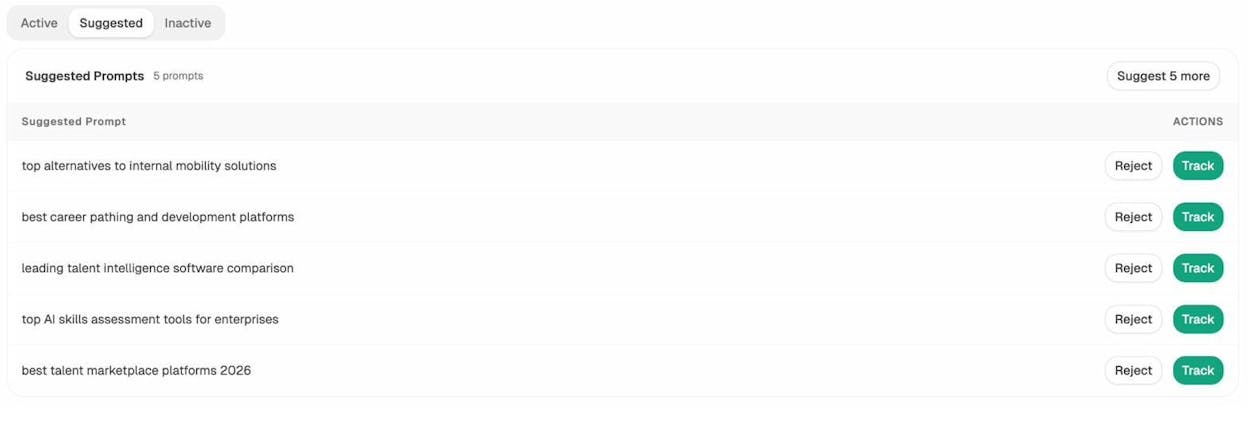
For a commercial prompt like “best CRM for small businesses,” position is the metric that matters. Appearing first vs fifth changes how many people consider you. If you sit at position 3 to 5 while a competitor holds the top, dig into what content they have that you don’t and build a better version.
7. Optimize for on-page SEO
On-page SEO is the polish step. It rarely makes a piece rank by itself, but skipping it leaves easy points on the table. The full on-page SEO checklist covers everything. The basics:
-
URL structure. Short, descriptive, no dates. /email-marketing-guide/ beats /blog/2026/01/15/the-complete-guide-to-email-marketing/.
-
Heading hierarchy. One H1 with the primary keyword, H2s for major sections, H3s for sub-points. Don’t force keywords into every heading.
-
Keyword placement. Primary keyword in the H1, meta title, first 100 words, one H2, the meta description, and one image alt. Sprinkle semantic keywords naturally elsewhere.
-
Internal links. For every new article, link to 3 to 5 existing pages and update 3 to 5 existing pages to link back. Use descriptive anchor text.
-
Meta title and description. Title in the 50 to 60 character range, description in the 150 to 160 range with a clear reason to click. CTR feeds back into rankings.
![Google site search query “site:yoursite.com email marketing” showing existing pages that could link to a new article on the topic]](https://www.datocms-assets.com/164164/1779179650-blobid13.png?auto=format,compress&w=1248&fit=max)
On-page SEO and AI citations
The same structural clarity helps AI engines parse your content. Clear H2s let an AI model find the section to cite. Clean topic sentences let it summarize the right point. There’s no separate AI on-page checklist. The fundamentals serve both channels.
8. Monitor results and adapt
A strategy without tracking is wishful thinking. You need to know what’s working in time to double down, and what’s failing in time to fix it.
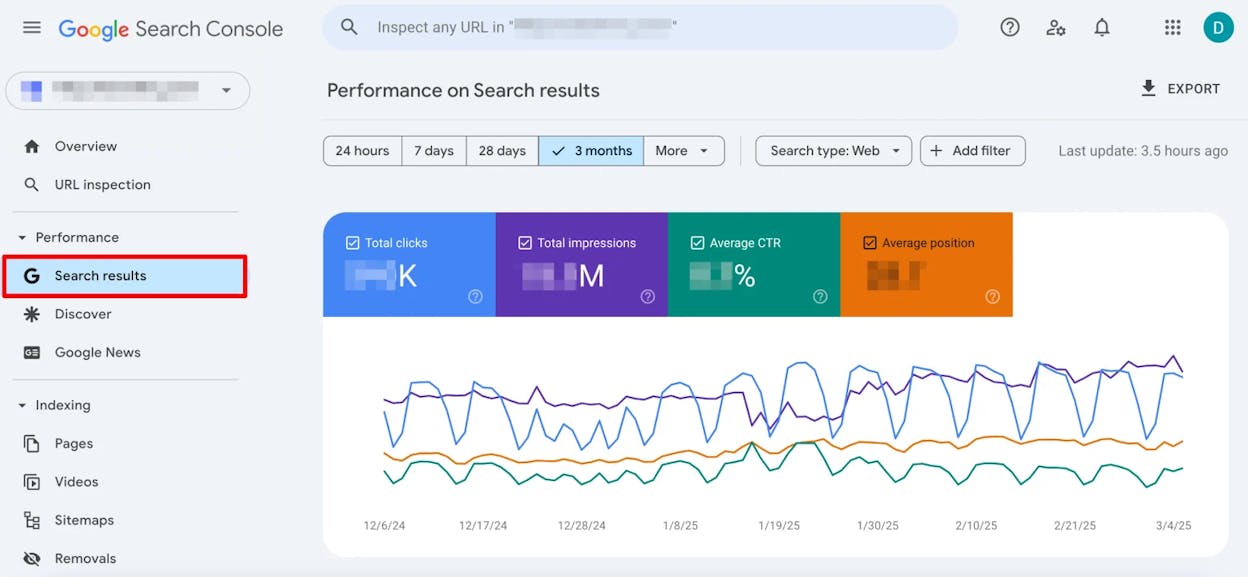
The metrics that matter: organic traffic, keyword rankings, CTR, engagement, and conversions. Traffic without conversions is vanity. For a fuller list, see 10 SEO metrics that actually matter.
Set up Google Search Console and Google Analytics 4 on day one. Run a weekly review on the total clicks trend, top pages with unexpected drops, new content traction, and rising keywords where you can double down.
When to update content
Months 1 to 3, leave new content alone and let it index. Months 3 to 6, review. Pages ranking 11 to 30 often need small tweaks to break onto page one. Pages ranking past 50 need a rewrite or removal, as covered in our content republishing guide. Ranking poorly for the target keyword usually means intent doesn’t match. Ranking but low CTR means the meta title and description need work.
Track AI search alongside Google
Default analytics tools don’t show AI referral traffic clearly. AI visits often look like direct traffic or get misattributed. AI Traffic Analytics connects to your GA4 and properly attributes AI sessions, broken down by engine, page, and trend.
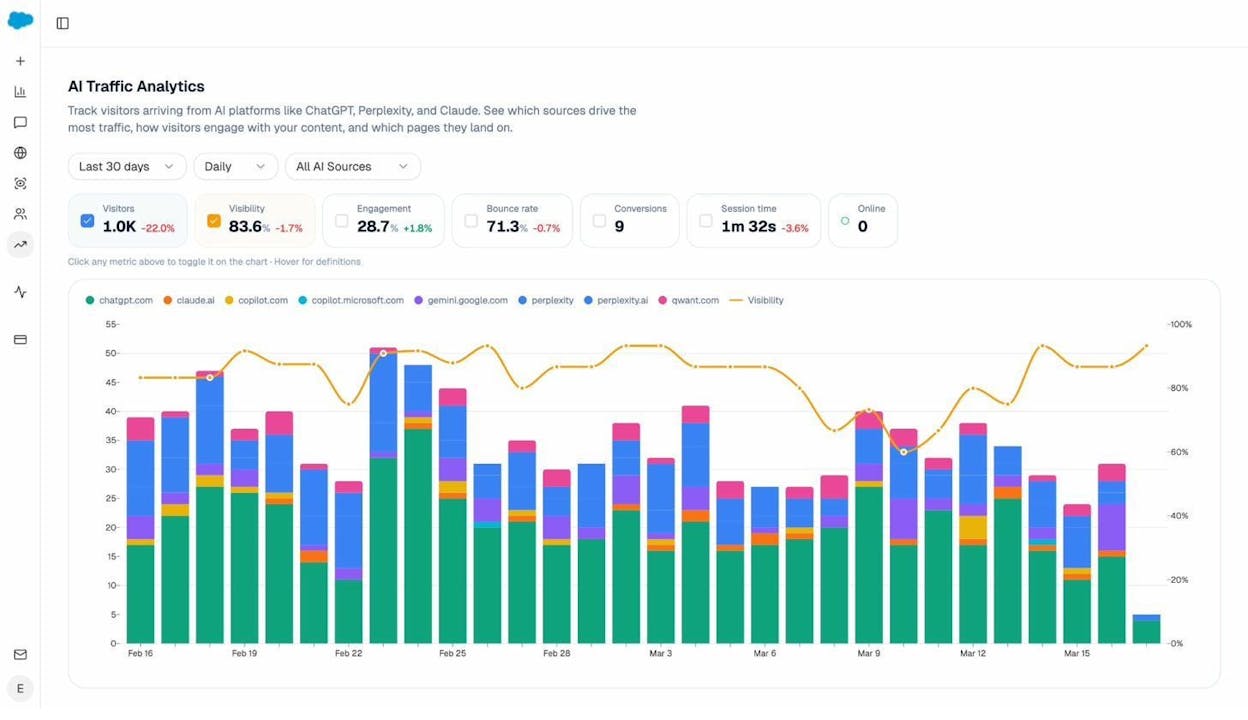
Beyond traffic, track visibility too. The Overview dashboard shows visibility, sentiment, and position across every prompt and engine in one view, and Weekly Email Digests push the changes to your inbox.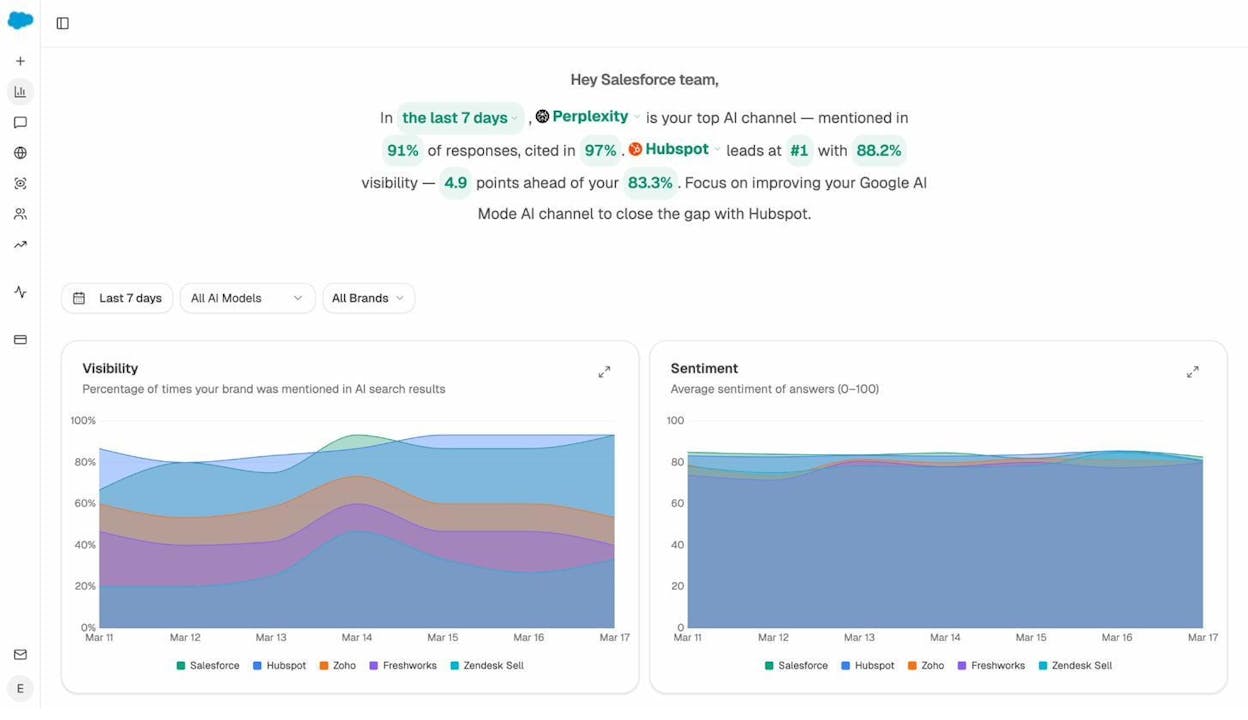
9. Demonstrate your products
Your content shouldn’t only attract traffic. It should show how your product solves the problem.
Weak: “Use a project management tool to track tasks.”
Strong: “In our task dashboard, create the task, assign it to a teammate, set a due date. The assignee gets notified, and you track progress from the weekly view.”
The second version gives the reader a concrete action and shows what the product does without sounding like a pitch. The test is simple. Would the example still teach something useful if the reader never bought your product? If yes, it earns its place.
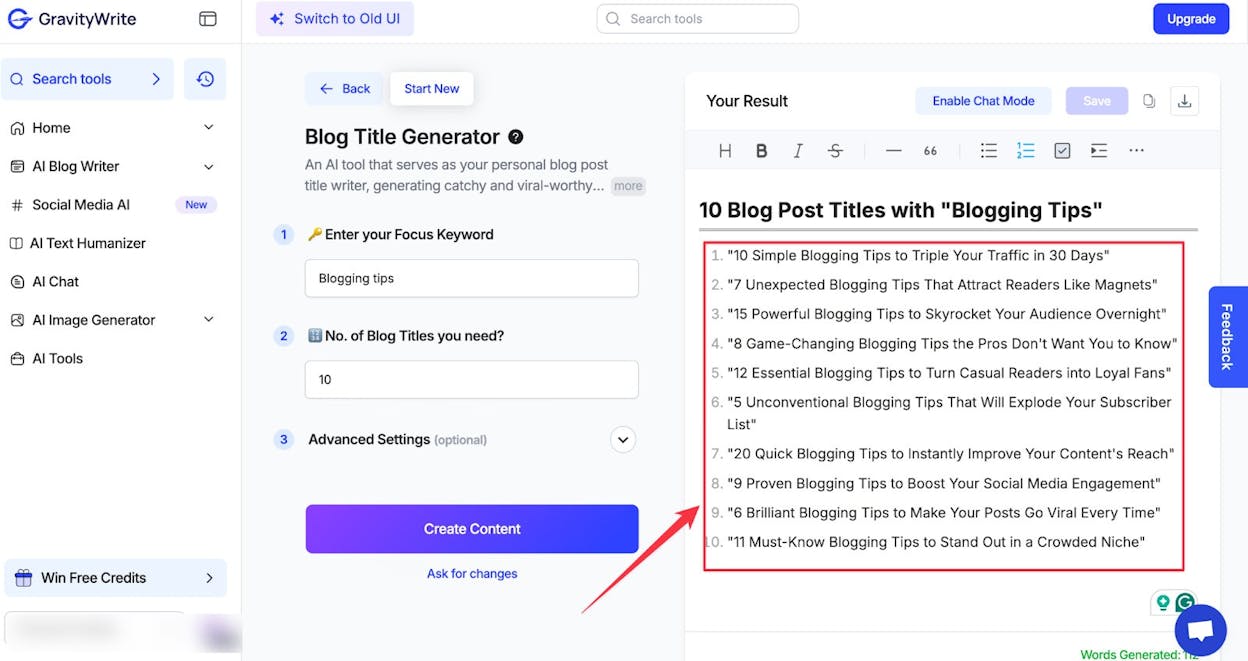
When the topic is AI search strategy, Analyze AI is the natural example. Instead of generic advice about “monitoring AI visibility,” show the Competitor Intelligence view with mention counts, last-seen dates, and the prompts each competitor wins.
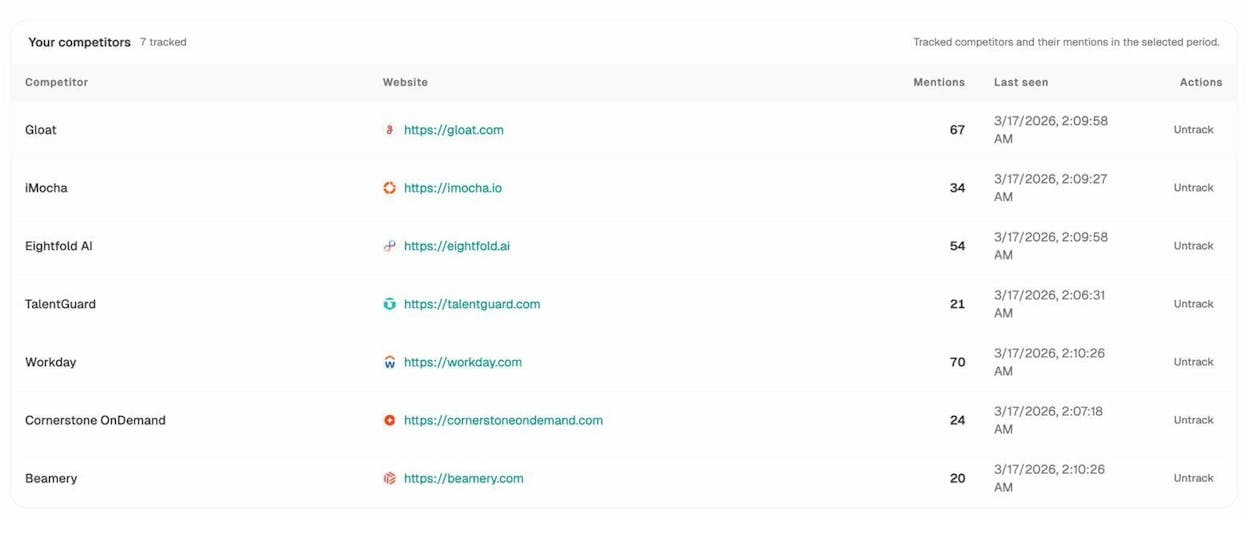
The reader gets a workflow they can replicate. You get to show what your product does without selling.
10. Build links to your content
Backlinks remain a top Google ranking factor. They also feed AI search authority because AI engines often pull from the same sources Google trusts. One link from a respected industry publication outweighs fifty from low-quality directories. Prioritize industry publications, news sites in your space, .edu and .gov resources, and established blogs in your niche.
A few tactics that actually work:
-
Linkable assets. Original research, tools, comprehensive guides. Content others want to cite.
-
Guest contributions. Useful articles for industry publications, not thinly veiled pitches.
-
Expert commentary. Services like Help A B2B Writer or Qwoted connect journalists to sources.
-
Broken link building. Find broken links on relevant sites and suggest your better page. The free broken link checker helps.
-
Relationships. The best links come from being known. Build the network before you need anything.
For more, see 12 link-building strategies that actually work in 2026.
Links and AI citations are converging
AI engines are citation engines. The URLs they cite aren’t traditional backlinks, but they perform a similar role of signaling authority and driving referrals.
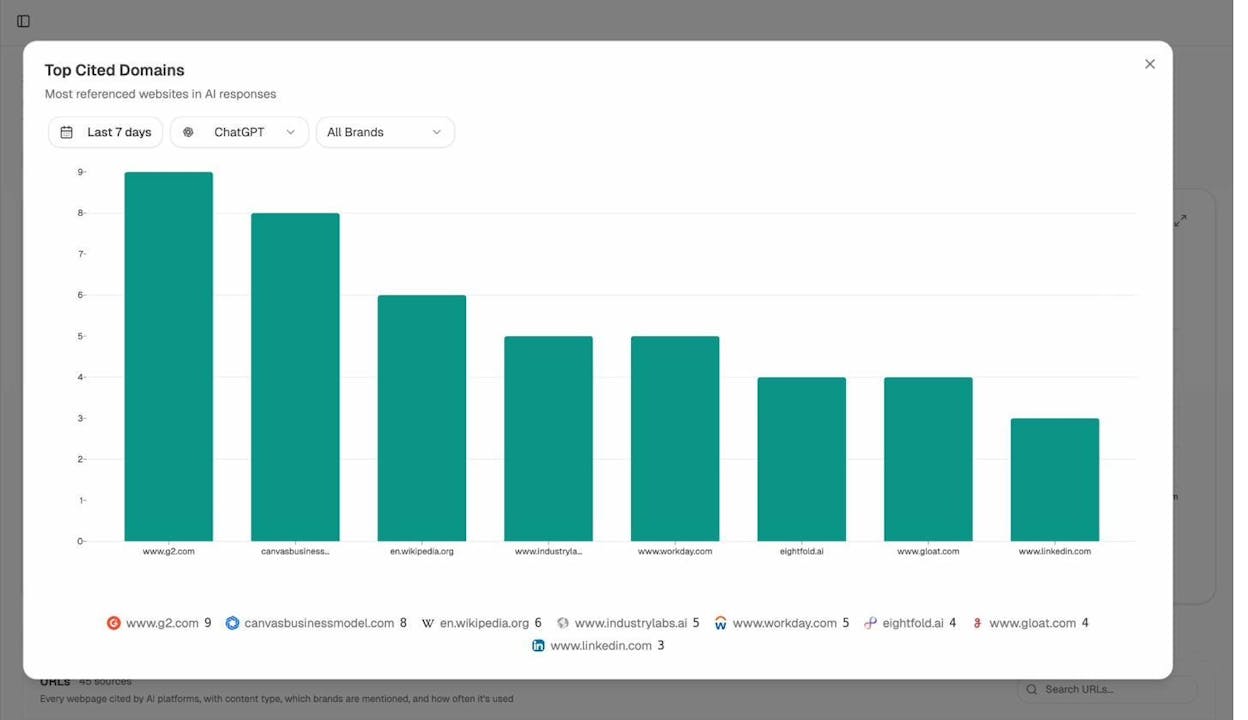
When you appear on a domain that’s both authoritative for Google and frequently cited by AI engines, you compound the value of that placement. Use Citation Analytics to spot which domains do double duty so you can prioritize them in outreach.
How AI search fits into your content strategy
AI search has appeared step by step alongside the traditional playbook throughout this article. The same fundamentals win in both channels.
What changes is the measurement layer. GSC covers the search side. GA4 covers behavior. Analyze AI fills the gap on AI search by tracking visibility across ChatGPT, Claude, Perplexity, Gemini, and Copilot, sentiment and position on every prompt, citation share against competitors, and AI referral traffic at the page level.
You don’t need a separate strategy for AI. You need the existing strategy plus one more dashboard, plus the discipline to weigh both signals when deciding what to publish next. Brands that win in 2026 treat AI search as the additional organic channel it is, not as a panic project replacing their SEO program.
Where the Agent Builder changes the math
Most teams run their content strategy on a calendar. Pick topics on Monday, brief on Tuesday, write on Wednesday, publish Thursday. The execution is human-paced.
Analyze AI’s Agent Builder turns that calendar into a system. With 180+ nodes and 34 pre-built data recipes, you wire your AI visibility data, GA4, GSC, and brand voice into agents that run on a schedule, on a webhook, or on demand.
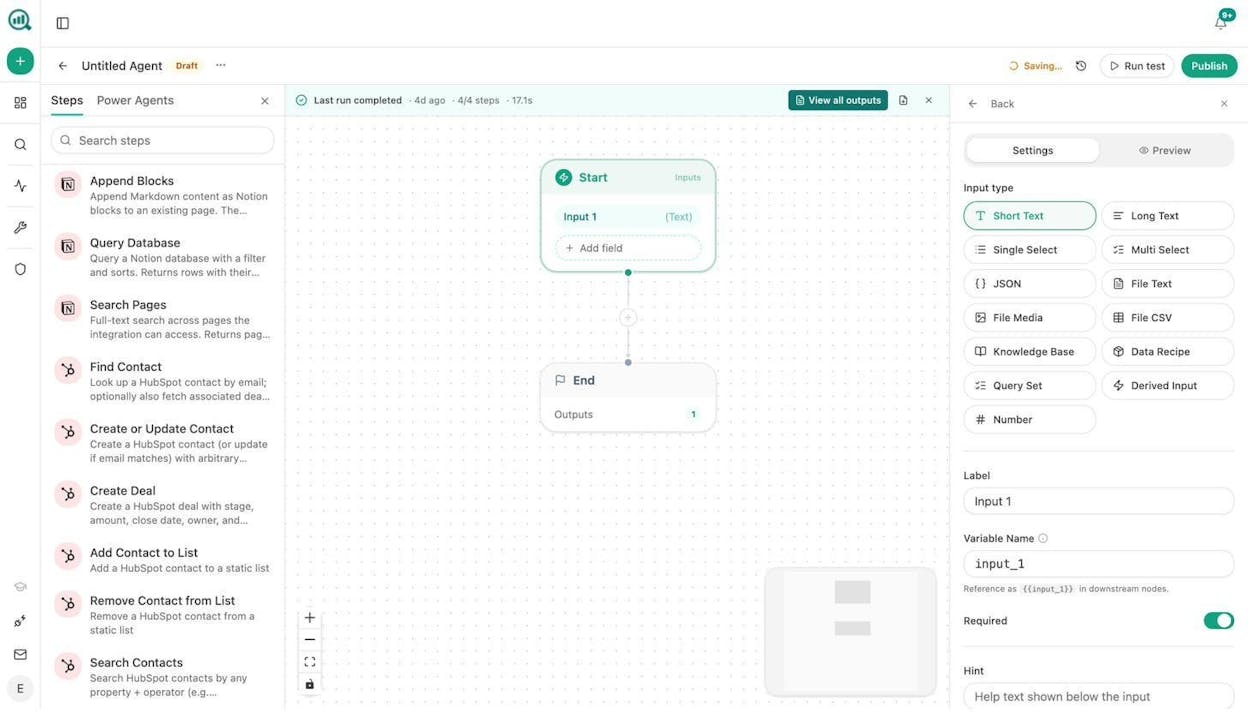
A few examples of what teams actually run:
-
Editorial calendar autopilot. Every Sunday night, an agent pulls uncovered prompts and high-opportunity keywords, drafts next week’s content calendar, and posts each idea to Notion with a brief attached.
-
Daily visibility regression alert. Every morning, an agent flags prompts that dropped in visibility over the last 24 hours and Slacks the team a draft counter-content brief for each.
-
Brief-to-publish pipeline. When a brief moves to “approved,” an agent generates research, builds the outline, drafts in your voice using the Knowledge Base, runs it through the AEO scorecard, and publishes if it scores above 80.
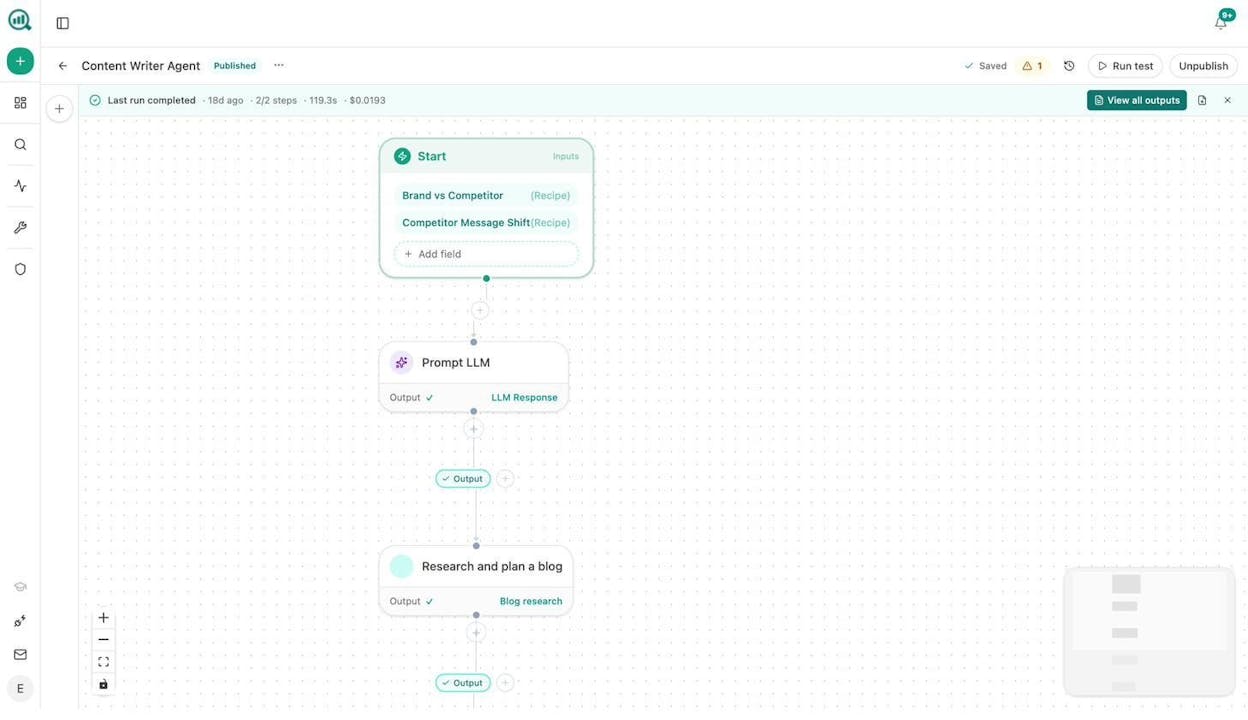
The unlock isn’t AI doing your strategy. It’s AI handling the operational glue, so your team spends time on judgment calls instead of assembling reports. The AI Content Writer and AI Content Optimizer features show how each piece slots into a larger pipeline.
Key takeaways
-
Pick topics that connect directly to a product use case. Score and filter for business relevance before writing a word.
-
Prioritize low-difficulty keywords for early wins that compound across long-tail variations.
-
Long-form earns rankings on Google and citations on AI engines, because both reward depth and structure.
-
Brand authority is your hedge against algorithm shifts in both channels, and roughly 83% of AI citations come from off-site sources.
-
Track Google Search Console, GA4, and AI search visibility together. Acting on one without the other leaves wins on the table.
-
Use the Agent Builder to turn your strategy into a system that runs on a cadence instead of a checklist.
The fundamentals haven’t changed. What’s new is the second channel where your content has to perform. Treat AI search as the additional organic surface it is, measure both, and the strategy compounds twice instead of once.

Ernest

Ibrahim


