
Sources & citations
Citation entities
Analyze AI opens every URL that AI engines cite and identifies the brands discussed on it — with quoted snippets and per-mention sentiment. No other layer tells you who's really winning on the pages AI trusts.
The layer most tools don't have
Knowing which pages AI cites is table stakes. The question that actually matters is: who is being talked about on those pages, and how? A single "best tools" listicle cited fifty times can quietly power a competitor's entire AI presence — or undermine yours with a lukewarm mention.
Analyze AI resolves this by analyzing every cited URL for entities: the brands discussed on the page, whether yours is among them, and what exactly is said about each.
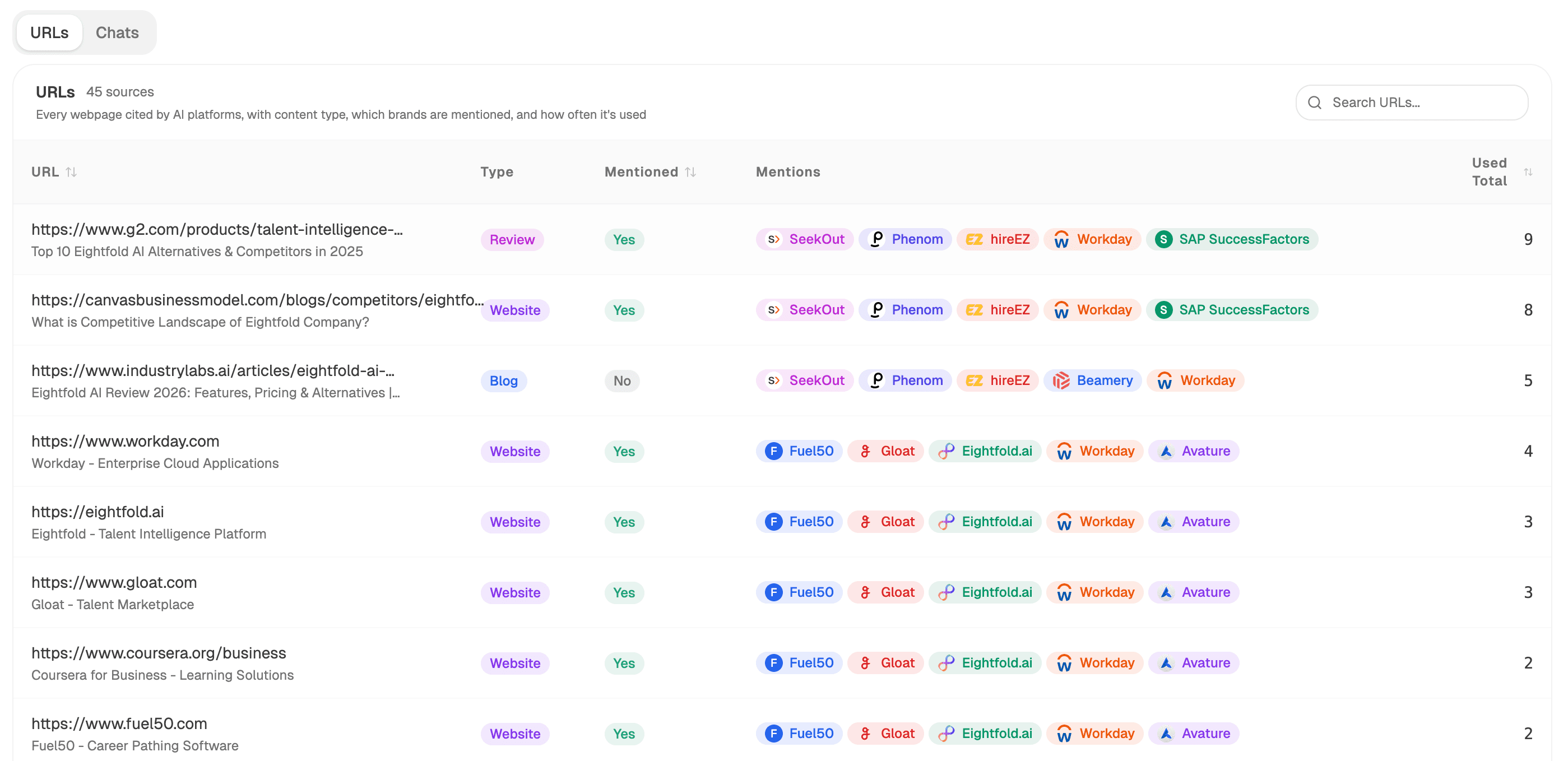
Two columns do the heavy lifting:
- Mentioned — a straight yes/no: is your brand on this page? When engines lean on a page that names every brand but yours, you know exactly where your next mention needs to come from.
- Mentions — every brand found on the page. This is how you see whose presence a source is really powering, before you invest in winning it.
Open any source for the full read
Click a URL and the detail panel shows what Analyze AI found when it read the page:
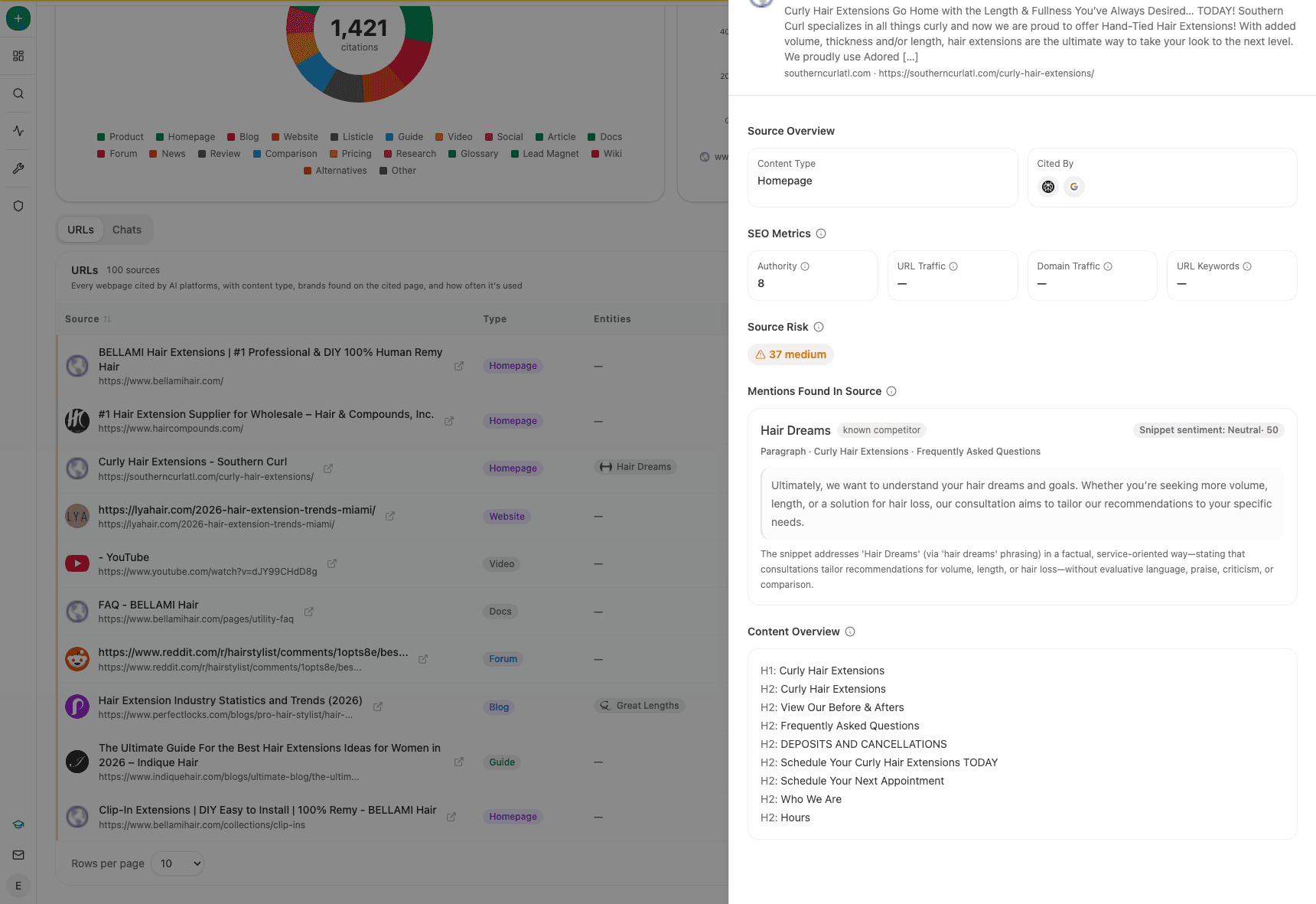
- Mentions found in source — each brand on the page, tagged (e.g. known competitor), with the exact paragraph where it appears, a per-snippet sentiment score, and a plain-language read of how the mention is framed (praise, comparison, neutral reference).
- Source overview — the page's content type and which engines have cited it.
- Content overview — the page's heading structure, so you can see what the page covers without leaving the dashboard.
- Authority and Risk Score — how much weight the page carries and how much competitive threat it represents, covered in depth in source authority & risk.
What this unlocks
- Outreach with eyes open. Before chasing a mention on a page, you know who's already on it, how they're framed, and whether the page is worth it.
- Real competitive accounting. "Cited 40 times" means nothing if the pages barely mention the brand. Entity-level data shows whose story those citations actually carry.
- Proof of coverage quality. When you land a mention, the snippet and its sentiment tell you whether the coverage helps. A neutral name-drop and an endorsement are different assets.
- Early warning. A competitor appearing across the pages AI trusts is upstream of a visibility rise. You see it here first.
Entity analysis runs on the pages cited in your tracked prompts' answers — coverage grows with your prompt portfolio. If a page you care about isn't listed, add prompts that surface it (see setting up your prompts).