
Prompts
Prompt suggestions
Analyze AI proposes the prompts worth tracking — grounded in real search demand for your category and in your own Brand Vault, not generic templates.
Why suggestions are hard to do well
Most tools suggest prompts by templating your keywords. The results sound like SEO, not like buyers — and tracking them measures a conversation nobody is having. Analyze AI builds suggestions from two sources instead:
- Real search demand — ranked keyword data for your category, so every suggestion maps to questions people actually ask.
- Your Brand Vault — the structured profile of your product, audience, and pain points (see Your Brand Vault), so suggestions reflect what you sell and who buys it, rather than your industry's average conversation.
The output is natural buyer questions — the kind a real person asks an assistant, phrased the way assistants actually get asked.
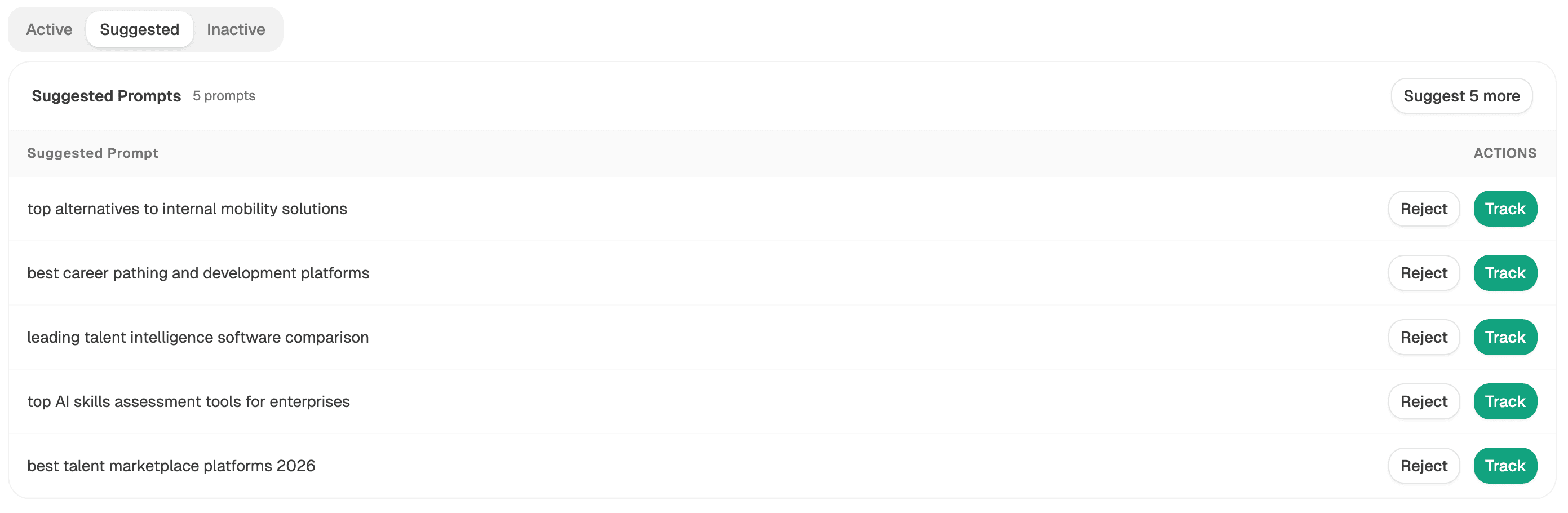
Working with suggestions
Judge them against your funnel
Good portfolios cover category questions, comparisons, and use cases (see thinking in clusters). Accept suggestions that fill a cluster you're missing, reject near-duplicates of what you already track.
Track or reject — both are signals
Tracking starts the first run immediately. Rejected prompts move to Inactive rather than vanishing, so you can revisit them when your strategy shifts.
Ask for five more
Suggestions regenerate on demand. Portfolios go stale as markets move — pulling fresh suggestions quarterly is a cheap way to catch new buyer language early.
If suggestions feel off-target, fix the Brand Vault, not the suggestions. The suggestion engine reasons from your Vault — a sharper product description and audience definition upstream produces noticeably better prompts downstream.