
Content Writer
The editorial process
Research briefs, outlines with argued rationale, and inline comments you can reply to — the Content Writer works like a newsroom, not a text generator.
Why an editorial process matters
The failure mode of AI content isn't grammar — it's judgment: generic openings, unsupported claims, structure that buries the argument. The Content Writer's answer is the same one publishing found decades ago: an editorial layer. Every piece moves through research and outline stages where the reasoning is visible, challengeable, and yours to steer — as inline comments, exactly like working with a human editorial team.
Stage one: the research brief
Before a word of the article exists, you get a research brief: searcher intent (what this person is trying to accomplish), searcher knowledge level (what they already know and have tried), and AI visibility context (which engines cite which competitors for this query, and where you're absent).
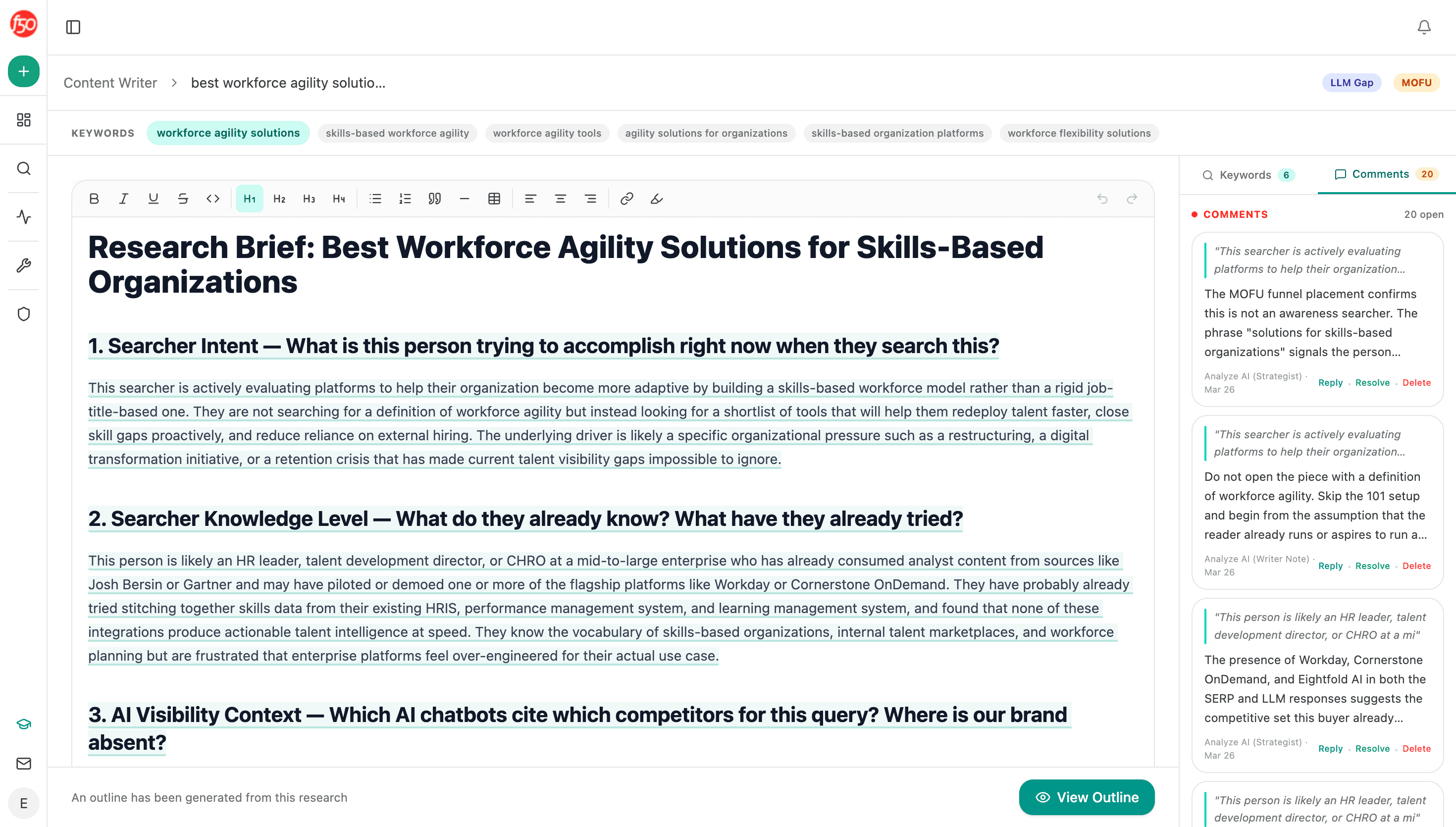
The comments panel is the distinctive part. Notes from Analyze AI (Strategist) and writer notes are anchored to specific passages — "Do not open the piece with a definition… begin from the assumption the reader already runs a skills-based org" — the kind of directive a good content lead writes in a margin. You can reply, resolve, or delete each one, and your responses steer the next stage.
Stage two: the outline, with its reasoning attached
The outline isn't just structure — every major choice carries a comment explaining it: the positioning analysis behind the title, the rationale for the thesis (including why it's deliberately debatable), the strategic purpose of each section.
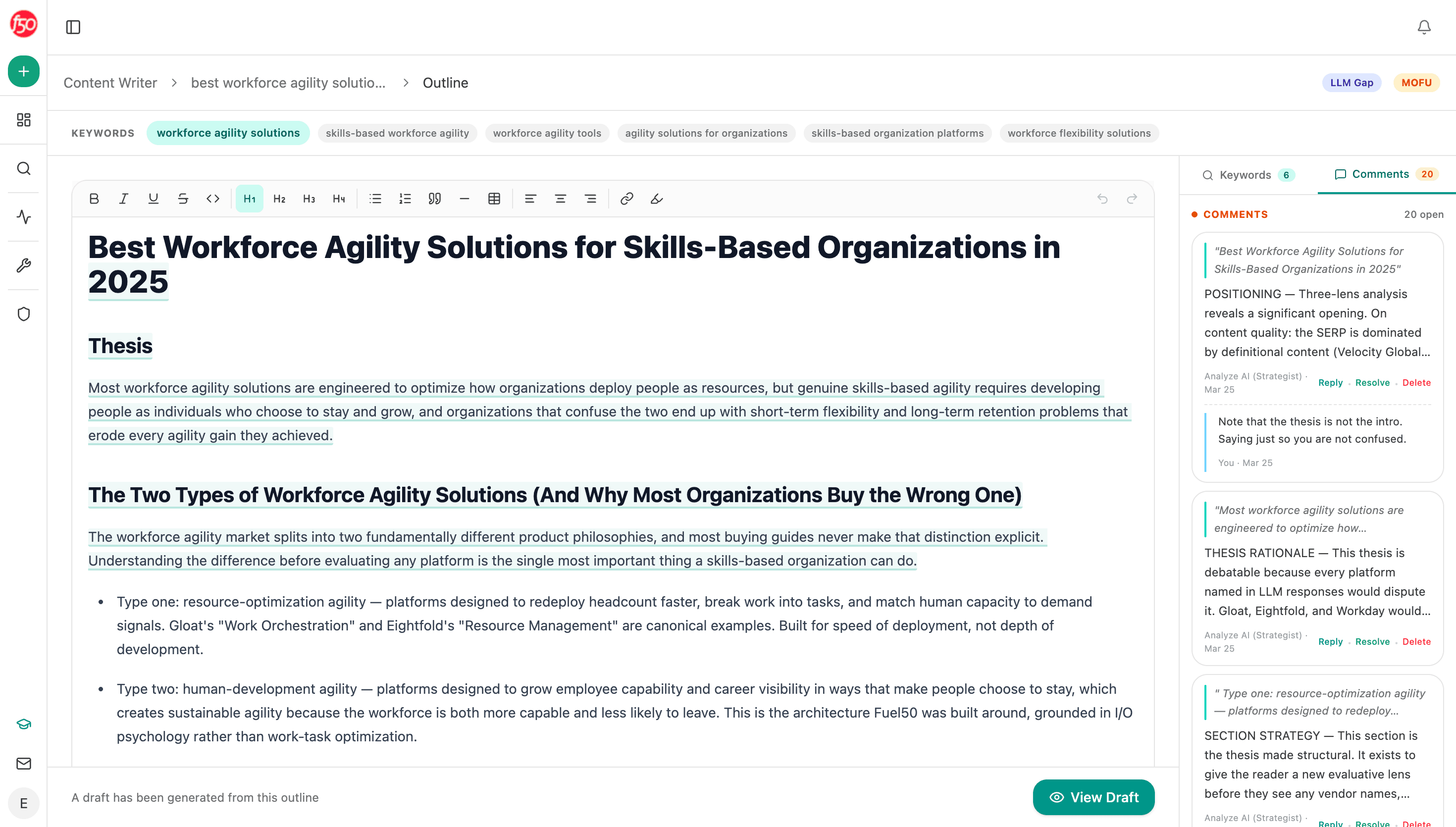
This is where you spend your five highest-leverage minutes: agree with the thesis or push back, cut a section, demand a different angle. Your comments are part of the context the draft is written from.
Why this beats prompt-and-pray
- The reasoning is inspectable. When the piece takes an angle, you can see why — and overrule it before 3,000 words are written, not after.
- Feedback lands at the right altitude. Fixing a thesis at the outline stage costs one comment; fixing it in a finished draft costs a rewrite.
- The trail persists. Comments and replies stay with the piece, so decisions ("we never lead with definitions") are visible history, not tribal memory.
Treat the strategist like a colleague, not an oracle. The comments marked as rationale are positions, and pushing back is the mechanism — a one-line reply at the research stage routinely changes the entire draft's direction.