
Competitors & traffic
AI traffic analytics
The visitors AI assistants actually send you — which platforms refer them, which pages they land on, and how AI-referred traffic behaves once it arrives.
Visibility is the cause — this is the effect
Everything else in Analyze AI measures what AI says about you. AI Traffic Analytics measures what that turns into: real visitors arriving from ChatGPT, Perplexity, Claude, Gemini, Copilot, and the rest, tracked from referral to behavior.
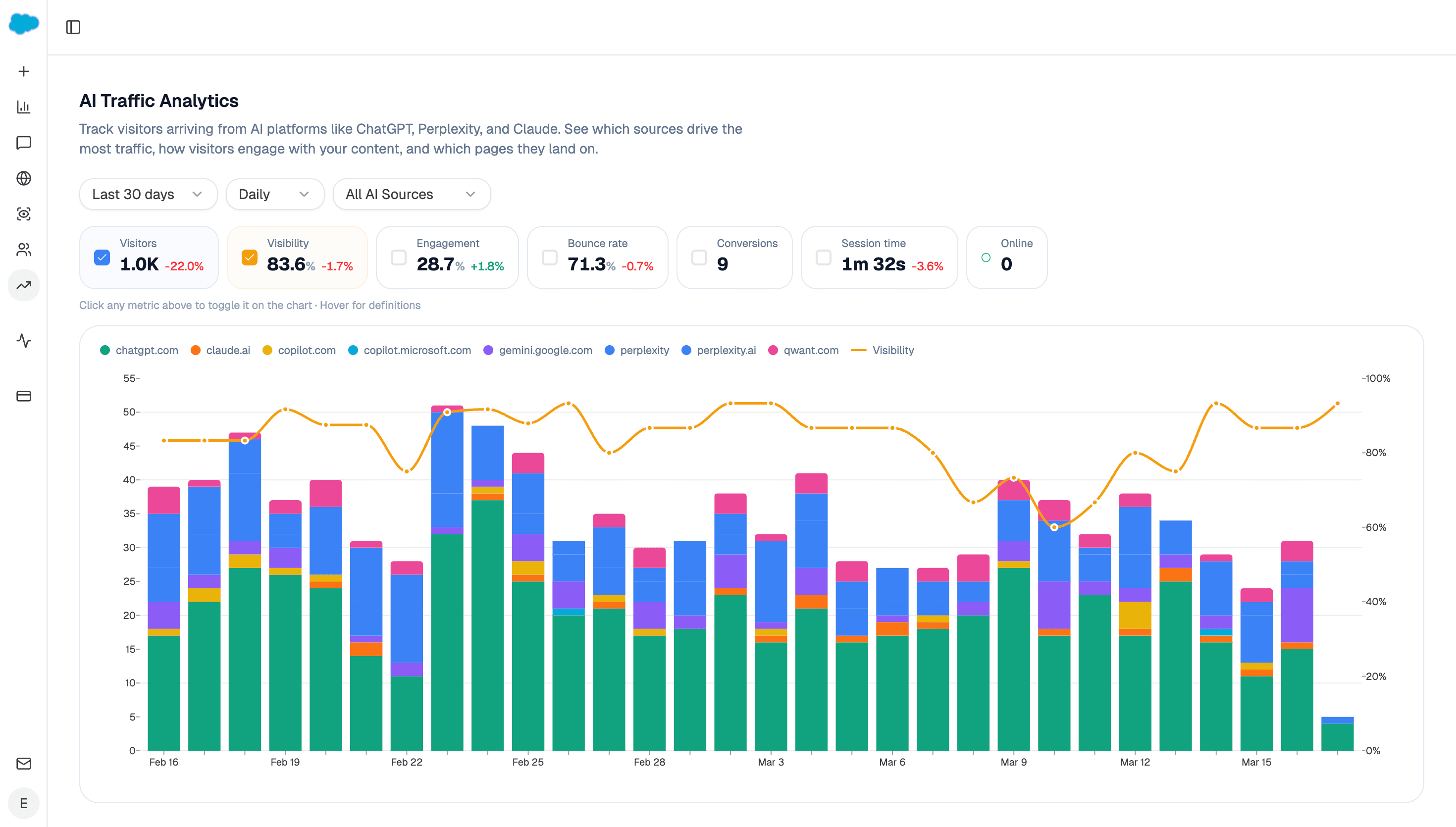
The metric tiles toggle onto the chart. Start with visibility vs visitors: when mentions rise, referral traffic should follow. When it doesn't, you have a specific, diagnosable gap — mentioned but not cited, or cited on pages nobody clicks from.
Landing pages: where AI sends people
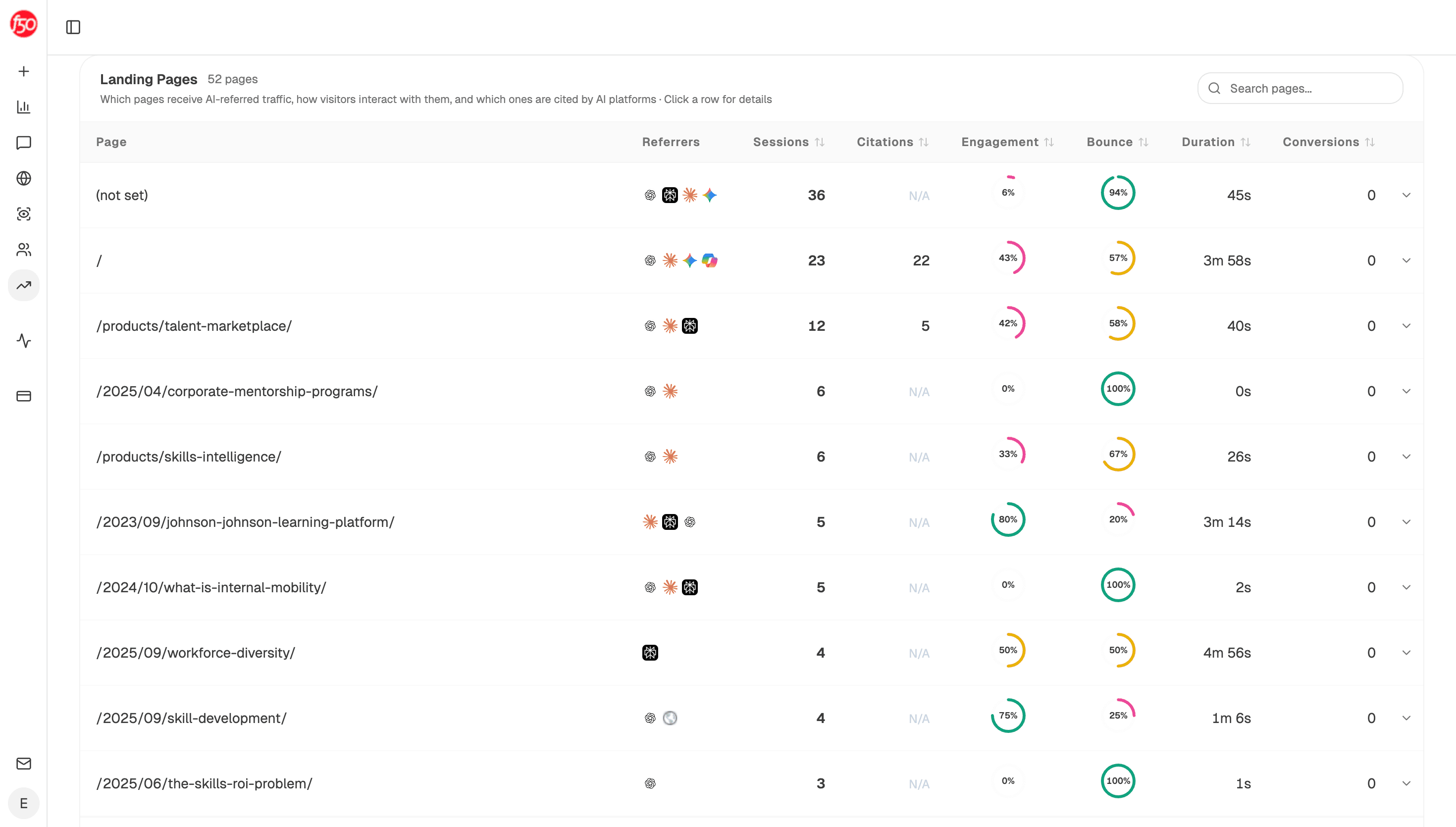
Every page receiving AI-referred traffic, with sessions, citations, engagement, bounce, and duration — and the referring platforms as icons per row:
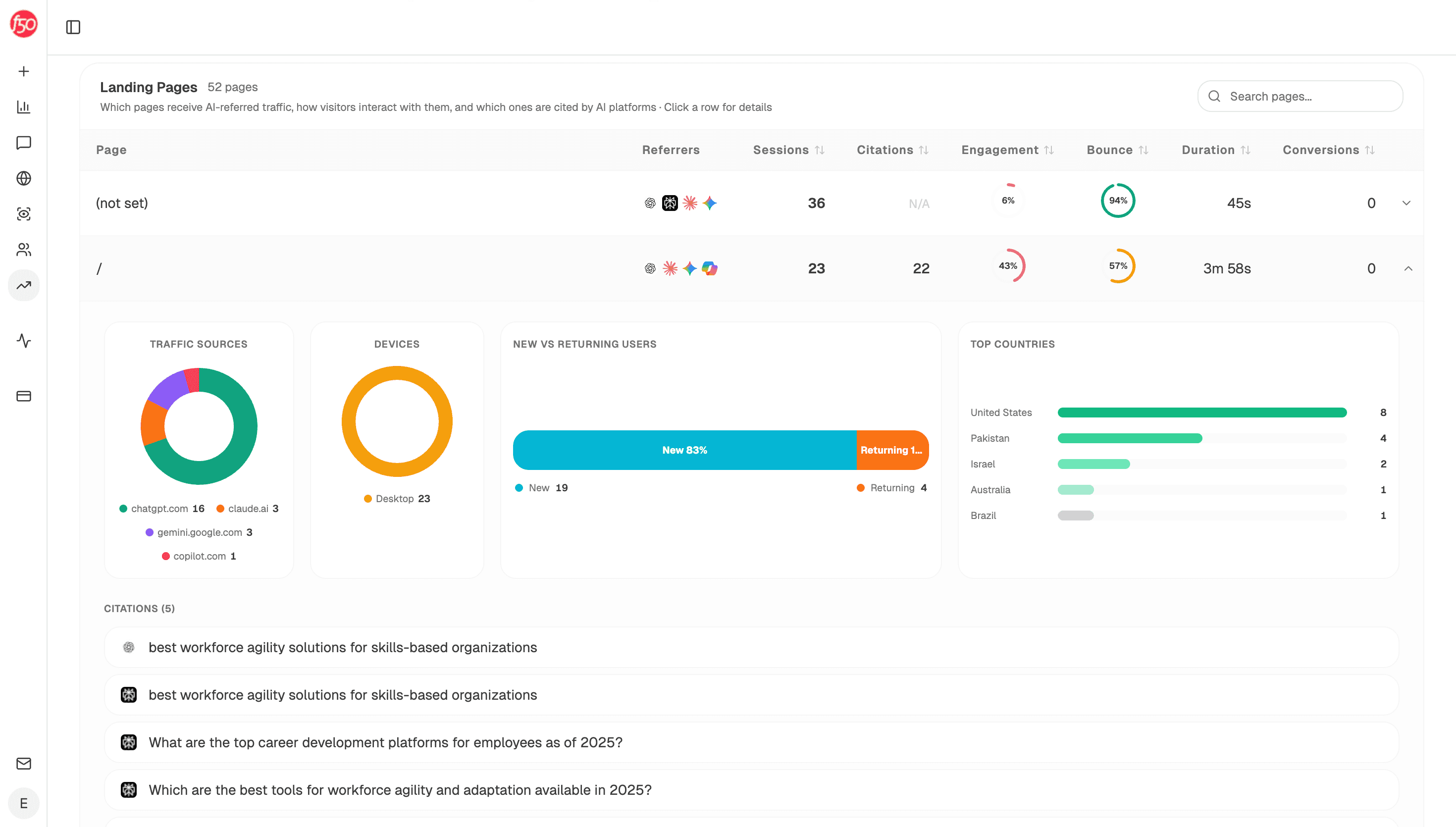
Expand any row for the full picture of that page's AI audience: traffic sources, devices, new vs returning, top countries, and the prompts whose answers cited the page:
Session-level detail
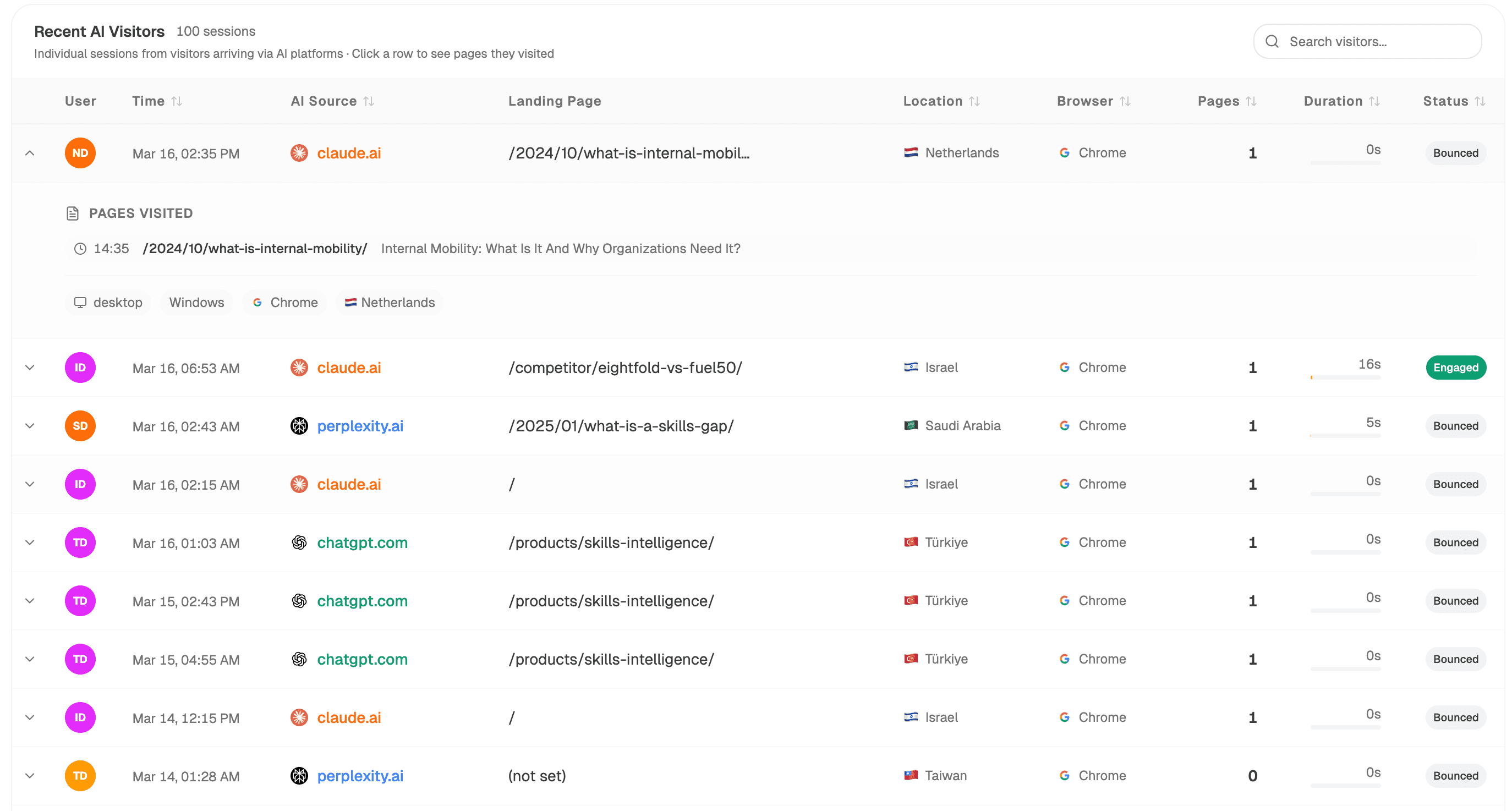
The Recent AI Visitors table shows individual sessions: platform, landing page, location, browser, pages visited, duration, and whether they bounced or engaged.
There's also a full visitor breakdown — countries, devices, operating systems, browsers — each row clickable to filter the whole page.
How to use it
- Prove the channel. AI-referred sessions with engagement times beat any argument about whether AI visibility matters to the business.
- Find the conversion gap. Pages with strong AI traffic but high bounce are landing-page problems, not visibility problems — send them to the Content Optimizer.
- Close the loop. A page that's cited often (citation intelligence) but receives little traffic suggests the citation isn't prominent — the entity-level detail shows how you're framed on it.
AI traffic data comes from your connected analytics (AI-referrer sessions), so numbers align with what your analytics platform sees. Assistants don't always pass referrers — treat these figures as a reliable floor, not a ceiling.