
Sources & citations
How citation intelligence works
Every URL that AI engines cite when answering questions in your space — captured, classified, and filterable by engine, brand, and time period.
Citations are the supply chain of AI answers
When an AI engine answers a buyer's question, it leans on sources — the pages it retrieves, trusts, and cites. Those citations decide who gets recommended. The Sources page captures every one of them across your tracked prompts: which URL, which engine, in answer to which question, how often.
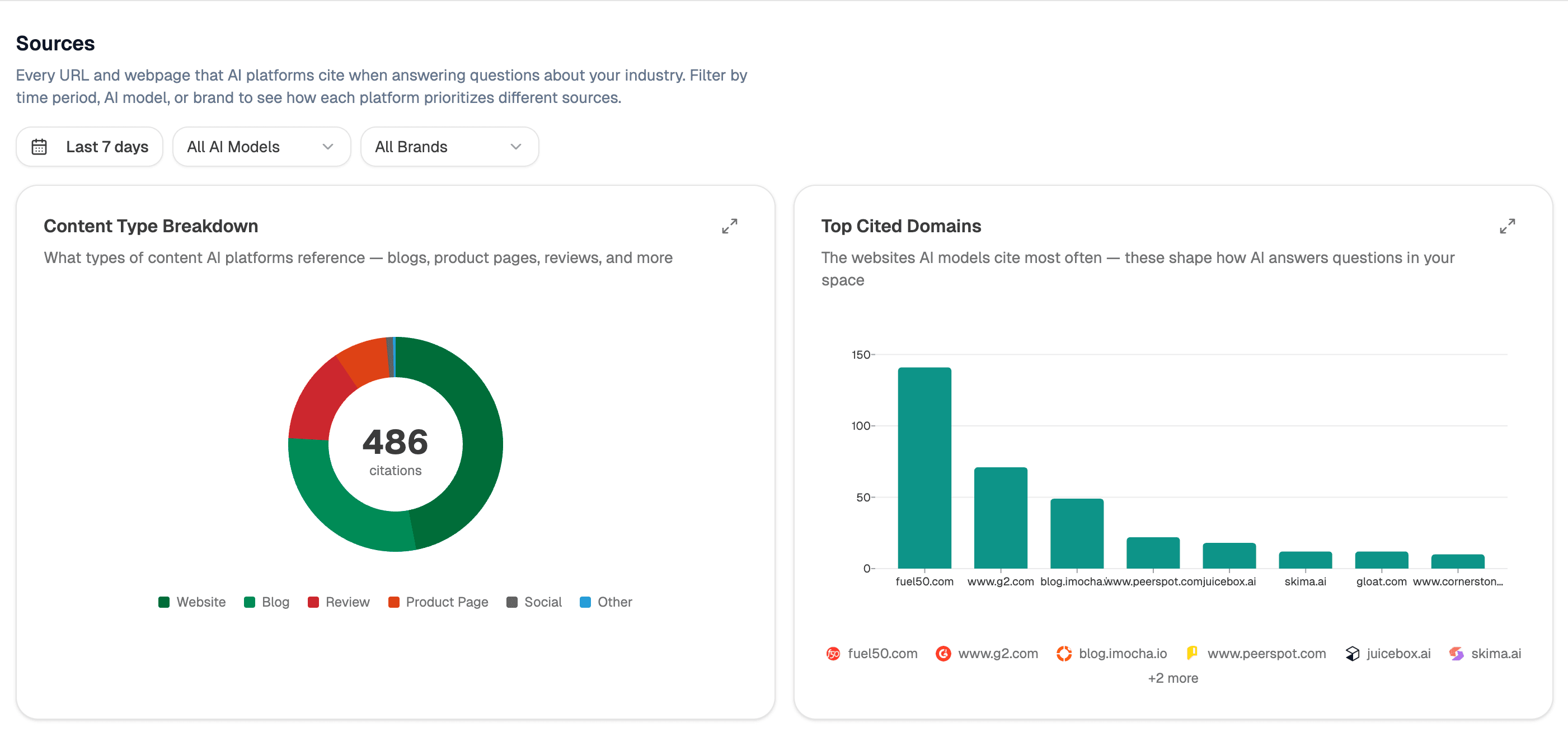
The two summary views
- Content Type Breakdown — what formats AI trusts in your space: websites, blogs, reviews, product pages, listicles, docs, forums, and more. If reviews and comparison listicles dominate your category, that's where mentions matter most.
- Top Cited Domains — the websites shaping AI answers in your space. These are the publications, review sites, and competitor properties the engines keep returning to.
Both filter by time period, AI model, and brand — and the per-engine view is where it gets interesting: every engine has its own trusted set.
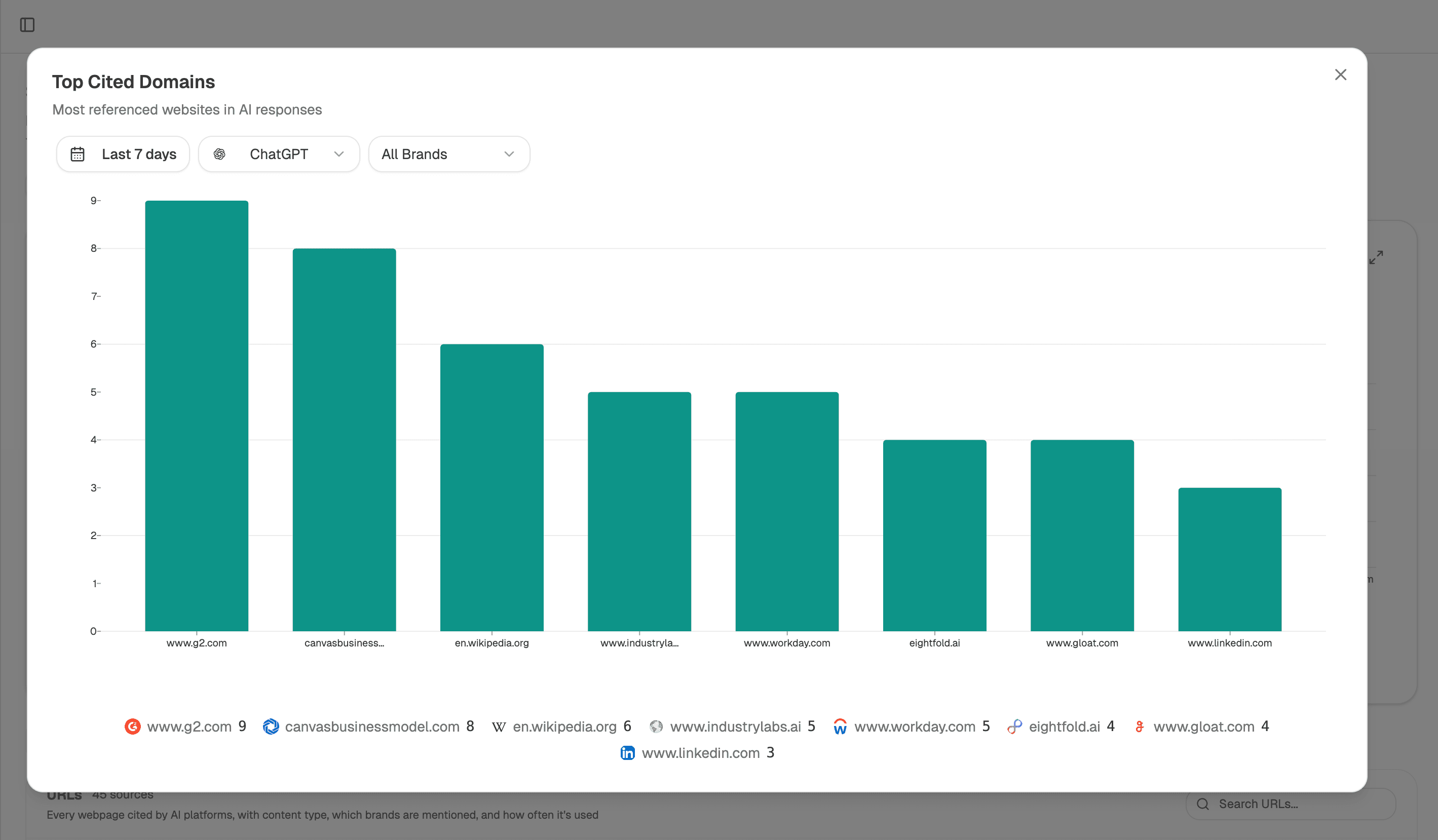
From summary to receipts: URLs and Chats
Two tables sit under the charts:
- URLs — every cited webpage with its content type, whether your brand is mentioned on it, which brands are found on the page, and how often engines used it. This is the entry point to citation entities, the layer that makes this table unique.
- Chats — the actual AI conversations that produced the citations: which prompt, how many citations, which brands appeared, which sources were used, and when.
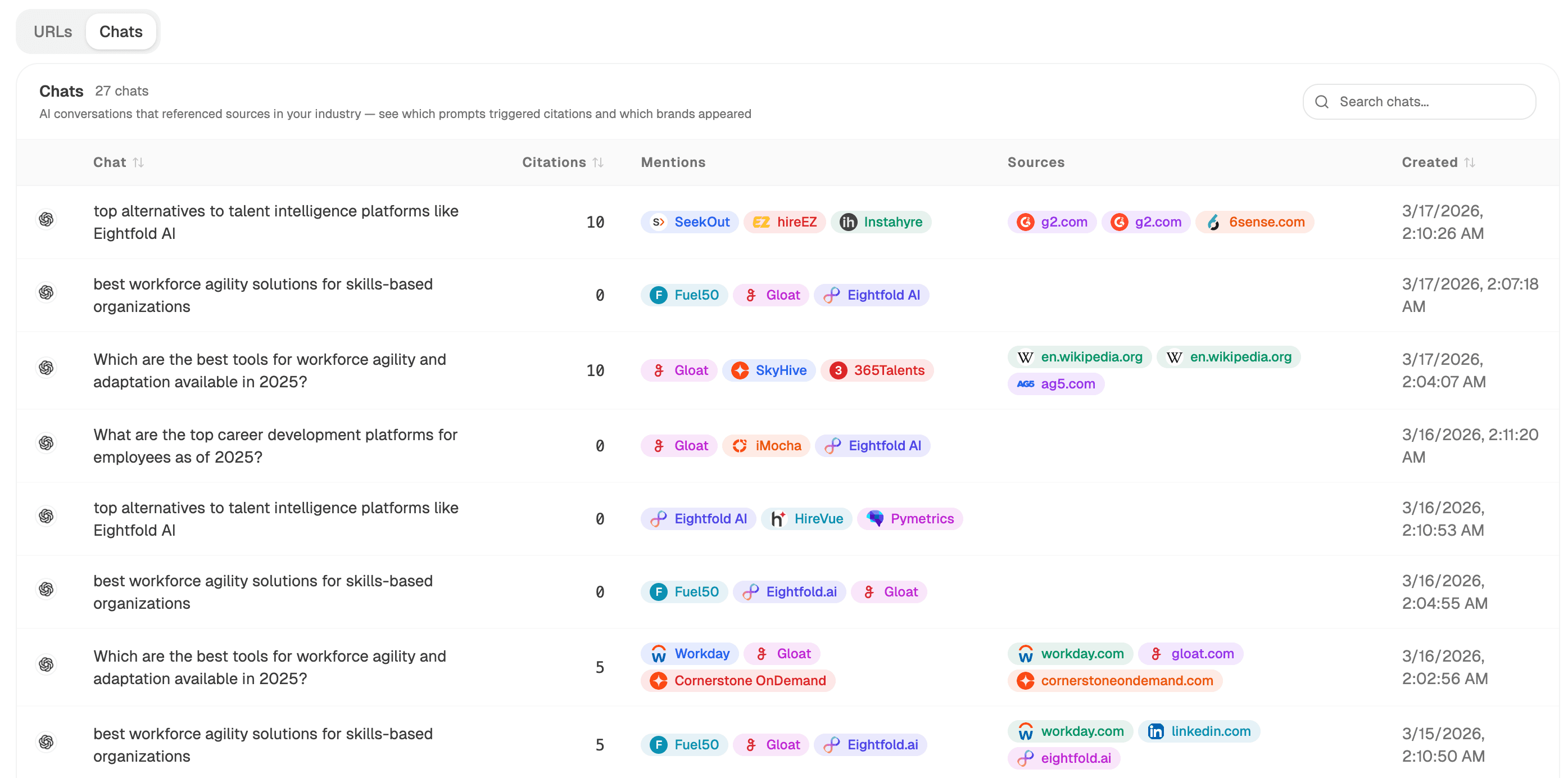
Work top-down: use Top Cited Domains to find where answers come from, then the URLs table to find the specific pages — and whether you're on them. A high-frequency page that cites competitors but not you is your best outreach target.
Where to go next
- Citation entities — what's actually said about every brand on every cited page
- Source authority & risk — which sources carry weight, and which are actively working against you